admin
admin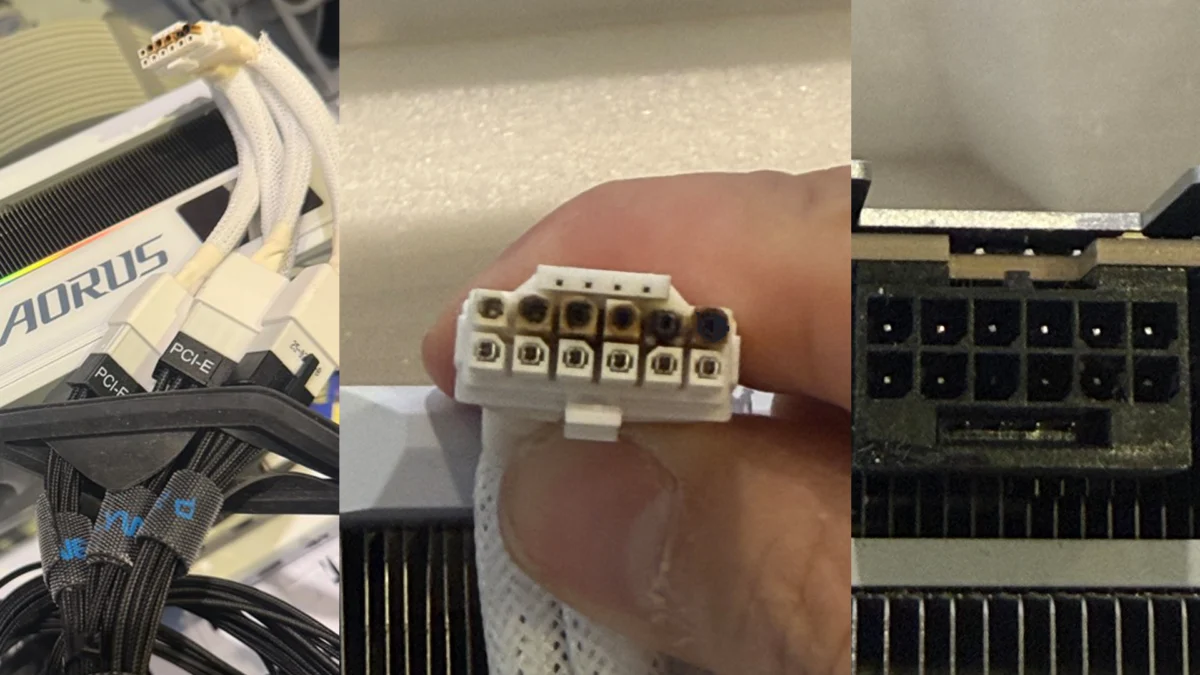
NVIDIA Corporation has recorded a staggering increase in warranty-related expenditures, with claims rising ninefold over the 2024–2025 fiscal period, a development that industry analysts attribute to a combination of hardware design challenges and volatile global economic conditions. According to a comprehensive report from Warranty Week, the Silicon Valley chipmaker’s warranty claims, which had historically stabilized around the $100 million mark, spiked to $894 million in 2025. This represents a 1,000% increase from the $81 million reported in 2024, signaling a significant shift in the company’s liability profile. While its primary competitor, Advanced Micro Devices (AMD), also experienced a rise in warranty claims, its increase was limited to approximately two-thirds, highlighting a unique set of challenges currently facing NVIDIA’s hardware ecosystem.
A Drastic Shift in Financial Liabilities
The financial data released by Warranty Week underscores an unprecedented trend in the discrete GPU market. For the better part of a decade, NVIDIA managed to maintain a relatively predictable warranty expense ratio. Between 2022 and 2024, the company’s annual payouts for repairs and replacements hovered near $100 million. However, the 2025 fiscal year saw a dramatic departure from this norm. The escalation began moderately in the first quarter of 2025 with $147 million in payments, followed by a dip to $80 million in the second quarter. The situation intensified in the third quarter with $156 million in claims, eventually culminating in a massive $511 million surge in the fourth quarter alone.
This quarterly trajectory suggests that the issues plaguing NVIDIA’s hardware are not only persistent but are accelerating in scale. To prepare for these mounting costs, NVIDIA has significantly increased its warranty accruals—the funds set aside to cover future repair and replacement obligations. In 2023, the company set aside $109 million for this purpose. By 2024, that figure had grown eight-fold to $948 million. In a move that suggests even greater turbulence ahead, NVIDIA nearly tripled its accruals in 2025, reserving a total of $2.59 billion.

The 16-Pin Connector and Thermal Excursions
Central to the discussion of NVIDIA’s rising failure rates is the controversial 16-pin power connector, technically known as the 12VHPWR (and its subsequent revision, the 12V-2×6). Introduced alongside the GeForce RTX 40-series in 2022, particularly the flagship RTX 4090, the connector was designed to deliver up to 600 watts of power through a single, compact interface. However, shortly after launch, reports began to surface of connectors melting, causing permanent damage to both the graphics cards and the power supply cables.
Despite revisions to the connector standard intended to ensure better seating and safety, reports of "melting" incidents have persisted into the current generation of hardware. The launch of the RTX 50-series, specifically the RTX 5090 and RTX 5080, has seen a resurgence in these reports. High power draw, combined with potential user error in seating the cables or excessive bending in tight PC chassis, has led to a consistent stream of RMAs (Return Merchandise Authorizations). Because these flagship cards often retail for upwards of $1,600 to $2,000, each successful warranty claim represents a significant financial hit to the manufacturer or its Add-in Card (AIC) partners, such as ASUS, MSI, and Gigabyte.
The Impact of Global DRAM Shortages and Pricing
While hardware design flaws are a primary driver of the volume of claims, the cost of fulfilling those claims has been exacerbated by a crisis in the semiconductor supply chain. Discrete GPUs rely heavily on high-speed video memory (VRAM), including GDDR6X and the newer GDDR7 standards. Throughout late 2024 and 2025, DRAM prices have undergone a period of extreme volatility, with some reports indicating that prices have quadrupled.
The surge in demand for Artificial Intelligence (AI) accelerators, such as NVIDIA’s own H100 and Blackwell series, has diverted massive amounts of memory production toward the enterprise sector. This has left the consumer gaming segment facing tight supply and inflated costs. When a consumer sends a graphics card in for repair—often due to memory failure or the aforementioned connector issues—NVIDIA and its partners must procure replacement modules at current market rates. With DRAM prices at historic highs, the "per-unit" cost of a warranty repair has climbed significantly, contributing to the nearly $900 million payout seen in 2025.

Tariffs and the Cost of Manufacturing
The fourth quarter of 2025, which saw the highest spike in warranty expenses, coincided with a period of intense geopolitical tension regarding trade tariffs. As the "tariffs dilemma" reached its peak, the cost of importing components and finished goods across various international borders rose sharply. For a global company like NVIDIA, which utilizes a complex web of manufacturing facilities in Taiwan, assembly plants in China, and distribution centers worldwide, these tariffs added another layer of expense to the warranty process.
When a card is returned for warranty service, it often involves international shipping, customs duties, and the cost of maintaining regional repair hubs. The combination of increased logistics costs and the higher base manufacturing cost of the GPUs themselves means that NVIDIA is paying more today to resolve a single claim than it was two years ago. This "inflationary warranty environment" explains why the dollar amount of claims has increased at a rate far exceeding the actual number of units failing.
Comparative Analysis: NVIDIA vs. AMD
The Warranty Week data provides an essential point of comparison by looking at NVIDIA’s closest rival, AMD. During the same 2024–2025 period, AMD’s warranty claim costs rose by approximately two-thirds, moving from $110 million to $238 million. While this is a notable increase, it is far less dramatic than NVIDIA’s 1,000% surge. AMD’s warranty claim rate stood at 0.69% in 2025, up from 0.43% the previous year. In contrast, NVIDIA’s claim rate for the fourth quarter of 2025 reached 0.90%, a sharp rise from the 0.17% recorded in the first quarter of the same year.
The divergence between the two companies can likely be attributed to design choices. AMD has largely avoided the 16-pin 12VHPWR connector for its Radeon RX 7000-series cards, opting instead for the more traditional and established 8-pin PCIe power connectors. This decision appears to have insulated AMD from the specific "melting" failures that have plagued NVIDIA’s high-end offerings. Furthermore, AMD’s focus on the mid-to-high-range market, rather than the ultra-enthusiast "halo" products that push power limits to the extreme, may have contributed to a more stable failure rate across its product line.

Implications for Consumers and AIC Partners
The massive increase in warranty expenses has broader implications for the PC gaming ecosystem. For consumers, the high failure rates and rising costs could eventually lead to stricter warranty terms or higher retail prices as manufacturers attempt to recoup their losses. There are already reports within the enthusiast community of longer turnaround times for RMAs, as repair centers struggle to keep up with the volume of returns and the scarcity of replacement parts.
NVIDIA’s Add-in Card partners are also under significant pressure. While NVIDIA provides the GPU silicon, the AICs are often responsible for the cooling solution, the PCB design, and the initial handling of warranty claims. If a design flaw like the 16-pin connector is inherent to the reference specification provided by NVIDIA, the AICs must coordinate closely with the chipmaker to manage the financial fallout. The $2.59 billion that NVIDIA has set aside in accruals suggests that the company is bracing for a long-term period of high liability, potentially covering the entire lifecycle of the RTX 40 and RTX 50 series.
Future Outlook and Corrective Measures
As NVIDIA moves forward, the industry is watching closely to see if the company will implement more robust hardware revisions to address the root causes of these failures. The transition to the 12V-2×6 connector was intended to be a definitive fix, but the continued reports of damage suggest that the margin for error remains uncomfortably slim for a consumer product.
Technological analysts suggest that NVIDIA may need to reconsider its power delivery strategy for future architectures or invest more heavily in "active" safety features within the GPU BIOS that can detect improper cable seating before thermal damage occurs. Additionally, as the AI boom continues to strain the global supply of DRAM, NVIDIA’s ability to manage its warranty expenses will depend heavily on its capacity to secure stable component pricing through long-term supply agreements.

For now, the 1000% increase in warranty claims serves as a stark reminder of the challenges inherent in pushing the boundaries of consumer electronics. As GPUs become more powerful and complex, the financial risks associated with hardware failure grow exponentially. NVIDIA’s current financial standing remains strong due to its dominance in the AI sector, but the escalating costs in its gaming division represent a significant operational hurdle that will require both technical and economic solutions in the years to come.