admin
admin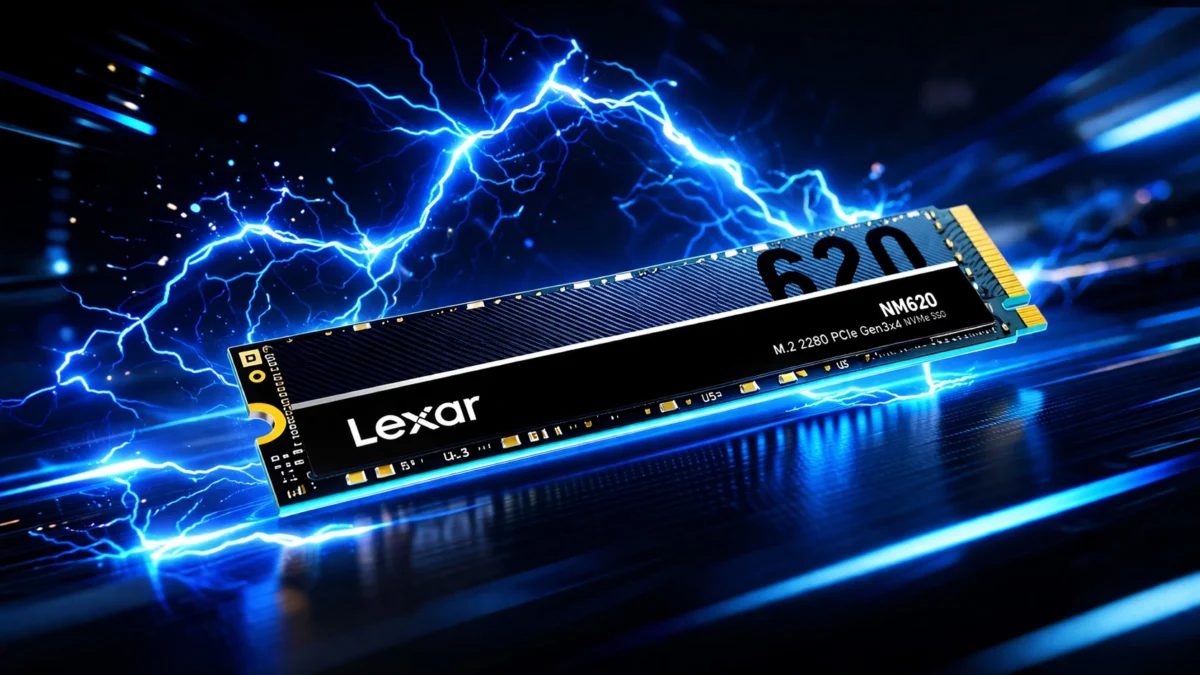
Recent market intelligence from Lexar, a leading global brand in flash memory solutions, has highlighted a significant divergence in how PC builders and gamers prioritize their hardware budgets amidst fluctuating component prices. While the industry has seen a substantial increase in the cost of both Dynamic Random Access Memory (DRAM) and NAND flash storage over the past year, consumer behavior suggests that while users are willing to compromise on RAM capacity to save costs, they are increasingly unwilling to accept lower-capacity Solid State Drives (SSDs). This trend, revealed in a recent technical exchange between Lexar executives and industry analysts, underscores a fundamental shift in the minimum viable specifications for modern computing and gaming.
In an interview with Digital Foundry, Lexar’s General Manager for the Europe region, Grace Su, provided insights into the company’s recent transition to lower-density flash memory for its entry-level product lines. The transition was expected to cater to a budget-conscious demographic looking for more affordable entry points into the DDR5 and NVMe markets. However, the sales data revealed an "unusual trend." While lower-capacity RAM kits—specifically those utilizing 8GB modules—continued to see steady and "decent" demand, the demand for lower-capacity storage drives, such as 256GB and 512GB models, plummeted to a mere "fraction" of what the company had projected.
The Decline of the Sub-Terabyte SSD
For years, the 256GB and 512GB SSDs were the standard for budget builds, providing enough space for an operating system and a handful of essential applications. However, Lexar’s findings indicate that the market has effectively moved past these capacities. The primary driver for this shift is the ballooning size of modern software, particularly AAA video game titles. In the current gaming landscape, it is not uncommon for a single title to exceed 100GB or even 150GB in installation size.
Games such as Call of Duty: Warzone, Ark: Survival Ascended, and Star Wars Jedi: Survivor have set a new precedent for storage requirements. When factoring in the footprint of a modern operating system like Windows 11, which can occupy upwards of 30GB to 60GB after updates and system files, a 256GB drive is rendered almost useless for a gaming PC. Even a 512GB drive, once considered a safe middle ground, can only comfortably house two or three major titles before reaching its capacity limit. Lexar’s data suggests that consumers now view the 1TB SSD as the absolute baseline, preferring to invest more upfront rather than face the immediate inconvenience of managing limited disk space.
RAM Capacity: The Surprising Resilience of 8GB Modules
In contrast to the storage market, the memory market shows a different psychological and practical approach from consumers. Despite the consensus among enthusiasts that 16GB is the modern minimum for gaming and 32GB is the new "sweet spot," Lexar reports that lower-capacity RAM kits remain popular. This is particularly notable in the transition to DDR5. While DDR5 was initially marketed with 16GB modules as the standard entry point, manufacturers eventually introduced 8GB modules to lower the barrier to entry for the new platform.
The persistence of 8GB RAM module sales can be attributed to the ease of upgradability. For a budget-conscious builder, starting with a single 8GB stick of RAM or a 16GB kit (2x8GB) is a viable path because adding more memory later is a simple, "plug-and-play" process. Most motherboards feature two to four DIMM slots, allowing users to double their memory capacity in seconds without affecting their software environment.

Furthermore, while low RAM can impact frame rates and multitasking capabilities, it does not prevent a computer from functioning or storing data in the same "hard wall" fashion that a full SSD does. Users appear more willing to tolerate slightly lower performance or longer loading times in exchange for a lower initial build cost, knowing the fix is inexpensive and physically easy to implement later.
Economic Context and Component Pricing Volatility
The consumer behavior observed by Lexar is occurring against a backdrop of significant price volatility in the semiconductor industry. Throughout 2023 and into 2024, the cost of both SSDs and RAM has seen a marked increase. This was largely a result of strategic production cuts by major NAND and DRAM manufacturers, including Samsung, SK Hynix, and Micron, aimed at correcting a previous oversupply and stabilizing falling prices.
As prices rose, the "value" proposition of low-capacity drives diminished. In many cases, the price difference between a 512GB NVMe SSD and a 1TB model became so narrow—often less than $20 to $30—that consumers found the smaller drive to be a poor investment. For RAM, however, the price jumps between 16GB and 32GB kits remained significant enough to influence the decision-making of entry-level buyers.
Retail data from major outlets like Micro Center has corroborated this, showing that while high-end enthusiasts continue to buy premium, high-capacity components, the "middle" of the market is hollowing out. Buyers are either going for the absolute bare minimum to get a system running or jumping straight to the 1TB/2TB storage tier.
The Impact of Modern Game Engines and DirectStorage
The technical requirements of modern games have also played a role in making small SSDs obsolete. With the advent of the PlayStation 5 and Xbox Series X, game developers began optimizing titles for high-speed NVMe storage. Technologies like Microsoft’s DirectStorage API allow the GPU to access SSD data directly, reducing CPU overhead and virtually eliminating loading screens.
However, these technologies require a certain amount of "breathing room" on the drive to function efficiently. SSDs, particularly those using QLC (Quad-Level Cell) flash, tend to see a significant drop in write speeds and overall performance as they approach their maximum capacity. A 512GB drive that is 95% full will perform significantly worse than a 1TB drive that is 50% full, even if they share the same theoretical peak speeds. Gamers, becoming more educated on these technical nuances, are opting for larger drives to ensure sustained performance and longevity.
The Logistics of Upgrading: SSD vs. RAM
A critical factor in this market trend is the logistical difficulty associated with upgrading storage compared to memory. When a user outgrows their RAM, they simply buy another matching stick. When a user outgrows their primary SSD, the process is far more involved. It typically requires:

- Purchasing a new, larger drive.
- Physically installing it (which may require removing a GPU or other components if the M.2 slot is obscured).
- Cloning the existing operating system and data to the new drive or performing a clean install of Windows and all applications.
- Reconfiguring drive letters and paths for installed software.
This "upgrade friction" makes the initial purchase of an SSD a much higher-stakes decision. Consumers are demonstrating that they would rather "buy once, cry once" when it comes to storage, whereas they view RAM as a modular component that can be scaled as their budget allows.
Analysis of Implications for the Hardware Industry
Lexar’s observations suggest that the industry may soon reach a point where 256GB and 512GB SSDs are phased out of the consumer retail market entirely, relegated to the "boot drive" roles in low-cost office PCs or embedded systems. For manufacturers, the focus is shifting toward optimizing the production of high-density NAND to make 2TB and 4TB drives the new standard for the enthusiast and gaming sectors.
For the RAM market, the continued demand for lower-capacity modules suggests that the "entry-level" segment remains price-sensitive. As long as DDR5 platforms remain more expensive than their DDR4 predecessors, 8GB modules will likely serve as a necessary bridge for users transitioning to newer CPUs from Intel and AMD.
Lexar’s Grace Su noted that the company must remain agile to these shifting demands. The "fractional" demand for small SSDs is a clear signal to product planners that the floor for consumer storage has moved. As we move further into the current console generation and as Unreal Engine 5 becomes the standard for game development, the pressure on storage capacity will only increase.
Conclusion
The findings from Lexar highlight a sophisticated level of consumer awareness in the PC building community. Users are no longer just looking at the price tag; they are evaluating the long-term utility and "hassle factor" of their components. The death of the small SSD and the survival of the small RAM module represent a pragmatic approach to PC building in an era of massive file sizes and expensive semiconductors. For the foreseeable future, the 1TB SSD has cemented its place as the foundational component of the modern computer, while RAM remains the flexible variable in the budget equation.