Garick Elordi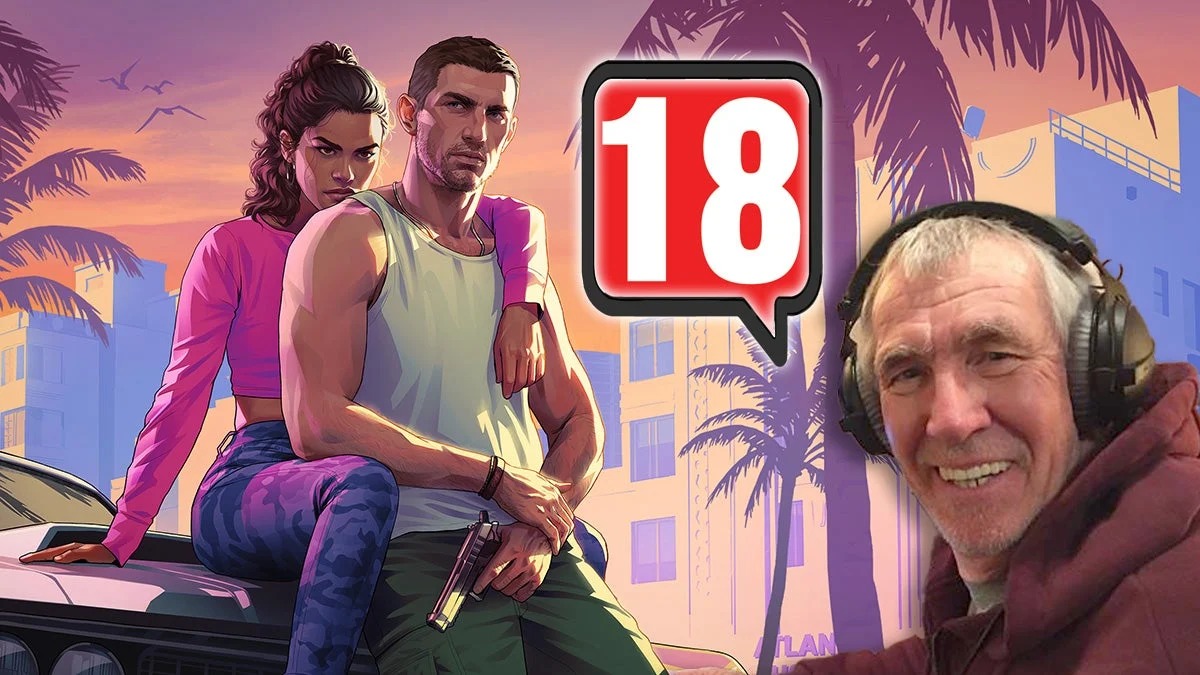
The resonant, authoritative voice that has introduced thousands of video game trailers over the past 16 years belongs to Richard Wells, a British voice actor whose sudden emergence on social media has sparked a wider conversation regarding compensation, digital legacy, and the evolution of the gaming industry. For over a decade and a half, the "PEGI 18" vocal tag has served as a cultural touchstone for millions of gamers across Europe and beyond, yet the man behind the microphone remained anonymous until a viral TikTok video in early 2024 brought his identity—and the modest terms of his original contract—to the forefront of public attention.
The Viral Revelation and the Power of Nostalgia
In early 2024, Richard Wells, an actor with a tidy white beard and a career spanning four decades, uploaded a short video to TikTok. In the clip, he introduced himself as the voice of the Pan European Game Information (PEGI) ratings. The reaction was instantaneous and overwhelming. Within days, the video amassed over 20.4 million views and nearly 19,000 comments. For a generation of gamers, Wells’ voice was synonymous with the "rite of passage" of playing mature-rated titles. One commenter noted that hearing the "PEGI 18" tag at age 12 was a defining moment of their youth, a sentiment echoed by hundreds of thousands of users.
Wells had recorded the video on a whim, curious to see if his work held any recognition in the digital age. The result was a "cacophonous yes," as he describes it. However, the surge in recognition brought a secondary realization: the massive disconnect between the global reach of his voice and the financial compensation he received for it.
A Career Built in the Heart of Europe
To understand how a British voice actor became the sonic face of European gaming regulation, one must look at Wells’ unconventional career path. Unlike many of his contemporaries who sought fame in London or Los Angeles, Wells found his niche in Brussels. Originally a professional in the advertising industry, Wells worked for prestigious firms such as J. Walter Thompson and Leo Burnett. His career took him to global hubs including Singapore, Hong Kong, and Bangkok.
In the mid-1980s, while based in Thailand, Wells decided to pivot away from management. Recognizing a natural talent for accents and vocal performance—honed during his years writing and occasionally voicing his own advertisements—he sought a stable foundation for a voiceover career. He chose Brussels due to its status as a bureaucratic and corporate epicenter. As the home of the European Parliament, the European Commission, and NATO, the city had a constant demand for English-language narration for corporate videos and the then-emerging Video Home System (VHS) market.
Since 1986, Wells has maintained a prolific output, often completing 200 to 250 jobs per year. His portfolio consists largely of corporate narrations, e-learning courses, and industrial videos—the essential but often "faceless" work of the voiceover industry. It was during one such routine session in 2009 that the PEGI recording took place.
The 2009 Session: A Minute of Work for a Lifetime of Exposure
The recording that would eventually be heard billions of times was an afterthought to a larger corporate assignment. In 2009, after finishing a scheduled job, Wells was asked by a studio operator to record a few extra lines that had been emailed through. The task was simple: voice the various PEGI age ratings (3, 7, 12, 16, and 18).
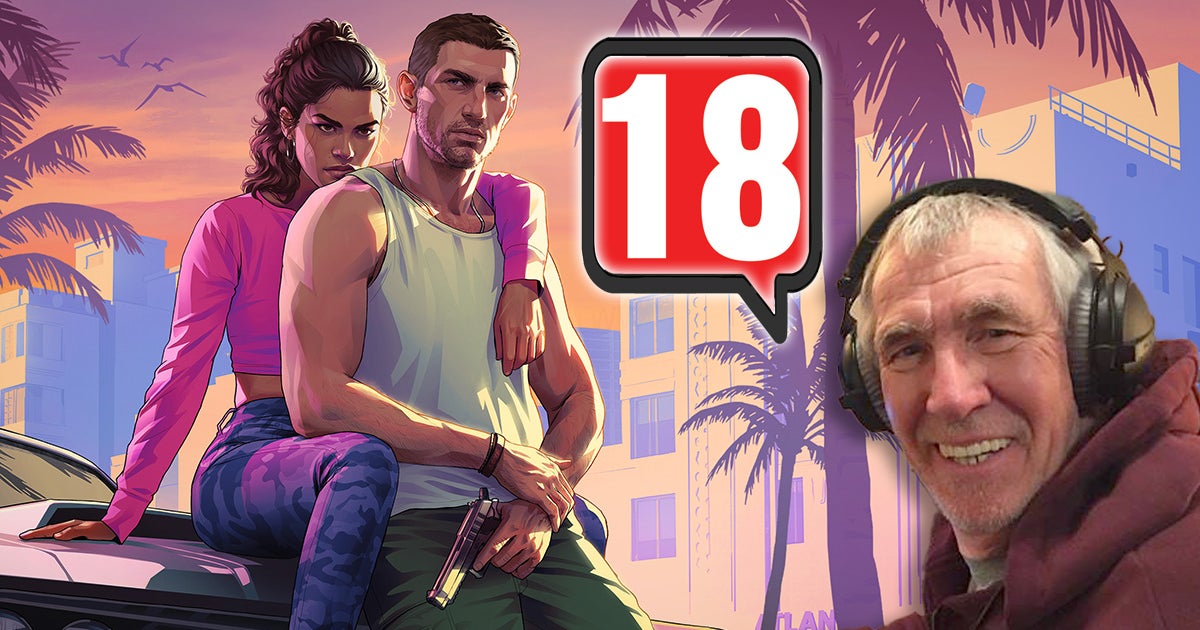
"Let’s be generous and say it took a minute," Wells recalls. For this addition to his day’s work, he was paid a flat fee of €200. At the time, neither Wells nor the studio fully grasped the trajectory of the gaming industry. PEGI, established in 2003 to replace various national age-rating systems with a unified European standard, was still relatively young. Furthermore, the explosion of video-sharing platforms like YouTube and social media sites like TikTok, where game trailers are viewed millions of times daily, was in its infancy.
Wells, who admits he is not a gamer, moved on to his next corporate assignment, unaware that his "PEGI 18" recording was becoming one of the most frequently played audio clips in the world.
The Economics of Voice Acting and Digital Licensing
The revelation that Wells received only €200 for a recording with such immense longevity highlights a recurring issue in the voice acting industry: the "buyout" vs. "residuals" model. In traditional broadcast media, such as television or radio, actors often receive residuals—ongoing payments based on how often and where an advertisement or performance is aired. However, in the realm of corporate work and, historically, in video games, flat-fee buyouts are common.
The PEGI case is unique because of the sheer scale of the exposure. As digital media consumption shifted from television to the internet, the "usage" of the 2009 recording expanded exponentially. Wells’ TikTok success prompted him to question whether a €200 fee was equitable for "hundreds of millions of exposures."
Because Wells lives in Belgium, he was unable to monetize his viral TikTok video through the platform’s Creator Rewards Program, which is restricted to specific regions. This left him with only one avenue for recourse: contacting PEGI directly.
Official Response and the Path to Resolution
The Games Rating Authority, which administers PEGI ratings in the UK, initially directed inquiries to the central PEGI organization. Dirk Bosmans, the Director General of PEGI, eventually addressed the situation, clarifying that the organization had not dealt with Wells directly in 2009 but had instead gone through a voice agency.
"We were totally unaware of this," Bosmans stated, referring to Wells’ identity and his dissatisfaction with the original payment. "There was no insidious plan to get away with a freebie. We didn’t know that YouTube would take off like it did… We were thinking cinema ads and that sort of thing."
In mid-2024, PEGI and Wells reached a new agreement. While the specific financial details remain confidential, Wells described the sum as a "modest" buyout that served as a gesture of goodwill from the organization. In exchange, PEGI now holds the total usage rights to the 2009 recordings for the next 50 years. For Wells, the negotiation provided a sense of closure, even if it did not result in the significant windfall some social media followers had hoped for.

Analysis: The Impact of Global Standardization
The PEGI system currently operates in 38 countries and is used by major console manufacturers (Sony, Microsoft, and Nintendo) and publishers worldwide. The "PEGI 18" tag is not merely a label; it is a legal and regulatory requirement for the sale of software in numerous jurisdictions.
The longevity of Wells’ voice highlights the value of consistency in branding. Much like the "Intel Bong" or the Netflix "Ta-dum" sound, the PEGI vocal tag provides immediate recognition and authority. From a logistical standpoint, re-recording the tag would require updating thousands of assets and risk losing the "familiarity" that Wells’ voice provides. By securing a 50-year buyout, PEGI has ensured that Wells’ 2009 performance will likely remain the standard for the foreseeable future, potentially making it one of the most enduring vocal performances in digital history.
Broader Implications for the Industry
The story of Richard Wells arrives at a pivotal time for the voice acting profession. The industry is currently grappling with the rise of Artificial Intelligence (AI) and the potential for voice cloning, leading to significant labor disputes and strikes by organizations like SAG-AFTRA. Wells’ experience serves as a cautionary tale about the importance of "future-proofing" contracts in an era where technology can amplify a single minute of work into decades of global exposure.
For Wells himself, the experience has been one of unexpected validation. While he continues to audition for character roles in video games—citing a particular interest in "wizard" archetypes—he remains a staple of the Brussels corporate voiceover scene. He expresses a deep sense of fulfillment in his 40-year career, noting that the ability to earn a living doing what one loves is a reward in itself.
A Potential Guinness World Record
As his viral moment settles, Wells is considering a formal application to the Guinness Book of Records. He posits that his "PEGI 18" recording may be the most-heard single vocal recording in human history, given its presence at the start of nearly every major game trailer produced for the European market since 2009.
While such a claim is difficult to quantify with absolute precision, the metrics of the modern gaming industry support his theory. With global gaming audiences numbering in the billions and trailers for titles like Grand Theft Auto, Call of Duty, and Assassin’s Creed garnering hundreds of millions of views each, the cumulative reach of Wells’ voice is undeniably vast.
Richard Wells may have started his career in the offices of global advertising firms, but he has ended up as an accidental icon of the digital age. His story remains a testament to the hidden voices that shape our cultural experiences and a reminder of the evolving relationship between creators and the platforms that distribute their work. Regardless of the final tally of his earnings, Wells has secured a permanent, if invisible, place in the history of interactive entertainment.