Evan Lee Salim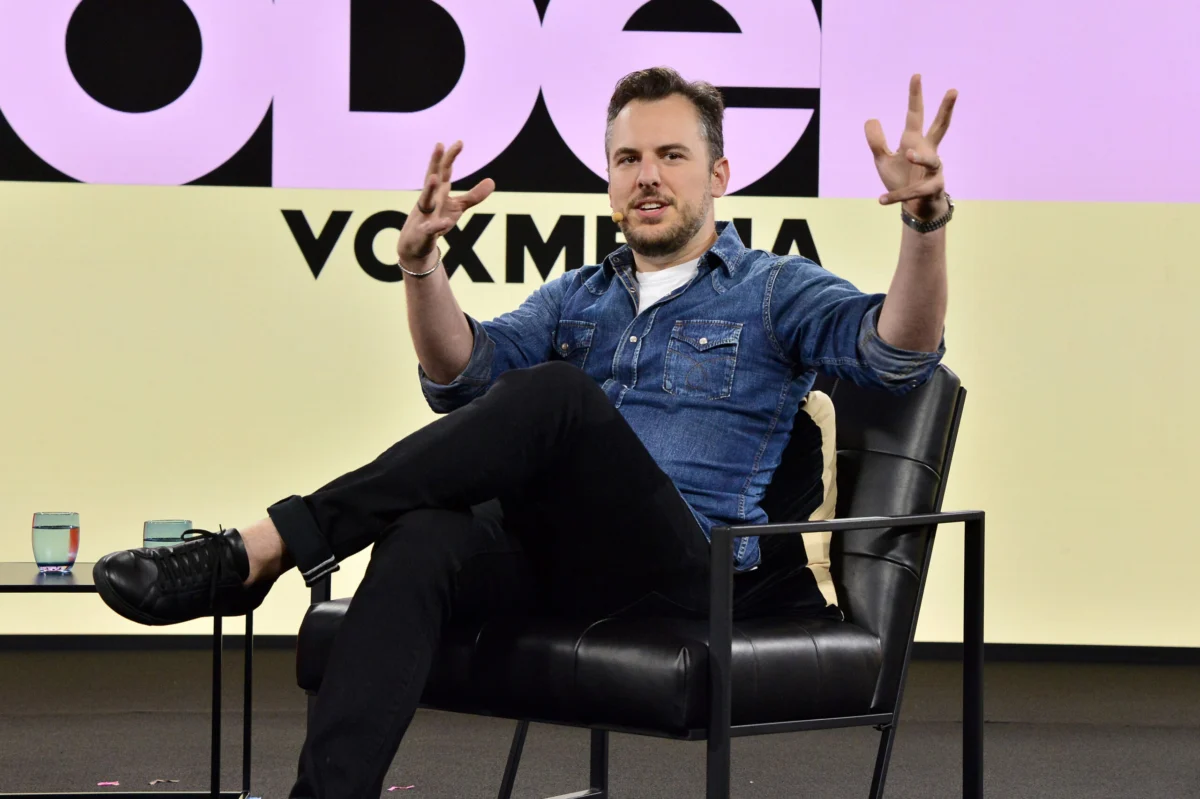
The technology landscape was abuzz on April 14, 2026, following the immediate resignation of Mike Krieger, Chief Product Officer at frontier artificial intelligence lab Anthropic, from the board of directors of Figma, the prominent interface design company. This high-profile departure, formally disclosed to the U.S. Securities and Exchange Commission (SEC) by the publicly traded company valued at approximately $10 billion, coincided with a critical report from The Information revealing that Anthropic’s upcoming large language model, Opus 4.7, is poised to incorporate advanced design tools potentially competitive with Figma’s core offerings. The confluence of these events has reignited intense discussions among investors and industry analysts regarding the "SAASpocalypse" — the escalating fear that powerful, generalist AI models developed by leading AI labs could increasingly subsume or even render obsolete many specialized software-as-a-service (SaaS) applications, fundamentally reshaping the software industry’s future.
The Resignation and its Strategic Timing
Mike Krieger’s decision to step down from Figma’s board, after serving for less than a year, was not an isolated incident but rather a strategically timed move that immediately drew scrutiny. The disclosure of his resignation on April 14, 2026, the same day The Information’s exclusive report detailed Anthropic’s plans for Opus 4.7, strongly suggests a direct conflict of interest arising from his dual roles. As Anthropic’s Chief Product Officer since 2024, Krieger is intimately involved in the development and strategic direction of Anthropic’s AI products, including the potentially disruptive design functionalities within Opus 4.7. Remaining on the board of Figma, a company that could soon find itself in direct competition with Anthropic’s expanded offerings, would have presented an untenable position, raising concerns about fiduciary duty and proprietary information. While no official statements explicitly linked the two events from either company, the timing speaks volumes about the accelerating pace of AI development and its immediate impact on corporate governance and competitive dynamics.
Mike Krieger: A Legacy of Innovation and Disruption
To fully grasp the significance of Krieger’s move, it’s essential to understand his formidable background and influence within the tech ecosystem. Mike Krieger is widely recognized as a co-founder of Instagram, the immensely popular photo and video sharing social networking service acquired by Facebook in 2012 for approximately $1 billion. His work on Instagram cemented his reputation as a visionary product leader with a keen understanding of user experience and scalable platform development. Following his tenure at Instagram, Krieger ventured into new territory, co-founding Artifact, an AI-powered news aggregation application. Artifact aimed to leverage AI to personalize news consumption, demonstrating Krieger’s early and sustained interest in artificial intelligence’s potential to transform digital experiences. His transition to Anthropic in 2024 as Chief Product Officer marked a pivotal shift towards the core development of foundational AI models, placing him at the vanguard of one of the most transformative technological shifts of our era. His appointment at Anthropic, a company co-founded by former OpenAI researchers with a strong emphasis on AI safety and constitutional AI, underscored the industry’s recognition of his product acumen. His subsequent joining of Figma’s board further highlighted his broad influence across the software and design sectors, a position now relinquished due to the evolving competitive landscape.
Figma: A Cornerstone of Modern Design
Figma stands as a preeminent force in the world of user experience (UX) and user interface (UI) design. Launched in 2016, it quickly gained widespread adoption due to its browser-based, collaborative nature, enabling multiple designers to work simultaneously on the same project in real-time. This collaborative capability revolutionized how design teams operate, moving away from traditional desktop-bound software to a more agile, cloud-native workflow. Figma’s popularity extends across startups, large enterprises, and independent designers, making it an indispensable tool for building interfaces for websites, mobile applications, and various digital products. The company’s valuation, hovering around $10 billion and a target of a failed acquisition by Adobe for $20 billion in 2022 due to regulatory concerns, attests to its critical market position and significant technological prowess.
Prior to Krieger’s resignation, Figma had actively embraced AI integration, recognizing its potential to enhance designer workflows rather than replace them. The company had, in fact, collaborated closely with Anthropic, exploring ways to embed the frontier lab’s advanced AI models into its products. These integrations were envisioned as intelligent assistants, streamlining repetitive tasks, generating design variations, and providing contextual suggestions to users, thereby augmenting human creativity and efficiency. This collaborative spirit now faces a potential shift as Anthropic moves towards developing its own design-centric AI capabilities, raising questions about the future dynamic between a leading AI infrastructure provider and a key application layer built atop such technologies.
Anthropic’s Ambitious Expansion: The Dawn of Opus 4.7
Anthropic, known for its Claude series of large language models, has rapidly ascended to become one of the most formidable players in the AI research and development space. With a strong commitment to developing safe and beneficial AI, Anthropic has attracted significant investment, recently reportedly turning down investor offers valuing the company at an astonishing $800 billion – more than double its valuation from its most recent funding round at the beginning of the year. This valuation trajectory underscores the immense confidence investors place in Anthropic’s potential to drive future technological innovation.
The impending release of Opus 4.7, Anthropic’s next-generation model, signals a strategic pivot beyond pure language generation towards more specialized, application-layer functionalities. The reported inclusion of "design tools" within Opus 4.7 marks a significant expansion of Anthropic’s product strategy. While specific details about these tools remain under wraps, industry analysts speculate they could range from AI-powered design generators capable of creating initial wireframes or mockups from text prompts, to intelligent assistants that automate UI component creation, suggest design system adherence, or even offer accessibility checks. Such capabilities, if robust and user-friendly, would directly address a segment of the market currently dominated by specialized design software like Figma. This move represents a broader trend among leading AI labs, including OpenAI, to move up the value chain, transforming their foundational models into more comprehensive, end-to-end solutions that could directly compete with existing software categories.

The SAASpocalypse Thesis: A Market Under Siege?
Krieger’s departure and Anthropic’s foray into design tools serve as another potent data point fueling the "SAASpocalypse" narrative that has intermittently rattled public markets throughout the year. The SAASpocalypse thesis posits that as large AI models become increasingly capable and multimodal, they will absorb functionalities traditionally provided by numerous specialized SaaS applications. Instead of subscribing to multiple niche tools for tasks like writing, coding, image generation, or, now, design, users might turn to a single, powerful AI platform that can perform these diverse functions with comparable or superior efficiency.
This fear has tangible effects on investor confidence. The iShares primary software ETF, IGV, which tracks a broad basket of software companies, has experienced a decline of nearly 18% this year. This downturn reflects a broader investor re-evaluation of SaaS companies, particularly those whose core functionalities are perceived as easily replicable by advanced AI. Companies that once commanded high valuations based on recurring revenue and specialized features are now facing questions about their long-term defensibility against the accelerating capabilities of AI. While no one expects an overnight demise of all SaaS, the threat of commoditization and direct competition from AI giants is a significant factor in current market sentiment.
Market Reactions and Investor Sentiment
The immediate aftermath of Krieger’s resignation and the Opus 4.7 news saw a mixed but notable market reaction. Figma’s stock price, surprisingly, experienced an increase of 5% since the disclosure of Krieger’s departure. This could be interpreted in several ways: perhaps investors view the departure as a clean break, removing a potential conflict of interest and allowing Figma to focus squarely on its competitive strategy. Alternatively, it might reflect a belief that Figma’s entrenched position, strong community, and unique collaborative features offer sufficient resilience against emerging AI competitors, at least in the short term. It could also be a "buy the dip" mentality from investors who believe the fears are overblown or that Figma will successfully integrate or adapt to the AI paradigm.
Conversely, Anthropic’s soaring valuation, with investors reportedly eager to buy into the company at an $800 billion valuation, illustrates the immense optimism surrounding foundational AI companies. This bifurcated market reaction highlights the central tension in the current tech landscape: a re-allocation of capital and confidence from traditional SaaS providers to the foundational AI layers. However, as the article notes, companies like Anthropic and OpenAI still face the formidable challenge of proving that their ultra-capable models can truly replicate the deep domain expertise, intricate user workflows, and established relationships that specialized software brands like Figma have cultivated over years. The "Opus 4.7 release" will be a critical litmus test for this thesis, demonstrating the practical capabilities and market reception of AI-native design tools.
The Future of AI in Design: Collaboration or Competition?
The unfolding scenario between Anthropic and Figma encapsulates a broader existential question for the entire software industry: will AI primarily act as an augmentative force, enhancing existing tools and workflows, or will it be a disruptive one, creating entirely new paradigms that render older ones obsolete?
For specialized design tools like Figma, the path forward likely involves a multi-pronged strategy. Firstly, continued innovation in their core collaborative features, community building, and integration with a wide ecosystem of plugins and services remains paramount. These elements constitute a significant moat that pure AI models may find challenging to replicate quickly. Secondly, Figma could double down on its own AI integrations, potentially leveraging Anthropic’s models or those from other providers, to maintain its position at the forefront of AI-assisted design. The key would be to ensure these AI features genuinely enhance the designer’s experience, providing true creative leverage rather than just automating away jobs.
For AI labs like Anthropic, the move into application layers like design tools represents a natural progression. By demonstrating the practical utility of their foundational models in specific, high-value domains, they can capture more of the market value and accelerate adoption. Their challenge will be to translate raw AI capability into polished, intuitive, and feature-rich products that meet the complex demands of professional designers, a field known for its nuanced requirements and established workflows.
Ultimately, the future may not be an either/or scenario but rather a dynamic interplay of collaboration and competition. Hybrid models, where specialized SaaS applications deeply integrate powerful AI capabilities, could emerge as the dominant force. However, the rise of powerful, generalist AI models undoubtedly places immense pressure on niche software providers to innovate rapidly, redefine their value propositions, and prove their indispensable relevance in an increasingly AI-driven world. Mike Krieger’s calculated departure from Figma’s board marks a symbolic moment in this ongoing transformation, signaling a new era where the lines between AI infrastructure and application software are increasingly blurred, and the competitive landscape is more fluid than ever before.