Garick Elordi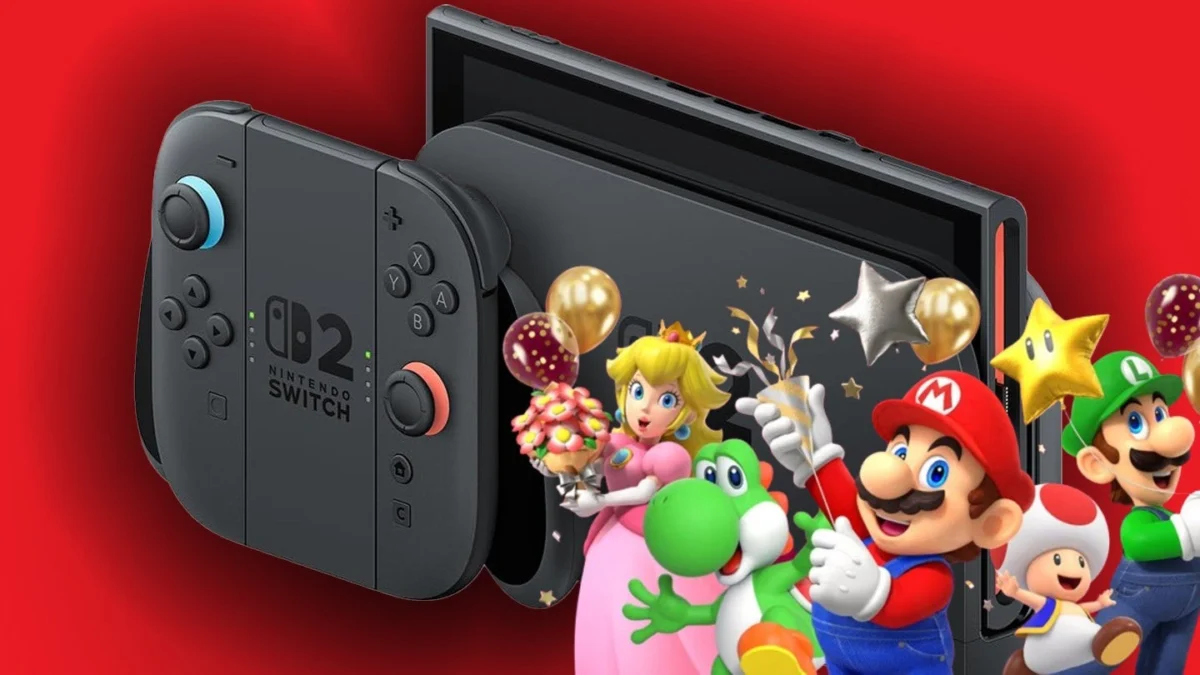
Nintendo has officially confirmed plans to introduce a revised hardware model of its latest console, the Switch 2, specifically for the European market. This new iteration is designed to allow consumers to replace the device’s internal battery without professional assistance, representing a significant shift in the company’s long-standing hardware philosophy. The move is a direct response to evolving legislative frameworks within the European Union, specifically the Right to Repair directive and the European Battery Regulation. These legal mandates require that by 2027, all portable devices featuring rechargeable batteries must be designed in a manner that allows end-users to safely remove and replace power cells using commonly available tools.
As reported by Nikkei and corroborated by industry analysts, this revision will affect not only the main console unit but also the modular Joy-Con controllers. Historically, Nintendo hardware has utilized proprietary screws and internal adhesives that made battery replacement a complex task for the average user, often necessitating professional servicing or the replacement of the entire unit. By transitioning to a modular battery design, Nintendo aims to comply with the EU’s environmental goals while extending the functional lifespan of its hardware. While the European rollout is the immediate priority, the company has indicated that similar design changes could be implemented in the United States and Japan, provided that consumer protection laws in those regions move toward similar standards of repairability.
The Regulatory Framework: Right to Repair and the 2027 Deadline
The impetus for this hardware revision stems from two major pieces of European legislation designed to reduce electronic waste and empower consumers. The European Battery Regulation (Regulation EU 2023/1542), which entered into force in 2023, dictates that by February 2027, batteries in consumer electronics must be "readily removable and replaceable by the end-user." The regulation defines "readily removable" as being able to be taken out with the use of "commercially available tools" and without causing damage to the appliance.
Complementing this is the EU Right to Repair directive, which seeks to make repairs more accessible and affordable. For a company like Nintendo, which operates on a global scale, these regulations present a significant engineering challenge. The original Nintendo Switch, launched in 2017, and its subsequent OLED and Lite models, featured batteries that were nestled deep within the chassis, secured by industrial-grade adhesives and connected via delicate ribbon cables. Adopting a user-replaceable system requires a fundamental redesign of the internal architecture, potentially involving the use of latches, standard Phillips-head screws, or modular battery "cartridges" that do not compromise the device’s structural integrity or its slim profile.
A Chronology of the Switch 2 Launch and Battery Performance
The Switch 2 was released to critical acclaim in June 2025, boasting significantly enhanced graphical capabilities and a robust library of launch titles, including "Mario Kart World" and the high-speed racer "Fast Fusion." However, the console’s reception was partially overshadowed by concerns regarding its energy consumption. Early adopters and technical reviewers noted that the increased processing power required for the console’s advanced chipset led to a noticeable decline in battery longevity compared to the refined Switch OLED model.
In the weeks following the June 2025 launch, user feedback highlighted that demanding titles often depleted the battery in under three hours of handheld play. This "battery bummer," as it was termed in the gaming press, created a surge in demand for portable power banks and raised questions about the long-term health of the internal lithium-ion cells. The upcoming hardware revision is seen as a dual-purpose solution: it addresses the legal requirements of the European market while providing a pathway for heavy users to swap out degraded batteries in the future, thereby maintaining the console’s portability over a multi-year lifecycle.
Technical Enhancements and the Version 22.0.0 Update
Simultaneous with the news of the hardware revision, Nintendo has deployed a major system software update, bringing both the original Switch and the Switch 2 to Version 22.0.0. While the update includes standard stability patches and user interface refinements for the Nintendo eShop, its most significant feature is the introduction of the "Handheld Mode Boost."
This software feature is specifically designed to leverage the superior hardware of the Switch 2 to enhance the performance of legacy Nintendo Switch titles. The Handheld Mode Boost allows older games to run at higher resolutions and more stable frame rates when played on the new hardware, effectively providing an "automatic remaster" for a large portion of the existing library. However, developers have noted that this boost is not universal; certain games with hard-coded frame rate caps or specific engine limitations remain unaffected. This update underscores Nintendo’s commitment to backward compatibility, ensuring that the transition to the Switch 2—and its subsequent battery-replaceable models—remains attractive to the existing player base of over 140 million users.
Implications for Hardware Design and Manufacturing
The shift toward user-replaceable batteries necessitates a departure from the "sleek and sealed" design trend that has dominated the electronics industry for the last decade. Industry experts suggest that Nintendo may look to the design of older handhelds, such as the Nintendo DS or the Game Boy, which featured simple battery compartments. However, modern safety standards and the need for high-capacity lithium-ion batteries make this more complex than simply adding a plastic door.
Nintendo’s engineers must ensure that the new battery compartments do not introduce vulnerabilities to dust or moisture, nor can they allow for the use of uncertified third-party batteries that could pose a fire risk. The Joy-Con controllers, in particular, present a spatial challenge. Given their diminutive size and the inclusion of haptic motors, gyroscopes, and wireless transmitters, finding space for a user-accessible battery latch requires precision engineering. There is speculation that the "EU Model" of the Switch 2 may feature a slightly different weight distribution or chassis thickness to accommodate these mechanical changes.
Global Market Reactions and Future Outlook
While the announced changes are currently specific to Europe, the global gaming community is closely monitoring the situation. In the United States, several states, including California, New York, and Minnesota, have passed their own versions of Right to Repair laws. If these state-level mandates align with the EU’s strict battery requirements, Nintendo may find it more cost-effective to unify its global manufacturing pipeline under the new "repair-friendly" design rather than maintaining two separate production lines.
Consumer advocacy groups, such as iFixit, have cautiously praised the move. "Nintendo has historically been one of the more difficult companies to work with regarding independent repair," a spokesperson for the group stated. "Seeing a major manufacturer adapt their flagship hardware to meet repairability standards is a win for consumers and the environment. We hope this becomes the new standard, not just a regional exception."
Conversely, some industry analysts worry that the cost of redesigning the hardware and the potential for increased warranty claims—stemming from users improperly installing batteries—could lead to a slight increase in the retail price of the console in affected regions. Nintendo has not yet provided a specific release date or pricing for the new model, but it is expected to hit European shelves well before the 2027 deadline.
Environmental Impact and the Circular Economy
Beyond consumer convenience, the move is a cornerstone of the EU’s "Circular Economy Action Plan." By making batteries replaceable, Nintendo is helping to curb the growing problem of e-waste. Lithium-ion batteries are often the first component to fail in a mobile device; when they are non-replaceable, the entire device is frequently discarded. By allowing the battery to be treated as a consumable part rather than a permanent fixture, the functional life of the Switch 2 could potentially extend into the next decade.
This strategy aligns with Nintendo’s broader corporate social responsibility goals, which have increasingly focused on sustainability. As the gaming industry continues to face scrutiny over its environmental footprint—ranging from the energy consumption of data centers to the plastic used in physical cartridges—the move toward modular, repairable hardware represents a tangible step toward a more sustainable business model.
In summary, the upcoming Switch 2 hardware revision in Europe is more than a simple technical tweak; it is a significant pivot in response to a changing global regulatory landscape. By balancing high-performance gaming with consumer-led repairability, Nintendo is setting a precedent that may soon become the industry standard for the next generation of interactive entertainment.