George Chandra Eka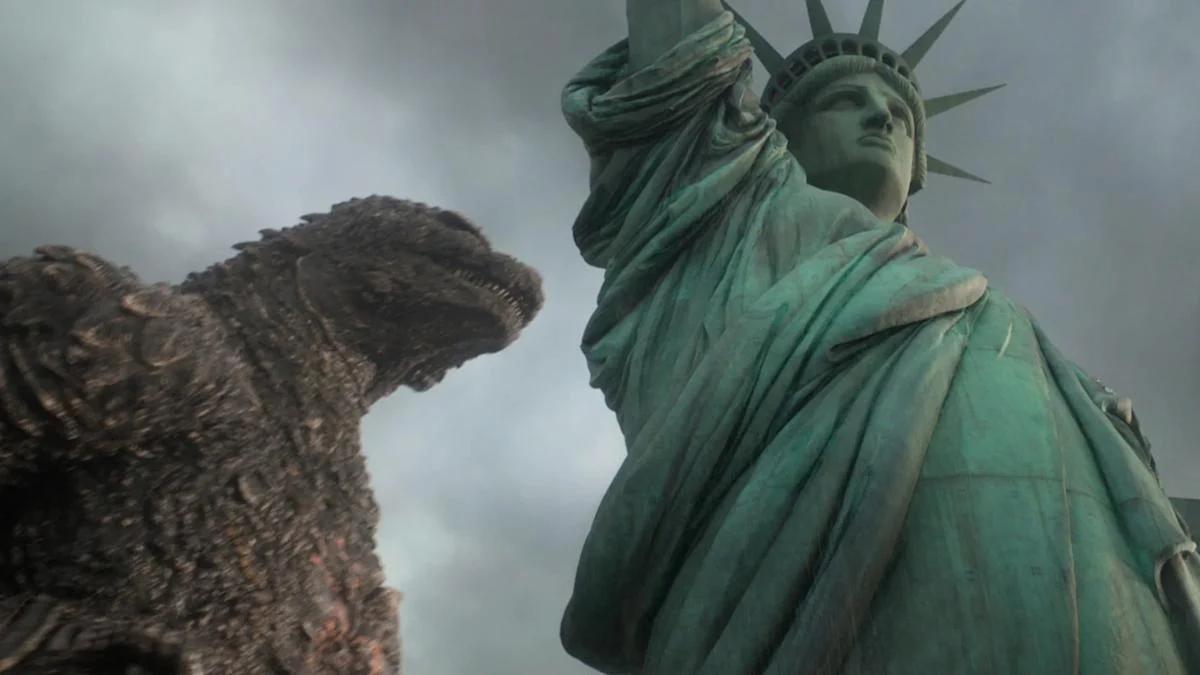
Japanese entertainment conglomerate Toho Co., Ltd. has officially launched the highly anticipated teaser video for Godzilla Minus Zero, marking the impending cinematic return of the iconic kaiju in a direct sequel to the critically acclaimed and Oscar-winning film, Godzilla Minus One. The newly released footage offers a glimpse into a dramatically expanded narrative, prominently featuring the colossal monster in a destructive rampage across New York City, notably positioned alongside the historic Statue of Liberty. This strategic reveal immediately signals a significant shift in the geographical scope of Godzilla’s devastation, moving beyond the post-war Japan depicted in its predecessor to an international stage.
Set in the tumultuous year of 1949, Godzilla Minus Zero is positioned chronologically two years after the harrowing events that unfolded in Godzilla Minus One. This precise temporal placement establishes a clear narrative continuity, allowing for the exploration of the lingering aftermath and the evolving threats in a world still grappling with the scars of conflict. The teaser further confirms the return of familiar faces, much to the delight of fans. Koichi Shikishima and Noriko Oishi, two of the central protagonists whose personal struggles and resilience formed the emotional core of the first film, are slated to reprise their roles. Their reintroduction suggests a deeper dive into their post-trauma lives and their continued entanglement with the monstrous force that reshaped their world.
The Legacy of Godzilla Minus One and Setting the Bar High
The announcement of Godzilla Minus Zero arrives with immense global anticipation, largely fueled by the unprecedented success and critical adulation garnered by Godzilla Minus One. Released in late 2023, Godzilla Minus One transcended typical genre expectations, achieving widespread acclaim for its profound thematic depth, compelling human drama, and groundbreaking visual effects, all delivered on a comparatively modest budget. The film garnered an impressive worldwide box office total exceeding $115 million, a remarkable feat for a non-English language film, especially considering its budget was reportedly around $15 million. In the United States alone, it became the highest-grossing Japanese film of all time, surpassing $56 million, and earned the distinction of being the first non-English film since 2004 to top the U.S. weekend box office.
The crowning achievement for Godzilla Minus One came at the 96th Academy Awards, where it secured the Oscar for Best Visual Effects. This historic win marked the first time a non-English language film had ever received the award in this category, and it was also the first Academy Award win for the entire Godzilla franchise in its nearly 70-year history. The film triumphed over formidable Hollywood productions with significantly larger budgets, including Guardians of the Galaxy Vol. 3, Mission: Impossible – Dead Reckoning Part One, Napoleon, and The Creator. This victory was not merely an accolade for Toho but a significant global recognition for Japanese filmmaking prowess in the realm of visual effects, demonstrating that ingenuity and artistic vision could compete with, and even surpass, productions with vastly greater financial resources.
The success of Godzilla Minus One was attributed to director Takashi Yamazaki’s meticulous approach, which blended the spectacle of kaiju destruction with a poignant narrative rooted in Japan’s post-World War II trauma. The film effectively explored themes of survivor’s guilt, collective responsibility, and the indomitable human spirit in the face of overwhelming odds. The kaiju itself served as a powerful metaphor for the atomic bomb and the lingering anxieties of a nation devastated by war. This thematic richness, coupled with its technical brilliance, resonated deeply with both critics and audiences, setting an exceptionally high benchmark for its successor.
Technical Ambition: Tailored for the Immersive Experience
Consistent with its predecessor’s commitment to cinematic excellence, Godzilla Minus Zero has been specifically filmed for the IMAX format, utilizing high-definition digital cameras to capture every detail of its grand-scale destruction. This strategic choice underscores Toho’s dedication to providing an unparalleled immersive viewing experience. IMAX cinematography involves specialized cameras and a larger film format, designed to maximize resolution, clarity, and the field of view, thereby pulling audiences deeper into the on-screen action. The use of HD digital cameras ensures that the visual fidelity is pristine, capable of rendering Godzilla’s formidable presence and the widespread devastation with breathtaking realism.
Furthermore, the audio for Godzilla Minus Zero has been meticulously optimized for the massive screen’s immersive cinema experience. IMAX sound systems are engineered to deliver a powerful, multi-channel audio landscape, enveloping the audience in precise, high-fidelity sound. This optimization is crucial for a kaiju film, where Godzilla’s iconic roar, the thunderous impact of its footsteps, and the cacophony of crumbling infrastructure are integral to the visceral experience. The combination of enhanced visuals and optimized audio aims to replicate, and potentially surpass, the sensory impact that Godzilla Minus One delivered, pushing the boundaries of what a kaiju film can achieve in terms of audience engagement.
The decision to return with Takashi Yamazaki at the helm for Godzilla Minus Zero provides a strong foundation for maintaining the quality and vision established by its predecessor. Yamazaki, who not only directed but also wrote the screenplay and oversaw the visual effects for Godzilla Minus One, is celebrated for his holistic approach to filmmaking. His continued involvement ensures a consistent creative voice across all crucial aspects of the production, from narrative development to the intricate crafting of the visual spectacle. This continuity is a significant factor in building confidence among fans and critics that the sequel will uphold the high standards set by the Oscar-winning film.
Chronology and Narrative Expansion
The announcement places Godzilla Minus Zero in 1949, two years after the events of Godzilla Minus One, which concluded in a Japan reeling from both the war and Godzilla’s initial assault. This period of reconstruction and recovery in Japan would have been incredibly fragile, and the emergence of Godzilla would have compounded the existential dread. The 1949 setting for the sequel suggests that humanity, particularly the Japanese protagonists, would have had some time to process the initial trauma, only to be confronted by a renewed, and potentially more powerful, threat.
The global shift in setting, with Godzilla attacking New York and menacing the Statue of Liberty, signifies a significant escalation. In Godzilla Minus One, the monster was a localized, albeit devastating, threat to a specific, vulnerable nation. By bringing Godzilla to an international symbol like the Statue of Liberty, Godzilla Minus Zero broadens the scope of its terror, implying a global awareness of the kaiju and potentially the involvement of international forces in combating it. This expansion also aligns with the broader historical context of the post-WWII era, where geopolitical dynamics were rapidly shifting, and the United States was emerging as a dominant global power. The presence of Koichi Shikishima and Noriko Oishi in this new international context raises questions about how they find themselves in New York and what role they will play in the escalating crisis. Their journey from a war-torn Japan to an America experiencing its own form of post-war prosperity, only to face the same monstrous threat, could offer a compelling narrative arc exploring the universality of trauma and resilience.
The Enduring Legacy of Godzilla and Toho’s Vision
The Godzilla franchise, originating with Ishirō Honda’s seminal 1954 film, has consistently served as a cinematic mirror reflecting societal anxieties. The original Godzilla was a powerful allegory for the nuclear age and the trauma of Hiroshima and Nagasaki. Over its nearly seven-decade history, Toho has produced numerous iterations of the kaiju, exploring various themes and tones across different eras – from the more fantastical Showa era to the darker, more serious Heisei and Millennium series, and the recent Reiwa era, which includes Shin Godzilla and the Minus One series.
Godzilla Minus One marked a significant return to the character’s roots as a terrifying, unstoppable force of nature, devoid of the more anthropomorphic or heroic traits sometimes attributed to it in other interpretations. Yamazaki’s vision deliberately stripped away elements of previous films, focusing on the sheer terror and the human cost of such an encounter. The success of this approach has revitalized interest in the Toho-produced Godzilla films, distinct from the parallel "MonsterVerse" franchise produced by Legendary Pictures in Hollywood. Toho’s commitment to its own distinct narrative universe for Godzilla underscores its strategic importance to the company’s entertainment portfolio.
The decision to greenlight Godzilla Minus Zero so swiftly after the Oscar win for Minus One indicates Toho’s confidence in Yamazaki’s creative team and the renewed global appetite for their specific take on the kaiju. It also suggests a strategic pivot towards building a more cohesive and critically acclaimed cinematic universe for Godzilla under Toho’s direct creative control, potentially setting a new standard for independent, high-quality genre filmmaking.
Anticipation and Broader Implications
Industry analysts are closely watching the performance of Godzilla Minus Zero. Following an Oscar win, expectations for a sequel are inherently magnified. The pressure to deliver a film that not only meets but potentially exceeds the artistic and technical achievements of its predecessor is immense. However, the consistent involvement of Takashi Yamazaki in multiple key roles provides a strong sense of creative stability, mitigating some of these pressures. His proven ability to craft a compelling narrative alongside breathtaking visual effects, even with budgetary constraints compared to Hollywood blockbusters, bodes well for the sequel.
The staggered release dates – November 3 in Japan and November 6 in the United States – reflect a deliberate and optimized distribution strategy. Releasing in Japan first allows for an initial wave of domestic critical and audience feedback, which can then be leveraged for the subsequent international rollout. The rapid follow-up in the U.S. demonstrates Toho’s intent to capitalize on the momentum generated by Minus One‘s success and the recent Academy Award buzz. This global approach is crucial for maximizing box office revenue and reinforcing Godzilla’s status as a globally recognized and beloved cinematic icon.
The implications of Godzilla Minus Zero‘s success extend beyond Toho. It could further solidify the global market for high-quality Japanese genre films, particularly those with strong narrative foundations and innovative visual effects. The Minus One phenomenon has already inspired renewed interest in Japanese filmmaking techniques and storytelling. A successful Minus Zero would reinforce the idea that original, character-driven narratives, even within the context of a monster movie, can achieve universal appeal and critical recognition. It also serves as a testament to the enduring power of the kaiju genre and its capacity for allegorical storytelling in contemporary cinema.
In conclusion, Godzilla Minus Zero is poised to be more than just a sequel; it is a continuation of a cinematic phenomenon that redefined expectations for the iconic monster. With its expansion to an international setting, the return of beloved characters, and the consistent creative vision of Takashi Yamazaki, the film carries the weight of an Oscar-winning legacy. As the release dates approach in November, the global cinematic community eagerly awaits to witness whether Toho’s latest kaiju epic can once again transcend boundaries and deliver another unforgettable experience.