Sisilia Frederika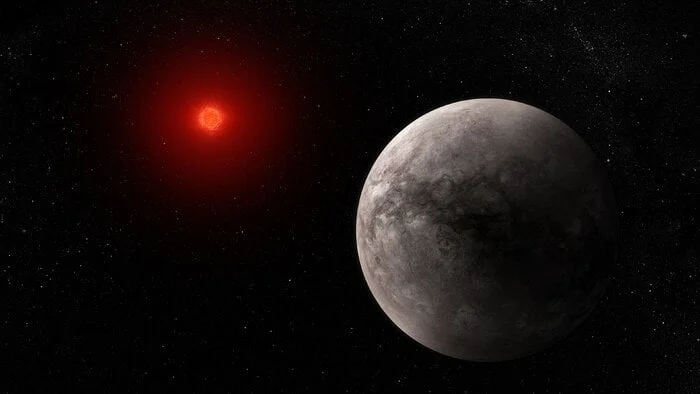
The search for life beyond our solar system has long centered on the detection of oxygen in the atmospheres of distant exoplanets. On Earth, the presence of molecular oxygen ($O_2$) is a direct consequence of biological activity—specifically, oxygenic photosynthesis. For decades, the prevailing logic in astrobiology was that a significant oxygen signal in an alien atmosphere would serve as a "smoking gun" for the presence of life. However, recent advancements in atmospheric modeling have revealed that oxygen can be produced by purely chemical, non-biological processes, leading to "false positives" that could mislead astronomers. A groundbreaking new study, authored by Margaret Turcotte Seavey and a collaborative team from the NASA Goddard Space Flight Center and Johns Hopkins University, suggests that water vapor may be the critical missing link in distinguishing between a lifeless rock and a thriving biosphere.
Published as a pre-print on the arXiv repository, the research titled "Oxygenated False Positive Biosignatures in Mars-like Exoplanet Atmospheres" provides a more nuanced framework for interpreting atmospheric data. The study demonstrates that while desiccated (dry) planets can accumulate massive amounts of abiotic oxygen, the presence of even a small amount of water vapor triggers chemical reactions that suppress these levels. This finding suggests that if future telescopes detect a planet with both high oxygen levels and significant water vapor, the likelihood of a biological origin increases exponentially.
The Evolution of the Oxygen False Positive Theory
The inspiration for Seavey’s research dates back to a seminal study published in 2015 by Peter Gao and colleagues in the Astrophysical Journal. Gao’s work challenged the status quo by demonstrating that planets orbiting M-dwarf stars—the most common type of star in the Milky Way—could possess oxygen-rich atmospheres without any life whatsoever.
M-dwarf stars, also known as red dwarfs, are smaller and cooler than our Sun but are prone to intense ultraviolet (UV) activity, especially in their youth. Gao’s model focused on "desiccated" planets—worlds that have lost their water or were born without it. These planets often possess atmospheres dominated by carbon dioxide ($CO_2$). Through a process known as photolysis, high-energy UV light from the host star breaks $CO_2$ molecules apart into carbon monoxide ($CO$) and atomic oxygen ($O$). In a dry environment, these oxygen atoms eventually combine to form molecular oxygen ($O_2$).
Gao’s 2015 findings were sobering for the scientific community: they suggested that a lifeless planet could develop an atmosphere with oxygen levels rivaling Earth’s 21% concentration. This established a major hurdle for the upcoming generation of space telescopes, as it meant that simply finding oxygen would not be enough to confirm the existence of alien life.
Methodology: The "Atmos" Photochemical-Climate Model
To build upon Gao’s findings, Seavey and her team utilized "Atmos," a sophisticated one-dimensional photochemical-climate model designed to simulate the complex interactions between light, chemistry, and temperature in planetary atmospheres. The team sought to determine how the introduction of water vapor would alter the abiotic oxygen production chain that Gao had identified.
The researchers simulated a rocky planet roughly the size of Mars, characterized by a 1-bar surface pressure atmosphere composed primarily of $CO_2$. This world was modeled to orbit a typical M-dwarf star, subjecting it to the specific UV radiation profiles associated with such stars. The defining variable in their simulation was the "mixing ratio" of water vapor—essentially, how much water was present in the atmosphere relative to other gases.
The simulations covered a wide spectrum of humidity levels, ranging from almost completely dry environments to those with significant moisture content. By isolating the impact of water, the researchers could observe how the chemical equilibrium of the atmosphere shifted in real-time under the influence of stellar radiation.
The Catalytic Suppression of Abiotic Oxygen
The results of the Seavey study provide a stark contrast to the 2015 findings. In every scenario where water vapor was present, the maximum abundance of oxygen reached only 2.7%. This represents a nearly 90% decrease compared to the oxygen levels predicted for dry planets in previous models.
The reason for this dramatic reduction lies in the chemical behavior of the hydroxyl (OH) radical. Just as UV light breaks down $CO_2$, it also breaks down water vapor ($H_2O$) through photolysis, resulting in free hydrogen atoms and OH radicals. These radicals are highly reactive and act as a catalyst in a recycling process.
In a moist atmosphere, the OH radicals facilitate the recombination of carbon monoxide and atomic oxygen back into carbon dioxide ($CO + OH rightarrow CO_2 + H$). Because the OH radical is regenerated in subsequent reactions, it can continuously drive this cycle, effectively "cleaning" the atmosphere of free oxygen. In the absence of water, there is no OH radical to facilitate this recombination, allowing $O_2$ to accumulate unchecked.
This discovery significantly narrows the window for "false positive" oxygen detections. It suggests that high levels of abiotic oxygen are only sustainable on exceptionally dry planets. Consequently, a "wet" planet with high oxygen levels becomes a much more credible candidate for harboring life, as the abiotic pathways to oxygen production are naturally throttled by the water-driven chemistry.
Chronology of Exoplanetary Atmosphere Research
The transition from theoretical modeling to observational science has accelerated over the last decade. The timeline of these developments highlights the increasing complexity of the search for life:
- 2000s–Early 2010s: Early exoplanet research focuses on discovery and radius/mass measurements. Oxygen is generally accepted as a primary biosignature.
- 2015: Peter Gao and others publish papers highlighting the risk of abiotic oxygen production around M-dwarfs, introducing the concept of the "false positive."
- 2018–2021: The launch and deployment of the James Webb Space Telescope (JWST) shifts focus toward atmospheric characterization. Scientists begin to realize that $CO_2$ and $CH_4$ (methane) may be easier to detect than $O_2$ in the near term.
- 2024: The Seavey et al. paper refines the biosignature criteria, demonstrating that water vapor acts as a natural filter for abiotic oxygen, thereby reinstating oxygen as a high-confidence biosignature when found in tandem with $H_2O$.
- 2030s–2040s (Projected): Future flagship missions like the Habitable Worlds Observatory (HWO) and the Large Interferometer for Exoplanets (LIFE) are expected to provide the high-resolution data needed to apply Seavey’s findings.
Implications for Future Space Missions
The findings from Seavey and her team are particularly timely as NASA and international space agencies define the technical requirements for the next generation of "Great Observatories."
The Habitable Worlds Observatory (HWO), a mission recommended by the 2020 Decadal Survey on Astronomy and Astrophysics, is being designed specifically to identify and characterize at least 25 Earth-like planets in the habitable zones of their host stars. To do this, the HWO will require a large-aperture telescope and a sophisticated coronagraph to block out the light of the host star, allowing the faint light of the planet to be analyzed via spectroscopy.
Seavey’s research underscores the necessity of multi-wavelength spectroscopy. To truly validate a planet as "living," an observatory must be able to detect not just the spectral lines of oxygen, but also those of water vapor and carbon dioxide. If an observatory only looks for oxygen, it risks flagging a desiccated, lifeless rock as a habitable world. By ensuring that future telescopes have the sensitivity to detect water vapor, scientists can effectively rule out the abiotic "false positive" scenarios described by Gao.
Furthermore, the LIFE (Large Interferometer for Exoplanets) mission, a proposed European Space Agency (ESA) project, aims to observe exoplanets in the mid-infrared spectrum. This spectral range is ideal for detecting a suite of gases including $O_3$ (ozone), $CH_4$, and $H_2O$. The Seavey model provides a critical benchmark for the LIFE mission’s data interpretation algorithms, helping researchers prioritize which "oxygen-rich" candidates deserve follow-up observations.
Scientific Analysis: Refining the Biosignature Search
The broader implication of this research is a shift from "single-molecule" biosignatures to "atmospheric context" biosignatures. The scientific community is moving away from the idea that any one gas can be an absolute proof of life. Instead, the focus is now on chemical "disequilibrium."
On Earth, oxygen and methane exist together in the atmosphere despite the fact that they react with one another. Their coexistence is a sign of disequilibrium, maintained only because life constantly replenishes both gases. Seavey’s work adds another layer to this: the coexistence of oxygen and water vapor in a $CO_2$-rich atmosphere is a state of "suppressed abiotic potential." If oxygen is found in high quantities despite the presence of water (which should be suppressing it), it implies an extremely powerful source of $O_2$ production—most likely a biological one.
This research also highlights the unique challenges of M-dwarf systems. Because M-dwarfs are the most common stars and are easier to observe, they remain the primary targets for the search for life. However, their high UV output and the tidal locking of their planets (where one side always faces the star) create exotic chemical environments that do not exist in our solar system. Models like "Atmos" are essential for navigating these alien chemistries.
Conclusion: Ensuring the "Real Deal"
As humanity stands on the precipice of potentially discovering life elsewhere in the universe, the stakes for scientific accuracy have never been higher. A false positive detection would be one of the greatest errors in scientific history, while a missed detection would be a profound lost opportunity.
The work of Margaret Turcotte Seavey and her colleagues provides a vital safeguard. By identifying the role of water vapor as a catalyst for carbon dioxide reformation, they have given astrobiologists a more robust tool for vetting potential biosignatures. The takeaway is clear: the search for life is not just a search for oxygen, but a search for a complex, interactive chemical system. When future telescopes finally peer into the atmospheres of distant Earth-like worlds, they will be looking for the combined signature of oxygen and water—the twin pillars of a living world. Through this rigorous modeling, scientists are ensuring that when they finally announce the discovery of life among the stars, they can do so with the confidence that it is, indeed, the real deal.