Sisilia Frederika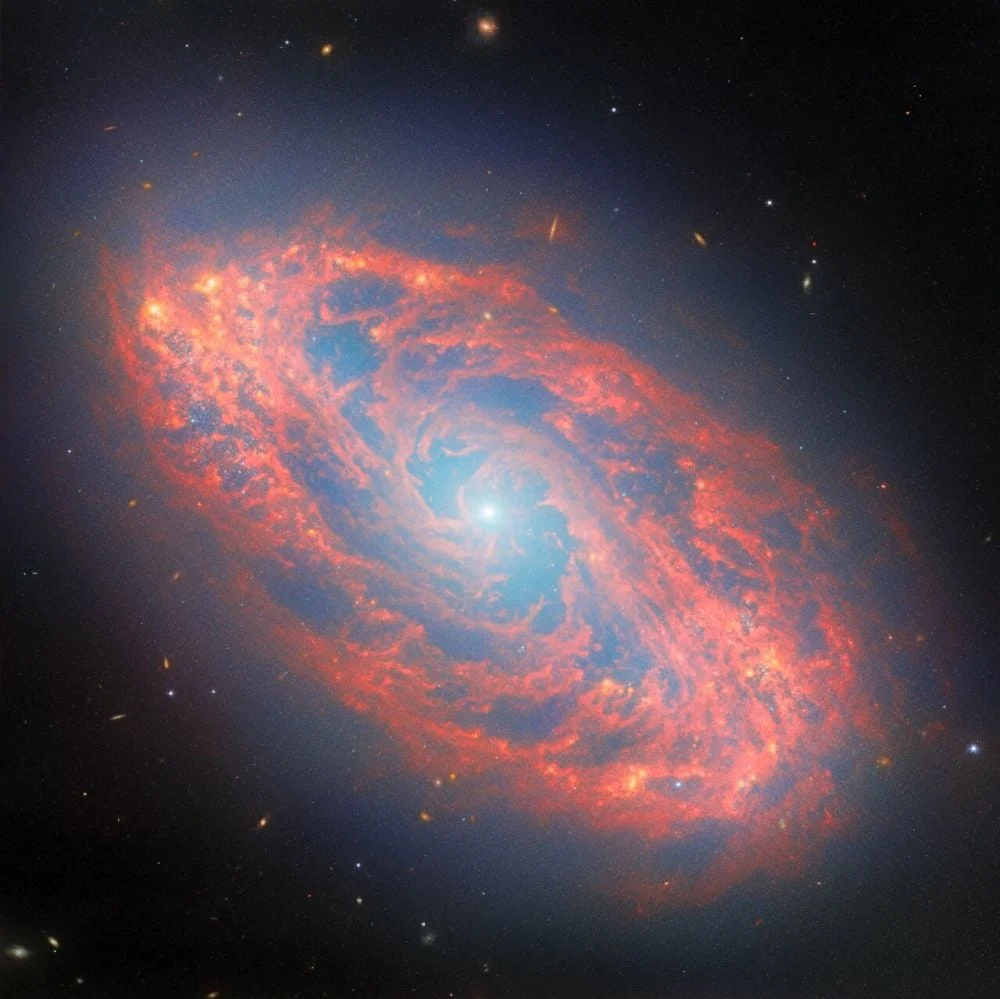
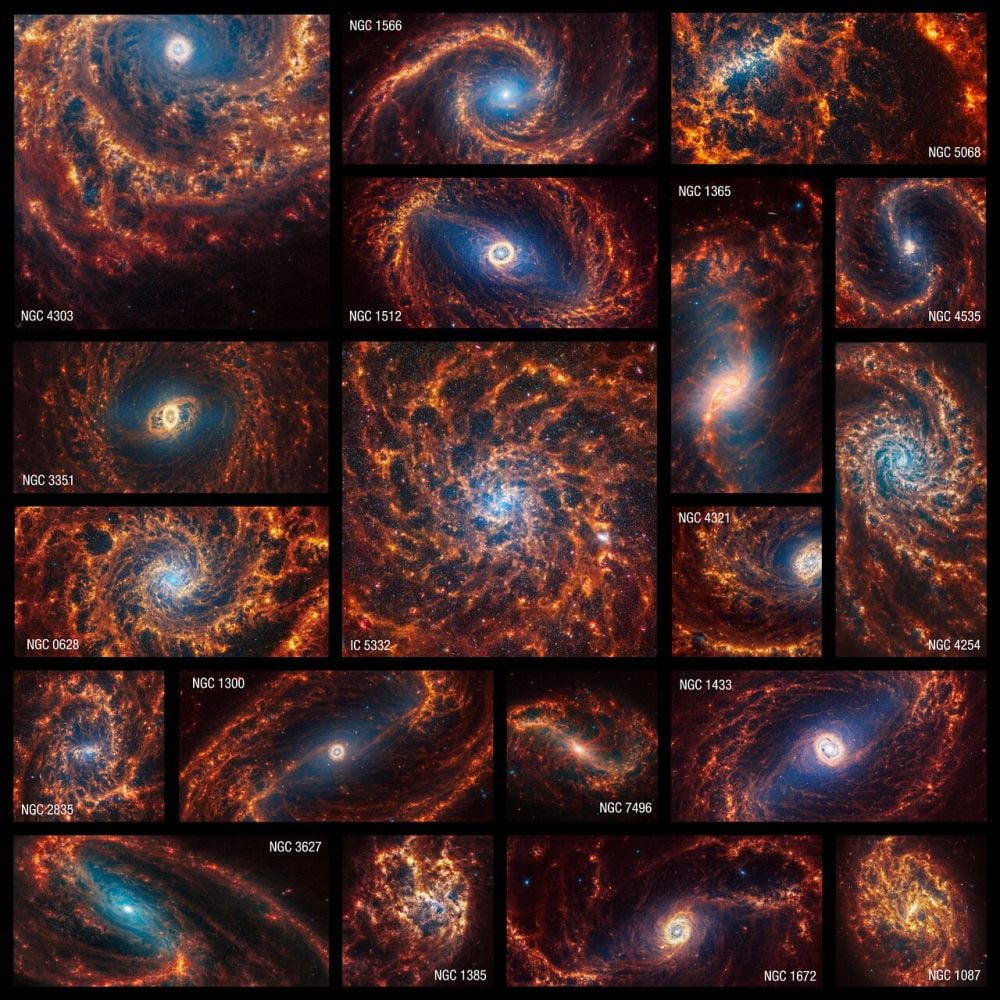
The Physics at High Angular resolution in Nearby GalaxieS (PHANGS) survey represents one of the most ambitious and comprehensive efforts in modern astronomy to decode the intricate lifecycle of stars within the local universe. By utilizing a multiwavelength, multitelescope approach, this international collaboration aims to bridge the gap between small-scale stellar physics and large-scale galactic evolution. The survey targets dozens of nearby spiral galaxies, selected specifically for their proximity, which allows astronomers to resolve critical star-forming features such as giant molecular clouds (GMCs), HII regions, and dense stellar clusters. Through the integration of data from the Atacama Large Millimeter/submillimeter Array (ALMA), the Hubble Space Telescope, and most recently, the James Webb Space Telescope (JWST), PHANGS is providing an unprecedented look at how gas is converted into stars and how the resulting stellar feedback modulates the very environment from which those stars were born.
The Multiwavelength Architecture of PHANGS
The foundation of the PHANGS survey lies in its ability to observe the universe across a broad spectrum of light, each wavelength revealing a different chapter of the star-formation story. For years, the project relied on the synergy between ALMA and Hubble. ALMA, located in the Chilean Andes, specializes in detecting the cold, dense gas found in molecular clouds—the raw materials for star formation. By mapping carbon monoxide (CO) emissions, ALMA provides a blueprint of where stars could form. In contrast, the Hubble Space Telescope offers high-resolution optical and ultraviolet views, identifying the locations of young, massive stars and the ionized gas clouds, or HII regions, that they create.
However, a critical piece of the puzzle remained obscured. Massive stars are born within thick cocoons of dust that are opaque to ultraviolet and visible light. This is where the James Webb Space Telescope serves as the "missing link." Launched in late 2021 and beginning its primary science mission in 2022, the JWST’s infrared capabilities allow it to pierce through these dusty veils. By observing in near-infrared and mid-infrared wavelengths, the JWST can detect the thermal glow of dust and the faint infrared light of protostars still embedded in their natal clouds. This allows astronomers to observe the very earliest stages of the stellar lifecycle that were previously invisible to Hubble.
The Anatomy of NGC 5134: A Galactic Case Study
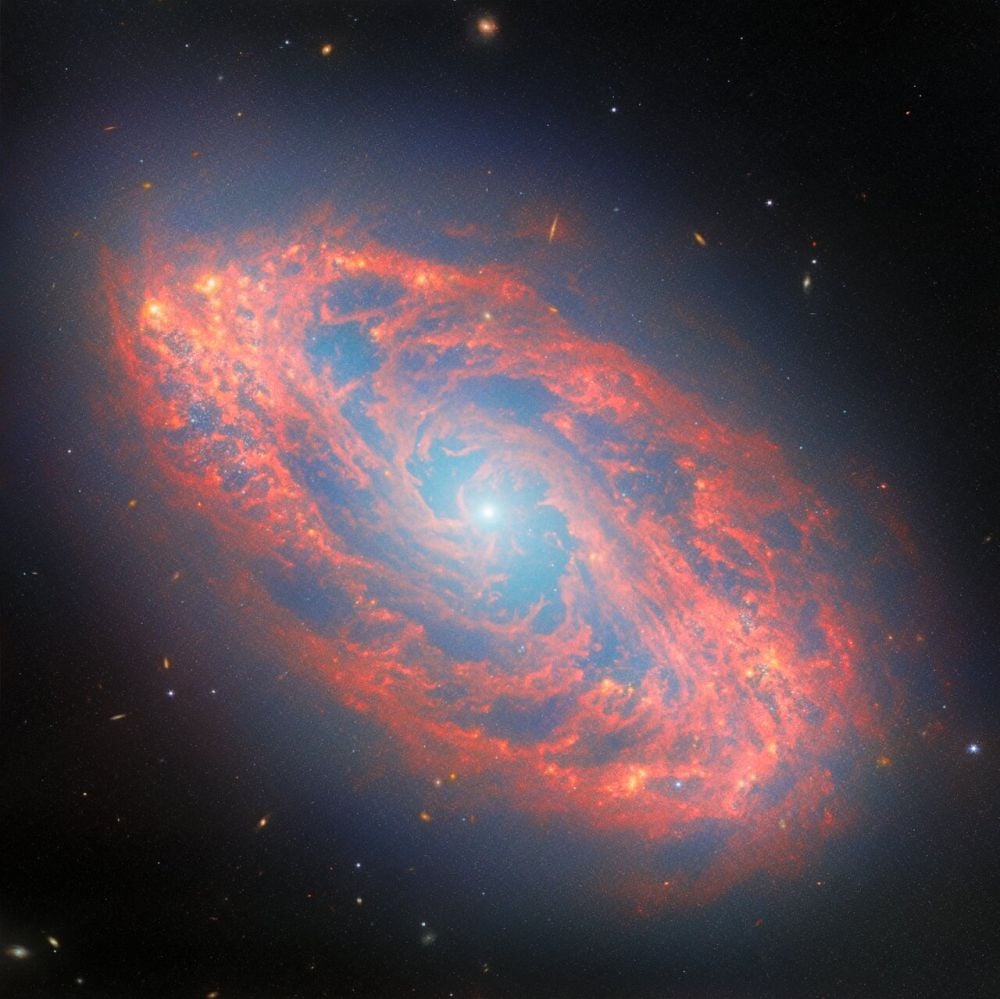
A primary focus of recent PHANGS research is the spiral galaxy NGC 5134, located approximately 65 million light-years from Earth. Recently featured as the European Space Agency’s (ESA) Picture of the Month, NGC 5134 serves as a laboratory for studying the "circulatory system" of a galaxy. The JWST’s Mid-Infrared Instrument (MIRI) has captured the emission from warm dust, revealing a complex web of filaments and clumps distributed throughout the galactic disk. Simultaneously, the Near-Infrared Camera (NIRCam) has resolved the light from dense clusters of stars populating the spiral arms.
In NGC 5134, the movement of gas is not a simple circular orbit but a sophisticated process of recycling. Gas undergoes constant phase transitions, moving from cold molecular clouds to hot ionized plasmas, driven by the energy injected by stars. This process, known as stellar feedback, involves powerful stellar winds and cataclysmic supernova explosions that push gas outward, potentially halting further star formation in the immediate vicinity or compressing gas elsewhere to trigger new births. The JWST’s observations of NGC 5134 provide a high-definition view of these interactions, showing exactly how the energetic output of a new generation of stars reshapes the interstellar medium (ISM).
The Mechanics of Spiral Arms and Density Waves
To understand the distribution of stars in galaxies like NGC 5134, astronomers must look beyond the visual appearance of the spiral arms. While they look like solid structures rotating like the blades of a fan, spiral arms are actually manifestations of density waves. According to the density wave theory, first proposed by C.C. Lin and Frank Shu in the 1960s, these arms are regions of higher-than-average density that move through the galaxy’s disk at a different speed than the individual stars and gas clouds.
As gas and dust encounter these density waves, they are compressed, much like a traffic jam on a highway. This compression triggers the collapse of molecular clouds, initiating the star-formation process. The PHANGS survey has allowed researchers to categorize the different regions of these arms based on their stellar populations and gas content:
- The Leading (Inner) Edge: This is the pre-stellar region. Here, the interstellar medium is beginning to feel the effects of the density wave. ALMA and JWST detect high concentrations of CO gas and dark filaments of dust where compression is starting, but few stars have yet ignited.
- The Active Region: Located within the heart of the arm, this is the site of intense star formation. This region is populated by protostars, young stellar clusters, and ionized nebulae. The JWST is particularly adept at identifying the "embedded" clusters that are still shrouded in dust.
- The Trailing Edge: As the density wave passes, star formation begins to wane. This area is characterized by older, massive OB stars that have had time to drift away from their birth clusters. It is also home to supernova remnants and "bubbles" blown into the gas by stellar winds.
- The Inter-arm Regions: Outside the main spiral structure, the population shifts toward intermediate-age stars (F, G, and K types) and older red giants. There is very little active star formation here, as the gas is too diffuse to collapse under its own gravity.
Data Proliferation and Scientific Impact
The PHANGS survey is not merely a collection of images; it is a massive data-mining operation. To date, the survey has generated comprehensive catalogs of molecular clouds, stellar clusters, and HII regions that have been cited in more than 150 peer-reviewed scientific papers. These datasets provide a statistical foundation for understanding how galactic environments—such as the presence of a central bar or the density of the spiral arms—affect the efficiency of star formation.
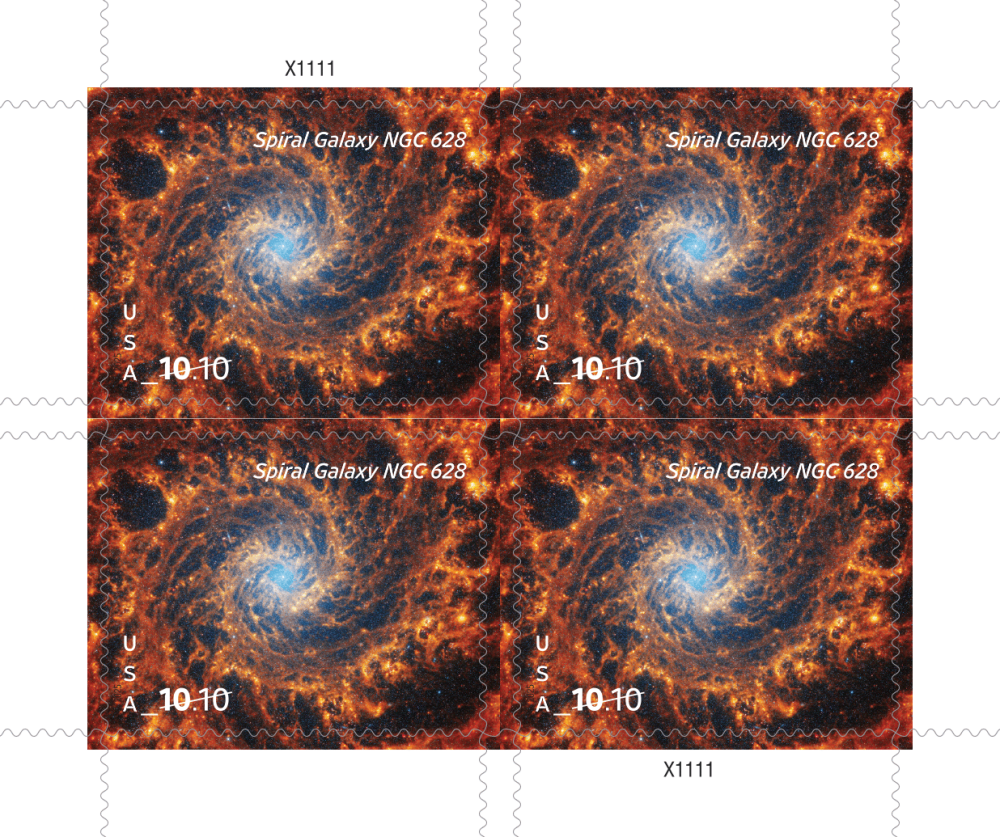
The public impact of PHANGS has been equally significant. The survey’s imagery has been featured globally as NASA’s Astronomy Picture of the Day (APOD) and in ESA’s annual calendars. In a notable recognition of its cultural and scientific value, a JWST image of the spiral galaxy NGC 628, processed as part of the PHANGS program, was featured on a United States Postal Service postage stamp. These efforts help translate complex astrophysical data into a format that inspires public interest in space exploration and the fundamental questions of our cosmic origins.
Stellar Feedback and the Regulation of Galaxies
One of the core questions PHANGS addresses is the role of stellar feedback in modulating galactic growth. If gravity were the only force at play, galaxies would likely exhaust their gas reservoirs and form stars at a much higher rate than observed. Feedback acts as a regulatory mechanism. When massive stars form, they emit intense ultraviolet radiation and high-velocity winds that "clear out" the surrounding gas. Eventually, these stars explode as supernovae, injecting immense amounts of energy and heavy elements into the interstellar medium.
By studying these processes in galaxies like NGC 5134, PHANGS researchers can observe the "bubbles" and "shells" created by this feedback. These observations help refine computer models of galaxy formation, which must account for these small-scale energy injections to accurately simulate the evolution of the universe over billions of years.
Implications for the Milky Way and Beyond
The insights gained from the PHANGS survey extend far beyond the individual galaxies being mapped. Because Earth is situated within the disk of the Milky Way, it is notoriously difficult for astronomers to get a clear, "top-down" view of our own galaxy’s spiral structure. Dust extinction and the overlapping of distant features make mapping the Milky Way a challenge. By studying nearby "twins" of the Milky Way, such as NGC 5134 or NGC 628, astronomers can infer the processes occurring in our own backyard.
Furthermore, the high-resolution data from nearby galaxies provide a "calibration" for observing the distant universe. Most galaxies in the deep cosmos appear as little more than faint smudges, even to the JWST. By understanding the detailed relationship between gas, dust, and star formation in nearby spirals, researchers can apply those lessons to interpret the light from galaxies that existed when the universe was only a fraction of its current age.
The PHANGS survey continues to evolve as the JWST completes more of its scheduled observations. With each new galaxy imaged, the picture of how the universe creates its most fundamental building blocks—stars and planetary systems—becomes clearer. As the survey’s database grows, it will remain a cornerstone of galactic astronomy for decades, providing a legacy of both scientific discovery and visual wonder that highlights the sophisticated machinery of the cosmos.