Sisilia Frederika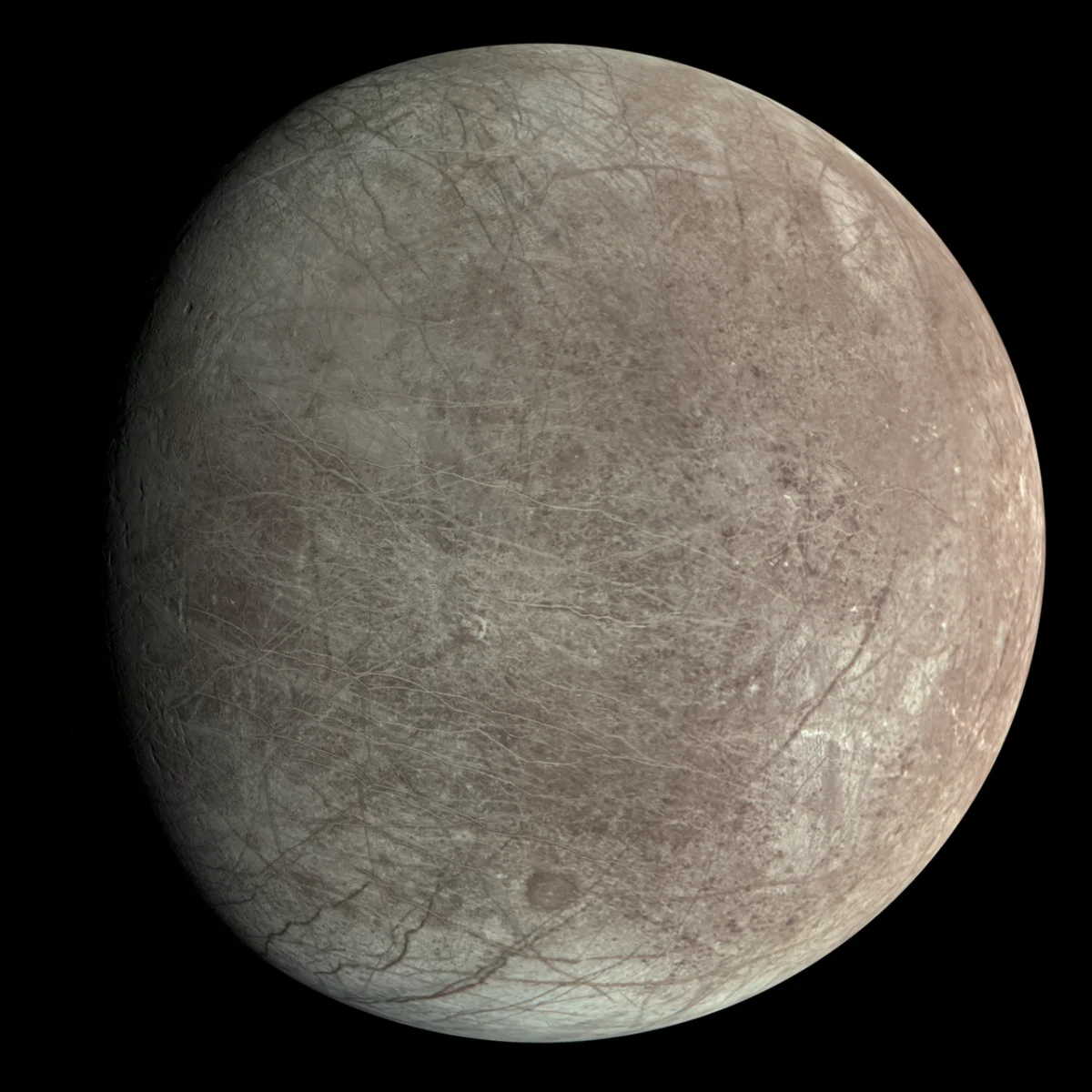
The icy moon of Europa, long considered one of the most compelling candidates for extraterrestrial life within our solar system, has yielded new secrets to the James Webb Space Telescope (JWST). A comprehensive study led by Gideon Yoffe and an international team of researchers has utilized the telescope’s high-resolution infrared capabilities to map the chemical composition of Europa’s surface with unprecedented precision. The findings, centered on the detection and distribution of carbon dioxide, suggest that this essential building block of life originates from within the moon’s hidden subsurface ocean rather than being delivered by external sources such as meteorites or solar wind. This discovery reinforces the hypothesis that Europa’s internal environment is geologically active and chemically connected to its frozen exterior, providing a potential pipeline for nutrients and organic compounds.
The Mystery of Europa’s Fractured Landscape
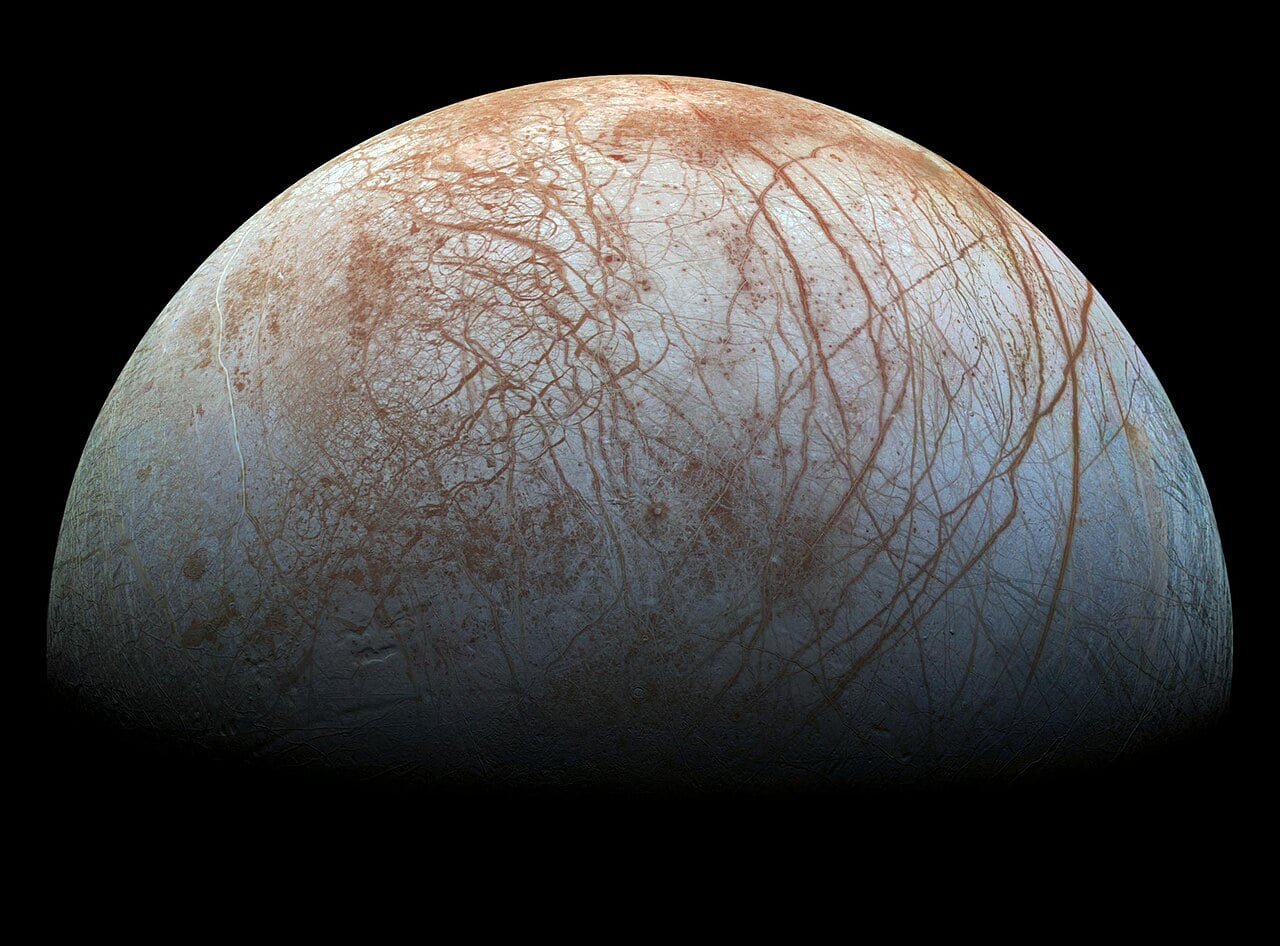
Europa is an anomaly among the moons of the Jovian system. While many moons are geologically dead, crater-pocked husks, Europa’s surface is a chaotic tapestry of ridges, bands, and "chaos terrain"—regions where the icy crust appears to have been shattered, shifted, and refrozen. For decades, planetary scientists have theorized that this disruption is caused by a vast liquid water ocean situated beneath an ice shell estimated to be 10 to 25 kilometers thick. This ocean is kept liquid not by the sun, but by tidal heating—the internal friction generated by the immense gravitational pull of Jupiter and its neighboring moons.
The new research published by Yoffe and his colleagues focuses on the leading hemisphere of Europa, specifically targeting the chemical signatures left on the surface. By using the JWST’s Near-Infrared Spectrograph (NIRSpec), the team performed a "spectral decomposition," a method that allows scientists to isolate the signatures of specific molecules from a complex mixture of reflected light. This technique identified nine distinct spectral bands, providing a high-definition map of water ice, carbon dioxide, and other compounds across the moon’s surface.
Spectral Decomposition: Chemical Fingerprinting from Deep Space
The primary challenge in studying Europa from Earth has always been the resolution and sensitivity of available instruments. While the Galileo spacecraft provided close-up imagery in the late 1990s, its spectrometers lacked the modern sensitivity required to fully differentiate between surface materials. The JWST, positioned 1.5 million kilometers from Earth at the second Lagrange point (L2), offers a vantage point and technological suite capable of "seeing" the chemical makeup of a moon nearly 800 million kilometers away.
Spectral decomposition works on the principle that every molecule interacts with light in a unique way. When sunlight hits Europa’s surface, certain wavelengths are absorbed by the chemicals present in the ice. By analyzing the light that reflects back, the JWST can identify these "fingerprints." Yoffe’s team found that carbon dioxide (CO2) is not uniformly distributed. Instead, it is concentrated in geologically young areas known as chaos terrain, with the highest concentrations found in a region called Tara Regio.
The fact that the CO2 is most abundant in these young, disrupted regions is significant. If the carbon had come from external sources like comets or the bombardment of charged particles from Jupiter’s magnetosphere, scientists would expect to see it spread more evenly across the surface or concentrated in older, more weathered areas. Its presence in the "fresh" chaos terrain suggests it was brought to the surface recently—geologically speaking—from the interior ocean.
Tara Regio and the Mechanics of Chaos Terrain
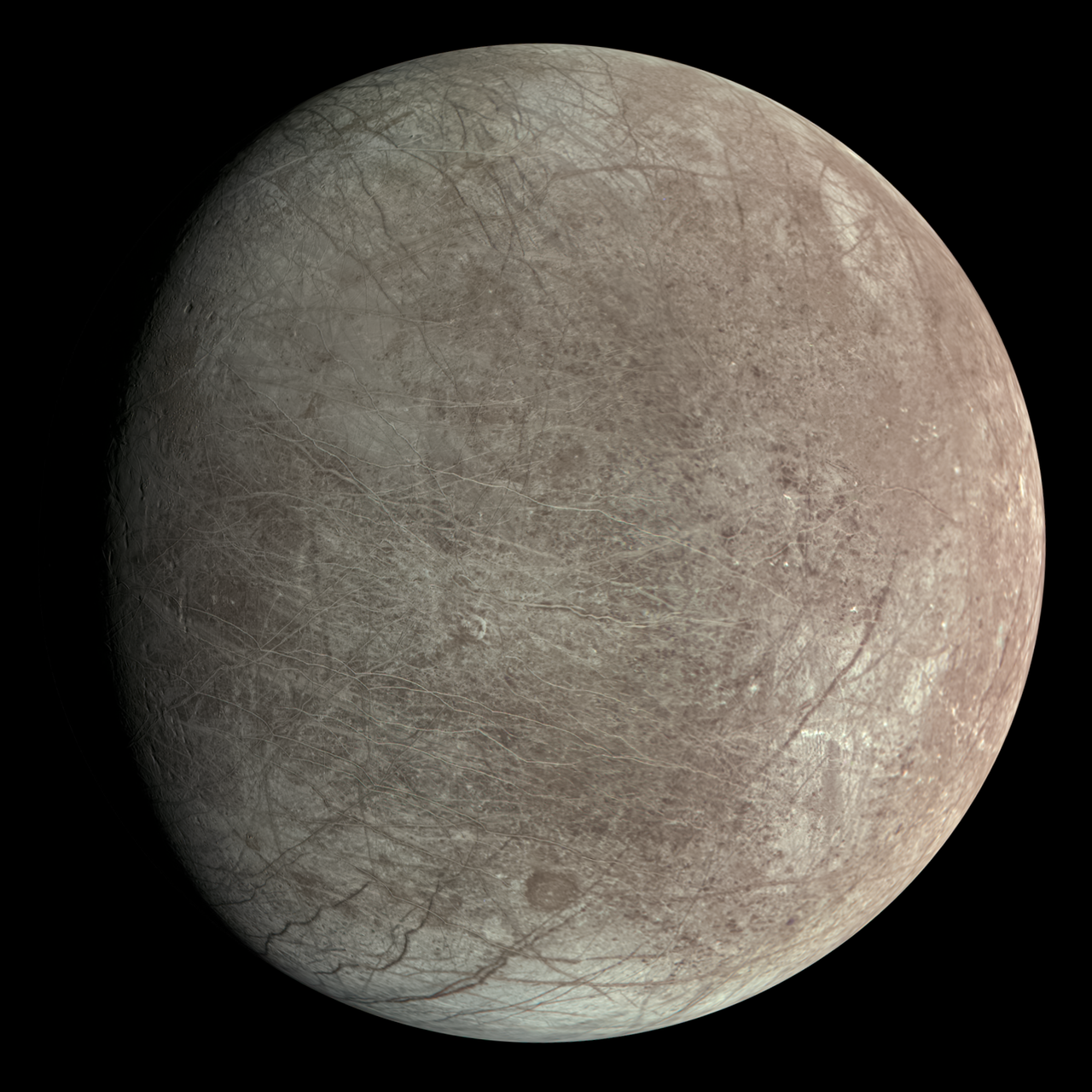
Tara Regio is a prominent example of Europa’s "chaos terrain," covering thousands of square kilometers. To the eye of a spacecraft, it looks like a jigsaw puzzle where the pieces have been scrambled and then frozen back into place. Scientists believe these areas form where warm plumes of water or diapirs of relatively warm ice rise from the ocean and press against the underside of the crust, causing it to melt and fracture.
The JWST data shows that the carbon dioxide enrichment in Tara Regio is not a localized fluke. The distribution extends in a broad, lens-shaped pattern across multiple chaos regions. Furthermore, the researchers noted a correlation between CO2 concentration and the physical texture of the ice. In areas where carbon dioxide is most prevalent, the ice itself displays unusual microstructural properties. This suggests that the presence of carbon may be altering the way ice crystallizes or that the process of upwelling material from the ocean creates a specific type of "porous" ice that is particularly good at trapping and retaining volatile gases.
A Chronology of Discovery: From Galileo to Webb
The understanding of Europa has evolved through several key milestones in space exploration:
- 1610: Galileo Galilei discovers Europa using a primitive telescope, identifying it as one of the four large moons of Jupiter.
- 1979: The Voyager 1 and 2 flybys provide the first close-up images, revealing a surface remarkably free of craters, suggesting a young and active exterior.
- 1995–2003: The Galileo mission orbits Jupiter, providing definitive evidence of a magnetic field around Europa, which strongly implies the presence of a salty, conductive subsurface ocean.
- 2013: The Hubble Space Telescope detects evidence of water vapor plumes erupting from Europa’s south pole, suggesting the ocean may be venting into space.
- 2023–2024: The James Webb Space Telescope begins high-resolution infrared observations, allowing for the first detailed chemical mapping of the surface.
This latest study represents the most significant leap in our understanding of Europa’s chemistry since the Galileo mission. By confirming that carbon—the backbone of organic chemistry—is present in the ocean and reaching the surface, the JWST has moved Europa from a "potentially" habitable world to a "likely" chemically rich environment.
The Biological Implications: Carbon and the "Big Six"
In the search for life beyond Earth, astrobiologists look for the "Big Six" elements: carbon, hydrogen, nitrogen, oxygen, phosphorus, and sulfur (CHNOPS). Carbon is the most critical of these, as its ability to form stable bonds with many elements allows for the creation of complex organic molecules.
The discovery of CO2 on Europa’s surface is a proxy for the carbon cycle within its ocean. If the ocean contains dissolved carbon dioxide, it suggests a dynamic chemistry that could support life. On Earth, CO2 is a vital component of both biological and geological cycles; it is consumed by organisms and cycled through the mantle via subduction and volcanic activity. On Europa, a similar exchange appears to be happening between the ocean and the icy shell.
"The fact that we see this carbon on the surface tells us that the ocean is not an isolated, sealed environment," says an inferred consensus among planetary scientists following the study’s release. "It is in active communication with the surface. This means that if there is life in that ocean, the evidence of its existence—its chemical waste or biological markers—could be sitting right there on the surface, waiting to be sampled."
Broader Impact and Future Exploration
The findings of Yoffe and his team have immediate implications for upcoming space missions. NASA’s Europa Clipper, scheduled for launch in late 2024 and arrival in 2031, is designed specifically to investigate Europa’s habitability. The Clipper will perform nearly 50 flybys of the moon, some as low as 25 kilometers above the surface.
Equipped with its own suite of spectrometers, cameras, and ice-penetrating radar, the Europa Clipper will use the JWST’s chemical map as a guide. Scientists can now program the Clipper to target Tara Regio and other chaos terrains for intensive study, knowing that these are the "windows" into the ocean below. The European Space Agency’s JUICE (Jupiter Icy Moons Explorer) mission, which is currently en route to the Jovian system, will also benefit from this data as it characterizes the broader environment of Jupiter’s moons.
The study also raises new questions about the physics of icy moons. If the ice microstructure determines how volatiles like CO2 are retained, then the surface of Europa is far more complex than a simple "sheet of ice." It is a dynamic filter that sorts and preserves chemicals based on their thermal and structural properties.
Conclusion: The Path to 2031
The JWST’s revelation regarding Europa’s carbon dioxide is a landmark moment in planetary science. It bridges the gap between seeing a world from a distance and understanding its internal mechanics. By proving that carbon is indigenous to the moon’s ocean and is being actively transported to the surface, the research provides a roadmap for the next decade of exploration.
As we look toward the arrival of the Europa Clipper in 2031, the focus shifts from "Does Europa have the ingredients for life?" to "How do those ingredients interact?" The fractured, chaotic landscape of Europa, once a mystery of geology, is now recognized as a vital bridge between a dark, hidden ocean and the vacuum of space—a bridge that may eventually lead us to the first evidence of life outside our home planet.