Sisilia Frederika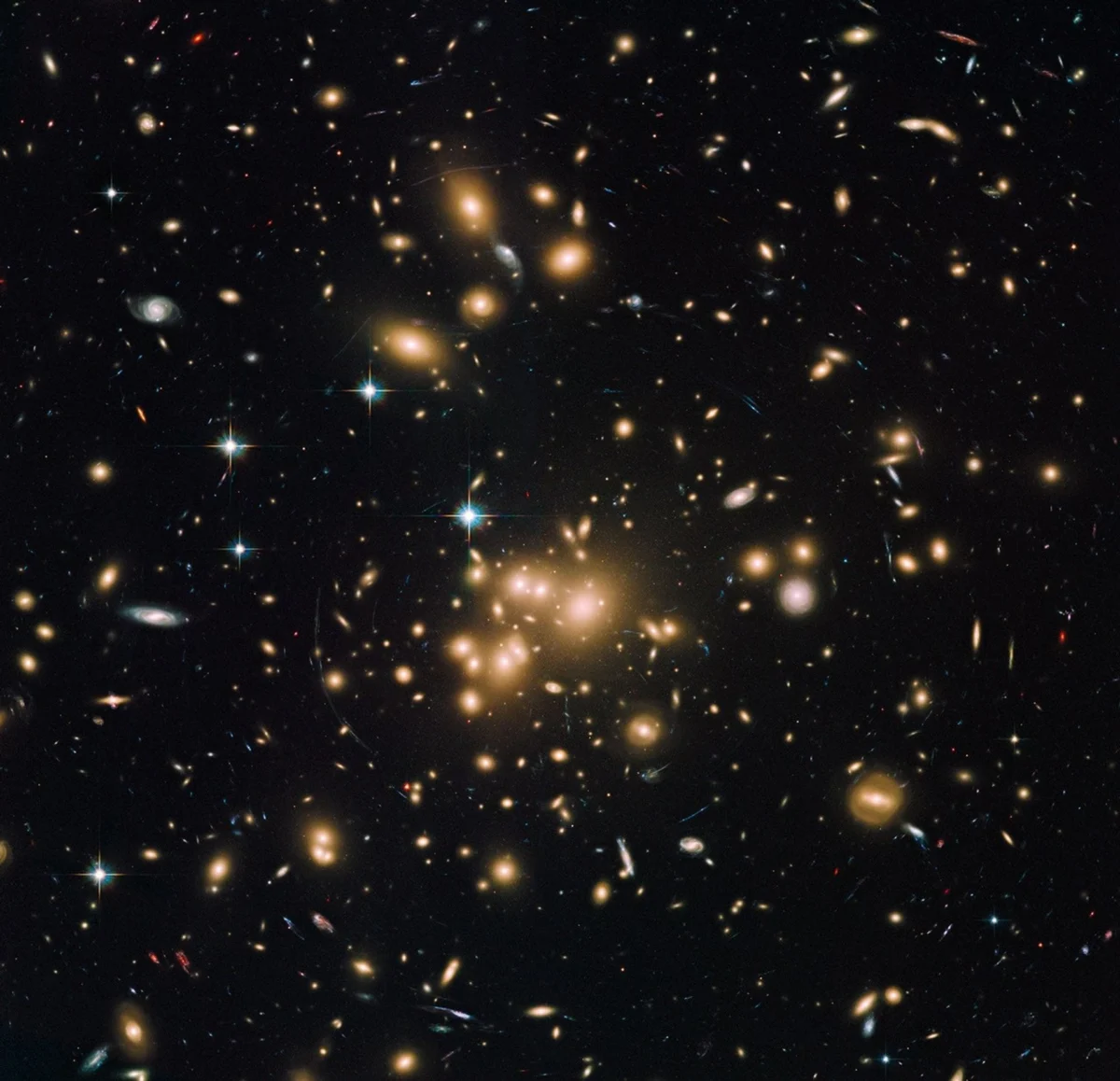
The fundamental laws of physics and the mathematical principles of topology suggest that the early universe, during its rapid cooling and expansion following the Big Bang, should have generated a series of structural irregularities known as topological defects. These defects, which include one-dimensional cosmic strings, zero-dimensional magnetic monopoles, and two-dimensional domain walls, are theorized to be inevitable consequences of symmetry-breaking phase transitions in the nascent cosmos. According to the Kibble mechanism, as the universe transitioned from a high-energy symmetric state to a lower-energy state, disparate regions of space would have settled into different vacuum states, creating "knots" or boundaries where these regions met. Despite the robust theoretical framework supporting their existence, contemporary astronomical observations have yet to provide definitive evidence of these relics, leading to a significant "missing defect" problem that challenges our understanding of primordial cosmology.
The Theoretical Framework of Topological Defects
Topological defects are hypothesized to be stable configurations of matter and energy that formed during the first fractions of a second after the Big Bang. In the context of Grand Unified Theories (GUTs), the universe underwent several phase transitions as it cooled. These transitions are analogous to the freezing of water into ice; just as cracks and misalignments form in a block of ice as it solidifies, the vacuum of space-time is thought to have developed "cracks" where the Higgs fields or other scalar fields failed to align perfectly across expanding horizons.
Cosmic strings are perhaps the most studied of these defects. Theoretically, they are incredibly thin—narrower than the diameter of a proton—yet they possess immense linear mass density. A single kilometer of a cosmic string could weigh as much as an entire mountain range. Because they are products of the vacuum itself, these strings would be under immense tension, causing them to oscillate at relativistic speeds and exert a powerful gravitational influence on their surroundings. If the standard cosmological model is accurate, the observable universe should be permeated by a network of these high-tension structures, influencing the large-scale distribution of matter and leaving a distinct imprint on the cosmic microwave background (CMB).
The Discrepancy in Observational Evidence
The primary conflict in modern cosmology lies in the "suspiciously clean" nature of the observed sky. If cosmic strings existed in the densities predicted by early GUT models, their gravitational signatures would be unmistakable. One of the most anticipated signatures is gravitational lensing. According to general relativity, a massive cosmic string passing between Earth and a distant light source would warp the intervening space-time. Unlike the diffuse lensing caused by dark matter halos, a cosmic string would create a "conical" space-time geometry, resulting in the observation of two identical, undistorted copies of the same background galaxy. Despite extensive deep-sky surveys using instruments like the Hubble Space Telescope and the James Webb Space Telescope, no such "string-like" lensing signatures have been confirmed.
Furthermore, the movement of cosmic strings should generate a continuous stochastic background of gravitational waves. As these strings wiggle and form loops, they are predicted to emit energy in the form of ripples in space-time. While modern detectors such as the Laser Interferometer Gravitational-Wave Observatory (LIGO) and pulsar timing arrays like NanoGRAV have successfully detected gravitational waves from merging black holes and neutron stars, they have not yet detected the characteristic "hum" or high-frequency "chirps" associated with cosmic string networks. The lack of such a signal places stringent upper limits on the tension of any strings that might exist, suggesting they are either much lighter than predicted or far more rare.
The Magnetic Monopole Problem and the 1982 Candidate Event
The absence of magnetic monopoles—particles that possess only a single magnetic pole (either north or south)—presents an even more acute crisis for theoretical physics. Standard Grand Unified Theories predict that monopoles should have been produced in massive quantities during the early universe. Unlike strings, which are extended structures, monopoles are point-like defects with enormous mass, roughly $10^16$ times that of a proton.
The historical timeline of the search for monopoles reached a climax on February 14, 1982. Blas Cabrera, a physicist at Stanford University, operated a detector consisting of a superconducting loop designed to record the unique electromagnetic induction signature of a passing monopole. On that Valentine’s Day, the instrument recorded an event that matched the theoretical prediction of a magnetic monopole with startling precision. However, despite the construction of significantly larger and more sensitive detectors in the following decades, no second event was ever recorded.
The scientific community generally regards the 1982 signal as a singular anomaly rather than a discovery, as reproducibility is a cornerstone of the scientific method. The "Missing Monopole Problem" remains a significant hurdle; if monopoles were as abundant as original theories suggested, their collective mass would have caused the universe to reach a "Big Crunch" and collapse in on itself long before galaxies or stars could form.
Cosmic Inflation as a Potential Resolution
To reconcile the theoretical necessity of defects with their observational absence, cosmologists have turned to the theory of Cosmic Inflation. Proposed by Alan Guth and others in the early 1980s, inflation suggests that the universe underwent an exponential expansion in the first $10^-32$ seconds of its existence. This rapid stretching of space-time provides a "dilution" mechanism for topological defects.
If the phase transition that produced monopoles and strings occurred before or during the inflationary epoch, the resulting expansion would have pushed these defects far beyond the observable horizon. Under this model, the density of defects would be reduced to such an extent that there might be only one monopole or a single string segment within the entire observable universe. While inflation successfully explains why we do not "trip over" these structures, some critics argue it is an overly convenient solution that makes the theories nearly impossible to falsify.
Recent analysis of CMB data from the Planck satellite has sought "residue" or construction debris from the inflationary period. While the data is consistent with inflation, it has not yet provided the "smoking gun" evidence of topological defects that many researchers hoped to find at the limits of current sensitivity.
The Vorton Hypothesis and Dark Matter Implications
As the search for macro-scale defects continues to yield null results, a new avenue of research suggests that topological defects may have evolved into different, less detectable forms. One such candidate is the "vorton." A vorton is a theoretical construct where a loop of a cosmic string becomes stabilized by internal currents and charges. Instead of dissipating into gravitational radiation, these loops could contract into tiny, heavy, and stable knots.
Vortons would interact very weakly with electromagnetic radiation but would possess significant mass, making them invisible to traditional telescopes while still exerting gravitational pull. This profile aligns closely with the characteristics of dark matter, the mysterious substance that accounts for approximately 27% of the universe’s energy density. If a significant portion of dark matter is composed of these microscopic topological remnants, it would resolve the discrepancy between the predicted "messy" early universe and the seemingly "clean" observable sky.
Conclusion and Future Outlook
The investigation into topological defects remains one of the most vital frontiers in cosmology, as it sits at the intersection of particle physics and general relativity. The failure to find cosmic strings and monopoles at the expected scales has forced a refinement of our models of the early universe, leading to the development of inflationary theory and new dark matter candidates.
Future missions and experimental upgrades are expected to provide more definitive answers. The Laser Interferometer Space Antenna (LISA), a planned space-based gravitational wave observatory, will have the sensitivity to detect lower-frequency signals that ground-based detectors might miss, potentially capturing the vibrations of ancient string networks. Additionally, next-generation CMB experiments, such as the Simons Observatory, will look for the subtle B-mode polarization patterns that defects would leave on the oldest light in the universe.
Whether these defects are merely hidden by the vastness of an inflated universe or have transformed into the dark matter that holds galaxies together, their eventual detection—or the continued lack thereof—will fundamentally dictate the next chapter of human understanding regarding the origin and structure of the cosmos. The "crime scene" of the early universe remains open, and the search for the missing evidence continues.