Garick Elordi
The year 2026 marks the 25th anniversary of Black & White, a landmark "god game" developed by Lionhead Studios that fundamentally altered the trajectory of artificial intelligence in interactive entertainment. While modern headlines are dominated by large language models and the existential risks of autonomous systems, the foundations of responsive, learning-based AI were being laid in a small studio in Guildford, England, at the turn of the millennium. The game’s central mechanic—a giant, sentient creature that learned from the player’s behavior—represented a radical departure from the scripted routines of contemporary software. Today, the lineage of that digital beast can be traced directly to the corridors of Google DeepMind, illustrating a profound evolution from virtual plaything to a global force capable of winning Nobel Prizes and reshaping human society.
The Genesis of the Learning Creature
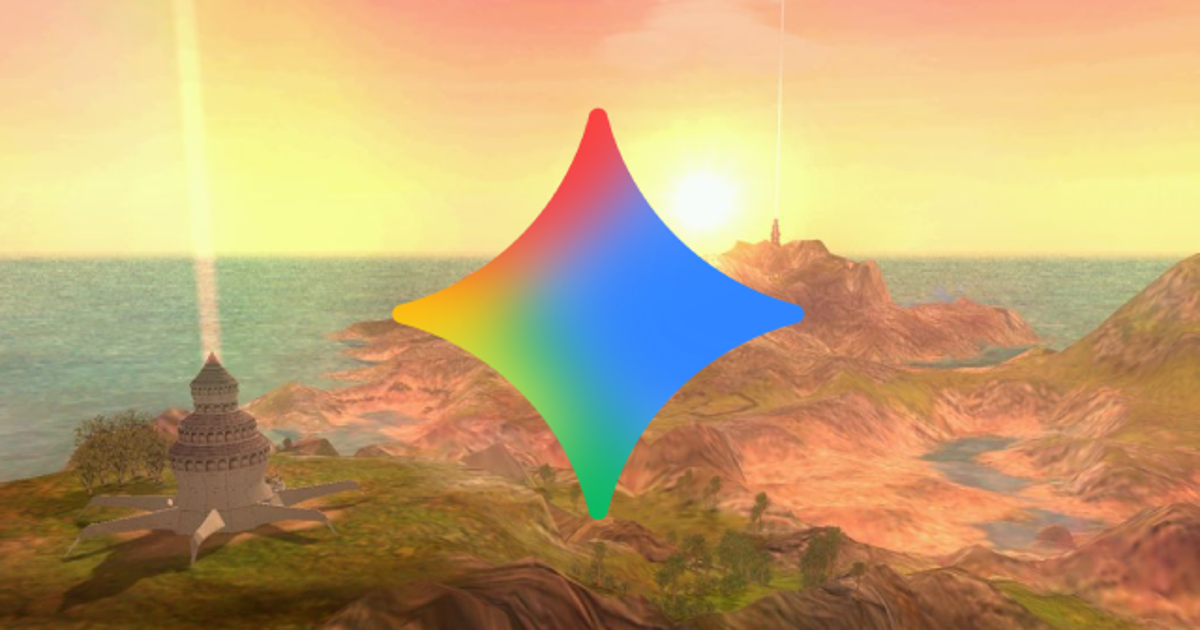
Released in 2001, Black & White was the brainchild of Peter Molyneux, a designer known for pioneering the "god game" genre with titles like Populous and Dungeon Keeper. In Black & White, the player assumed the role of a nameless deity, interacting with a lush archipelago through a disembodied hand. While the player could perform miracles, such as summoning rain or throwing fireballs, the game’s soul resided in "The Creature." Whether taking the form of an ape, a lion, or a tortoise, this entity served as the player’s physical manifestation and primary companion.
Unlike typical non-player characters (NPCs) that relied on "if-then" logic, the Creature was designed to learn through a process known as reinforcement learning. Richard Evans, the lead AI programmer for the project, developed a system where the Creature’s personality was a blank slate, shaped entirely by the player’s rewards and punishments. A slap to the face would discourage a specific behavior, while a gentle stroke would reinforce it. This created a highly personalized experience; one player might raise a benevolent giant that watered crops and cared for children, while another might cultivate a sadistic beast that feasted on villagers and desecrated temples.

The unpredictability of this system was famously demonstrated during a visit from the Mayor of Guildford to the Lionhead offices in 2000. During a live demo, a digital ape, acting on its own emerging desires, proceeded to defecate, examine its own waste, consume it, and subsequently vomit on a villager, who then stumbled off a cliff. This slapstick sequence, while humorous, underscored a sophisticated underlying architecture: the Creature was not following a script, but rather navigating a complex web of desires and learned associations.
Technical Innovations: From Knowledge-Driven to Data-Driven AI
To understand the significance of Black & White, one must distinguish between the two primary methodologies of artificial intelligence: knowledge-driven and data-driven systems. According to Mike Cook, an AI researcher at King’s College London, most video games utilize knowledge-driven AI, where developers provide the system with every rule and piece of information it needs to function. The AI simply executes the most efficient path based on those pre-defined rules.

In contrast, Black & White utilized a data-driven approach. The Creature did not have a fixed set of behaviors; instead, it evolved based on the data provided by the player’s interactions. Evans faced a significant technical hurdle: "few-shot learning." In traditional machine learning, an agent requires millions of examples to master a task. However, a video game player expects their digital pet to learn almost instantly. Working within the constraints of late-90s hardware—specifically PCs with only a few hundred megabytes of RAM—Evans utilized single-layer neural networks known as perceptrons and decision trees to allow the Creature to generalize intentions from a single piece of feedback.
A pivotal breakthrough was the "leash" system. By leashing the Creature to themselves, players could teach the beast through "inverse reinforcement learning." The Creature would observe the player’s actions, attempt to perceive the underlying intention, and then replicate the behavior in different contexts. This level of cognitive modeling was unprecedented in the gaming industry and remains a benchmark for "embodied AI."

The Chronology of Influence: From Lionhead to DeepMind
The development of Black & White served as a high-level laboratory for several figures who would go on to dominate the global AI landscape. The most notable connection is Demis Hassabis, who served as a lead programmer at Lionhead before departing in 1998 to found Elixir Studios. Hassabis eventually co-founded DeepMind in 2010, which was later acquired by Google for an estimated £400 million in 2014.
The transition from game development to cutting-edge scientific research was not incidental. Researchers at DeepMind, including Richard Evans—who joined the company after completing a PhD inspired by his work on the Creature—viewed video games as the perfect "test bed" for AI. Game environments provide a safe, high-speed simulation where agents can be tested without real-world consequences. This philosophy led to several of DeepMind’s most famous achievements:

- 2016: AlphaGo – The first AI to defeat a world champion Go player, Lee Sedol, using deep reinforcement learning.
- 2019: AlphaStar – An agent that reached Grandmaster level in the complex real-time strategy game StarCraft II.
- 2020/2024: AlphaFold – A system that solved the "protein folding problem," a 50-year-old challenge in biology. This achievement earned Demis Hassabis and John Jumper the 2024 Nobel Prize in Chemistry.
The trajectory from teaching a digital ape to eat grain to solving the molecular structures of life highlights the scale of ambition that began in the "stoner culture" of Lionhead. Mark Healey, an artist and animator on Black & White, recalls the studio as a "jazz ensemble" where developers would "jam" on ideas late into the night, often fueled by an unconventional, creative atmosphere that encouraged radical experimentation.
The Morality of the Machine: Real-World Implications
While the Creature in Black & White existed to delight or frustrate a solitary player, the AI systems of 2026 carry existential weight. The transition of AI from "contained" game worlds to the global infrastructure has introduced risks that were purely theoretical 25 years ago.

The current landscape is marked by a dichotomy of progress and peril. On one hand, Google DeepMind’s "Genie 3" model can now generate entire interactive 3D worlds from simple prompts, a feat that would have seemed like sorcery during the development of Black & White. On the other hand, the industry faces severe scrutiny. Google’s Gemini chatbot has been the subject of controversy and litigation, including a high-profile lawsuit regarding its alleged role in the death of a user in Florida. Furthermore, the rise of "slopaganda"—AI-generated misinformation—and the development of lethal autonomous weapons have led pioneers like Geoffrey Hinton to resign from their positions to warn of the dangers of their own creations.
Hinton, often called the "Godfather of AI," has expressed concerns that machine intelligence has not just replicated human cognition but surpassed it in ways that may be irreversible. This echoes the sentiments of the Black & White developers, who often felt they were "nurturing" a life form rather than simply writing code. However, where the Creature’s mistakes resulted in slapstick comedy, the errors of modern "black box" AI can result in societal destabilization.

The Legacy of Nurturing
Despite the dark shadows cast by contemporary AI, the founders of the "god game" genre maintain a humanistic perspective. Peter Molyneux, currently developing Masters of Albion, argues that the allure of these games is not about the exercise of power, but the weight of responsibility. He traces his inspiration back to childhood stories of caring for tiny, vulnerable creatures, viewing the act of nurturing as the most profound form of engagement.
The Creature of Black & White remains a unique artifact in the history of technology. It was a "playful AI" that did not seek to maximize shareholder value or optimize workplace efficiency. It required no massive data centers or millions of gallons of cooling water; it lived on a single desktop PC, powered by the curiosity of the user.

As Richard Evans reflects on his journey from the Lionhead office to the forefront of global AI research, he views the Creature as a "lovable half-wit"—a necessary first step toward the ferocious intelligence that now defines the modern era. The legacy of Black & White is a reminder that before AI was a tool for global transformation, it was a mirror held up to the human soul, asking us what kind of gods we would choose to be if given the chance to teach a digital being how to live.