Galang Taruna
A bombshell investigation published by the Wall Street Journal on Tuesday, October 20, 2026, alleges that Elon Musk himself personally ordered the throttling of Starshield, the specialized military version of his Starlink satellite internet service critical to the Ukrainian armed forces. This purported directive, which reportedly plunged Kyiv into panic and sowed confusion within the Trump administration, follows a series of conflicting reports and official denials regarding the source of the unprecedented restrictions. The incident has reignited concerns over the immense power wielded by private tech magnates in global conflicts and underscored the urgent need for national and supranational entities to establish sovereign, resilient communication infrastructure.
The Allegation and Immediate Fallout
The Wall Street Journal’s exclusive report, citing American officials and individuals close to the matter, directly implicates the SpaceX and Tesla CEO in the decision to limit the operational capabilities of Starshield for Ukrainian military use. This alleged order led to a significant degradation of service, particularly affecting high-speed mobile applications crucial for modern warfare. The move was reportedly implemented in the dead of night between October 13 and 14, causing immediate and severe operational challenges for Ukrainian forces without prior warning.
Serhii Beskrestnov, a prominent advisor to the Ukrainian president, detailed the technical impact of the restrictions, explaining that SpaceX had capped the maximum speed at which terminals could move while maintaining a connection. Beyond approximately 160 kilometers per hour (about 100 miles per hour), the Starshield connection would abruptly cut out. This technical limitation had profound and immediate consequences, rendering certain attack drones and interceptor aircraft—which rely heavily on high-speed, stable satellite communication for real-time intelligence, targeting, and command-and-control—"almost useless," as described by the WSJ. The unannounced nature of these restrictions left Ukrainian commanders scrambling to adapt their strategies, leading to significant disruption in critical drone operations, particularly those targeting Russian infrastructure. Ukraine’s Ministry of Defense had previously issued statements expressing frustration, stating, "Our forces were not warned."
A Critical Lifeline: Starshield’s Role in Ukraine
To fully grasp the gravity of Musk’s alleged directive, it is essential to understand the pivotal role Starlink, and its militarized counterpart Starshield, has played in Ukraine’s defense since the full-scale Russian invasion in February 2022. When traditional communication networks were destroyed or jammed by Russian forces, Starlink emerged as a vital lifeline, providing reliable, high-speed internet access across the battlefield. Tens of thousands of Starlink terminals were deployed, enabling everything from frontline troop communication and drone reconnaissance to critical command and control operations and civilian connectivity.
Starshield, specifically designed for government and military use, offers enhanced security and priority access, making it indispensable for Ukraine’s sophisticated network-centric warfare. Its low-Earth orbit (LEO) satellite constellation provides a resilient alternative to vulnerable ground-based infrastructure, allowing Ukrainian forces to coordinate complex maneuvers, receive real-time intelligence feeds, and effectively operate their rapidly expanding fleet of unmanned aerial vehicles (UAVs). The ability of these drones to conduct long-range reconnaissance, artillery spotting, and, increasingly, direct strike missions against Russian targets, including vital energy infrastructure deep within Russian territory, is intrinsically linked to stable satellite communication.
Ukraine’s intensified drone strikes against Russian diesel refineries and other strategic targets in recent weeks have drawn strong condemnation from both Elon Musk and U.S. President Donald Trump. The American president has publicly voiced concerns that these attacks contribute to rising global energy prices, hinting at a potential motive behind any move to curtail Ukrainian offensive capabilities. This convergence of interests between a powerful tech CEO and the U.S. President forms a crucial backdrop to the unfolding controversy.
Chronology of Confusion: Conflicting Accounts Emerge
The period following the Starshield throttling has been characterized by a bewildering series of conflicting statements and reports, highlighting a profound lack of transparency and accountability regarding who holds ultimate control over critical wartime infrastructure.
- October 13-14, 2026: SpaceX implements the speed limitations on Starshield terminals used by Ukraine, without prior notification. Ukrainian forces immediately report operational disruptions, particularly for high-speed drones.
- October 14, 2026: Elon Musk, in response to initial inquiries and Ukrainian complaints, deflects responsibility. He publicly states that such limits are "decided by the American military and, ultimately, by the President." This assertion directly points the finger at the White House.
- October 15, 2026: Reuters publishes a report, citing two anonymous U.S. officials and one Western official, claiming that the order to limit Starshield capabilities for Ukraine "came from inside the White House." While these sources confirmed the White House as the origin, they did not specify who within the administration issued the directive, leaving a critical piece of the puzzle missing.
- October 16, 2026: The Telegraph, a British newspaper, offers a third version of events, based on four unnamed sources. This report suggests a direct interaction between Musk and President Trump, alleging that Musk "floated the idea" of the restrictions to Trump, who then "agreed" to the measure. This narrative paints a picture of collaboration between the two powerful figures. However, on the same day, President Trump publicly denied any involvement, stating he did not believe either he or Musk were responsible.
- October 20, 2026: The Wall Street Journal’s investigation, the latest and most comprehensive report, directly attributes the order to Elon Musk himself, despite the subsequent denials and conflicting claims. This report suggests Musk’s personal decision, possibly influenced by his discussions with Trump, was the ultimate trigger for the throttling.
This whirlwind of accusations, denials, and anonymous sources has created an environment of deep uncertainty, leaving allies and adversaries alike questioning the command structure and decision-making processes governing vital military support.
The White House Denials and Diplomatic Ramifications
Amidst the swirling allegations, the Trump administration has been quick to issue strong denials. Marco Rubio, the U.S. Secretary of State, has categorically dismissed the notion that an order to restrict Starshield originated from the White House, branding such claims as "categorically false." Rubio also made an assertion that Kyiv has contested: that the Starshield service has since returned to its previous, unrestricted level of operation. This discrepancy between U.S. official statements and Ukrainian reports further exacerbates the confusion and erodes trust.
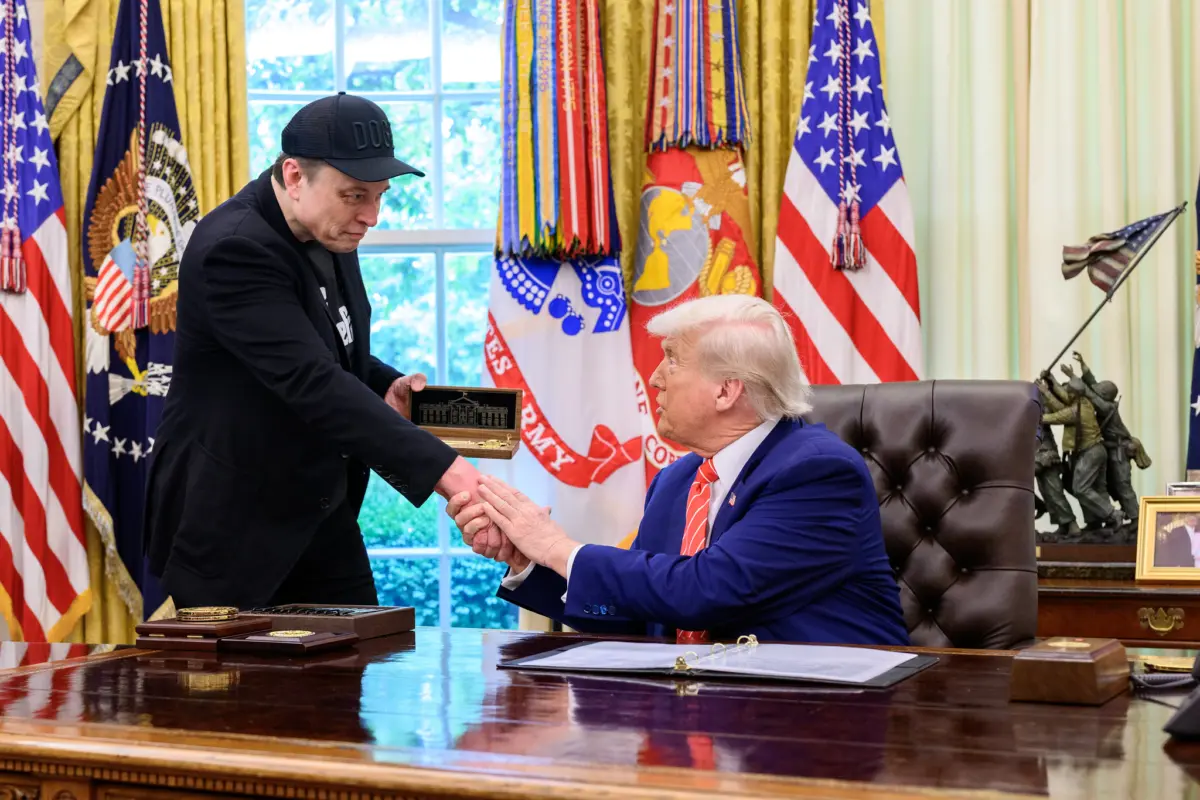
The alleged involvement of Elon Musk and the subsequent blame game highlight the complex and often murky relationship between private enterprise, national security, and international diplomacy. Musk’s previous actions, such as his initial provision of Starlink to Ukraine, followed by threats to withdraw services over cost, and his refusal to extend coverage to Crimea, have already established a precedent for his personal influence over geopolitical events. His reconciliation with Donald Trump, publicly showcased by their joint appearances at the White House as recently as September, adds another layer of intrigue to the current situation. The perception of a quid pro quo or a coordinated effort between the two powerful men, regardless of its veracity, carries significant diplomatic weight.
Musk’s Influence: A Pattern of Geopolitical Intervention
This isn’t the first time Elon Musk’s control over Starlink has intersected with the Ukrainian conflict in a controversial manner. In late 2022, Musk threatened to cut off funding for Starlink in Ukraine, citing the immense costs incurred by SpaceX. This led to a period of intense negotiation and public debate, ultimately resulting in the Pentagon taking over some of the funding responsibility. Furthermore, Musk reportedly rejected a Ukrainian request to extend Starlink coverage to Crimea in 2022, effectively preventing a planned drone attack on Russian naval forces, arguing he did not want to be complicit in an act that could escalate the conflict into "World War III."
These previous instances illustrate a clear pattern: a private individual, through his control of critical technology, possesses the unilateral ability to influence the course of a major international conflict. While Musk has often framed his decisions as attempts to prevent escalation or promote peace, they invariably draw criticism for circumventing established diplomatic and military channels and for potentially undermining the sovereign decisions of nations at war. The Starshield throttling incident is arguably the most direct and impactful exercise of this personal power to date, directly affecting active military operations.
Impact on Ukrainian Warfare and Strategic Implications
The immediate military impact on Ukraine from the alleged Starshield throttling is undeniable. The degradation of high-speed drone capabilities significantly hampers Kyiv’s ability to conduct offensive operations, particularly those involving long-range strikes against Russian logistical and energy targets. Drones have proven to be a cost-effective and highly strategic tool for Ukraine, allowing them to inflict damage deep behind enemy lines and disrupt Russia’s war machine. Any impediment to these operations can have a tangible effect on the battlefield dynamics and Ukraine’s ability to maintain pressure on the aggressor.
Beyond the immediate tactical consequences, the incident carries profound strategic implications. It exposes the vulnerability of relying on a single, privately owned entity for critical military infrastructure. Nations, particularly those engaged in conflict, typically seek to ensure redundancy and sovereign control over such vital assets. The Starshield controversy highlights a new dimension of geopolitical risk: the potential for a single CEO to exert leverage over national security interests, even those of allied nations, based on personal beliefs, business interests, or political affiliations. This sets a dangerous precedent for future conflicts, where access to cutting-edge technology might be contingent on the whims of its creators.
The Push for European Space Sovereignty
The unsettling events surrounding Starshield have not gone unnoticed by international partners. In Europe, the incident has catalyzed renewed discussions and an accelerated push for developing indigenous, sovereign space capabilities. Faced with the realization that reliance on non-European private providers, even allied ones, can introduce unacceptable vulnerabilities, the European Union and its member states are reportedly fast-tracking their projects to establish a robust, independent European satellite constellation. This ambitious undertaking aims to provide secure communication services for both civilian and military applications, ensuring that Europe is not beholden to external actors for its critical infrastructure in times of crisis.
The proposed European "sovereign space giant" project, which has been in various stages of planning, now gains a new sense of urgency. The goal is to create a resilient, secure, and fully controlled European satellite communication network that can guarantee uninterrupted service for governmental, defense, and essential civilian needs, irrespective of geopolitical pressures or the decisions of individual corporations. This strategic shift represents a long-term response to the challenges posed by the evolving landscape of space commercialization and its implications for national and collective security.
Unanswered Questions and the Future of Private Military Tech
Despite the detailed reporting from the Wall Street Journal, many critical questions remain unanswered. What were Elon Musk’s precise motivations for ordering the throttling, if indeed he did? Was it a unilateral decision, a response to pressure from the U.S. government, or a calculated move to influence the conflict’s trajectory? The role of Donald Trump, given his denials and the conflicting reports, also remains shrouded in ambiguity. The lack of clear communication and the contradictory statements from various parties underscore a dangerous opacity in decision-making processes that directly affect global security.
The Starshield controversy serves as a stark reminder of the growing intersection between advanced technology, private enterprise, and international conflict. As technological innovation continues to outpace regulatory frameworks, the world grapples with how to manage the immense power concentrated in the hands of a few tech giants. The incident forces a critical re-evaluation of the governance models for dual-use technologies, particularly those that become indispensable for military operations. The future of warfare, and indeed global stability, may increasingly depend on establishing clear ethical guidelines, robust oversight mechanisms, and resilient, diversified infrastructure that can withstand both state-sponsored aggression and the unpredictable actions of private individuals.