Sisilia Frederika
The cosmic dawn, a period occurring just a few hundred million years after the Big Bang, represents one of the most significant yet least understood eras in the history of the cosmos. During this epoch, the first generation of stars, known to astronomers as Population III (Pop III) stars, ignited and brought an end to the "cosmic dark ages." Unlike the stars observed in the modern universe, these primordial giants were composed of pristine hydrogen and helium, lacking the heavier elements, or "metals," that characterize subsequent generations. Now, a groundbreaking study led by astrophysicist N.V. Krishnendu of the University of Birmingham and an international team of researchers suggests that the next generation of gravitational wave observatories will provide the first direct evidence of these ancient stars by detecting the gravitational ripples produced by their remnants.
The Nature and Legacy of Population III Stars
Population III stars were the true pioneers of the universe. Formed from the raw materials left behind by the Big Bang, they were devoid of the carbon, oxygen, and iron that facilitate the cooling and fragmentation of gas clouds in the modern era. Because of this lack of metallicity, the gas clouds that birthed them remained much hotter and more massive before collapsing. Consequently, Pop III stars were gargantuan, often reaching masses tens to hundreds of times that of the Sun. Their immense size came at a cost: they burned through their nuclear fuel at an incredible rate, living for only a few million years before exploding as supernovae or collapsing directly into black holes.
These early black holes are of particular interest to cosmologists. Many were born in binary pairs, locked in a gravitational dance that eventually led to their collision. These mergers released colossal amounts of energy in the form of gravitational waves—distortions in the fabric of spacetime itself. While these events occurred over 13 billion years ago, the signals they produced have been traveling through the expanding universe ever since, carrying with them the "fossil" records of the universe’s first light-producing objects.
The Limitations of the Current Observational Era
The field of gravitational wave astronomy is relatively young, having only achieved its first direct detection in 2015. Since then, the current network of observatories—comprising the Laser Interferometer Gravitational-Wave Observatory (LIGO) in the United States, Virgo in Italy, and KAGRA in Japan—has revolutionized our understanding of the dark universe. To date, these facilities have cataloged approximately 400 gravitational wave events, mostly involving mergers of stellar-mass black holes and neutron stars.
However, these current instruments face significant technological hurdles when it comes to probing the very early universe. Due to their design and sensitivity ranges, they are primarily attuned to high-frequency signals. This limits their observational "reach" to events occurring within the last 8 billion years. While this covers a significant portion of cosmic history, it falls far short of the 13.5-billion-year threshold required to observe the era of Population III stars. To see further back in time, astronomers require detectors that can operate at lower frequencies and with significantly higher sensitivity.
A New Generation of Cosmic Sentinels
The study by Krishnendu and her colleagues focuses on the transformative potential of two upcoming projects: the Cosmic Explorer (CE) and the Einstein Telescope (ET). These next-generation (XG) observatories are designed to push the boundaries of what is physically measurable.
The Cosmic Explorer, planned for construction in the United States, will follow the L-shaped design of LIGO but on a much larger scale. While LIGO’s arms are 4 kilometers long, CE’s arms will stretch up to 40 kilometers. This increase in length directly translates to a massive leap in sensitivity. Meanwhile, the Einstein Telescope is envisioned as a triangular underground facility, likely located in Sardinia, Italy. With 10-kilometer-long arms arranged in an equilateral triangle, ET will be shielded from terrestrial noise and capable of detecting signals across a broader frequency spectrum.
Together, these facilities will act as a global network capable of "hearing" the universe’s most ancient whispers. The research team’s simulations indicate that the combination of CE and ET will be essential for disentangling the complex signals arriving from the edge of the observable universe.
The Physics of Cosmological Redshift and Signal Distortion
One of the primary challenges in detecting ancient black hole mergers is the effect of the expanding universe. As a gravitational wave travels through space, the expansion of the universe stretches its wavelength—a phenomenon known as cosmological redshift. For a signal originating from the era of Pop III stars (approximately 13.5 billion years ago), the wave is stretched by a factor of roughly 19 by the time it reaches Earth.
This stretching has two profound effects on how we perceive the signal. First, it lowers the frequency of the gravitational wave. A merger that would normally produce a high-pitched "chirp" in the local universe becomes a low-frequency rumble. Second, the redshift makes the black holes appear significantly more massive than they actually are. For example, a binary pair consisting of two 30-solar-mass black holes merging in the early universe would appear to our detectors as a single, massive binary weighing 1,100 solar masses.
Distinguishing these "inflated" ancient signals from massive black holes in the nearby universe is a major focus of the Birmingham study. Previous research often used simplified mathematical models, such as Fisher matrices, to estimate detector performance. However, Krishnendu’s team employed sophisticated Bayesian supercomputer simulations to model a realistic population of Pop III stars, providing a more accurate forecast of what these future observatories will actually see.
The Critical Importance of Low-Frequency Sensitivity
The researchers highlighted a vital technical distinction in detector design: the difference between a 10 Hz and a 5 Hz low-frequency cutoff. While a 5 Hz difference may seem negligible, it is revolutionary in the context of gravitational wave physics.
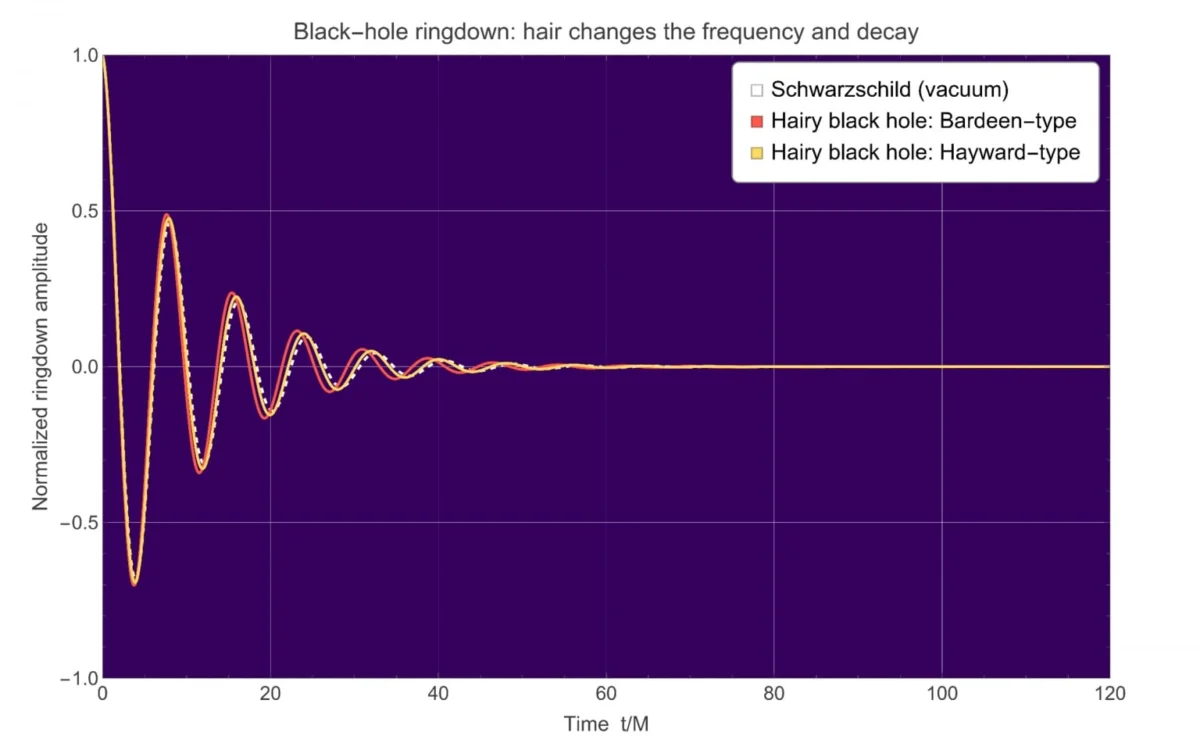
A detector limited to 10 Hz can only capture the final moments of a black hole merger—the "ringdown" phase where the two objects have already collided and are settling into a single entity. However, a detector capable of reaching 5 Hz can observe the "inspiral" phase, where the black holes are still orbiting each other. By capturing several full orbital cycles before the collision, astronomers can accurately calculate the distance, mass, and spin of the objects. This additional data is what allows scientists to determine that a signal is a redshifted remnant from the cosmic dawn rather than a mundane, massive merger occurring much closer to home.
Solving the Supermassive Black Hole Paradox
The data gathered by CE and ET could resolve one of the most persistent mysteries in modern astrophysics: the origin of supermassive black holes. Observations with the James Webb Space Telescope (JWST) have revealed the presence of massive black holes, millions of times the mass of the Sun, existing only a few hundred million years after the Big Bang. Standard models of black hole growth struggle to explain how they became so large so quickly.
By cataloging the exact physical masses of Pop III remnants to within 12% accuracy, the next generation of detectors will provide a "census" of the early black hole population. This will allow scientists to determine if supermassive black holes grew from "small" seeds (the remnants of Pop III stars) through rapid accretion and frequent mergers, or if they formed through the direct collapse of massive gas clouds. Understanding the distribution of these early weights is the key to unlocking the evolutionary history of the centers of galaxies.
Multi-Messenger Astronomy and Localization
The Birmingham study also emphasizes the power of combining gravitational wave data with traditional electromagnetic observations. The simulations suggest that a network of XG detectors will be able to pinpoint the location of early mergers to within 60 square degrees in approximately 60% of cases.
This localization is precise enough to allow for cross-referencing with giant radio telescopes, such as the Square Kilometer Array (SKA). By tying gravitational wave detections to radio maps of neutral hydrogen—the gas that filled the universe before the first stars reionized it—scientists can build a comprehensive map of the early universe. This multi-messenger approach will show not only where the first black holes were merging but also how they interacted with the surrounding environment of the early cosmos.
Engineering Challenges and the Path Forward
While the scientific potential of the Cosmic Explorer and the Einstein Telescope is vast, the engineering challenges are equally significant. Building 40-kilometer laser interferometers or underground triangular facilities requires unprecedented precision and stability. Issues such as seismic isolation, thermal noise in the mirrors, and the stability of the laser vacuum tubes must be addressed before these facilities can begin their mission.
Despite these hurdles, the international scientific community remains committed to the project. The ability to observe the first stars represents the final frontier of observational cosmology. As these detectors move from the planning stages toward reality over the next decade, they promise to provide a definitive answer to how the universe transitioned from a cold, dark expanse of gas into the vibrant, star-filled gallery we inhabit today.
The study led by N.V. Krishnendu serves as a roadmap for this future, proving that with the right technology, we can look back 13.5 billion years to witness the dying breaths of the stars that gave us first light. These primordial beacons, though long dead, continue to shape our understanding of the universe’s origin, and soon, we will finally have the ears to hear them.