Sisilia Frederika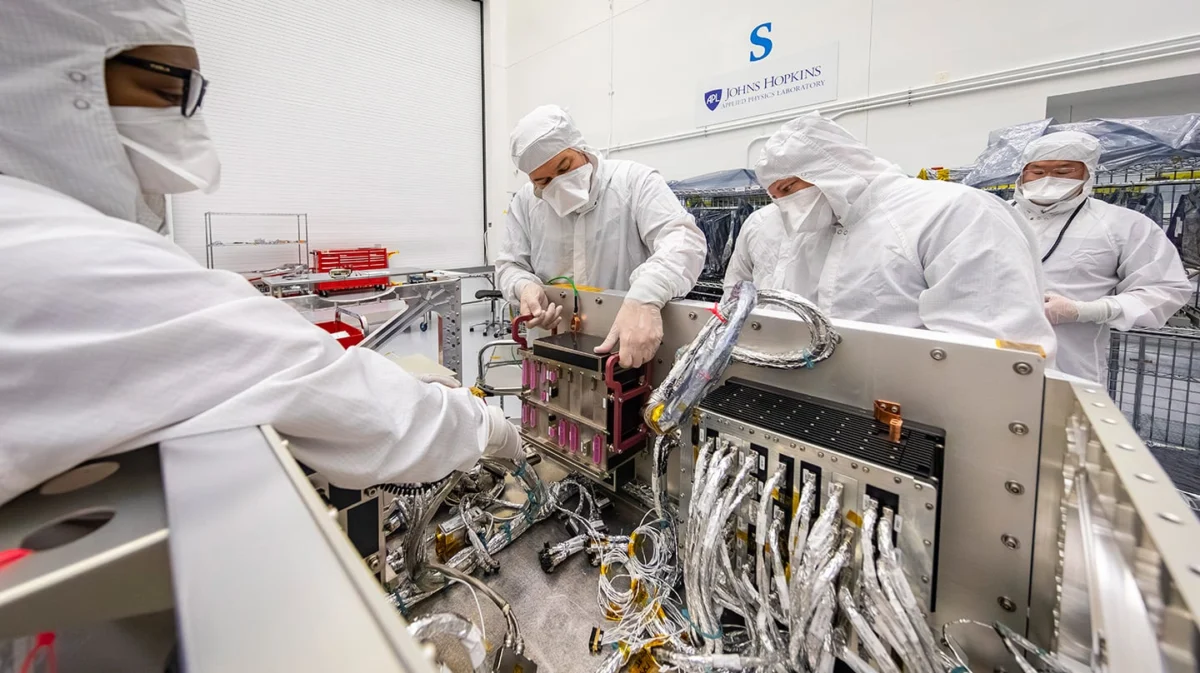
The journey to explore the prebiotic chemistry of Saturn’s largest moon has reached a pivotal hardware milestone as engineers at the Johns Hopkins Applied Physics Laboratory (APL) in Laurel, Maryland, officially commenced the integration and testing phase for the Dragonfly rotorcraft. This car-sized, nuclear-powered helicopter represents one of NASA’s most ambitious planetary science endeavors, designed to leapfrog across the surface of Titan to investigate environments where life might have once emerged. Following years of rigorous computer modeling, component design, and sub-system validation, the transition to physical hardware integration signals that the mission is on a definitive trajectory toward its scheduled 2028 launch.
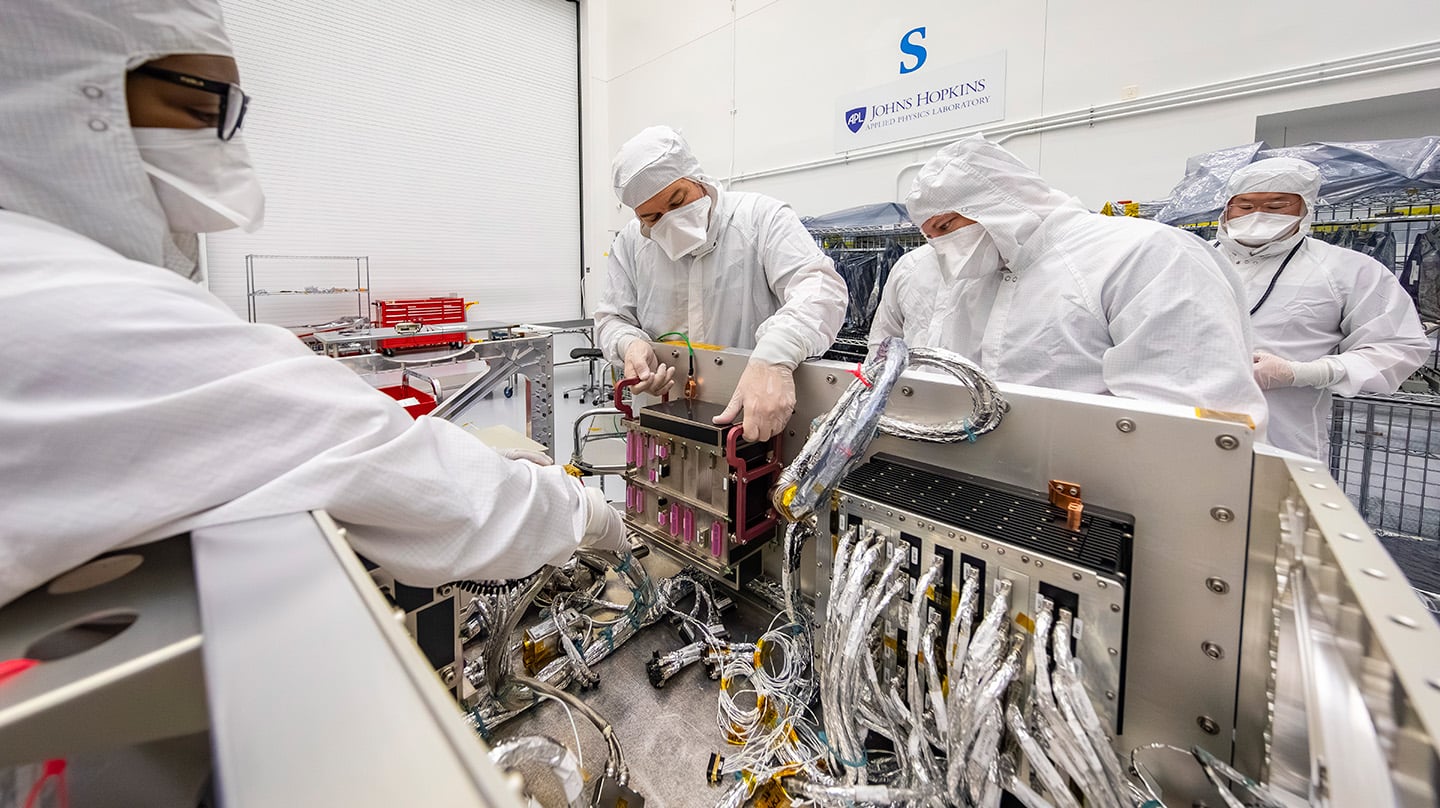
The commencement of the integration and testing (I&T) phase is a high-stakes period in aerospace engineering, where individual components—many developed in isolation across various global institutions—are brought together to form a unified flight system. At the APL facility, this process began with the successful power-up of the Integrated Electronics Module (IEM), often described as the "brain" of the spacecraft. The IEM is a sophisticated, power-efficient assembly that houses the vehicle’s core avionics, including its primary telecommunications, guidance, navigation, and data handling systems. Alongside the IEM, engineers successfully integrated several Power Switching Units (PSUs), which serve as the central nervous system for energy management, distributing power from the mission’s nuclear source to its flight, communication, and scientific instruments.
Technical Milestones in Maryland and Colorado
The successful verification of the IEM and PSUs represents a critical hurdle. For the first time, these components were connected to the spacecraft’s main wiring assembly, known as the harness, and operated in unison. This test confirmed that the digital and electrical architecture of the rotorcraft can communicate and function under simulated flight conditions. Elizabeth Turtle, the Dragonfly principal investigator at APL, characterized this development as the "birth" of the flight system. She noted that building a first-of-its-kind vehicle intended to navigate another ocean world pushes the boundaries of contemporary engineering, emphasizing that each successful test brings the mission closer to its departure for the outer solar system.
While the primary flight systems are taking shape in Maryland, other critical components are undergoing parallel development across the United States. At Lockheed Martin Space in Littleton, Colorado, engineers are currently focusing on the hardware that will protect Dragonfly during its arduous journey. This includes the aeroshell—a protective heat shield and backshell—and the cruise-stage assembly. These components must withstand the vacuum of space during a six-year transit and the immense thermal and aerodynamic stresses of entering Titan’s nitrogen-rich atmosphere. Simultaneously, aerodynamic testing has been completed at NASA’s Langley Research Center in Virginia, where wind tunnel trials provided essential data on how the octocopter’s rotors will perform in Titan’s atmosphere, which is four times denser than Earth’s.
The Challenge of the Titan Environment
A primary engineering hurdle for the Dragonfly mission is the extreme environmental conditions of the target moon. Titan’s surface temperature hovers around -179 degrees Celsius (-290 degrees Fahrenheit), a temperature at which standard aerospace materials can become brittle and electronics can fail. To combat this, APL teams are utilizing a specialized "Titan Chamber" to test a unique foam coating designed to insulate the spacecraft’s internal components. This thermal protection system is vital for maintaining the operational temperature of the Integrated Electronics Module and the scientific payload, ensuring that the heat generated by the onboard Multi-Mission Radioisotope Thermoelectric Generator (MMRTG) is retained efficiently.
The MMRTG is the heart of the Dragonfly’s power system. Unlike Mars rovers that can rely on solar panels, Titan’s thick atmosphere and distance from the Sun make solar power unfeasible. The nuclear power source provides a steady stream of electricity and heat, allowing the rotorcraft to charge its batteries during the Titan night and perform flights and scientific operations during the day. This power management strategy is critical for the mission’s longevity, as Dragonfly is expected to cover dozens of kilometers over its multi-year mission—far exceeding the distance traveled by any previous planetary rover.
Chronology and Mission Timeline
The path to the 2028 launch is a tightly choreographed sequence of engineering and logistics. The mission was officially selected by NASA in June 2019 as the fourth mission in the New Frontiers program, following in the footsteps of New Horizons, Juno, and OSIRIS-REx. Since then, the team has navigated the Preliminary Design Review (PDR) and is now moving toward the Critical Design Review (CDR), which will finalize the blueprints for the flight-ready vehicle.
According to the current schedule, the integration of scientific instruments will continue into early 2027. These instruments, which are being contributed by various international partners, include mass spectrometers to analyze organic molecules and sensors to monitor Titan’s weather and seismic activity. By mid-2027, the partially assembled craft will be transferred to Lockheed Martin for system-level testing, which includes vibration and acoustic tests to simulate the rigors of launch. In late 2027, the vehicle will return to APL for final space-environment checks, including thermal vacuum testing, before being transported to the Kennedy Space Center in Florida in the summer of 2028.
Dragonfly is slated to launch aboard a SpaceX Falcon Heavy rocket. The choice of the Falcon Heavy provides the necessary lift capacity to send the heavy, fuel-laden cruise stage on a trajectory toward Saturn. After launch, the spacecraft will spend six years in interplanetary space, performing several gravity-assist maneuvers to gain the velocity required to reach the Saturnian system by 2034.
Scientific Objectives and the Search for Life
The scientific motivation behind Dragonfly is centered on "prebiotic chemistry"—the study of the chemical steps that lead to the emergence of life. Titan is often described as an "analogue to early Earth" because it possesses a complex, carbon-rich atmosphere and liquid on its surface. However, unlike Earth, where the liquid is water, Titan’s lakes and rivers are composed of liquid methane and ethane. Despite this difference, the moon’s organic chemistry is incredibly active, with complex molecules raining down from the atmosphere onto the icy surface.
Dragonfly’s primary landing site is the "Selk Crater" region, an area where scientists believe liquid water and organic materials may have mixed in the past following an impact event. By landing here, the rotorcraft can sample the frozen "paleo-sediments" to see if the building blocks of life—such as amino acids—were ever present. The scientific payload is specifically designed for this task:
- DraMS (Dragonfly Mass Spectrometer): Will analyze the chemical composition of surface samples.
- DraGNS (Dragonfly Gamma-Ray and Neutron Spectrometer): Will determine the elemental composition of the ground beneath the lander without needing to drill.
- DraGMet (Dragonfly Geophysics and Meteorology Package): Will study the moon’s weather patterns and search for "Titan-quakes" to understand the interior structure.
- DragonCam: A suite of cameras that will provide high-resolution imagery of the landscape and microscopic views of the soil.
Broader Implications for Planetary Science
The success of Dragonfly would represent a paradigm shift in how NASA explores the solar system. For decades, planetary exploration was limited to orbiters or stationary landers. The success of the Ingenuity helicopter on Mars proved that aerial mobility is possible on other worlds, but Dragonfly takes this concept to a much larger scale. Because Titan’s atmosphere is dense and its gravity is only about one-seventh that of Earth’s, flying is significantly easier there than on Mars. In fact, an average human could likely fly on Titan by simply attaching wings to their arms.
This ease of flight allows Dragonfly to be "the ultimate explorer." Instead of being stuck in a single landing zone, it can scout new locations, fly over rugged terrain that would be impassable for a wheeled rover, and relocate its entire laboratory to a new scientific site every few weeks. This mobility is essential for answering the big questions about Titan’s habitability.
As Annette Dolbow, Dragonfly’s integration and test lead at APL, noted, the transition from design to hardware is where the mission becomes a reality. The current testing phase is not just about verifying that the electronics work; it is about ensuring that humanity’s first robotic explorer of an alien ocean world is robust enough to survive one of the most hostile environments in the solar system. If successful, Dragonfly will not only unlock the secrets of Saturn’s moon but will also provide a blueprint for future aerial missions to other destinations, such as the clouds of Venus or the canyons of Mars.
The mission stands as a testament to international cooperation and the persistent pursuit of knowledge. As the hardware continues to arrive at APL and the flight system takes its final form, the scientific community watches with anticipation. The next four years of testing will be the most demanding in the mission’s history, but they are the final steps toward a journey that could fundamentally change our understanding of where life might exist in the universe.