Evan Lee Salim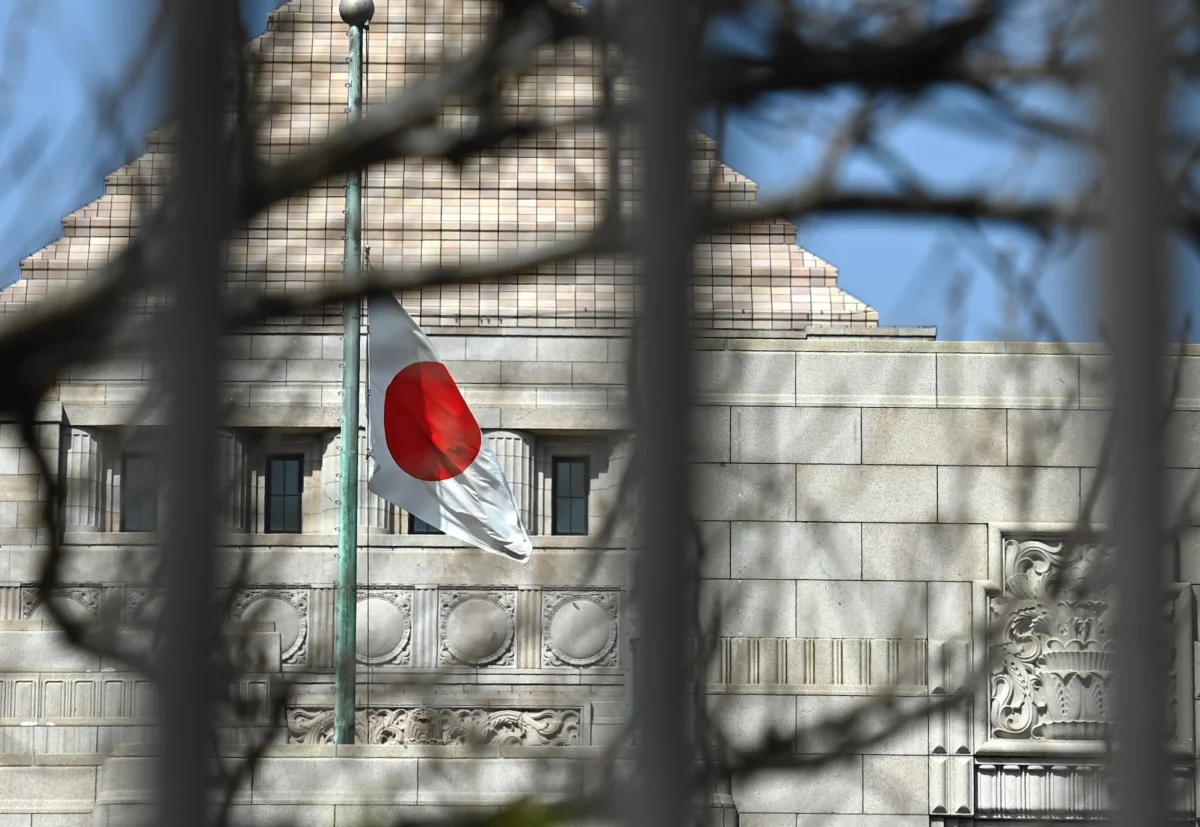
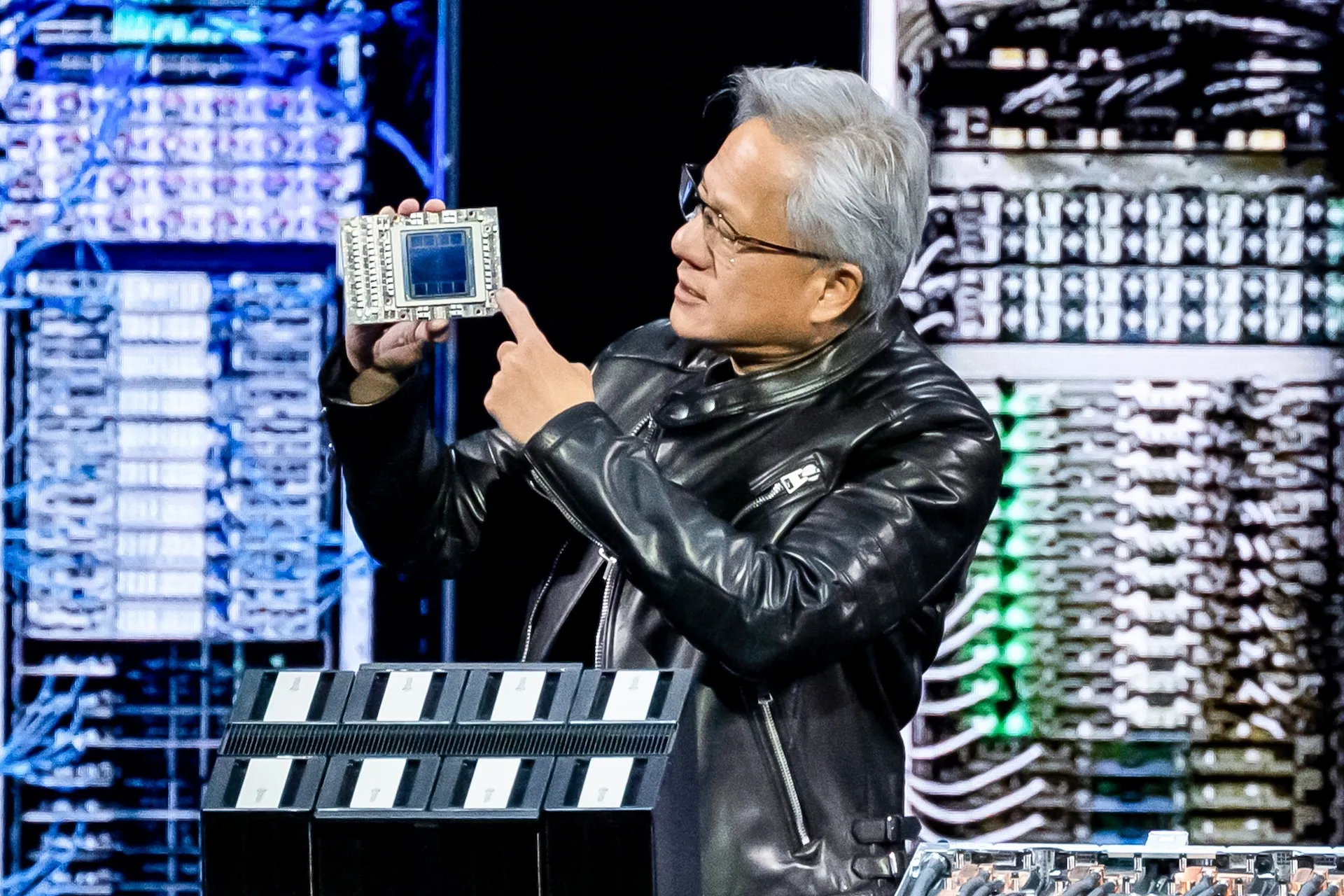
Nvidia CEO Jensen Huang concluded a pivotal two-day visit to Tokyo on July 16, solidifying a series of groundbreaking partnerships that position Japan at the forefront of the "physical AI" revolution. His intense itinerary, following recent strategic engagements in Taiwan and South Korea, underscored Nvidia’s accelerating global campaign to embed its AI infrastructure across critical industrial ecosystems. The outcome of his Tokyo trip is a comprehensive suite of agreements spanning Japan’s entire technology landscape, from the establishment of a national AI factory to collaborations with leading robotics manufacturers and crucial alliances with chip-material suppliers vital for Nvidia’s next-generation AI processors. Huang’s message was unequivocal: Nvidia is targeting Japan’s vast factory floors, and the nation’s industrial titans are embracing this vision, recognizing that the next chapter of artificial intelligence will unfold within the realm of intelligent machines and automated physical spaces, with Japan poised to lead its construction.
A Historic Partnership Revisited: From Graphics to Global AI Dominance
The narrative of Nvidia’s enduring relationship with Japan holds a significant historical resonance. Three decades ago, a timely $5 million investment from Sega proved instrumental in sustaining a nascent, near-bankrupt Nvidia. That seed capital helped a fledgling company, then primarily focused on graphics processing units (GPUs), navigate its early challenges. Today, the tables have turned, with Nvidia now a trillion-dollar behemoth, yet the mutual necessity remains. Both Nvidia and Japan’s industrial powerhouses find themselves at another critical juncture, requiring each other’s strengths to architect the physical AI era. This renewed synergy is initially manifesting through three monumental projects designed to integrate AI deeply into Japan’s manufacturing core and beyond.
Nvidia’s evolution from a niche GPU manufacturer to the undisputed leader in AI computing infrastructure is a testament to its foresight and relentless innovation. Founded in 1993, the company initially carved out its niche in the burgeoning PC gaming market, developing high-performance graphics cards. However, its true inflection point arrived when researchers discovered that the parallel processing architecture of GPUs, designed for rendering complex graphics, was also exceptionally well-suited for the computationally intensive demands of deep learning and neural networks. This serendipitous alignment propelled Nvidia into the vanguard of the AI revolution, transforming its GPUs into the foundational hardware for training and deploying large-scale AI models. Jensen Huang’s strategic pivot positioned Nvidia not just as a chipmaker, but as a comprehensive platform provider, offering software stacks like CUDA that optimize GPU performance for AI workloads, effectively creating an entire ecosystem around its hardware. This strategic vision has culminated in Nvidia’s current market dominance, making it an indispensable partner for any nation or industry aspiring to harness the power of advanced AI.
Japan’s Strategic Imperative: Addressing Demographic Challenges with AI
Japan’s eagerness to embrace this physical AI paradigm is rooted in a profound national imperative: overcoming a rapidly shrinking and aging workforce. With one of the lowest birth rates and highest life expectancies globally, Japan faces an acute labor shortage across numerous sectors, particularly in manufacturing. The National Institute of Population and Social Security Research projects that Japan’s population could shrink by nearly one-third by 2060, with the elderly accounting for almost 40% of the populace. This demographic crunch threatens to severely impede economic growth and global competitiveness if left unaddressed.
Against this backdrop, the integration of advanced robotics and AI into factory floors and service industries is no longer merely an efficiency play but a strategic necessity for national survival and prosperity. The government’s "Society 5.0" initiative, launched in 2016, envisions a super-smart society where cyber and physical spaces are seamlessly integrated to solve social problems, with AI and robotics as core enablers. This vision perfectly aligns with Nvidia’s "physical AI" ethos, which extends AI beyond digital realms into tangible interactions with the real world through robots, autonomous vehicles, and smart industrial systems. Tokyo’s ambition to deploy 10 million AI-equipped robots across 18 sectors by 2040, backed by a staggering $65 billion in public and private investment, underscores the urgency and scale of this national transformation. The goal is to maintain and enhance Japan’s legendary manufacturing capabilities, ensuring its industrial strength for generations to come, even with a reduced human workforce.
Pillars of the Physical AI Era: Noetra, Cosmos, and Toyota’s Vision
Huang’s visit crystallized into tangible commitments across three primary fronts, each designed to accelerate Japan’s transition into the physical AI era:
1. Noetra: Japan’s Sovereign AI Factory and National Ambition
At the heart of Japan’s ambitious AI strategy is Noetra, a collaborative effort representing the country’s sovereign-AI play. Acknowledging the geopolitical implications and the desire for data privacy and national security, Japan is determined not to have its critical infrastructure, factories, and robotics systems reliant on AI models developed or controlled by foreign entities, particularly from the U.S. or China. To achieve this, the Japanese government has orchestrated a formidable consortium of approximately 44 domestic firms, with industry titans such as SoftBank, Sony, NEC, and Honda forming its core. This initiative is backed by a substantial commitment of up to 1 trillion yen (approximately $6.2 billion) over five years, specifically allocated to developing homegrown "physical AI" foundation models tailored to operate machines in real-world environments. Japan aims to own the software brain that powers its future industrial landscape.
While the software development remains distinctly Japanese, the hardware backbone required to build and train these colossal AI models will come from Nvidia. As part of the Noetra initiative, Nvidia is constructing what it terms "a Vera Rubin AI factory"—a massive, state-of-the-art data center designed for unparalleled AI compute power. Expected to become operational by 2028, this facility will be equipped with an astonishing 13,750 Vera CPUs and 27,500 next-generation Rubin GPUs, delivering an immense 140 megawatts of computational capacity. The sheer scale of this infrastructure highlights the exponential growth in demand for AI processing power and Nvidia’s role as the indispensable provider of such capabilities. Noetra will oversee the development and operation of this national AI infrastructure.
Noetra’s strategic plan unfolds in three distinct stages:
- Fiscal 2026: Launch of a reasoning model with a strong emphasis on Japanese-language skills. This initial phase targets the nuanced understanding and generation of Japanese text, crucial for local industrial applications and human-robot interaction within a Japanese context.
- 2028: Introduction of an omni-modal version, capable of processing and understanding diverse data types including text, images, video, and audio. This expansion will enable more sophisticated interactions and environmental awareness for robots and AI systems.
- 2030: Release of "Real-world Native AI," models specifically designed and optimized to run robots and interact seamlessly with the physical world. This will be made available to external Noetra developers in phases, fostering a broader ecosystem of innovation.
This phased approach underscores a meticulous long-term vision, ensuring that Japan not only develops its own AI capabilities but also cultivates a robust domestic ecosystem for their deployment and continuous refinement.
2. The Robotics Coalition: Industrial Giants Embrace Nvidia Cosmos
Japan’s storied history and global leadership in industrial robotics make it a natural epicenter for the physical AI revolution. Recognizing this, Nvidia has strategically targeted Japan’s factory floors, and the response from the country’s top robotics and manufacturing players has been overwhelmingly positive. A powerful coalition of industry stalwarts, including Fanuc, Yaskawa, Kawasaki Heavy Industries, Fujitsu, Hitachi, NEC, Sony, SoftBank, Kubota, and the robotics group AIRoA, have publicly announced their commitment to build upon Nvidia’s Cosmos models.
Cosmos is an open-model initiative launched by Nvidia in May with several global AI labs, designed to provide a unified foundation for developing intelligent machines. In Tokyo, Nvidia provided a compelling incentive for Japanese manufacturers to commit by unveiling Cosmos 3 Edge. This specialized version of the Cosmos model is engineered to run directly on Nvidia’s Jetson Thor chips, which are designed for embedded AI applications within the machines themselves. This capability is crucial for real-time decision-making, reducing latency, and enhancing the autonomy of robots on the factory floor.
The implications are far-reaching. Some members of the coalition are already testing a shared control system, promising unprecedented levels of interoperability and efficiency. Others, such as Honda R&D and Omron, are actively integrating these tools into their development pipelines, signaling a rapid adoption curve. Jensen Huang articulated the profound significance of this collaboration, stating, "The next frontier of AI is in the physical world, and this is a once-in-a-generation opportunity for Japan. Japan invented modern manufacturing. Now, it has the opportunity to reinvent it for the age of intelligent industries." This statement not only acknowledges Japan’s historical prowess but also frames the current partnership as a chance for the nation to redefine its industrial legacy in the digital age.
3. Toyota: Driving Physical AI from Vehicles to Production Lines
Toyota Motor Corporation, a global automotive giant and a symbol of Japanese manufacturing excellence, represents another critical facet of Nvidia’s expanding footprint in the nation. Toyota has already integrated Nvidia chips extensively across its technological stack. At CES in January 2025, Toyota committed its next-generation vehicles to Nvidia’s Drive platform, a comprehensive AI computing platform for autonomous vehicles and advanced driver-assistance systems (ADAS). This partnership ensures that Nvidia’s powerful AI hardware and software will underpin the intelligence of Toyota’s future car fleets.
The newer agreements, however, extend Nvidia’s influence far beyond the vehicle itself, permeating Toyota’s entire manufacturing ecosystem. Nvidia’s technologies are now being leveraged for advanced simulations used to design and optimize production lines, potentially utilizing platforms like Nvidia Omniverse for digital twin creation and virtual factory testing. Furthermore, Nvidia’s AI is being integrated into the software that operates Toyota’s vehicles, enhancing everything from infotainment systems to predictive maintenance. Crucially, it’s also being deployed in systems designed to analyze road traffic and environmental data, feeding into the development of safer and more efficient mobility solutions.
Toyota’s approach to autonomous driving, characterized by its focus on advanced driver assistance systems (ADAS) that still require driver engagement, is a more conservative strategy compared to companies like Waymo and Tesla, which are pursuing fully autonomous systems with minimal human intervention. This reflects Toyota’s emphasis on safety and gradual implementation, a philosophy that aligns well with the practical, incremental benefits offered by Nvidia’s Drive platform for ADAS development.
Broader Impact and Geopolitical Implications
Huang’s strategic visit and the ensuing partnerships have firmly cemented physical AI at the core of Japan’s national industrial strategy. The financial commitment from Tokyo, particularly the $6.2 billion for the Noetra initiative and the broader $65 billion public-private investment target by 2040, signifies a serious long-term dedication. The goal of deploying 10 million AI-equipped robots across 18 sectors by 2040 is not just aspirational but a calculated response to the nation’s demographic crisis.
The longer-term vision is even more ambitious. Japan’s AI Robotics Strategy, unveiled in March, aims to capture over 30% of the global AI robotics market by 2040, a market Tokyo estimates to be worth approximately ¥20 trillion (about $133 billion). The Ministry of Economy, Trade and Industry (METI) is actively funding the development of domestic foundation models to power these machines, and the Nvidia-powered Noetra factory is explicitly designed to train models of that immense scale, potentially reaching into the trillions of parameters. The strategic wager is that Japan’s unparalleled factory-floor data and its formidable manufacturing base can replicate for physical AI what Silicon Valley did for software AI: provide the fertile ground for innovation and global leadership.
Underneath the compelling industrial case lies a profound sovereign imperative. In an era where the United States and China are racing ahead in large-scale AI development, Tokyo is acutely aware of the need to cultivate its own data, its own compute capabilities, and reduce its dependence on foreign-controlled infrastructure. The public endorsement of this strategy was evident on July 16, when Jensen Huang appeared alongside Japan’s Trade Minister Ryosei Akazawa at the government’s official physical-AI launch, with Prime Minister Sanae Takaichi joining via video conference. The Takaichi administration has made AI and semiconductors the centerpiece of a comprehensive growth plan, targeting ¥370 trillion ($2.3 trillion) in public and private investment by 2040. Noetra’s "Vera Rubin AI factory," which Nvidia proudly touts as "the world’s first national AI infrastructure," stands as the clearest and most significant manifestation of this national commitment.
However, this push for independence presents a fascinating paradox: Japan’s quest for AI sovereignty, at least for the foreseeable future, remains intricately reliant on American silicon. While Japan aims to own the AI software and its applications, the foundational hardware—the cutting-edge GPUs and CPUs that power the training and inference of these complex models—continues to be supplied by Nvidia. This dynamic highlights the current global technological landscape, where a few companies hold critical choke points in the AI supply chain, even as nations strive for self-reliance. It underscores the strategic importance of such partnerships for both sides: Japan gains access to essential technology for its national ambitions, and Nvidia solidifies its position as the global AI infrastructure provider of choice.
Working the Whole Room: Huang’s Global Playbook
Huang’s two-day blitz in Tokyo exemplified his characteristic hands-on approach to strategic market development. His schedule was packed with high-level engagements, including a working lunch with the CEOs of Japan’s industrial titans—Toyota, Fanuc, Yaskawa, Fujitsu, and Kawasaki Heavy Industries. Beyond the boardroom, he engaged with dozens of crucial supply-chain chiefs over a more informal setting of skewers and whisky in a Kanda izakaya, a quintessential Japanese experience designed to foster deeper connections.
This "working the whole room" playbook is one Huang has successfully deployed across Asia. Weeks prior, he delivered a homecoming keynote in Taiwan, celebrating the island’s pivotal role in semiconductor manufacturing. Before that, his visit to South Korea involved memorable interactions, including enjoying fried chicken with local partners, and culminated in a significant 50,000-GPU deal in Seoul the previous fall, expanding Nvidia’s AI ties with Hyundai, Samsung, SK, and Naver. This time, it was Tokyo’s turn to be courted, with the focus squarely on its unparalleled strengths in robotics, its critical position in the global chip supply chain, and its burgeoning demand for the foundational AI chips that power the future. These strategic tours underscore Nvidia’s commitment to building deep, localized partnerships, recognizing that the global AI revolution will be built not just on cutting-edge technology, but also on robust, collaborative ecosystems.