Evan Lee Salim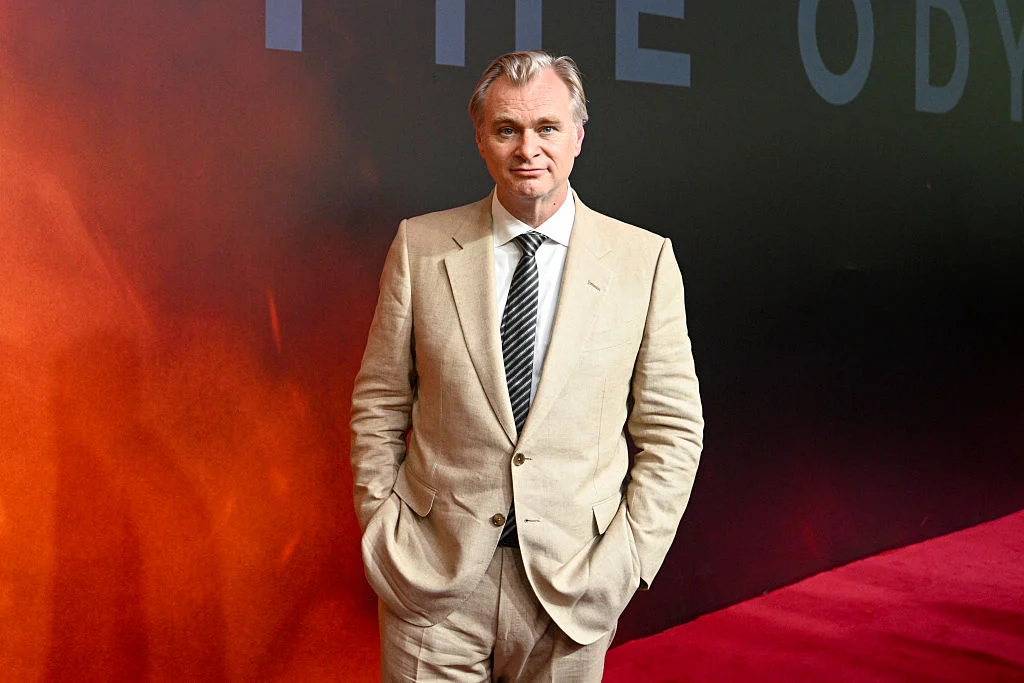
Christopher Nolan, the critically acclaimed and Oscar-winning director, whose latest cinematic endeavor, a modern reinterpretation of "The Odyssey," is currently dominating the global box office, has expressed considerable encouragement regarding the deep-seated skepticism toward artificial intelligence, particularly among younger generations. Nolan’s remarks come at a pivotal time, with AI’s rapid advancements sparking both awe and apprehension across industries, especially within the creative arts. His film’s success, which has been reported by Variety as "conquering the box office," provides a stark contrast to the burgeoning digital landscape, given Nolan’s well-documented preference for traditional filmmaking techniques.
The director’s insights into public perception of AI were delivered during an interview with Hugo Travers, known for his YouTube channel HugoDécrypte. Travers initiated the discussion by drawing a compelling parallel between AI and the legendary Trojan horse, a central element in Homer’s epic and, by extension, in Nolan’s film. Travers questioned whether AI might similarly represent a seemingly benevolent "gift" that individuals welcome into their daily lives, only for it to transform into "something else and something darker." This analogy resonated deeply with Nolan, who responded with a knowing laugh, stating, "I think AI is a Trojan horse that everybody knows the Greeks are inside." He further elaborated on this metaphor, describing the technology as "a transparent horse, it’s made of glass," implying that the inherent risks and potential for misuse are overtly visible to the public.
The Unprecedented Public Rejection of Rapidly Advancing Technology
Nolan highlighted what he perceives as a unique phenomenon in the history of technological progress: widespread public distrust despite rapid advancement. "I’ve never seen a technology advancing so rapidly [that’s been] so completely rejected by the public," Nolan observed. He pointed specifically to the "extreme" suspicion, particularly from young people, citing their immediate dismissal of AI-generated content as "AI slop." This colloquial term, coined by digital natives, signifies a clear and immediate judgment, effectively "putting it in a box" of perceived low quality or inauthenticity. This widespread rejection is atypical, as many new technologies, from the internet to smartphones, have historically been met with initial curiosity and relatively swift adoption, even amidst early concerns.
This skepticism, in Nolan’s view, is not a hindrance but a "very healthy" and necessary response. He posited that while technology invariably offers "great gifts," it must always be approached with a critical eye. This critical stance extends not just to the technology itself, but also to "the motives of the people giving it to us." He argued that it is through this balanced approach, rather than "blind faith that everything’s going to be great," that society can truly extract the best from new innovations. This perspective aligns with broader societal discussions around technological ethics, corporate responsibility, and the potential for unintended consequences in the digital age.
AI’s Shadow Over Hollywood: A Chronology of Concern
Nolan’s remarks underscore a growing anxiety within the entertainment industry, where AI has emerged as a significant source of contention. The specter of AI’s impact on creative labor was a central and highly contentious issue during the landmark writers’ and actors’ strikes of 2023. The Writers Guild of America (WGA) and the Screen Actors Guild – American Federation of Television and Radio Artists (SAG-AFTRA) both engaged in prolonged negotiations, primarily over fair compensation in the streaming era and, crucially, protections against the uncontrolled deployment of generative AI.
The WGA strike, which lasted for 148 days from May to September 2023, saw writers demanding guarantees that AI would not be used to generate scripts from their work or to rewrite their material without their consent and appropriate compensation. Similarly, SAG-AFTRA members expressed deep concerns about AI’s potential to replicate their voices and likenesses without permission or remuneration, threatening their livelihoods and creative control. The Directors Guild of America (DGA), where Christopher Nolan serves as president, also secured important generative AI protections in its most recent contract, reflecting a unified front across major Hollywood guilds to address these nascent but profound threats. These protections typically aim to establish clear guidelines for AI’s use, ensure human oversight, and guarantee fair compensation for creative work, preventing the wholesale replacement of human talent by algorithms.
The industry’s concerns are multifaceted. There is the immediate economic threat of job displacement, as AI models become increasingly capable of generating scripts, visual effects, and even rudimentary performances. Beyond economics, there is a profound philosophical debate about the nature of authorship, creativity, and artistic integrity in an age where machines can mimic human expression. The fear is that a reliance on AI could lead to a homogenization of content, a dilution of unique artistic voices, and a devaluation of the human element that has traditionally been the bedrock of storytelling.
Nolan’s Technoskepticism: A Consistent Stance
Nolan’s current stance on AI is consistent with his broader, well-documented technoskepticism. He has famously resisted the ubiquitous adoption of certain modern technologies, most notably smartphones, in his personal and professional life. His steadfast commitment to traditional film stock and large-format cameras, particularly IMAX, often positions him as both a Luddite – one who opposes new technology – and a pioneering visionary, pushing the boundaries of what analog filmmaking can achieve.
His film "The Odyssey" stands as a testament to this philosophy, being the first feature film ever shot entirely on IMAX film and cameras. This choice is not merely aesthetic; it is a deliberate artistic and technical statement. When questioned by The New York Times about whether he considers himself a technophobe, Nolan clarified, "I think of myself as a techno-skeptic." He explained that his enduring love for film stems from its superior ability "to represent the way the eye sees the world than any digital imaging system I’ve seen."
Nolan’s skepticism is not an outright rejection of all new technology but rather a discerning approach. He stated, "I embrace new technology all the time, but it tends to be sold to people at the expense of systems that might still be valid and viable." He lamented a trend within his own industry of "throwing the baby out with the bath water," citing the near-loss of film as a medium. This perspective suggests a desire for technological evolution to be additive, building upon and preserving existing valuable methods, rather than aggressively supplanting them. His argument implies that the rush to adopt the "next big thing" often overlooks the enduring merits and unique qualities of established practices.
The Broader Implications of Public Skepticism
The public’s "healthy skepticism" towards AI, as championed by Nolan, carries significant implications beyond Hollywood. In an era increasingly grappling with misinformation, deepfakes, and the blurring lines between reality and synthetic creation, a discerning populace is crucial. The term "AI slop" used by young people reflects a sophisticated understanding that not all digital content is created equal and that automated generation can often lack the nuance, originality, and soul inherent in human-made art.
This widespread skepticism could influence the trajectory of AI development itself. If consumers consistently reject AI-generated content or products perceived as inauthentic or low-quality, it could compel developers and companies to prioritize ethical AI, transparency, and the integration of human oversight and creativity. It may also foster a greater appreciation for genuine human artistry and intellectual property, creating a counterbalance to the potentially overwhelming tide of AI-produced media.
The debate surrounding AI is not merely technological; it is deeply cultural and philosophical. It touches upon questions of human value, the future of work, and the definition of art itself. Nolan’s voice, as a prominent figure in an industry uniquely susceptible to AI’s disruptive potential, adds considerable weight to the argument for caution and critical engagement. His success with "The Odyssey," a film rooted in ancient storytelling and crafted with meticulous traditional techniques, serves as a powerful testament to the enduring appeal of human creativity in an increasingly automated world.
The ‘Odyssey’ Controversy: A Separate Cultural Dialogue
While Nolan champions skepticism towards AI, his latest film has also found itself at the center of a different, albeit related, cultural debate. SpaceX CEO Elon Musk has notably engaged in public criticism of "The Odyssey," specifically taking issue with the film’s nonwhite and transgender cast members, including Lupita Nyong’o as Helen of Troy. This reaction, distinct from the technological discussions, highlights the broader societal shifts and differing viewpoints that often accompany major cultural works in the modern era. While Nolan’s focus remains on the integrity of the artistic process and the discerning use of technology, the public reception of his work, both positive and critical, continues to reflect the complex interplay of art, technology, and evolving social values.
In conclusion, Christopher Nolan’s observations regarding public AI skepticism paint a picture of a society increasingly aware of the double-edged nature of technological progress. His "transparent Trojan horse" analogy serves as a potent reminder that not all advancements are unequivocally beneficial, and that a critical, questioning approach is essential for navigating the complex future of artificial intelligence. As AI continues its rapid ascent, the "healthy skepticism" advocated by Nolan may prove to be the most vital tool in shaping a future where technology serves humanity, rather than dominating it.