Evan Lee Salim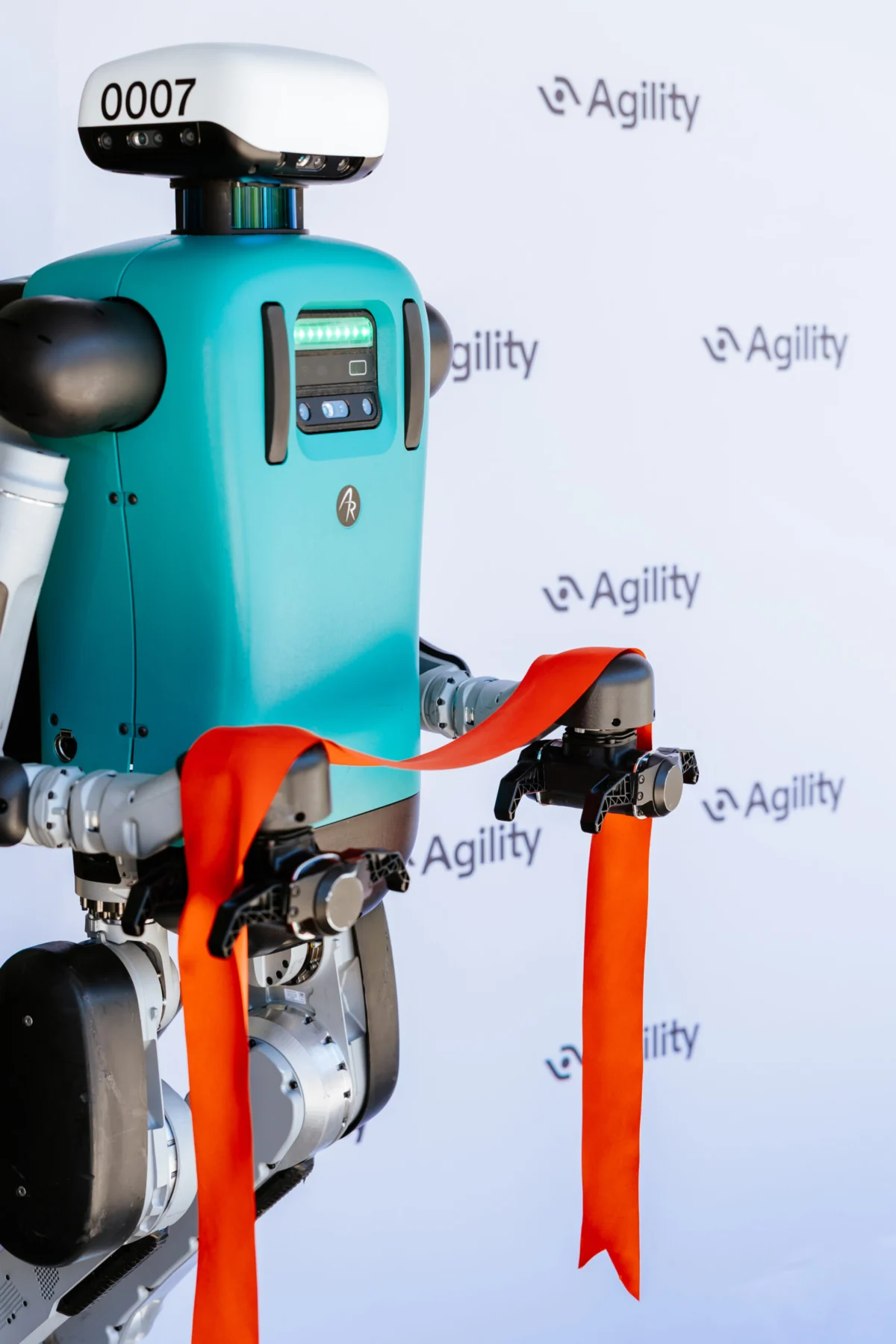
Agility Robotics, a pioneer in the development of bipedal humanoid robots, has announced the opening of a sprawling 60,000-square-foot facility in Fremont, California. This strategic move aims to accelerate the training and deployment of its Digit robots, placing the company in close proximity to where Tesla is anticipated to commence manufacturing its Optimus humanoid robots later this year. The facility represents a significant step in Agility’s journey to scale its commercial operations and solidify its position in an increasingly competitive market.
A New Hub for Humanoid Innovation
The new Fremont facility is not merely an assembly plant but a dedicated hub for advanced robotic skill development. Here, Agility’s six-foot-tall Digit robots will undergo rigorous training in environments meticulously designed to mimic real-world industrial and warehouse settings. This hands-on learning approach is critical for refining Digit’s capabilities, ensuring it can seamlessly integrate into diverse operational workflows for existing and prospective clients. The company currently has more than 30 customers in active discussions regarding Digit deployments, underscoring the growing demand for intelligent automation solutions.
This expansion comes at a pivotal moment for the robotics industry. Global investment in robotics and automation has seen a dramatic surge, driven by factors such as persistent labor shortages, rising operational costs, and the increasing complexity of supply chains. According to a report by MarketsandMarkets, the humanoid robot market size is projected to grow from an estimated USD 1.8 billion in 2023 to USD 17.3 billion by 2028, at a Compound Annual Growth Rate (CAGR) of 57.5%. This growth is fueled by advancements in AI, sensor technology, and mechanical engineering, making humanoid robots increasingly viable for a wider range of applications.
Agility’s Commercial Edge: Digit’s Real-World Impact
While many companies are still in the prototype or early development stages for humanoid robots, Agility Robotics distinguishes itself through its established commercial footprint. Unlike Tesla, which possesses immense capital and a grand vision for Optimus, Agility has focused on pragmatic, revenue-generating applications for its Digit robot. Digit is already actively deployed, performing essential tasks such as carrying totes and bins in manufacturing and warehouse environments for prominent customers including Amazon, GXO Logistics, Schaeffler, and Toyota Motor Manufacturing Canada.
Agility CEO Peggy Johnson highlighted the company’s significant lead in commercialization, stating, "It’s great to have [Tesla] in the same area as us, because really, for a long time Agility was out there alone, and it’s good to have others in the humanoid space. We have commercialized. We now know what it takes to walk into these facilities and meet their safety bars, their regulatory bars, compliance, plug into their IT infrastructure, plug into their warehouse management system." This emphasis on practical integration and compliance underscores Agility’s commitment to delivering immediate value to businesses. The company has secured an impressive $300 million in contract orders for its robots, a testament to the market’s confidence in Digit’s capabilities.
Although Agility has not publicly disclosed the exact number of Digits built or deployed, external observers estimate that dozens are already operating in either pilot programs or revenue-generating roles. A notable example cited by the company is Digit’s performance at a GXO logistics facility, where it successfully moved over 100,000 totes, demonstrating its efficiency and reliability in a demanding industrial setting.
The Broader Landscape: Tesla’s Ambitious Vision and Emerging Competitors
Agility Robotics was founded in 2015 by a team of researchers who pioneered advanced techniques for bipedal locomotion, enabling robots to walk safely and dynamically on two legs. This foundational expertise has given Agility a significant head start over a newer generation of AI-inspired robotic startups. Companies like Figure, 1X, the Bot Company, and Sunday Robotics are also vying for a share of the burgeoning humanoid market, often leveraging recent breakthroughs in artificial intelligence, particularly transformer-based neural networks that power large language models (LLMs).
Tesla’s entry into the humanoid robotics arena with Optimus represents a high-profile challenge. Elon Musk has repeatedly expressed an exceptionally ambitious vision for Optimus, recently declaring it "the biggest product ever" once it becomes "useful outside of Tesla sometime next year." This long-term perspective, coupled with Tesla’s significant manufacturing capabilities and brand recognition, positions Optimus as a formidable potential disruptor. However, Optimus is still largely in its developmental phase, with Tesla yet to demonstrate commercial-scale deployments. The contrasting strategies — Agility’s focus on immediate commercial utility versus Tesla’s grander, potentially more distant, vision — highlight the diverse approaches within the humanoid robotics sector.
Navigating Autonomy: AI’s Promise and Practical Constraints
The integration of artificial intelligence, particularly generative AI, is a central theme in the evolution of humanoid robotics. While AI promises unprecedented advancements in robotic behavior and adaptability, Agility Robotics is adopting a measured and practical approach to autonomy, especially concerning safety-critical functions.
Agility co-founder and chairman Damion Shelton articulated this philosophy, drawing parallels with established technologies: "When you think about self-driving cars, you know, as a non-humanoid example, you really don’t want the anti-lock brake controller under AI control. The analog with humanoids is all the safety stuff needs to go through a path that’s not generative AI, right? You don’t want to get creative with your safety stack." This statement underscores a crucial distinction: while generative AI can unlock new levels of versatility and problem-solving for robots, core safety systems must remain robust, predictable, and deterministic, not subject to the probabilistic outputs of complex neural networks.
Despite these safety considerations, AI is seen as an indispensable tool for achieving scale and expanding the range of applications for humanoid robots. Shelton recalled an early challenge: "One of the first times [Bruce Leak, the Quicktime inventor who serves on Agility’s board] asked us how we were going to go about coding applications for the robot, we didn’t really have a good answer. The number of things you can imagine a robot doing is far larger than the number of engineers who can program robots. And generative AI answers that question definitively." This perspective highlights AI’s potential to democratize robot programming, allowing for more intuitive instruction and rapid adaptation to new tasks without extensive, bespoke coding by human engineers. This capability is vital for reaching the "trillion-dollar company" vision outlined by Agility’s leadership.
Paving the Way to Public Markets: Agility’s Reverse Merger
In a move set to further elevate its profile and secure capital for accelerated growth, Agility Robotics CEO Peggy Johnson is currently leading the company through a reverse merger. This strategic maneuver is expected to culminate in Agility becoming the first pure-play humanoid robot company to trade on the public markets later this year. A reverse merger is a process where a private company effectively goes public by merging with an existing public company, typically a shell company. This route often offers a faster, less expensive, and less complex alternative to a traditional Initial Public Offering (IPO).
Going public through this mechanism will provide Agility with access to a broader pool of capital, enhancing its ability to invest in research and development, scale manufacturing, and expand its market reach. It also offers liquidity for early investors and employees, signaling a maturation of the humanoid robotics sector as a viable investment class. The move is a strong indicator of investor confidence in Agility’s technology and commercial strategy, especially given its established revenue streams and clear path to market expansion.
The Future of Work: From Totes to Trillion-Dollar Visions
Jonathan Hurst, Agility’s co-founder and chief robot officer, painted a vivid picture of the company’s long-term aspirations, emphasizing the vast untapped potential within manufacturing and logistics alone. "Let’s start with the bins and the totes, and then let’s do the picking and the kitting," Hurst outlined. "And then let’s like start working on cardboard, which is really hard, and loading and unloading tractor trailers and things like that. Okay, now we’re at 100 million robots, you know? A trillion-dollar company." This vision underscores the incremental yet monumental impact humanoid robots could have by automating increasingly complex and labor-intensive tasks within industrial settings.
Crucially, Agility Robotics maintains a cautious stance regarding the deployment of humanoid robots in consumer homes in the near future. This pragmatic view aligns with the consensus among most independent robotics experts, who argue that current robotic technologies, while advanced, are not yet sufficiently safe or cost-effective for widespread household use. The complexities of operating safely and reliably in unstructured, unpredictable home environments, often alongside untrained individuals, present significant challenges that require further technological maturation.
Currently, Digit operates primarily in human-free zones within facilities. However, Agility’s commitment to safety and human-robot collaboration is evident in the planned features for version 5 of Digit, anticipated to be unveiled this fall. This upcoming iteration will incorporate advanced sensing capabilities, allowing Digit to detect and interact safely with humans, thereby removing the necessity for strictly robot-only operational areas. This development is critical for broader adoption, enabling more flexible and collaborative work environments.
Investment Trends and Market Dynamics in Robotics
The establishment of Agility’s Fremont facility and its impending public listing reflect broader trends in the robotics investment landscape. Venture capital funding for robotics companies has surged in recent years, driven by the compelling economic arguments for automation. Companies are increasingly seeking solutions to mitigate the impact of labor shortages, particularly in sectors like manufacturing, warehousing, and logistics. According to industry reports, the global robotics market size was valued at USD 47.9 billion in 2022 and is expected to grow at a CAGR of 10.9% from 2023 to 2030, reaching USD 100.9 billion. Within this, the humanoid segment, while nascent, is garnering significant attention due to its potential versatility and ability to operate in human-centric environments.
The strategic co-location of Agility and Tesla in Fremont could foster a regional cluster of humanoid robotics innovation, potentially attracting further talent and investment to the area. While direct competition is inevitable, the "rising tide lifts all boats" principle may also apply, with advancements from one company pushing the entire sector forward. Agility’s focus on commercialization and immediate return on investment provides a tangible model for how humanoid robots can transition from research curiosities to indispensable tools in the modern economy. As the industry matures, the distinctions between practical, incremental deployment and ambitious, long-term visions will continue to shape the development and adoption of these increasingly capable machines.