Galang Taruna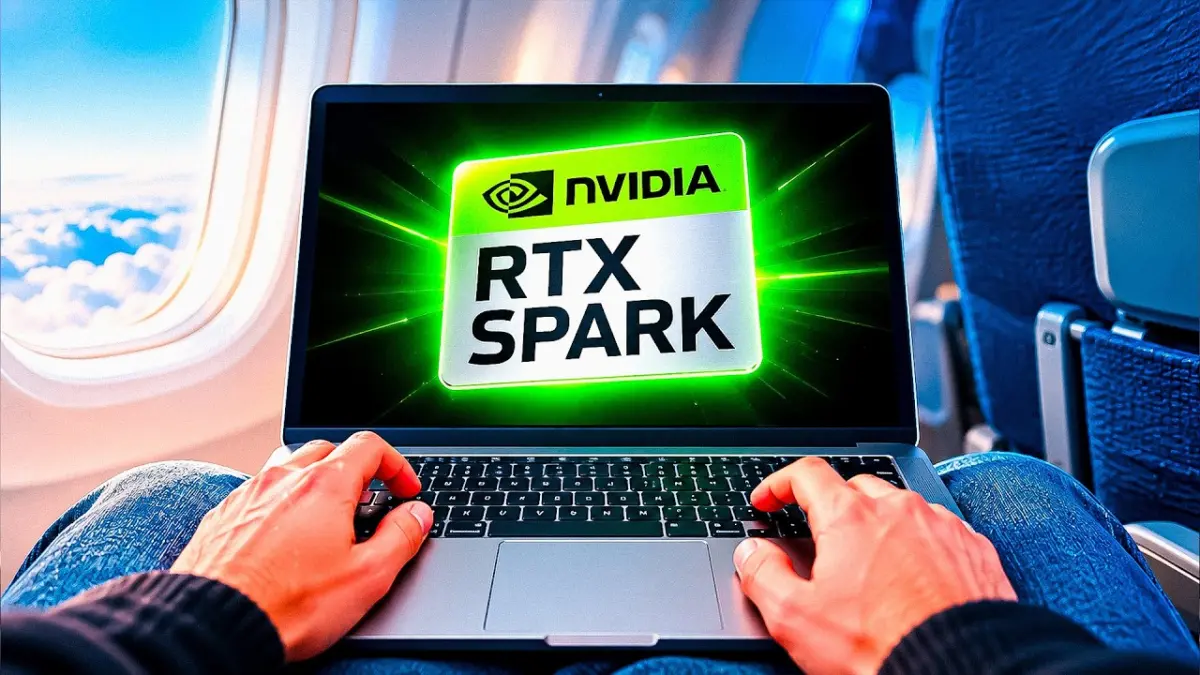
A revolutionary chip from Nvidia, the RTX Spark, poses a significant challenge to the prevailing cloud-based artificial intelligence landscape, promising to liberate users from recurring subscriptions to services like ChatGPT or Claude. To rigorously evaluate this ambitious claim, an Asus laptop equipped with the ARM-based Nvidia RTX Spark chip was subjected to an arduous 11-hour intercontinental flight from San Francisco to Paris, entirely devoid of internet connectivity. This real-world, offline crucible aimed to ascertain the chip’s capability to run sophisticated AI models locally, free from the constraints of network access, subscription fees, or usage tokens. The test, documented comprehensively in a dedicated video report by Frandroid, delves into the practical performance, advantages, and current limitations of this novel hardware architecture.
The core of this groundbreaking technology lies in the Nvidia RTX Spark chip, an intriguing architectural marvel that couples a powerful Nvidia GPU with an ARM-based Central Processing Unit (CPU) developed in collaboration with MediaTek. This strategic alliance represents a direct assault on the long-standing duopoly of Intel and AMD in the personal computing processor market, aiming to introduce a new paradigm where AI processing is handled directly on the device, rather than relying on remote servers.
The Dawn of On-Device AI: A Paradigm Shift in Computing
For years, the burgeoning field of artificial intelligence has been largely dominated by cloud-based solutions. Services such as OpenAI’s ChatGPT, Anthropic’s Claude, and Google’s Gemini have demonstrated immense capabilities, processing vast amounts of data and generating complex outputs by leveraging immense computational power housed in distant data centers. While these services offer unparalleled scalability, access to the latest models, and convenience, they come with inherent drawbacks: persistent internet dependency, potential privacy concerns as user data traverses external servers, and often, recurring subscription costs or per-token usage fees.
The concept of "on-device AI" or "edge AI" seeks to address these limitations by shifting the processing power closer to the user. This means that large language models (LLMs), image generators, and other AI applications can run directly on a personal computer, smartphone, or other local device. The benefits are manifold: enhanced data privacy since information never leaves the device, instant access without internet latency, freedom from subscription models, and potentially more personalized experiences tailored to individual user data held locally. Nvidia’s RTX Spark chip is at the forefront of this movement, aiming to make powerful, autonomous AI a standard feature of personal computing.
Nvidia’s foray into this hybrid CPU-GPU architecture, particularly with an ARM-based CPU, is a significant strategic pivot. Traditionally known for its dominant position in high-performance graphics processing units (GPUs) and AI accelerators for data centers, Nvidia is now extending its influence into the client computing space. This move is bolstered by the rising success of ARM architecture in personal computers, exemplified by Apple’s M-series chips, which have showcased remarkable performance-per-watt efficiency. By partnering with MediaTek, a prominent ARM chip designer, Nvidia is positioning the RTX Spark as a formidable contender, blending ARM’s efficiency with Nvidia’s unparalleled GPU expertise for AI acceleration.
Architecture of Innovation: Dissecting the Nvidia RTX Spark
The Nvidia RTX Spark processor is not merely an incremental upgrade; it represents a foundational rethinking of PC architecture for the AI era. At its heart lies a powerful Nvidia GPU, optimized specifically for AI workloads, integrated seamlessly with an ARM-based CPU. This hybrid design is crucial because while GPUs excel at the parallel processing required for neural networks, a robust CPU is still necessary for general computing tasks and orchestrating the AI operations.
Unlike traditional x86 architectures from Intel and AMD, which have historically dominated the PC market, ARM architecture is renowned for its energy efficiency. This characteristic is particularly vital for mobile devices and laptops, where battery life is a critical factor. MediaTek’s contribution as the ARM CPU designer brings a wealth of experience in power-efficient computing to the table. The synergy between MediaTek’s ARM CPU and Nvidia’s high-performance GPU aims to deliver a balanced system that is both powerful enough for complex AI tasks and efficient enough for prolonged portable use.
The explicit objective behind this integrated design is to enable complex AI models, often requiring billions of parameters, to execute locally without the need for an external connection or cloud infrastructure. This contrasts sharply with current market offerings where even chips with integrated Neural Processing Units (NPUs) primarily handle lighter AI tasks, leaving heavy lifting to cloud services or dedicated, power-hungry discrete GPUs. The RTX Spark, therefore, seeks to democratize access to advanced AI, embedding capabilities previously reserved for data centers or high-end workstations directly into everyday laptops.
The Ultimate Test: 11 Hours Offline, San Francisco to Paris
To genuinely assess the Nvidia RTX Spark’s capabilities, the chosen testing environment was deliberately extreme: an 11-hour flight from San Francisco to Paris. This particular scenario was selected precisely because it guaranteed a complete and sustained disconnection from any internet network, simulating a common real-world limitation for travelers, remote workers, or anyone operating in areas with poor connectivity. The test aimed to determine if the ARM chips, augmented by Nvidia’s AI prowess, could truly deliver robust performance in an everyday, offline context.
The test platform was an Asus ProArt P16, one of the inaugural laptop models to feature this revolutionary hardware transition. This specific machine was configured with a substantial 64 gigabytes (GB) of Random Access Memory (RAM), a critical component for running large AI models efficiently. Earlier assessments of the Asus ProArt P16 had already provided insights into its overall ergonomics and user experience, setting the stage for this deeper dive into its AI performance.
For the evaluation, several open-source language models were installed directly onto the laptop. These included the Chinese model Qwen 3.6, which boasts 35 billion parameters, and a more recent, optimized version, Qwen 3.8, with 27 billion parameters. In addition to LLMs, the powerful Whisper Large V3 Turbo, an advanced audio and video transcription model, was also deployed to test the chip’s multimedia processing capabilities. This selection allowed for a diverse assessment of the RTX Spark’s ability to handle different types of AI workloads in an entirely self-contained environment.
Performance Under Pressure: LLMs and Transcription in Isolation
The results of the flight test were, in many respects, profoundly impressive, particularly concerning the performance of the chosen language models. The Qwen 3.6 model, with its substantial 35 billion parameters, demonstrated remarkable speed. It processed and generated text at an astounding rate of 70 tokens per second. To put this into perspective, human reading speed typically ranges from 200 to 300 words per minute, which translates to roughly 3 to 5 words per second. Given that a token often corresponds to part of a word, 70 tokens per second is significantly faster than human comprehension, allowing for near-instantaneous text generation. This rapid output capability highlighted the chip’s raw processing power for large-scale text generation in an offline setting.
When testing the more recent and optimized Qwen 3.8 model, which features 27 billion parameters, the speed decreased to 16 tokens per second. However, this reduction in speed was accompanied by a noticeable leap in the relevance and quality of the generated responses. This trade-off underscores a crucial aspect of AI model deployment: optimization often involves balancing computational efficiency with output quality. Despite the lower token rate, the improved pertinence of Qwen 3.8’s responses indicates the chip’s ability to effectively run sophisticated models that prioritize accuracy and contextual understanding. The test confirmed that even without internet access, the AI delivered "stunning" and "very, very comprehensive" results, underscoring the self-contained nature of its intelligence.
Beyond language models, the Nvidia RTX Spark also excelled in handling demanding multimedia tasks. The Whisper Large V3 Turbo model, known for its advanced audio and video transcription capabilities, was put to the test. The machine successfully transcribed a 70-second audio sequence in a mere 6 seconds, showcasing exceptional processing speed. Furthermore, the model seamlessly managed both French and English within the same sequence, demonstrating its robust bilingual capabilities. This performance is a significant boon for content creators, journalists, and professionals who require rapid and accurate transcription services, especially in environments where internet access is unreliable or unavailable. The ability to perform such complex tasks locally, with high efficiency, marks a substantial step forward for productivity on portable devices.
Pushing the Limits: Agentic AI and Memory Constraints
While the Nvidia RTX Spark demonstrated formidable capabilities, particularly with single-task LLMs and transcription, the test also revealed areas where current hardware configurations face limitations. The ambition to push the boundaries further led to an experiment with "agentic AI," a more advanced form where multiple AI models collaborate to achieve a complex goal. Specifically, the test involved combining the Hermes language model with the Flux image generator, aiming for an AI agent capable of understanding a prompt and subsequently generating a corresponding visual.
It was during this multi-modal, agentic AI attempt that the limitations of the 64 GB of RAM became apparent. The system encountered "multiple error messages" related to the "saturation of video memory" (VRAM). Running two large, resource-intensive models simultaneously, especially when one is a powerful image generator, quickly consumed the available memory, leading to system instability and failures. To successfully generate a visual, the testers had to employ a workaround: reducing the "context size" for the models, essentially limiting the amount of information they could process at once.
This finding highlights a critical bottleneck for advanced on-device AI. While 64 GB of RAM is substantial for many computing tasks, it proved insufficient for the most complex, multi-modal, and agentic AI workloads. The implication is clear: for truly "very complex" tasks that involve multiple sophisticated AI agents or large generative models, an alternative configuration with 128 GB of RAM will be indispensable. This insight is further elaborated in the companion travelogue, which details the experience of replacing ChatGPT with a free Chinese AI during the 11-hour internet-free flight. This points to a future where higher memory capacities might become the standard for AI-centric personal computers, akin to how storage or CPU cores evolved over time.
Practical Realities: Heat, Battery, and User Experience
Beyond raw performance, the real-world application of such powerful technology in a portable form factor invariably brings practical considerations to the forefront. The flight test highlighted two significant challenges associated with running the Nvidia RTX Spark at full capacity: thermal management and battery life.
When the arsenal of AI models was deployed and pushed to its limits, the laptop transformed into a "true radiator." The considerable heat generated by the intense computational demands of the GPU and CPU necessitated aggressive cooling, causing the fans to spin at high speeds. The resulting blast of hot air from the vents quickly became "uncomfortable" when the laptop was placed on the user’s lap. This thermal output is not unexpected for high-performance computing but poses a usability challenge for a device designed for portability and prolonged use in various environments. Effective thermal design, balancing cooling efficiency with noise and user comfort, will be crucial for broader adoption.
Concurrently, the energy consumption required to power such demanding AI operations took a heavy toll on the laptop’s battery life. The "autonomy melts away rapidly," indicating a significant drain on power when AI tasks are running at peak performance. While the exact battery life under these conditions was not specified in the excerpt, the observation suggests that users will need to manage their expectations regarding unplugged usage when engaging in intensive AI work. This highlights a fundamental trade-off: the immense power required for local, complex AI comes at the expense of portability and sustained battery performance. Future iterations of the chip and laptop designs will need to prioritize energy efficiency and larger battery capacities to mitigate this issue. A comprehensive comparative analysis of the Nvidia RTX Spark chip against leading market alternatives further elucidates its architectural nuances and performance characteristics, offering deeper insights into its competitive positioning.
Broader Implications and Future Outlook
The advent of the Nvidia RTX Spark chip and its demonstrated capabilities carry profound implications for the future of personal computing and the broader AI landscape. It heralds a potential disruption of the cloud AI dominance, offering users an alternative that prioritizes privacy, cost-efficiency, and accessibility. By enabling sophisticated AI models to run locally, the chip empowers users with greater control over their data, as sensitive information no longer needs to be uploaded to external servers. This enhanced privacy is a significant selling point in an era of increasing data security concerns.
Economically, the shift towards on-device AI could lead to reduced reliance on recurring subscription fees for AI services, democratizing access to powerful tools that were previously gated behind paywalls. This might foster innovation in software development, encouraging the creation of new business models centered around one-time purchases or value-added services rather than continuous subscriptions.
The competitive landscape in the AI chip market is set to intensify. Nvidia, with its RTX Spark, is now a direct competitor not only to Intel and AMD in the CPU space but also to other players like Qualcomm and Apple, who are heavily investing in AI-accelerated ARM chips for PCs. This fierce competition is likely to drive rapid advancements in performance, efficiency, and integration of AI capabilities into personal devices.
However, the path forward is not without its challenges. Beyond the thermal and battery considerations, there is a need for continuous optimization of AI models for on-device deployment. Software ecosystems will also need to evolve, with developers embracing and leveraging the local AI capabilities of these new chips. Furthermore, the ethical considerations surrounding AI, such as bias in models, remain relevant even when processing occurs locally, necessitating responsible development and deployment practices.
Ultimately, the Nvidia RTX Spark represents a significant stride towards ubiquitous, personal AI. It transforms the computer from a mere terminal accessing remote intelligence into an intelligent agent itself, capable of performing complex cognitive tasks independently. While challenges remain in perfecting the balance between power, portability, and user experience, the successful flight test underscores the immense potential of this technology. It marks a pivotal moment, signaling a future where advanced AI is not just a cloud service but an integral, offline-capable component of our personal computing experience. The journey towards truly autonomous, powerful on-device AI has clearly taken a revolutionary leap forward.
For those eager to stay abreast of these transformative technological developments, subscribing to Frandroid’s YouTube channel offers ongoing insights and analyses.