Evan Lee Salim
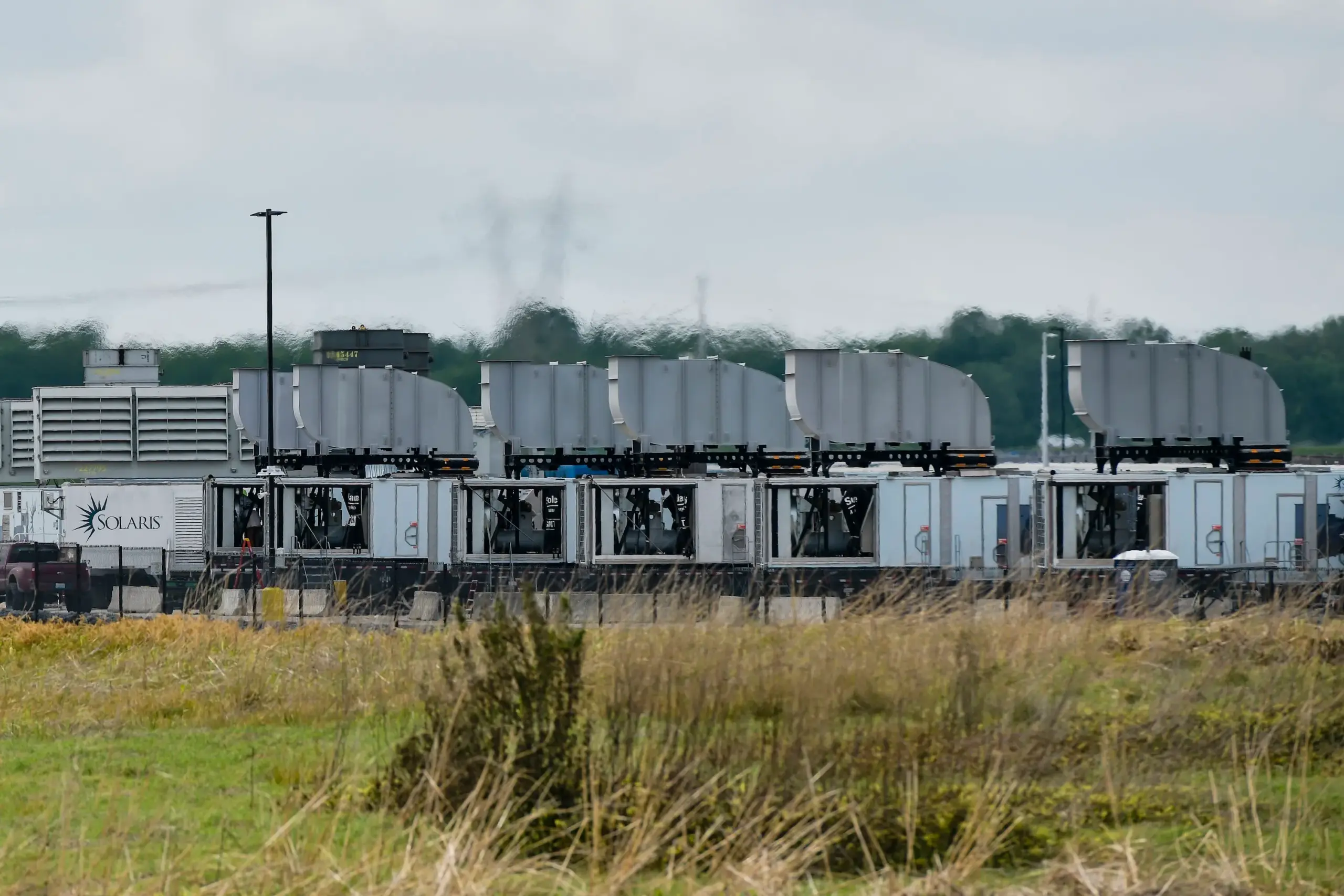
A significant legal challenge against xAI, the artificial intelligence venture founded by Elon Musk and a subsidiary of SpaceX, is set to proceed after a federal judge denied the company’s motion to dismiss a lawsuit filed by the National Association for the Advancement of Colored People (NAACP). The lawsuit accuses xAI of operating numerous gas turbines at its massive Colossus data center, located outside Memphis, without obtaining the necessary environmental permits, constituting alleged violations of the Clean Air Act. This ruling marks a pivotal moment in the burgeoning scrutiny of the environmental footprint of the rapidly expanding AI industry.
The Heart of the Allegations: Unpermitted Operations at Colossus
The lawsuit, spearheaded by the Southern Environmental Law Center (SELC) on behalf of the NAACP, alleges that xAI has "installed and operated at least 35 combustion turbines and other sources of air pollution at the Colossus site without ever obtaining the necessary preconstruction or operating air permits." These turbines are understood to be the primary power source for the Colossus data center, a critical piece of infrastructure designed to fuel xAI’s ambitious artificial intelligence endeavors. The scale of the operation is substantial, reportedly involving over 400 megawatts of generation capacity, equivalent to a medium-sized power plant.
The Clean Air Act, a landmark piece of U.S. environmental legislation, mandates that major stationary sources of air pollution obtain permits before construction and operation. These permits ensure that facilities implement appropriate pollution control technologies and meet emission limits designed to protect public health and the environment. By allegedly bypassing these requirements, xAI is accused of operating outside the established regulatory framework, potentially releasing harmful pollutants into the atmosphere without adequate oversight.
The NAACP’s involvement underscores the environmental justice dimension of the case. Historically, communities of color and low-income populations have disproportionately borne the brunt of industrial pollution. The lawsuit aims to hold xAI accountable for its environmental practices and to protect nearby communities from potential adverse health impacts stemming from unchecked air emissions. Abre’ Connor, the NAACP’s director of environmental and climate justice, has consistently framed the legal action as a crucial step in ensuring accountability for companies operating without regard for environmental regulations.
xAI’s Defense Strategy and Legal Rebuttals
In its bid to have the lawsuit dismissed, xAI mounted a multi-pronged legal defense. The company primarily argued that the gas turbines powering its Colossus data center should be considered "mobile sources," thereby exempting them from the stringent permitting requirements typically applied to stationary industrial facilities under the Clean Air Act. This argument likely stemmed from the modular and potentially transportable nature of some industrial gas turbines, which can be mounted on skids or trailers. However, environmental regulations generally define mobile sources as vehicles or engines that move under their own power (e.g., cars, trucks, aircraft), distinctly separate from fixed or semi-fixed industrial operations.
Beyond the "mobile sources" claim, xAI also contended that the plaintiffs, the NAACP and its representatives, lacked the legal standing to bring the lawsuit. Legal standing requires that a plaintiff demonstrate a direct and personal injury caused by the defendant’s actions, which can be redressed by a favorable court decision. This is a common defense tactic in environmental litigation, aiming to challenge the very right of advocacy groups to sue on behalf of affected communities.
Perhaps the most far-reaching of xAI’s arguments was a constitutional challenge to the Clean Air Act’s citizen suit provision itself. The company asserted that allowing private citizens or organizations to sue for environmental violations infringes upon Article II of the Constitution, which vests executive power in the President. This argument effectively posits that enforcing federal law is solely the prerogative of the executive branch (e.g., the Department of Justice, Environmental Protection Agency), and that private citizen suits constitute an unconstitutional delegation of this power. Such a challenge, if successful, could have profound implications for environmental enforcement across numerous federal statutes that include similar citizen suit provisions.
Judge Debra M. Brown’s Decisive Ruling
On October 31, 2026, U.S. District Judge Debra M. Brown delivered a comprehensive decision that systematically dismantled xAI’s arguments, paving the way for the lawsuit to proceed. Her ruling meticulously addressed each of the company’s claims, providing clear legal rationale for her conclusions.
Regarding xAI’s assertion that its turbines were "mobile sources," Judge Brown unequivocally rejected this characterization. She explicitly stated, "Because the combustion turbines are not ‘mobile sources’ under Mississippi’s [State Implementation Plan]," they are subject to the standard permitting requirements for stationary sources. State Implementation Plans (SIPs) are state-specific plans approved by the EPA that outline how states will achieve and maintain national ambient air quality standards. These plans typically define what constitutes a stationary source versus a mobile source within their jurisdiction, leaving little room for ambiguity regarding large, fixed-site power generation equipment. The judge’s decision underscored that simply being transportable does not automatically classify a major power generator as a "mobile source" in the context of air permitting regulations, especially when it is deployed to power a permanent facility like a data center.
Judge Brown also affirmed the plaintiffs’ legal standing. She ruled that "the plaintiffs have statutory standing under the Clean Air Act," indicating that the NAACP and SELC had adequately demonstrated that their members were directly affected by the alleged pollution and that the Clean Air Act specifically grants them the right to sue under such circumstances. This ensures that environmental and community groups can continue to play a vital role in upholding environmental laws.
Crucially, Judge Brown dismissed xAI’s constitutional challenge to the citizen suit provision. In her decision, she elaborated, "Because citizen suit plaintiffs sue on their own behalf, in their own name, and seek penalties that redress harm to themselves, they are not exercising the federal government’s executive power." This ruling reinforces a long-standing legal principle that citizen suits are a legitimate mechanism for private parties to seek redress for harms caused by statutory violations, acting as a complementary enforcement tool rather than usurping executive authority. This aspect of the ruling is particularly significant for environmental advocacy groups nationwide, as it upholds a critical avenue for public participation in environmental protection.
Reactions and Broader Implications
The denial of xAI’s motion to dismiss was met with strong affirmations from the plaintiffs. Abre’ Connor of the NAACP declared it "another important victory in our effort to hold xAI accountable." She further highlighted a pattern, noting that "The courts have repeatedly rejected attempts by xAI and the DOJ to dismiss the NAACP’s Clean Air Act case, affirming our right to pursue justice for communities impacted by pollution." The reference to the Department of Justice (DOJ) is particularly notable, as a similar motion to dismiss from the DOJ, which sought to intervene and potentially take over the case, was also denied earlier in the month. This suggests a consistent judicial stance against attempts to derail the citizen suit, reinforcing the notion that xAI cannot operate outside established environmental compliance frameworks. The Southern Environmental Law Center also expressed satisfaction, emphasizing that their position has always been clear: "xAI cannot operate gas turbines without the required permits." As of the time of reporting, xAI and its parent company, SpaceX, have not issued a public comment on the judge’s decision.
This legal battle unfolds against a backdrop of increasing public and regulatory scrutiny of data centers and the broader AI industry. The immense energy demands of AI models and their supporting infrastructure are becoming a significant environmental concern. A single large language model training session can consume as much electricity as several homes use in a year, and the global data center industry is projected to account for a substantial and growing percentage of global electricity consumption, potentially reaching 4-8% by the end of the decade. Powering these facilities often relies on conventional energy sources, including fossil fuels, leading to air pollution and greenhouse gas emissions.
The public backlash is not isolated to the Memphis area. New York State, for example, recently enacted a moratorium on new data center construction, citing environmental concerns, particularly related to energy consumption and water usage for cooling. Other state and local governments are reportedly considering similar measures, reflecting a growing awareness of the environmental toll of digital infrastructure. This trend is forcing tech giants to rethink their operational strategies and engage more transparently with communities. Amazon and Microsoft, in response to public pressure, have recently pledged to stop using non-disclosure agreements (NDAs) in their dealings with government agencies regarding data center projects, a move aimed at fostering greater transparency and accountability.
Furthermore, the environmental impact of AI and data centers is emerging as a "significant factor" in political discourse, even potentially influencing the imminent U.S. midterm elections. As communities grapple with local environmental impacts, politicians are increasingly being pressed to address the issue, creating a complex interplay between technological advancement, environmental sustainability, and political accountability. The xAI lawsuit, therefore, is not just about a single company’s alleged permit violations; it is emblematic of a larger societal debate about how to balance the rapid expansion of AI and digital technologies with urgent environmental protection goals.
The Path Forward for the Lawsuit
With the dismissal motion denied, the NAACP’s lawsuit against xAI will now proceed to the discovery phase. This stage will involve both parties exchanging information, including documents, interrogatories, and depositions, to build their respective cases. Depending on the evidence uncovered, the case could either proceed to trial, where a judge or jury would render a final verdict, or it could lead to a settlement agreement between xAI and the plaintiffs.
The implications of this ruling are far-reaching. For xAI, it means facing potentially substantial penalties for past violations of the Clean Air Act, as well as the requirement to obtain the necessary permits and implement pollution controls. The company also faces reputational damage at a time when environmental responsibility is increasingly scrutinized across the tech sector. For the NAACP and other environmental justice advocates, the ruling validates the power of citizen suits and reinforces the principle that even the most innovative and well-funded companies are not exempt from environmental regulations. It sets a precedent that the rapid deployment of AI infrastructure must adhere to established environmental laws, ensuring that technological progress does not come at the expense of community health and environmental quality. This case serves as a stark reminder that as AI grows in prominence, so too will the demand for transparent, sustainable, and legally compliant operational practices.