Sisilia Frederika
Cislunar space, the vast region of gravitational influence between Earth and the Moon, has transitioned from a desolate frontier into a strategic focal point for global space agencies and private enterprises. As the international community prepares for a permanent human presence on the lunar surface, the increasing density of spacecraft and hardware has raised urgent questions regarding orbital safety and long-term sustainability. A recent study conducted by a team of researchers from the Chinese Academy of Sciences (CAS) has provided a critical evaluation of the dispersion of debris clouds within this region, specifically focusing on Distant Retrograde Orbits (DROs). Their findings, published in the context of a rapidly accelerating lunar "space race," highlight the potential for a "Kessler Effect" around the Moon and underscore the necessity for international mitigation protocols.
The Evolution of Cislunar Traffic and the Debris Dilemma
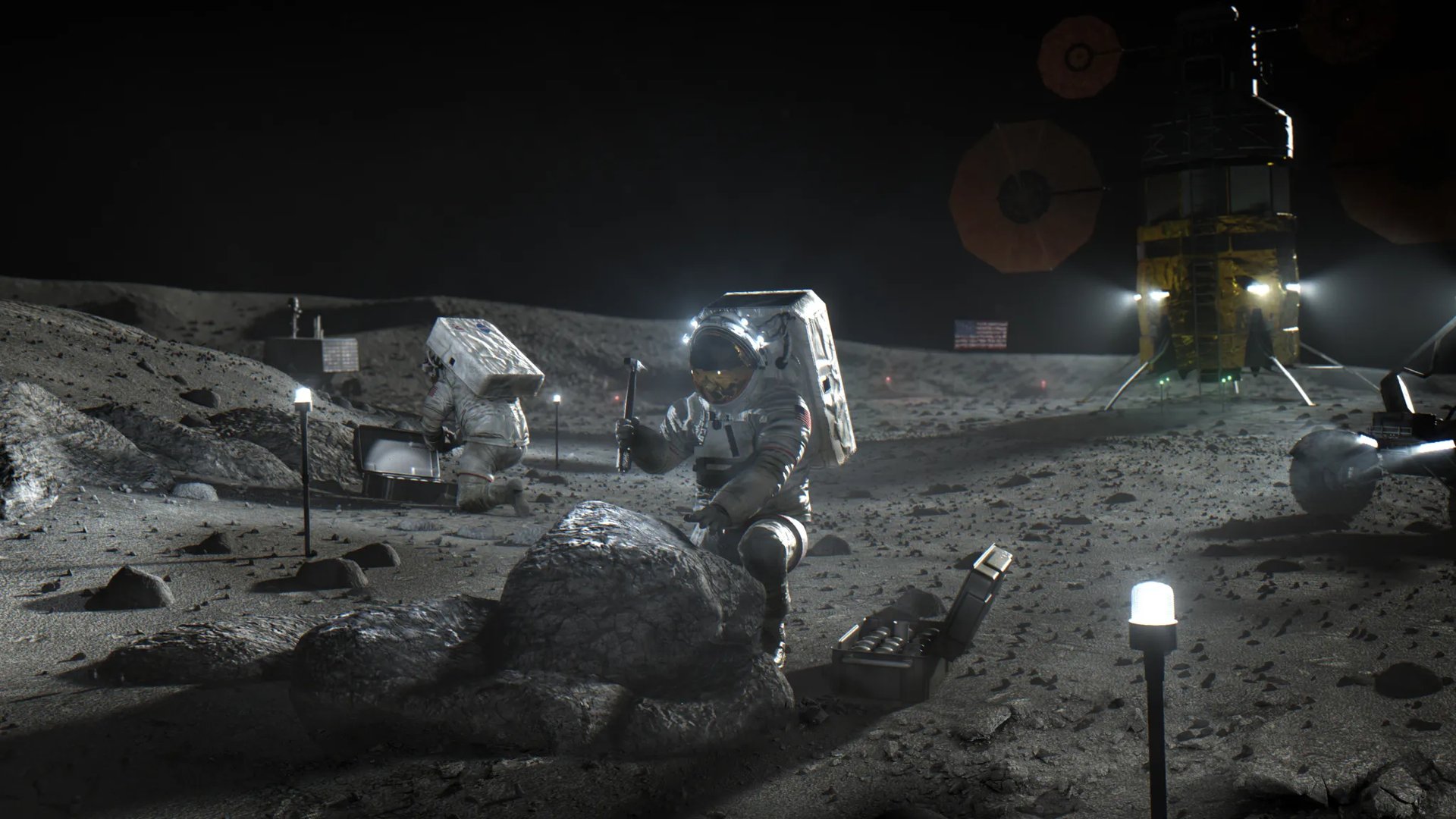
The historical context of lunar exploration was defined by the Apollo era, a period of intense but relatively short-lived activity. However, the current decade represents a fundamental shift toward sustained presence and infrastructure development. NASA’s Artemis Program, which aims to return humans to the lunar surface for the first time in over 50 years, is the centerpiece of Western efforts. Simultaneously, the International Lunar Research Station (ILRS)—a joint venture between the China National Space Administration (CNSA) and Roscosmos—serves as a parallel framework for long-term lunar habitation.
This surge in activity is not limited to superpowers. The European Space Agency (ESA) is advancing its Argonaut lunar lander program, while nations such as India, South Korea, and Japan have successfully placed orbiters and landers in the lunar vicinity. This proliferation of hardware—ranging from massive crewed vehicles to small CubeSats—has turned the Earth-Moon system into a bustling corridor.
With this increased traffic comes the inevitable byproduct of space exploration: debris. Unlike Low Earth Orbit (LEO), where atmospheric drag eventually causes many objects to de-orbit and burn up, the lunar environment lacks an atmosphere to clear out "space junk." Debris in cislunar space can remain in unstable or chaotic orbits for extended periods, posing a persistent threat to active missions. The CAS study specifically targets Distant Retrograde Orbits, which are highly stable and favored for many proposed lunar missions, including those involving deep-space communication relays and fuel depots.
Methodology: Modeling the Fragmentation of Lunar Orbits
To understand the risks associated with cislunar debris, the CAS research team employed sophisticated mathematical models to simulate breakup events—scenarios where a spacecraft or spent rocket stage explodes or collides with another object. The study utilized the Circular Restricted Three-Body Problem (CR3BP) model to establish reference orbits. This model accounts for the gravitational pull of both the Earth and the Moon, which creates complex orbital dynamics far different from the two-body mechanics used for Earth-centric satellites.
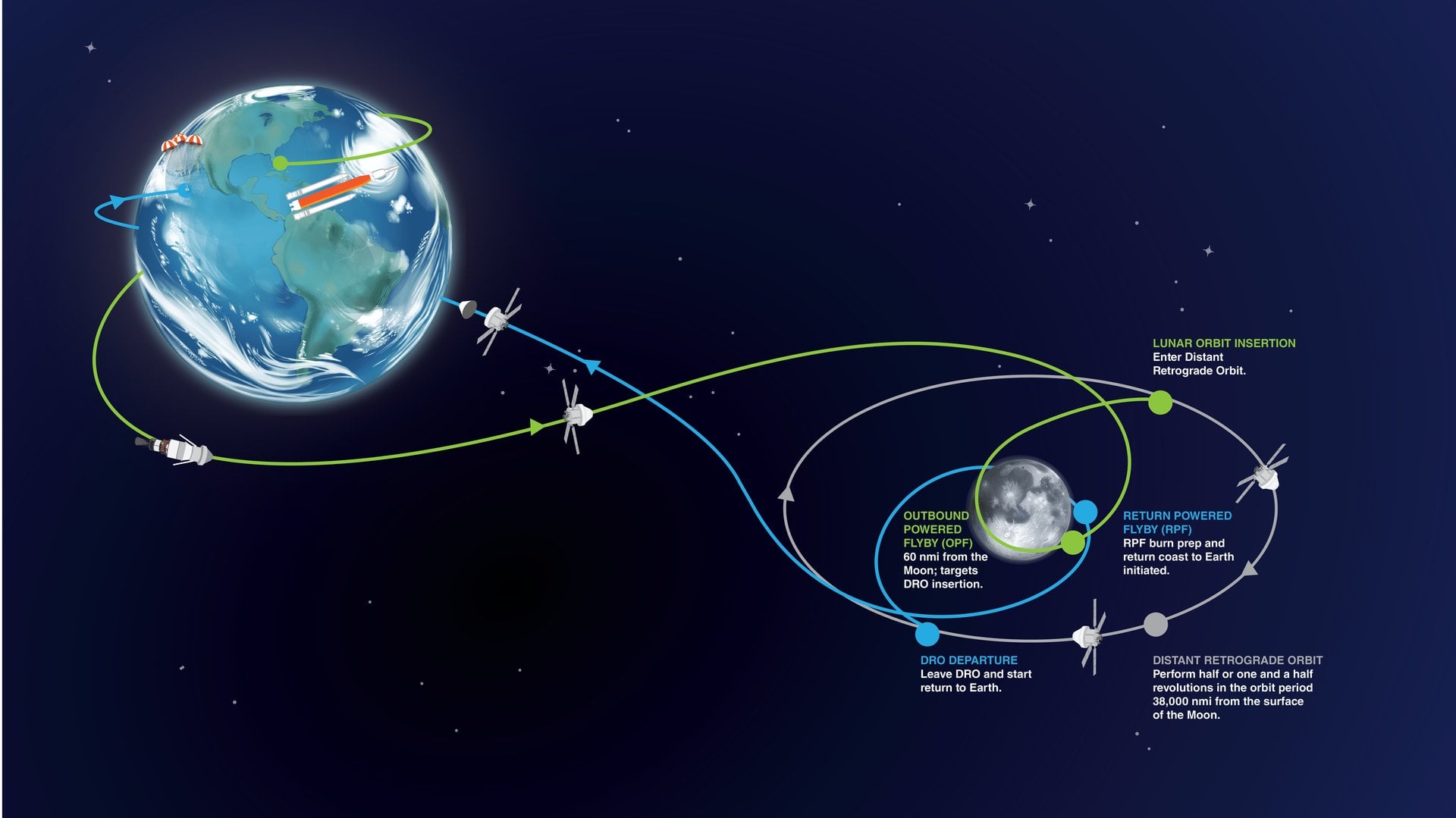
To simulate the physical reality of a collision, the researchers integrated the NASA Standard Breakup Model. This industry-standard tool provides a statistical distribution of the size, velocity, and number of fragments generated when an object disintegrates in space. The team simulated these fragmentations at multiple points along three distinct DROs to observe how the resulting debris clouds would propagate over time.
The final phase of the simulation tracked the debris over a 30-day window using the Bicircular Restricted Four-Body Problem (BCR4BP) model. This advanced framework adds the gravitational influence of the Sun into the equation, which is essential for long-term cislunar calculations as solar gravity can significantly perturb orbits over several weeks.
Key Findings: Collision Risks and Surface Impacts
The simulations yielded several critical insights into the behavior of debris in the lunar environment. One of the primary findings was that the cumulative percentage of fragments that would immediately impact the lunar surface remained relatively low, staying below 3.5% during the initial 30-day propagation period. While this suggests that the Moon’s surface is not in immediate danger of a "debris rain," it also means that the vast majority of fragments remain in orbit, where they continue to pose a risk to other spacecraft.
A notable geographical variation was observed: breakups occurring near the far side of the Moon resulted in a higher initial risk of surface impact. This is attributed to the specific gravitational gradients and orbital velocities associated with far-side trajectories.
For objects remaining in orbit, the CAS team defined a "protected region"—a donut-shaped safety zone approximately 200 kilometers (125 miles) in diameter following the path of a mission’s trajectory. The study found that approximately 3% of debris fragments from a breakup event would enter this protected region, usually peaking within 24 hours of the initial event. However, the researchers warned that some fragments could linger in these high-traffic zones for several weeks before natural gravitational perturbations cleared them. The number of debris objects within these zones varied wildly depending on the specific orbit, with some simulations showing over 100 dangerous fragments crossing paths with operational corridors.
A Timeline of Modern Lunar Expansion (2018–2030)
The urgency of the CAS study is best understood through the timeline of recent and upcoming lunar missions, which illustrates the accelerating pace of hardware deployment:
- 2018–2019: China’s Chang’e-4 becomes the first mission to land on the lunar far side, supported by the Queqiao relay satellite in a halo orbit. Israel’s Beresheet lander and India’s Chandrayaan-2 orbiter arrive, marking the start of a multi-national lunar surge.
- 2022: NASA’s CAPSTONE (Cislunar Autonomous Positioning System Technology Operations and Navigation Experiment) mission enters a Near-Rectilinear Halo Orbit (NRHO), testing the stability required for the future Lunar Gateway. NASA’s Artemis I completes a successful uncrewed circumlunar flight.
- 2023: India’s Chandrayaan-3 successfully lands at the lunar south pole, while Russia’s Luna-25 mission ends in a crash, highlighting the continued risks of lunar operations.
- 2024: Japan’s SLIM (Smart Lander for Investigating Moon) achieves a precision landing. China’s Chang’e-6 mission successfully returns samples from the lunar far side.
- 2025–2026: Scheduled launch of Artemis II, the first crewed mission to orbit the Moon since 1972. NASA and its partners plan to begin the assembly of the Lunar Gateway.
- 2027–2030: China plans the Chang’e-7 and Chang’e-8 missions, which will serve as the foundational elements of the ILRS. NASA targets the Artemis III mission for a crewed lunar landing near the south pole.
Analysis: Implications for Global Space Policy
The findings of the Chinese Academy of Sciences carry significant implications for the governance of cislunar space. Currently, international space law, primarily the 1967 Outer Space Treaty, provides a broad framework but lacks specific, enforceable regulations regarding debris mitigation in cislunar orbits.
The "Kessler Effect," a theory proposed by NASA scientist Donald J. Kessler in 1978, suggests that the density of objects in LEO could become high enough that collisions create a cascade of more debris, eventually making certain orbits unusable. The CAS study suggests that while we are not yet at a Kessler-level tipping point around the Moon, the "seeds" of such a scenario are being sown.
Strategic analysts suggest that the results of this study will likely bolster calls for a "Lunar Traffic Management" system. Unlike LEO, which is monitored by the U.S. Space Command and various international tracking networks, cislunar space is currently under-monitored. Small debris objects at a distance of 380,000 kilometers are nearly impossible to track with current ground-based radar, creating a "blind spot" for mission planners.
Furthermore, the CAS study highlights the need for "planetary protection" in a new context. Traditionally, planetary protection aimed to prevent biological contamination of other worlds. In the modern era, this definition is expanding to include "environmental protection" of the orbital regimes themselves. The potential for high-velocity "fly-by" events—where debris crosses a spacecraft’s path at several kilometers per second—means that even a fragment the size of a marble could end a multi-billion-dollar mission.
Conclusion: Toward Sustainable Stewardship
As humanity moves toward becoming a multi-planetary species, the stewardship of cislunar space must become a shared priority. The CAS research serves as a technical foundation for what will inevitably become a diplomatic challenge. Future lunar missions will likely be required to undergo rigorous risk assessments that account for fragmentation potential and long-term orbital residency of spent stages.
The consensus among the scientific community is that the "Wild West" era of lunar exploration must give way to a structured, regulated environment. Whether through the Artemis Accords or a new UN-led treaty, the mitigation of debris in DROs and other strategic orbits is no longer a theoretical concern but a prerequisite for the safe development of the lunar frontier. If the goal is a permanent human presence on the Moon, the preservation of the pathways to get there is the first and most vital step.