Evan Lee Salim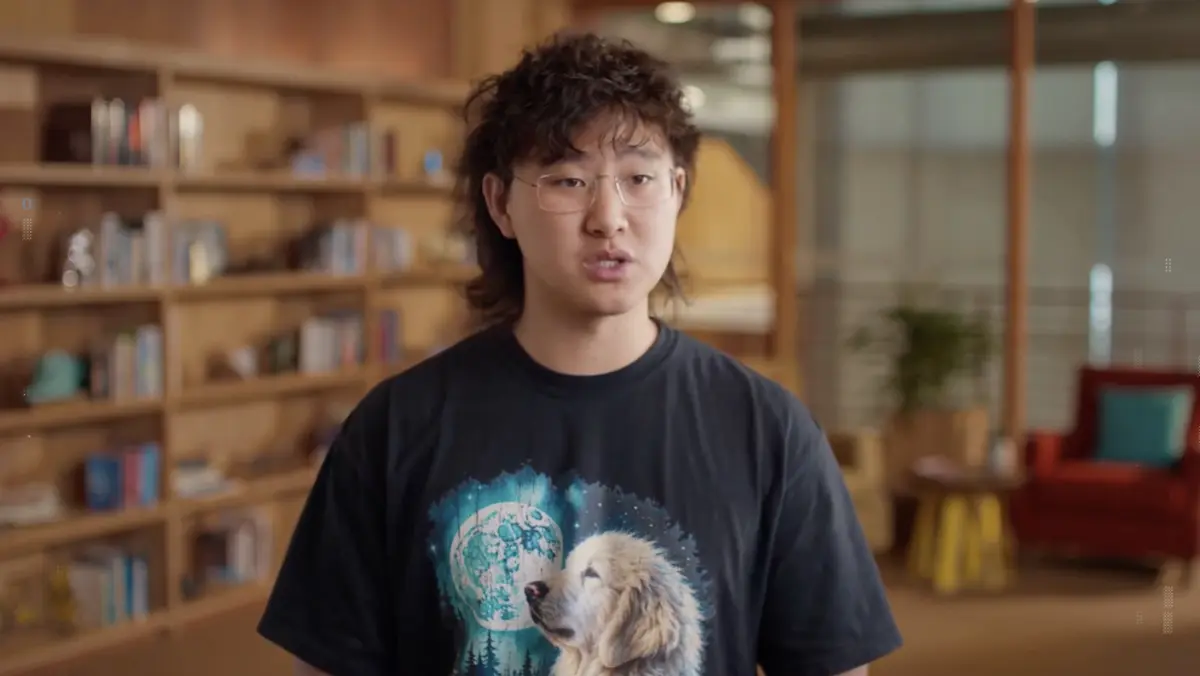
Menlo Park, California – Meta’s Superintelligence Lab officially launched its highly anticipated Muse Wonder and Muse Wonder Full models on Monday, signaling a significant escalation in the company’s ambition within the burgeoning artificial intelligence landscape. This release represents Meta’s inaugural foray into the realm of frontier models, positioning it directly against established leaders like OpenAI and Anthropic, and challenging the prevailing benchmarks for advanced AI capabilities. The introduction of these sophisticated models underscores Meta’s accelerated strategic pivot towards AI innovation, a move spearheaded by a significant restructuring of its AI divisions in the past year.
A New Standard for Meta’s AI Portfolio
The Muse Wonder models stand in stark contrast to their predecessor, Muse Spark, which was engineered for lightweight performance and low-latency applications. Wonder and Wonder Full are substantially larger, designed to tackle more complex computational tasks, and exhibit a pronounced leap in capability. Internal testing conducted by Meta, detailed in their comprehensive model card, indicates that these new models achieve benchmark scores comparable to industry-leading systems such as Fable 5.1 and GPT-6 Astra. This parity is particularly notable in areas requiring advanced reasoning and problem-solving, with Meta highlighting their superior performance in intricate tasks like coding.
"Together, they mark the next step on our scaling ladder and a major leap toward personal superintelligence," a Meta blog post accompanying the launch declared, articulating the company’s long-term vision for AI integration. This statement encapsulates Meta’s commitment to developing AI systems that are not merely tools but intelligent companions capable of deeply understanding and assisting individual users over extended periods. The pursuit of "personal superintelligence" suggests an ambition to create AI that can learn, adapt, and operate with a level of foresight and contextual awareness currently beyond most commercial offerings.
Pricing and Accessibility: A Premium Offering
The advanced capabilities of the Muse Wonder models are reflected in their pricing structure, aligning them with other premium-tier AI services. Accessible through the Meta Model API, Muse Wonder is priced at $4 per million input tokens and $20 per million output tokens. This cost profile places it in direct competition with high-performance models such as GPT-6 Sol and Opus 5.5, indicating Meta’s confidence in its models’ value proposition for developers and enterprises.
Notably, Muse Wonder Full, the more powerful variant, will not be made available via the public API. Instead, it is exclusively reserved for Muse Code subscribers, suggesting a strategic move to bundle its most advanced capabilities within a specialized developer ecosystem or a higher-tier service offering. Both Muse Wonder and Muse Wonder Full are also slated to power Meta’s evolving Muse agent, a pivotal component of the company’s strategy to embed AI assistants across its ecosystem of products and services. This dual deployment strategy aims to provide broad access to the foundational model while reserving the most potent iteration for strategic applications and premium users.
The Crucial Role of "Active Memory"
A cornerstone of Meta’s design philosophy for the Muse Wonder models is the emphasis on "active memory." This innovative property refers to the models’ enhanced ability to retain and synthesize information provided by users over extended interactions, a critical component for developing truly effective personal assistants. In an era where AI models often struggle with context window limitations and rapidly forget past conversations, Meta’s focus on active memory represents a significant technical challenge and a potential differentiator.
To validate this capability, Meta highlighted its engagement with the MemoryBench benchmark, a rigorous evaluation framework specifically designed to test continual learning and memory construction in AI systems. According to Meta’s internal assessments, Muse Wonder has achieved higher scores on MemoryBench than rival models from Fable, Opus, or Astra. This performance metric is crucial for Meta’s vision of AI agents that can maintain long-term user context, understand evolving preferences, and perform multi-stage tasks without constant re-instruction.
"We put a tremendous amount of effort into making sure your model can remember what’s important to you over days, weeks, months, and beyond," stated research scientist Kavya Kopparapu in a video accompanying the launch, underscoring the foundational importance of persistent memory for the envisioned "personal superintelligence." This capability is not just about recalling facts but about building a cumulative understanding of a user’s intent, habits, and history, enabling a more personalized and effective AI experience.
A Strategic Reorientation and the Road to Prometheus
The launch of Muse Wonder models marks a pivotal moment in Meta’s reorganized AI strategy. This renewed focus on cutting-edge AI research and development follows a significant internal restructuring of Meta’s AI efforts in August of last year, overseen by Scale AI founder Alexandr Wang. Wang’s appointment signaled a clear intent from Meta CEO Mark Zuckerberg to accelerate the company’s AI initiatives and consolidate its various research groups under a unified, more aggressive strategic direction.
Prior to this restructuring, Meta had primarily focused on foundational research and more lightweight, accessible AI models. While the company has consistently contributed to open-source AI, it had largely abstained from the high-stakes, state-of-the-art model releases that have characterized the competitive landscape dominated by OpenAI and Anthropic. The Muse Spark model, released post-restructuring, served as an initial step, showcasing Meta’s ability to develop efficient, low-latency models for its agent. However, Muse Wonder represents a bolder leap, directly targeting the frontier of AI capability.
The immense computational demands of training such frontier models necessitated a robust infrastructure. The Muse Wonder models were trained at Meta’s Prometheus data center in central Ohio, which became operational earlier this year. Prometheus, heralded as one of the world’s highest-capacity data centers, represents a multi-billion-dollar investment by Meta to establish the foundational computing power required for its ambitious AI roadmap. Its activation is a critical enabler for Meta’s ability to compete at the highest echelons of AI research and development, providing the sheer scale of processing power and energy efficiency required for iterative model training and refinement.
The Broader Implications for the AI Ecosystem
Meta’s aggressive push into frontier AI models carries significant implications for the broader artificial intelligence ecosystem. Firstly, it intensifies the competitive pressure on existing leaders. With Meta’s vast resources, global user base, and established developer network, its entry into the frontier model space is not merely symbolic; it represents a formidable new challenger. The direct comparison of Muse Wonder to GPT-6 Astra and Fable 5.1 indicates Meta’s intent to vie for top-tier performance and market share.
Secondly, the emphasis on "active memory" could set a new paradigm for AI agent development. If Meta successfully demonstrates and productizes AI with truly persistent, context-aware memory, it could unlock a new generation of personalized applications and services. This would move AI beyond transactional interactions to more collaborative and long-term relationships with users, potentially revolutionizing personal computing, customer service, and even creative endeavors. Industry analysts suggest that this focus aligns with a growing demand for AI that understands users deeply, rather than merely responding to isolated prompts.
Thirdly, Meta’s strategy of offering a public API for Muse Wonder while reserving Muse Wonder Full for Muse Code subscribers highlights a nuanced approach to commercialization and ecosystem building. This tiered access could allow Meta to democratize access to powerful AI while retaining its most cutting-edge capabilities for strategic partners or internal applications, fostering a vibrant developer community while protecting proprietary advancements.
Finally, the substantial investment in infrastructure, exemplified by the Prometheus data center, underscores the escalating capital requirements for leading AI development. The "AI race" is increasingly becoming an infrastructure race, where access to massive computational power, efficient cooling systems, and reliable energy sources are as critical as algorithmic breakthroughs. Meta’s commitment to building out such infrastructure signals its long-term dedication to maintaining a leadership position in AI, moving beyond reliance on external cloud providers for its most critical AI workloads.
The launch of Muse Wonder and Muse Wonder Full marks a significant inflection point for Meta. It is not merely another product release but a clear declaration of intent: Meta aims to be a dominant force at the forefront of AI innovation, with a strategic vision that extends far beyond its current social media and metaverse offerings. As the AI landscape continues its rapid evolution, Meta’s latest frontier models will undoubtedly shape the trajectory of personal AI and the competitive dynamics of the industry for years to come.