Galang Taruna
The highly anticipated Apple iPhone Duo, Apple’s inaugural foldable smartphone, has faced a significant setback just days after its launch, with independent durability tests revealing a critical vulnerability in its hinge mechanism when exposed to common dust and sand. Despite carrying a premium price tag of 2,339 euros for the 256 GB model and boasting an IP68 certification – a standard generally understood to imply robust dust and water resistance – the device’s complex folding architecture proved susceptible to environmental particulate matter, leading to functional impairment. This discovery, prominently highlighted by the renowned YouTube channel JerryRigEverything, has ignited a debate about the practical implications of IP ratings for foldable devices and the inherent challenges in designing resilient folding mechanisms.
The iPhone Duo’s Grand Entrance and Initial Expectations
Apple’s entry into the burgeoning foldable smartphone market with the iPhone Duo was met with considerable fanfare and high expectations. Positioned as a premium device, the iPhone Duo promised to combine Apple’s signature design aesthetics and powerful ecosystem with the innovative form factor of a foldable screen. The device’s launch on Friday, October 23rd, (inferred as 2025 or 2026 based on the source’s future dating of images) was a pivotal moment for Apple, signaling its commitment to a segment previously dominated by competitors like Samsung and Google. Early impressions, including those from tech reviewers like Frandroid, acknowledged the device’s sleek design and potential, yet also expressed initial doubts regarding its long-term durability, particularly concerning the intricate hinge. These concerns were not unfounded, as the history of foldable phones is littered with examples of early models struggling with the rigors of everyday use, often related to screen fragility or hinge failures. Consumers, having witnessed the evolution of foldable technology, were keen to see if Apple’s late entry would translate into a more robust and reliable design.
JerryRigEverything’s Rigorous Durability Assessment
Zack Nelson, the host of the popular YouTube channel JerryRigEverything, known for his uncompromising and often destructive durability tests, put the iPhone Duo through its paces on the very day of its retail release. His standard battery of tests includes scratch resistance, heat exposure, bending, and crucially for a foldable, dust and sand exposure.
The results presented a mixed picture. The iPhone Duo’s external screen, protected by Apple’s Ceramic Shield 2 technology, demonstrated impressive scratch resistance, only showing marks at level 7 on the Mohs hardness scale. This is a commendable performance, as plastics typically scratch at levels 2-3, while sapphire, a highly scratch-resistant material, marks at 8-9. This indicates that the outer display is well-equipped to withstand everyday abrasions from keys or coins. The internal foldable display, as expected with current foldable screen technologies, proved far more susceptible to scratches, marking at level 2 on the Mohs scale. However, Apple’s implementation of a nano-textured matte layer on the internal screen effectively camouflaged these minor abrasions once the display was illuminated, a clever design choice to mitigate a known vulnerability.
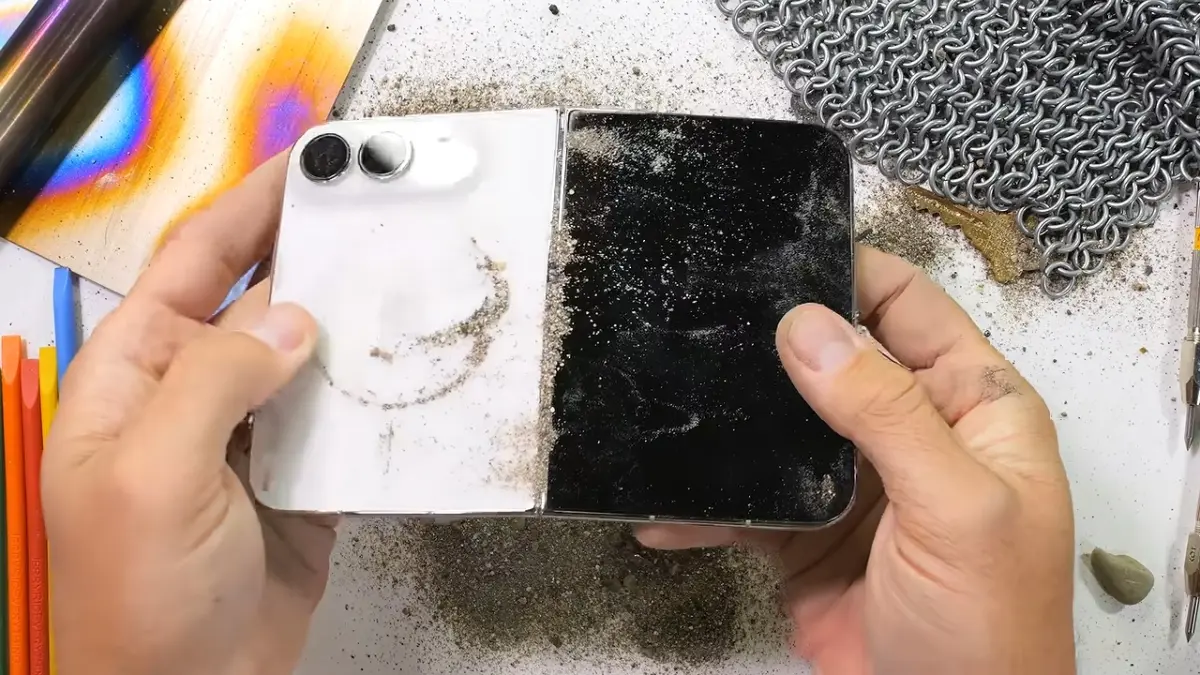
The true test for the iPhone Duo, however, came with the introduction of particulate matter. Nelson subjected the device’s hinge to a generous amount of dirt and sand, simulating real-world conditions that users might encounter at a beach or a dusty outdoor environment. The outcome was stark: after this exposure, the iPhone Duo failed to close properly. Its internal magnets, designed to secure the device in its folded state, were unable to compensate for the grains of sand trapped within the titanium hinge mechanism. This inability to fully close, for a device marketed with an IP68 rating and costing a substantial 2,339 euros, represents a significant functional impairment and a serious blow to consumer confidence in its advertised ruggedness.
Deconstructing IP68: The Nuances of Ingress Protection
The IP68 rating, proudly displayed on the iPhone Duo’s specifications page, refers to the Ingress Protection standard IEC 60529. This rating is widely recognized as indicating a high level of resistance against dust and water. The "6" in IP68 signifies "dust-tight," meaning no ingress of dust; the device can withstand up to eight hours in a chamber circulating talcum powder particles smaller than 75 micrometers (roughly the thickness of a human hair) without any internal penetration. The "8" denotes resistance to continuous immersion in water, with Apple specifying depths of up to six meters for 30 minutes in laboratory conditions.
However, the JerryRigEverything test crucially exposed a critical nuance often overlooked in general interpretations of IP ratings, especially for devices with moving parts. The laboratory tests for IP68 are conducted under very specific, controlled conditions. Crucially, during the dust ingress test, the device remains stationary and sealed. No one is opening or closing the smartphone, and the talcum powder used is a far cry from the abrasive, irregularly shaped particles of real-world dirt and sand. The IP standard primarily aims to protect the sealed internal electronics from environmental ingress, not necessarily the external mechanical components like a hinge, which are in constant motion and exposed. Apple’s own fine print acknowledges this, stating that water and dust resistance "is not permanent" and can decrease over time with normal wear.
This discrepancy highlights a fundamental challenge: while the IP68 rating might accurately describe the protection of the phone’s internal circuitry, it fails to capture the practical vulnerability of its complex external hinge mechanism. Apple’s specifications do not provide any specific durability figures for the hinge itself, such as the number of folds it can withstand or how its intricate components are protected from fine particles. The fact that the iPhone Duo carries the same IP68 rating, with identical depth and duration specifications, as a conventional, non-folding iPhone 18 Pro (a device without any moving parts in its chassis) further underscores this disconnect.
The Hinge Conundrum: A Persistent Challenge for Foldables
The iPhone Duo’s hinge issue is not an isolated incident but rather a symptom of a broader, persistent engineering challenge facing the entire foldable smartphone industry. The very nature of a folding device necessitates a complex hinge, often comprising dozens, if not hundreds, of tiny interlocking components. These parts must move smoothly and precisely for tens of thousands, or even hundreds of thousands, of folds over the device’s lifetime. Protecting such an intricate, dynamic mechanism from microscopic particles like sand or dust has proven incredibly difficult.
Prior to Apple’s entry, other foldable manufacturers have grappled with similar issues. In August, iFixit highlighted this problem with the Samsung Galaxy Z Fold 8 (which carries a less ambitious IP48 rating, signifying protection against objects larger than 1mm and water immersion up to 1.5 meters, but notably not certified as dust-tight). iFixit’s findings indicated that while the sealed internal components remained clean, the hinge itself became clogged with dust, impeding the device’s normal opening and closing.
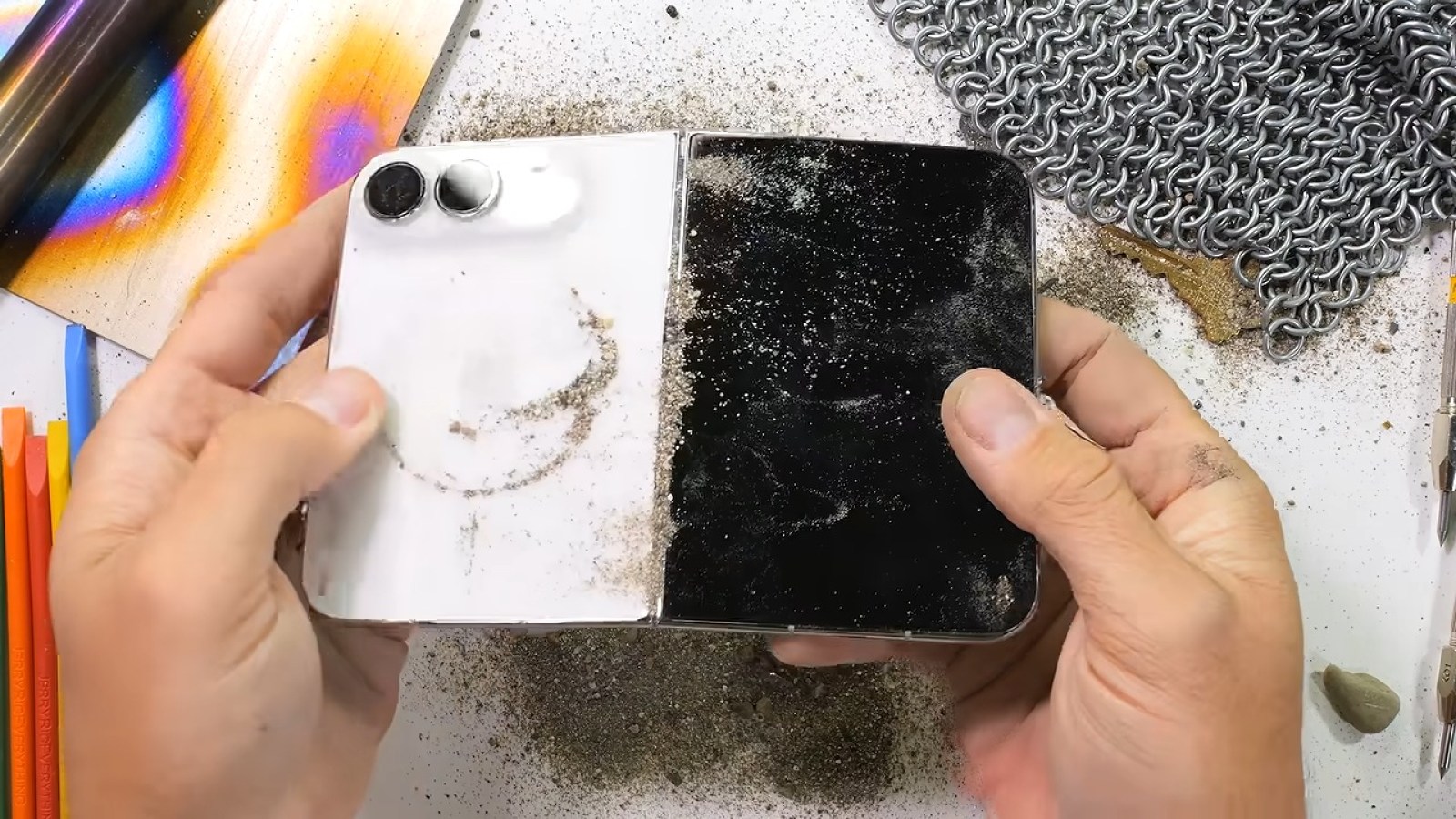
Google’s Pixel 10 Pro Fold, touted as the first foldable with an IP68 rating in 2025, also faced similar scrutiny. JerryRigEverything’s test on that device concluded with a "crunchy" hinge due to sand ingress, demonstrating that even with an IP68 certification, the mechanism remained vulnerable. Zack Nelson famously described the Pixel 10 Pro Fold as "the most fragile foldable I’ve ever tested" after it literally exploded during a subsequent bend test, further emphasizing the fragility inherent in early foldable designs.
These precedents underscore that the industry is still in the early stages of perfecting foldable durability. While significant strides have been made in strengthening flexible displays and hinge designs, achieving true "ruggedness" akin to traditional smartphones, especially against fine particulate matter, remains an elusive goal. Samsung, by opting for an IPX8 rating (where ‘X’ indicates no specific dust resistance testing) for some of its earlier foldables, effectively acknowledged this limitation, choosing not to make claims about dust protection that could be easily disproven in real-world scenarios.
Comparative Durability: How the iPhone Duo Stacks Up Against Rivals
In the specific context of the JerryRigEverything "sand test," the iPhone Duo’s performance, or lack thereof, places it in a challenging position relative to its competitors. While earlier foldable iterations from Samsung and Google also struggled with dust ingress, Samsung’s recent Galaxy Z Fold models have reportedly shown improved resilience in the bend test without permanent screen damage, unlike the iPhone Duo which developed a permanent green line on its internal display and ultimately became unresponsive after the bending phase of Nelson’s test.
The reports of early iPhone Duo buyers experiencing damaged screens near the hinge, even without extreme tests, further compound concerns about the device’s overall structural integrity. While it’s premature to directly link these isolated incidents to JerryRigEverything’s findings, they collectively paint a picture of a device whose mechanical durability might not yet match Apple’s reputation for engineering excellence and robustness. This puts Apple, a company known for meticulous design and high quality, in a difficult spot in a market segment where durability has historically been a significant point of contention for consumers.
Apple’s Stance and Broader Industry Reactions
As of the immediate aftermath of the JerryRigEverything test, Apple has not issued a direct official statement specifically addressing the hinge failure due to sand ingress. Typically, manufacturers respond by reiterating their product specifications and the controlled nature of their certification tests. It can be inferred that Apple’s position would likely emphasize that the IP68 rating covers the internal components and that extreme conditions, such as actively working abrasive particles into the hinge, fall outside the scope of intended use or warranty coverage.
However, the findings have undoubtedly spurred internal discussions at Apple and drawn significant attention from industry analysts and consumer advocacy groups. Technology analysts are likely to highlight this as a learning curve for Apple in the foldable space, emphasizing that real-world durability goes beyond laboratory certifications. Consumer watchdogs may press for clearer communication from manufacturers regarding the limitations of IP ratings for devices with moving parts, ensuring that marketing claims do not mislead consumers about practical ruggedness. This incident could also accelerate industry efforts to develop more comprehensive durability standards specifically tailored for foldable devices, moving beyond the current IP system that was primarily designed for sealed, non-moving electronics.
Implications for Consumers and the Future of Foldables
For consumers, the takeaway is clear: despite the IP68 rating, the Apple iPhone Duo, like many of its foldable predecessors, is highly susceptible to damage from fine particulate matter like sand and dust in its hinge mechanism. Owners of such premium devices, especially those costing upwards of 2,300 euros, must exercise extreme caution in environments where sand or dust is prevalent. This means avoiding beaches, construction sites, or even very dusty hiking trails, or at the very least, keeping the phone securely closed and protected within a case when in such environments. The advice to keep the phone closed to prevent sand from getting into the hinge is a pragmatic, if somewhat limiting, recommendation for a device designed to be opened and used.
The broader implications extend to the entire foldable market. This incident serves as a stark reminder that while foldable technology offers exciting new form factors and user experiences, the engineering challenges associated with long-term durability, particularly for the hinge, are still being actively addressed. It underscores the need for continuous innovation in materials science, hinge design, and sealing technologies to create truly robust foldable devices that can withstand the rigors of everyday life without compromise. This event could push manufacturers to either improve hinge protection significantly or to revise their IP rating claims to be more transparent about the limitations concerning moving parts. Ultimately, for foldable phones to achieve mainstream adoption, consumer confidence in their durability must be unequivocally established, and incidents like this, unfortunately, represent a step backward in that critical journey.
Expert Advice and Best Practices for Foldable Owners
Given the vulnerabilities highlighted by these tests, owners and prospective buyers of foldable smartphones, including the Apple iPhone Duo, should adopt several best practices to maximize the lifespan and functionality of their devices:
- Avoid Dusty/Sandy Environments: The most critical advice is to keep foldable phones away from beaches, construction sites, or any area with significant fine particulate matter. If unavoidable, keep the device securely folded and encased.
- Use Protective Cases: While not all cases protect the hinge, a well-designed case can offer an additional layer of defense against accidental ingress and impact.
- Handle with Care: Foldable screens and hinges are still more delicate than traditional smartphone components. Avoid aggressive opening or closing, and refrain from applying excessive force.
- Understand IP Ratings: Educate yourself on what IP ratings truly mean. An IP68 rating guarantees protection for internal electronics against specific dust and water conditions, but it does not necessarily guarantee the same for exposed, moving mechanical parts like a hinge in real-world abrasive environments.
- Check Warranty: Familiarize yourself with the manufacturer’s warranty regarding hinge damage or issues related to environmental ingress. Many warranties exclude damage caused by foreign objects or misuse.
- Regular Cleaning (Carefully): For any visible dust or debris on the hinge, use a soft brush or compressed air (at a safe distance and low pressure) to gently remove it, avoiding forcing particles deeper into the mechanism.
The iPhone Duo’s launch and subsequent durability test highlight a critical juncture for Apple and the foldable smartphone industry. While the allure of a folding screen is undeniable, the journey towards truly resilient and worry-free foldable devices continues, demanding ongoing innovation and transparent communication from manufacturers to consumers.