Sisilia Frederika
The emergence of Lazuli comes at a critical juncture in astrophysics. While the James Webb Space Telescope (JWST) has revolutionized our understanding of the infrared universe, and the upcoming Nancy Grace Roman Space Telescope will provide wide-field surveys, a dedicated private mission offers a level of agility and specialized focus that state-funded agencies often find difficult to maintain amidst shifting political and budgetary landscapes. The research led by Logan Pearce of the University of Michigan and Ewan Douglas of the University of Arizona provides the first strategic roadmap for Lazuli’s most ambitious instrument: the ExtraSolar Coronagraph (ESC). By identifying 27 high-priority targets, the researchers have laid the groundwork for a mission that could provide the first definitive glimpses into the atmospheres of planets that are billions of years old.
The Technical Evolution of Exoplanet Imaging
To understand the significance of Lazuli’s mission, one must consider the limitations of current exoplanet detection methods. To date, the vast majority of directly imaged exoplanets have been discovered through their thermal emission. When planets are young, they retain the heat of their formation, glowing brightly in the infrared spectrum. This "self-luminosity" allows telescopes like the JWST or the Keck Observatory to isolate the planet’s heat from the overwhelming glare of its host star. However, as planets age, they cool down. For mature systems—those comparable in age to our own solar system—thermal emission becomes too faint for current technology to detect at close orbital separations.
The Lazuli Space Telescope intends to bypass this "cooling problem" by focusing on reflected starlight. Unlike thermal emission, which decays over millions of years, the amount of starlight a planet reflects remains relatively constant regardless of its age. This shift in methodology allows astronomers to probe "mature" systems, offering a more representative view of the galaxy’s planetary population. Furthermore, because reflected light is observed at shorter visible wavelengths, the diffraction limit of the telescope is smaller, allowing Lazuli to resolve planets that are physically closer to their stars than infrared telescopes can manage.
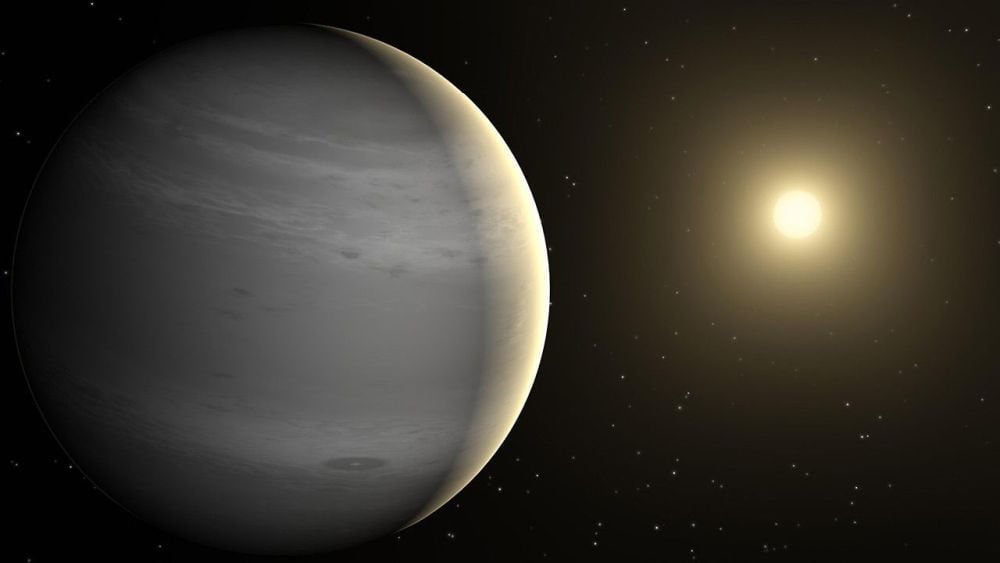
The core of this capability lies in the ExtraSolar Coronagraph (ESC). A coronagraph is a complex optical device designed to block out the direct light of a star so that the much fainter objects orbiting it—such as planets or debris disks—can be seen. The ESC on Lazuli is designed to achieve contrast ratios between $10^-7$ and $10^-9$. This means the instrument must be capable of detecting a planet that is a billion times dimmer than its host star. Achieving this level of precision requires not only a massive 3-meter mirror but also advanced wavefront sensing and control systems to eliminate "speckles" or optical noise that can mimic the appearance of a planet.
Strategic Target Selection and Mission Efficiency
The research paper published on the arXiv preprint server emphasizes that Lazuli cannot afford to "hunt" blindly for planets. Given the extreme sensitivity required and the long exposure times—estimated to range from 10 to 100 hours per target—the mission must be highly targeted. Pearce and Douglas argue that the most efficient use of Lazuli’s time is to focus on known exoplanets with well-constrained orbital parameters. By knowing exactly where a planet should be in its orbit, mission controllers can time observations to coincide with the planet’s "greatest elongation," the point where it is furthest from the glare of its star from our perspective.
The researchers’ list of 27 targets consists primarily of gas giants. These planets were chosen because their size and orbital characteristics make them the most viable candidates for reflected light detection in the late 2020s. The list includes the famous Beta Pictoris b, a massive exoplanet that has been a primary subject of study since its discovery in 2008. Beta Pictoris b is an ideal candidate for Lazuli because it orbits a relatively young star surrounded by a debris disk, providing a rich environment for studying planetary evolution. However, the list also spans a range of temperatures and ages that have never been probed by direct imaging before, moving beyond the "hot Jupiters" that have dominated previous studies.
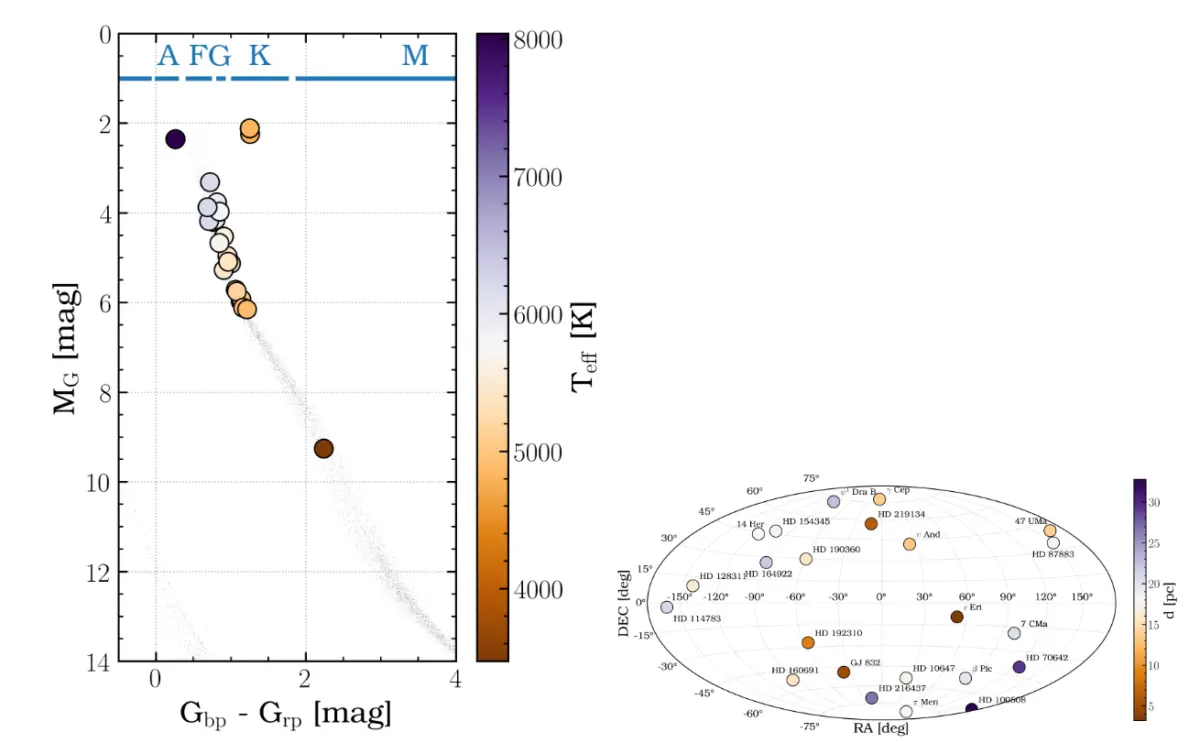
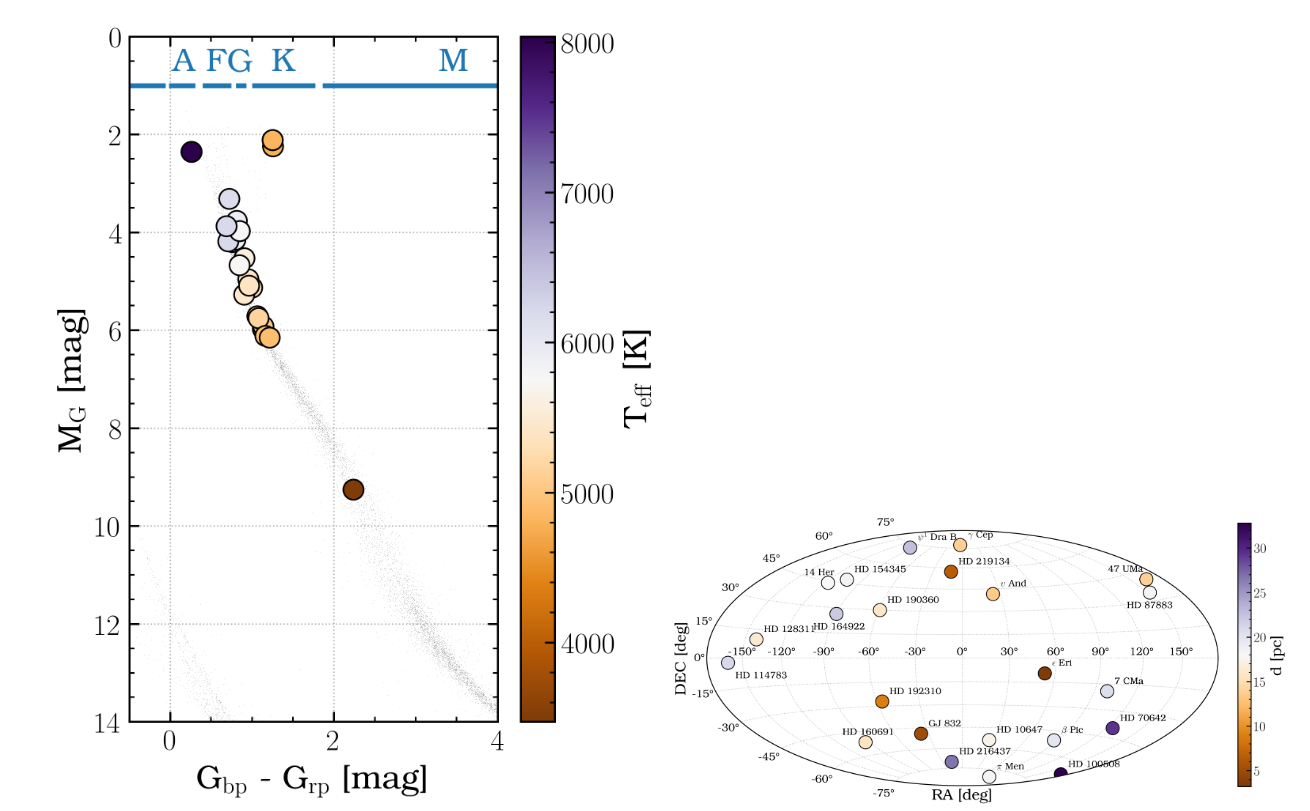
The selection process also took into account the spectral types of the host stars. The Gaia color-magnitude diagram included in the research shows that the targets orbit a variety of stars, though only one M-dwarf (a red dwarf) made the initial cut. Most targets orbit G, F, and A-type stars, which are brighter and provide more reflected light for the telescope to capture. This diversity is essential for understanding how different stellar environments influence the atmospheric composition of the planets they host.
Instrumentation and Scientific Synergies
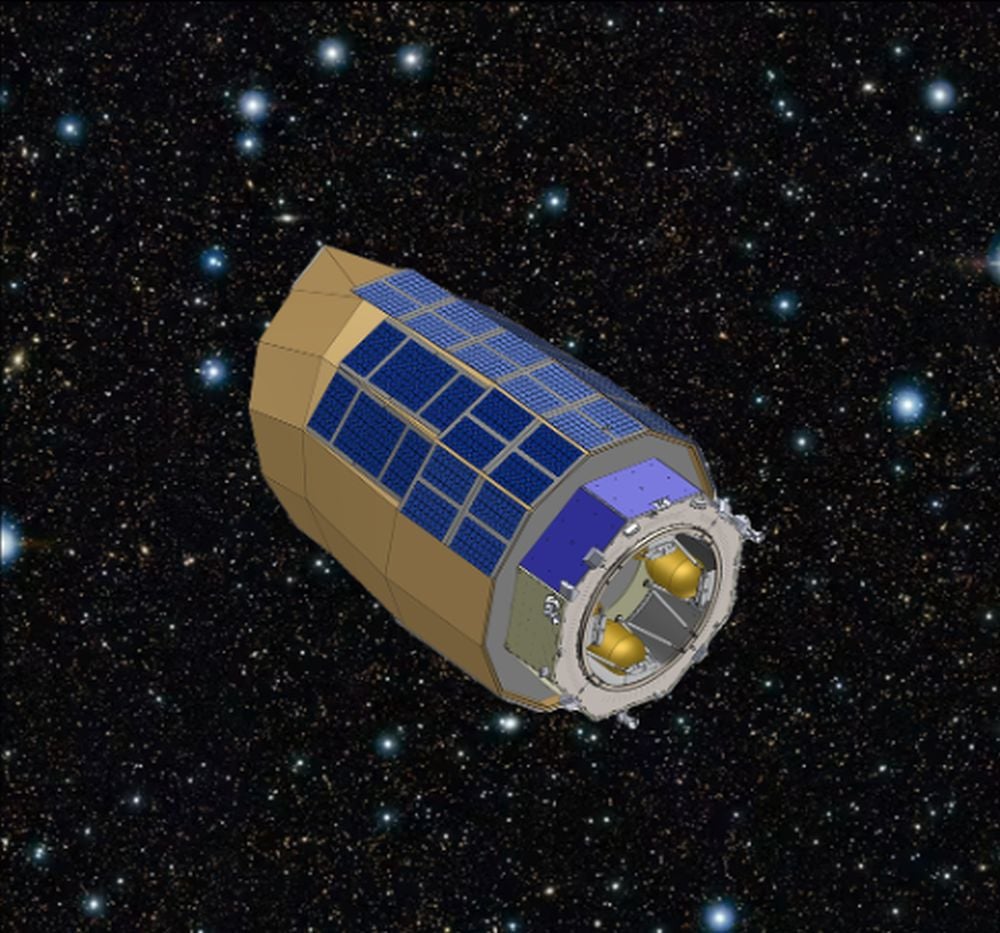
Beyond the ESC, the Lazuli Space Telescope will carry two other primary instruments: a wide-field optical imager and an integral field spectrograph. The wide-field imager will allow for broader surveys of the star systems, identifying debris disks and other structural features that can influence planetary orbits. The integral field spectrograph, however, is where the most profound discoveries are expected to happen. By breaking down the reflected starlight into its constituent wavelengths, the spectrograph can identify chemical "fingerprints" in the planetary atmospheres.
This capability is what enables the search for biosignatures. While the 27 initial targets are gas giants—unlikely to harbor life as we know it—the techniques developed by Lazuli will pave the way for future missions to observe smaller, Earth-like worlds. Even in gas giants, the detection of methane, water vapor, and carbon dioxide in reflected light provides a "ground truth" for atmospheric models that have previously relied on indirect methods like transit spectroscopy.
Lazuli is not intended to operate in a vacuum. The researchers highlight the significant synergies between Lazuli, the Nancy Grace Roman Space Telescope, and the European Southern Observatory’s Extremely Large Telescope (ELT), specifically its METIS (Mid-infrared ELT Imager and Spectrograph) instrument. While Roman will perform wide-field surveys and ELT-METIS will look at thermal emissions from the ground, Lazuli’s high-resolution optical imaging in space fills a crucial gap. By combining data from these three platforms, astronomers can achieve "comprehensive atmosphere characterization," observing the same planet in both reflected light and thermal emission to determine its mass, radius, and chemical makeup with unprecedented accuracy.
The Private Sector and the Future of Big Science
The launch of Lazuli by 2029 marks a pivotal moment in the history of space science. Traditionally, telescopes of this magnitude have been the exclusive domain of national space agencies like NASA, ESA, or JAXA. The involvement of Schmidt Sciences suggests a new model for funding high-risk, high-reward scientific endeavors. Private ownership may allow for faster development cycles and a more singular focus on specific scientific questions, such as the direct imaging of exoplanets, which can sometimes be diluted in multi-purpose flagship missions.
However, the private nature of the mission also raises questions about data access and the long-term sustainability of such projects. The researchers’ decision to publish their target list and methodology openly on arXiv suggests a commitment to the "open science" model, ensuring that the broader astronomical community can contribute to and benefit from the mission’s findings. This collaborative spirit is essential, as the sheer volume of data generated by 100-hour exposures will require significant computational resources and international expertise to analyze.
The timeline for Lazuli is ambitious. With a 2029 launch date, the project must navigate the complexities of spacecraft integration, environmental testing, and securing a launch vehicle—likely a commercial heavy-lift rocket such as SpaceX’s Falcon Heavy or Starship. The next five years will be critical for the mission as it moves from the theoretical target-selection phase to the engineering reality of building a 3-meter space-qualified mirror.
Conclusion and Broader Implications
The Lazuli Space Telescope represents more than just a new tool for astronomers; it is a proof-of-concept for the next century of space exploration. By focusing on reflected starlight, it tackles one of the most difficult challenges in the field: seeing the faint signal of a mature planet against the blinding light of its sun. The 27 targets identified by Pearce and Douglas are the first steps in a journey that could eventually lead to the direct imaging of a "Second Earth."
As the mission moves toward its 2029 launch, the scientific community will be watching closely. The success of Lazuli could encourage other private entities to fund large-scale astrophysical hardware, potentially leading to a fleet of specialized telescopes that complement the general-purpose observatories run by national governments. For now, the focus remains on the "mature" giants of our galaxy. By capturing the light reflected off these distant worlds, Lazuli will provide the first clear look at the planetary systems that have long since cooled, offering a window into the future of our own solar system and the potential for life elsewhere in the cosmos. In the words of the researchers, this campaign expands direct imaging into "regimes not probed before," ensuring that the next decade of astronomy will be defined by what we can see, not just what we can infer.