Galang Taruna
The electric mobility sector witnessed a week defined by significant developments across infrastructure, regulation, and market innovation, underscoring a pivotal moment where pricing strategies and evolving guidelines are reshaping the landscape. From Ionity’s ambitious plans to accelerate ultra-fast charging network deployment across French highways to the SNCF’s new stringent restrictions on electric personal mobility devices, and the unexpected surge in used Chinese electric vehicle imports circumventing European tariffs, the industry is navigating complex challenges and opportunities. Amidst these strategic shifts, a viral video featuring a BYD SUV cleverly outmaneuvering a wheel clamp offered a glimpse into the cutting-edge technology defining modern electric vehicles, while French manufacturer Hutchinson introduced a new compact electric pump for cyclists, highlighting continuous innovation even in ancillary products.
Ionity’s Ambitious Expansion in France: Powering the Future of Highway Charging
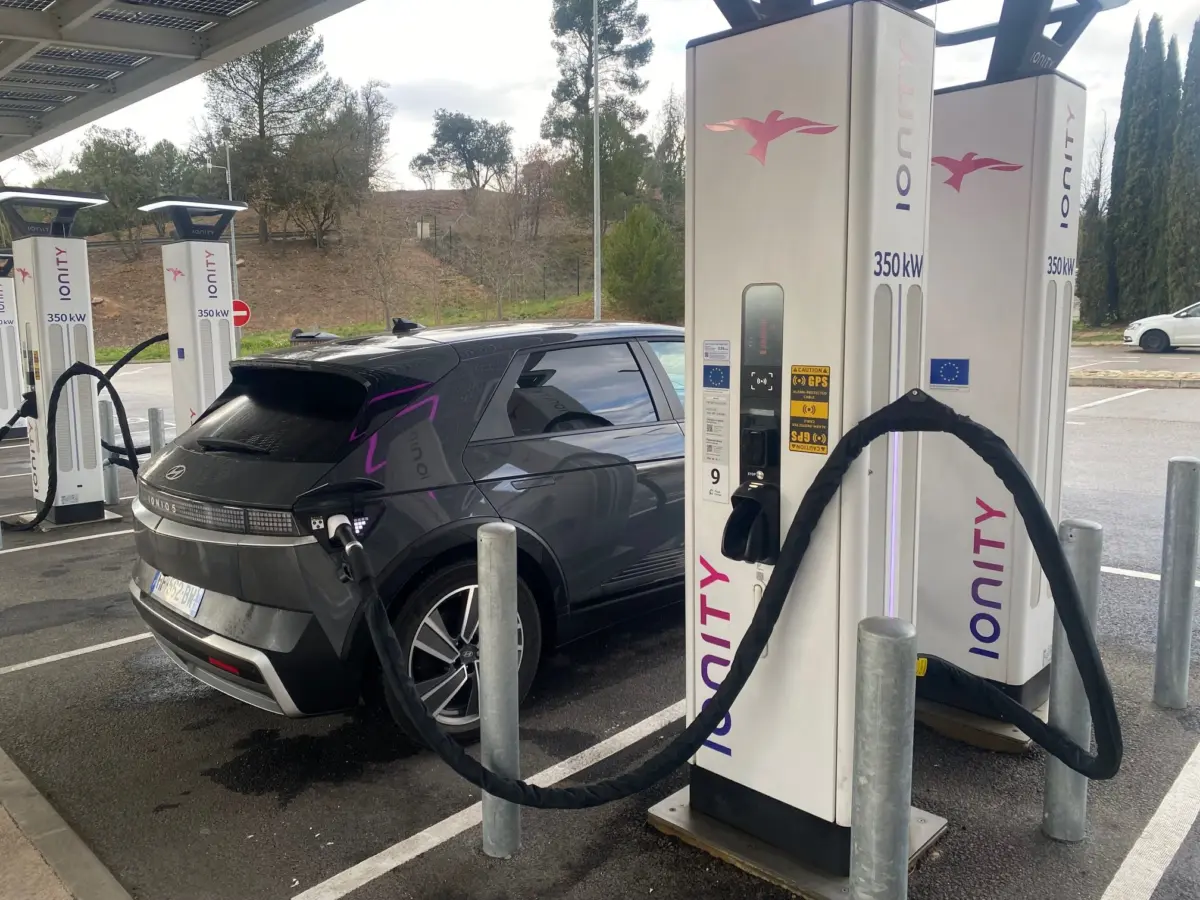
Ionity, the pan-European high-power charging network, is significantly bolstering its presence in France, signaling a clear intent to rival traditional petrol stations on motorways. With a current footprint of 181 stations and approximately 1,380 charging points across the country, averaging nearly eight points per station, the operator is poised for substantial growth. In the coming four to five months, Ionity plans to add between two and eight charging points to roughly 25% of its existing stations. This immediate expansion will be complemented by a sustained strategy of opening around twenty new stations annually, underscoring a robust commitment to enhancing charging accessibility.
To fuel this aggressive expansion, Ionity has successfully secured a substantial banking facility of up to €600 million from a consortium of nine banks. This financing is critical to achieving its broader European objective of establishing approximately 13,000 high-power charging points by 2030. This target represents a significant increase from its current European network, which serves to alleviate range anxiety and facilitate long-distance electric travel across the continent. Ionity, a joint venture founded by leading automotive manufacturers such as BMW Group, Mercedes-Benz AG, Ford Motor Company, Hyundai Motor Group, and Volkswagen Group with Porsche AG, was established with the explicit mission to build a comprehensive network of ultra-fast charging stations along major European highways. Their focus on high-power chargers, some capable of delivering up to 600 kW, positions them at the forefront of rapid charging technology, enabling compatible electric vehicles to regain significant range in under 10 minutes, a crucial factor in achieving parity with conventional refuelling times.
Aurélia Boscher, Ionity’s France Country Manager, recently shed light on the intricate negotiations involved in securing prime land locations, often in direct competition with established petrol companies. She elaborated on the network’s strategic pricing model, designed to be competitive with, and in some cases, more advantageous than, the cost of a full tank of petrol. This direct competition highlights a shifting paradigm in the energy market, where the battle for consumers’ wallets is increasingly fought on both location and kilowatt-hour pricing. The continued prioritization of motorway locations underscores Ionity’s commitment to facilitating seamless long-distance electric travel, a key driver for wider EV adoption. This strategic push is particularly relevant as Europe aims for significant electrification of its vehicle fleet, with robust charging infrastructure being a foundational requirement. The investment not only supports Ionity’s growth but also contributes significantly to the broader decarbonization efforts across the European transport sector.
SNCF Tightens Grip on Electric Mobility Devices: New Rules for Rail Travel
In a move set to impact thousands of commuters and travelers across France, SNCF Voyageurs is implementing new, more restrictive rules regarding the transportation of electric personal mobility devices on its TGV Inoui and Intercités trains. Effective December 13, 2026, coinciding with the annual service change, the national railway company will prohibit bicycles exceeding 185 cm in length or 6 cm in tire width. This regulation effectively excludes a range of popular electric two-wheelers, including fatbikes, multi-wheel bicycles, gyropodes, and hoverboards.
The new policy extends beyond bicycles to encompass electric scooters. Those equipped with a seat, non-folding models, or scooters with tire widths exceeding 6 cm will also be denied boarding. This update adds to an already extensive list of prohibited items, which includes recumbent bicycles, tricycles, tandems, cargo bikes, longtail bikes, and trailers. SNCF Voyageurs confirmed these details to BFMTV, citing concerns related to passenger safety, space constraints, and the potential fire risk associated with certain lithium-ion batteries, especially those in larger or uncertified electric mobility devices. While classic bicycles remain unaffected, travelers are strongly advised to verify the dimensions of their bikes or scooters before booking tickets, particularly during peak travel periods like the festive season, to avoid potential fines that could reach up to €150.
The rationale behind these restrictions stems from the burgeoning popularity of electric personal mobility devices, which has introduced new logistical and safety challenges within the confined spaces of train carriages. The increase in size and weight of many e-bikes and scooters, coupled with their batteries, presents difficulties in storage, maneuverability, and emergency evacuation. This regulatory shift by SNCF reflects a growing trend among public transport operators in Europe and beyond, as they grapple with integrating new forms of mobility into existing infrastructure while maintaining safety and operational efficiency. For instance, some German rail operators have also introduced specific rules for e-bikes and cargo bikes, often requiring prior reservation or disallowing them during peak hours. The implications for commuters, especially those relying on intermodal transport, are significant, potentially forcing them to seek alternative solutions such as dedicated bike parking facilities at stations, rental services, or entirely different modes of transport for longer journeys. This decision highlights the ongoing tension between promoting sustainable urban mobility and ensuring the smooth operation and safety of mass transit systems.
The BYD Bao 8: A Technological Feat Defying Urban Constraints
In a vivid demonstration of advanced automotive engineering, a BYD Bao 8 SUV recently became the subject of a viral video across Chinese social media. Filmed in Jinshan, Lianyungang city, the footage captured the vehicle ascending a busy commercial street on three wheels, with its fourth wheel dramatically lifted into the air – still bearing an attached wheel clamp. This extraordinary maneuver, which circulated widely over the weekend of October 17th and 18th, highlighted the vehicle’s sophisticated suspension system.
The BYD Bao 8 owes this capability to its DiSus-P Ultra hydraulic controlled suspension system. This innovative technology allows for independent control of each wheel’s height through precise oil pressure management, enabling the vehicle to lift a single wheel by up to 30 centimeters. While such a feature is typically engineered for challenging off-road conditions, such as navigating deep sand or uneven terrain, its application in this urban context showcased an unexpected utility. The BYD Bao 8, marketed outside China as the Denza B8, is a plug-in hybrid electric vehicle (PHEV) measuring 5.2 meters in length. It combines a potent 2.0-liter turbocharged engine generating 272 horsepower with two electric motors, delivering a formidable total output of 550 kW (approximately 737 horsepower). Power is supplied by a 46.7 kWh battery, contributing to an impressive announced combined range of approximately 1,380 kilometers. In China, the Flash Charge version of the Denza B8 starts at 419,800 yuan, equivalent to roughly €56,000, reflecting its premium positioning and advanced technological offerings.
This incident, while humorous, underscores BYD’s rapid ascent as a global automotive powerhouse and its commitment to integrating cutting-edge technology into its vehicles. The DiSus system, in its various iterations, represents a significant technological differentiator for BYD, competing with established premium brands known for their adaptive air and hydraulic suspensions. This level of individual wheel control not only enhances off-road capability but also contributes to superior ride comfort, handling, and safety in diverse driving conditions. The viral video, therefore, served as an unconventional yet effective demonstration of BYD’s engineering prowess, suggesting that the boundaries of vehicle capability continue to expand, offering solutions that extend beyond their initially intended purpose. It highlights a broader trend in the automotive industry where advanced software and hardware integration are leading to vehicles with unprecedented adaptability and intelligence.
Hutchinson’s FlashAir: A Compact Electric Solution for Cyclists
Hutchinson, a renowned French manufacturer celebrated by cyclists worldwide for its high-performance road, gravel, and mountain bike tires, has entered the burgeoning market for portable electric pumps with the launch of its new FlashAir model. This ultra-compact electric pump, weighing a mere 130 grams and measuring 71 x 45 x 32 mm, is designed to fit effortlessly into a small saddlebag, making it an ideal companion for cyclists on the go.
Priced at €69.99, the FlashAir boasts impressive specifications for its size. It can inflate tires up to 120 psi (approximately 8.3 bar), catering to a wide range of bicycle tire types, from high-pressure road bike tires to lower-pressure mountain bike and gravel tires. A digital screen provides real-time pressure readings and allows users to set a target pressure, after which the pump automatically shuts off once the desired value is reached. This intelligent auto-stop feature, reminiscent of popular electric pumps from brands like Xiaomi, ensures precise inflation and prevents over-inflation. The FlashAir is compatible with both Presta and Schrader valves, the two most common valve types found on bicycles. It features convenient USB-C charging, a crucial modern connectivity standard, and includes integrated safety mechanisms such as overheat protection and an LED light for enhanced visibility during nighttime use or in dimly lit environments. However, while the technical specifications are reassuring, Hutchinson has not yet specified the number of tires that can be inflated on a single charge from its 300 mAh battery (7.4 volts, approximately 2.2 Wh). This detail regarding battery endurance remains a key consideration for potential buyers.
The introduction of the FlashAir pump positions Hutchinson as a direct competitor in a growing segment of the cycling accessories market. As cycling continues to gain popularity, particularly with the rise of electric bikes, portable and efficient inflation solutions are increasingly sought after. The FlashAir’s blend of compact design, intelligent features, and brand reputation makes it a compelling option for cyclists seeking convenience and precision, potentially challenging established players and reinforcing Hutchinson’s commitment to innovation across the cycling ecosystem.
The Grey Market Surge: Used Chinese EVs Circumventing EU Tariffs
The European Union’s recent imposition of compensatory duties on new electric vehicles imported from China has inadvertently spurred a significant surge in the market for used Chinese EVs, as savvy importers exploit a crucial loophole in the new trade regulations. These duties, which range from 17% for BYD, 18.8% for Geely, and a substantial 35.3% for SAIC – levied in addition to the standard 10% customs tariff – are specifically designed to counteract what the EU deems unfair subsidies by the Chinese government. However, these tariffs are explicitly applied only to new vehicles.
Capitalizing on this distinction, platforms like China EV Marketplace, headquartered in Hong Kong with a subsidiary in Prague, have seen their sales of used electric vehicles to European customers skyrocket. According to their operational model, a vehicle that has exceeded 6,000 kilometers on its odometer is classified as used and, therefore, only subject to the base 10% customs duty, effectively bypassing the additional compensatory tariffs. This strategic maneuver has led to a remarkable 280% year-on-year increase in sales of used Chinese EVs to Europe between January and September 2026, totaling 7,900 units. Concurrently, the platform observed a 44% decline in its sales of new vehicles, clearly indicating a shift in market dynamics driven by the new tariff regime.
On paper, the prospect of acquiring popular Chinese EV models such as Xiaomi, BYD, or Zeekr at prices up to 40% below their new counterparts in China is highly attractive to European consumers. However, this seemingly significant saving can quickly diminish once additional costs and practical challenges are factored in. Buyers must navigate not only the remaining customs duties but also potential issues with charging compatibility (European vs. Chinese standards), the difficulty of finding authorized service centers or mechanics capable of repairing and maintaining these vehicles, and the absence of standard European warranties. Furthermore, software updates, spare parts availability, and the complex process of re-registration in European countries can add considerable expense and inconvenience, often negating the initial savings.
Our in-depth analysis of the total cost of ownership reveals that while the upfront purchase price is considerably lower, the cumulative expenses associated with importing, adapting, and maintaining these vehicles can quickly erode the perceived economic advantage. This emerging grey market poses significant questions for European policymakers regarding the effectiveness of their tariff policies and the potential for unintended consequences. It also highlights a critical need for greater transparency and consumer protection in this evolving segment of the EV market, as the influx of these vehicles could put further pressure on European automakers struggling to compete on price, particularly in the mass-market segment. Industry analysts suggest this loophole could pressure European policymakers to reconsider the definition of "new" versus "used" vehicles in future trade agreements, potentially leading to further regulatory adjustments to level the playing field.
Broader Implications and The Shifting Landscape of Electric Mobility
The collection of events from the past week paints a vivid picture of an electric mobility sector in rapid flux, characterized by intense competition, evolving regulatory frameworks, and continuous technological innovation. Ionity’s aggressive expansion, backed by substantial financing, signals a crucial battle for charging infrastructure dominance, directly challenging the long-standing reign of fossil fuels on European highways. This infrastructure development is paramount for mainstream EV adoption, as convenience and speed of charging directly influence consumer confidence. The strategic focus on making EV charging competitive with petrol prices suggests a mature market where cost-effectiveness is becoming as important as environmental benefits.
Conversely, the SNCF’s new restrictions on electric personal mobility devices underscore the complex challenges of integrating diverse mobility solutions into existing public transport networks. While driven by legitimate concerns over safety and space, these rules highlight the need for clear, harmonized policies that balance innovation with practical operational realities. The impact on urban and intermodal commuters could be significant, potentially pushing users towards alternative solutions or even discouraging the use of certain e-mobility devices altogether, thereby influencing urban planning and transport policy.
The BYD Bao 8 incident, beyond its viral appeal, serves as a powerful testament to the advanced engineering capabilities emerging from Chinese automotive manufacturers. The DiSus-P Ultra suspension system is not merely a novelty but an indicator of sophisticated technological integration that enhances vehicle performance, safety, and adaptability. As Chinese brands expand globally, such innovations will undoubtedly challenge established players and accelerate the pace of technological development across the industry.
Finally, the surge in used Chinese EV imports, driven by tariff circumvention, reveals a dynamic and often unpredictable global market. While offering attractive price points for consumers, this grey market activity poses regulatory challenges and raises questions about long-term sustainability, consumer support, and fair competition. It forces European regulators to continuously adapt their policies to prevent unintended loopholes and protect domestic industries, while also ensuring a level playing field for all market participants.
Collectively, these developments illustrate that the future of electric mobility is being shaped not only by technological advancements and environmental imperatives but also by intricate economic forces, regulatory adjustments, and the ever-evolving demands of consumers. The coming years will likely see continued intense competition, further policy refinements, and ongoing innovation as the world transitions towards a more electrified and sustainable transport ecosystem.