Lina Irawan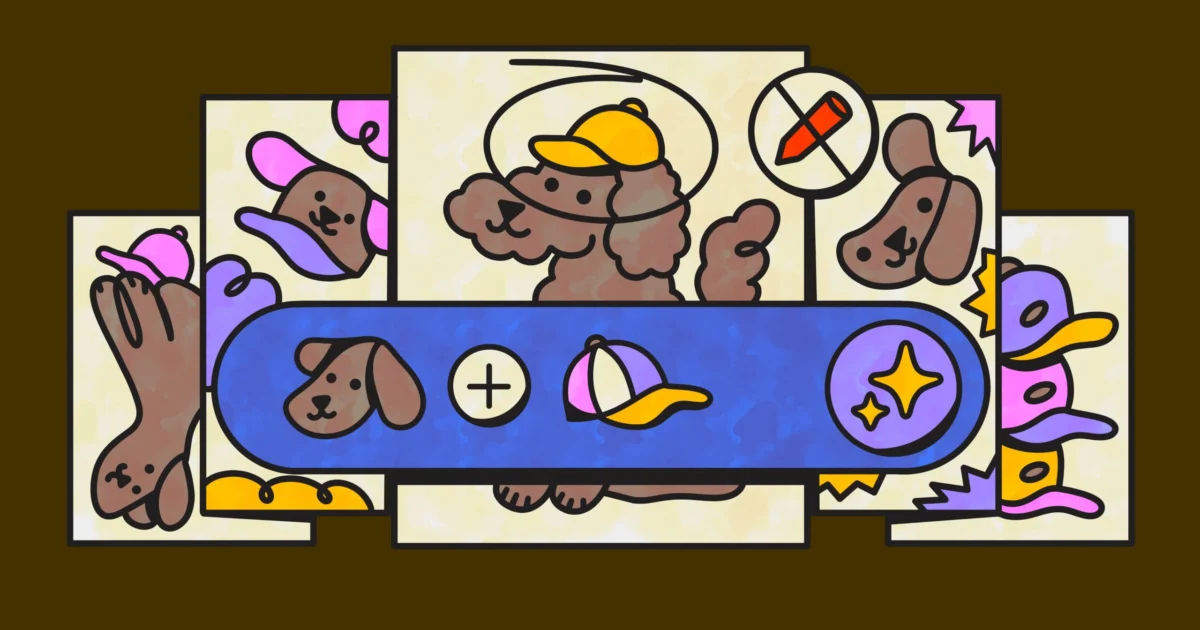
DeveloperWeek 2026, held at the San Jose Convention Center, concluded this week with a definitive focus on the practical application of artificial intelligence within the software development lifecycle, signaling a departure from the speculative hype of previous years. As the world’s largest developer conference and expo series, the 2026 iteration drew an estimated 8,000 in-person attendees and thousands more virtually, serving as a barometer for the current state of the global technology workforce. Unlike major hardware-centric events such as AWS re:Invent, DeveloperWeek 2026 prioritized the "nitty-gritty" of codebases, workflows, and the evolving relationship between human engineers and autonomous agents. The central theme of the event revolved around a critical assessment of AI tool efficacy, usability, and the necessity of organizational context in achieving the long-promised "10x" productivity boost.
The Usability Crisis in Artificial Intelligence Tooling
A recurring sentiment throughout the technical sessions was the inherent friction in current AI-assisted development. While initial iterations of generative AI focused on the speed of code production, industry leaders at DeveloperWeek 2026 argued that usability has been sacrificed for raw computational efficiency. Caren Cioffi of Agenda Hero highlighted this discrepancy during her session on product design, noting that many AI tools operate as "black boxes" that prioritize non-deterministic output over user control.
Cioffi’s analysis focused on the "almost right" phenomenon, where an AI generates a solution that is nearly functional but requires minor adjustments. In traditional software interfaces, a user can manually edit specific components; however, many natural language-driven AI tools require users to re-prompt the entire task, often leading to wildly different and sometimes inferior results. This lack of agency has led to what some attendees described as a "wild ride" through an AI’s creative process rather than a controlled engineering exercise.
The consensus among UI/UX specialists at the event was that for AI to achieve widespread, sustainable adoption, it must move toward a model of "human-in-the-loop" agency. This includes features that allow developers to edit specific segments of AI-generated output directly within the interface or provide granular feedback that doesn’t trigger a full regeneration of the codebase. Without these improvements, the industry faces a growing risk of technical debt as developers spend more time "janitorial cleaning" AI-generated errors than writing original code.
Chronology of Innovation: A Three-Day Technical Deep Dive
The event was structured to address the hierarchy of developer needs, moving from individual productivity to enterprise-scale automation.
Day 1: The Trust and Context Foundation
The opening day focused on the "trust gap" currently existing between developers and their tools. Stack Overflow’s keynote, delivered by Chief Product and Technology Officer Jody Bailey, set the tone by identifying "context" as the master key for unlocking AI potential. Bailey argued that out-of-the-box Large Language Models (LLMs) trained on public data lack the specific architectural nuances and security guardrails required for enterprise-level contributions.
Day 2: Engineering Interoperability and Agentic Teams
The second day shifted toward the architectural requirements of autonomous agents. IBM’s Chief Architect for AI, Nazrul Islam, and Akamai’s Senior Director of Developer Relations, Lena Hall, delivered back-to-back sessions on the necessity of "agentic teams." The discussion moved beyond single-task bots toward interconnected systems capable of cross-departmental collaboration.
Day 3: The Human Element and Future Workforce
The final day addressed the sociological impact of these technologies. Sessions by Coders Lab and various academic partners explored how junior developers can remain competitive in an AI-saturated market. The event concluded with a massive hackathon where participants were challenged to build tools that solved the very usability and context issues discussed throughout the week.
The Role of Context and the Model Context Protocol (MCP)
If "AI" was the keyword of 2024, "context" was the undisputed buzzword of DeveloperWeek 2026. Technical experts emphasized that AI’s effectiveness is strictly limited by its training data. For a developer working within a large corporation, a generic AI tool may suggest code that violates internal security protocols or ignores established architectural patterns.
To combat this, speakers highlighted several emerging solutions:
- Model Context Protocol (MCP): A standardized way for AI agents to access data from various silos, such as meeting notes, internal documentation, and legacy codebases.
- Advanced Retrieval-Augmented Generation (RAG): Using real-time company data to "ground" AI responses in factual, internal truth.
- Human-Validated Data Streams: Products like Stack Internal were cited for their use of MCP servers to feed human-verified information to agents, ensuring that the AI is not just hallucinating plausible code but following established company standards.
Lena Hall of Akamai summarized this shift with the phrase "Context is all you need," suggesting that the limitations of current AI are not necessarily due to a lack of model intelligence, but rather a failure of information design. By providing industry-specific and company-specific context during the logic formation phase, enterprises can reduce the "stopping points" where humans must intervene to correct errors.
Interoperability and the Rise of Agentic Teams
Nazrul Islam of IBM introduced a framework for "agentic interoperability," addressing the difficulty of automating workflows that span multiple software-as-a-service (SaaS) platforms and on-premise systems. Islam noted that while the industry has created millions of individual agents, they often exist in silos, unable to communicate or hand off tasks effectively.
The proposed "gold-medal relay" model of automation would see a seamless transition of data between specialized AIs:
- A Sales AI closes a contract and triggers a data transfer.
- A Finance AI receives the data, generates a forecast, and updates the budget.
- A Customer Success AI analyzes the contract for retention risks and reports back to the team.
Achieving this requires a roadmap that includes normalizing access for models through APIs, creating observable governance for agent interactions, and mapping out "cross-system journeys." Islam warned that without such a framework, companies risk replicating the same "siloed work" and "context loss" that plague human departments.
Impact on the Next Generation of Developers
A significant portion of the conference was dedicated to the "Junior Developer Crisis." With AI tools now capable of handling many entry-level coding tasks, the traditional path for young professionals—internships and junior roles focused on rote coding—is rapidly disappearing.
Data presented by Coders Lab suggested that the "entry-level gap" is widening. To remain viable, junior developers are being encouraged to move up the value chain by focusing on system orchestration, soft skills, and mentorship. The "Coders Lab" model, which involves junior developers working on actual client projects under the direct supervision of senior engineers, was presented as a potential solution to bridge the gap between academic learning and professional AI-augmented engineering.
Students at the DevWeek Hackathon demonstrated a keen awareness of this shift. Many projects focused not on writing code from scratch, but on building the "connective tissue" between AI agents or creating tools that audit AI-generated code for security vulnerabilities. This suggests that the next generation of tech workers sees themselves not as "coders," but as "system architects" who manage AI-driven workflows.
Broader Implications and Industry Outlook
The overarching takeaway from DeveloperWeek 2026 is that the tech industry is entering a "stabilization phase" regarding artificial intelligence. The focus has shifted from what AI could do to what it actually does in a production environment.
The implications of the 2026 findings are three-fold:
- The Productivity Paradox: AI tools can actually decrease productivity if they increase technical debt or require excessive human supervision. Companies must prioritize tools that offer high usability and granular control.
- The Context Economy: Data remains the most valuable asset. The ability to securely and efficiently feed internal context to AI models will be the primary differentiator between successful and unsuccessful AI strategies.
- Human Irreplaceability: Despite the advancements in agentic teams and automated code generation, the need for human oversight is greater than ever. Humans are required to provide the "nuanced perspective" and "human taste" that AI lacks, as well as to manage the complex interoperability of distributed systems.
In conclusion, DeveloperWeek 2026 provided a sober, realistic view of the future of software engineering. While AI is poised to handle increasingly mundane and taxing tasks—such as documentation and basic code review—the "technical superheroes" mentioned in the event’s opening remarks are not being replaced. Instead, their roles are evolving into those of high-level supervisors and architects of increasingly complex, context-aware, and interconnected systems. The conference served as a reminder that while the tools are changing, the fundamental requirement for human logic, creativity, and accountability remains the cornerstone of the technological world.