admin
admin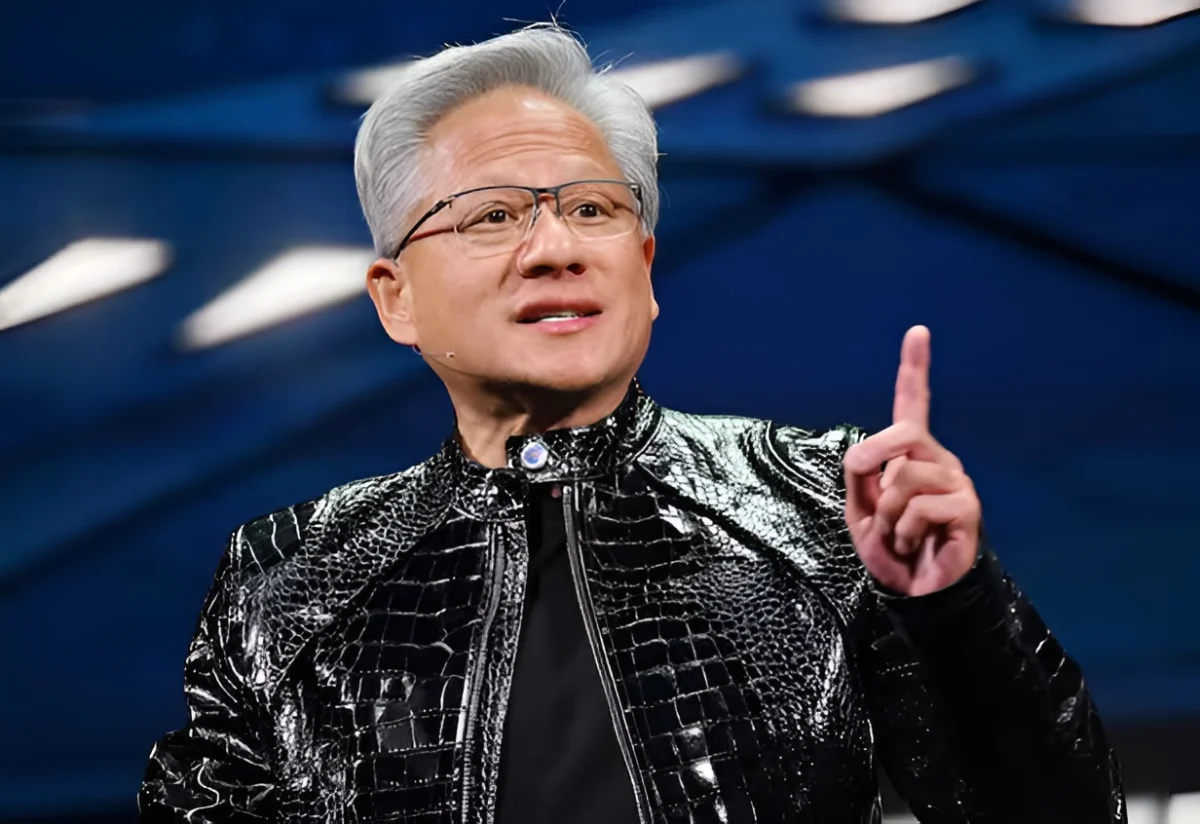
The rapid advancement of artificial intelligence has sparked a global debate regarding the future of the workforce, but NVIDIA CEO Jensen Huang remains steadfast in his belief that the technology will ultimately serve as a catalyst for employment rather than a replacement for human labor. Speaking at the Stanford Graduate School of Business, Huang framed the current rise of AI as the "Industrial Revolution" of the modern era, suggesting that while the nature of work will shift, the total number of jobs available to humanity will increase significantly by the time the revolution reaches its maturity. This perspective comes at a critical juncture for the global economy, as enterprises across every sector grapple with the integration of generative and agentic AI systems into their core operations.
Huang’s address at Stanford sought to demystify the fears surrounding automation. He argued that the most significant risk facing workers is not the technology itself, but a lack of proficiency in utilizing it. According to the NVIDIA chief, the narrative that machines will simply erase human roles misses the nuances of historical economic shifts. Instead, he posited that the more likely scenario involves a redistribution of competitive advantage, where individuals who master AI tools will replace those who do not. This "adaptability thesis" has become a cornerstone of NVIDIA’s corporate messaging as the company continues to dominate the hardware market that powers these very transformations.
The Historical Context of the AI Industrial Revolution
To understand Huang’s optimism, one must look at the parallels he draws with previous technological shifts. During the first Industrial Revolution, the transition from hand production methods to machines initially caused widespread social unrest and fears of permanent unemployment. However, the long-term result was an explosion in productivity, the birth of entirely new industries, and a massive net increase in the global workforce. Huang suggests that the "AI Revolution" is following a nearly identical trajectory.
The chronology of this shift has moved with unprecedented speed. While AI has been a field of study for decades, the timeline accelerated sharply with the advent of Large Language Models (LLMs) and Generative AI (GenAI) in late 2022. By 2024, the industry had moved from experimental "chat" interfaces to "Agentic AI"—systems capable of executing complex, multi-step workflows with minimal human intervention. NVIDIA has been at the center of this timeline, transitioning from a gaming-focused GPU manufacturer to the primary architect of the world’s AI infrastructure. The launch of the Blackwell architecture and "Blackwell Ultra" has pushed the boundaries of what these systems can achieve, enabling a global ecosystem of "AI factories" that Huang believes will be the backbone of future economic growth.
The "Carpenter to Architect" Paradigm
One of the most poignant examples provided by Huang during his Stanford talk was the evolution of traditional crafts through the lens of AI assistance. He described a scenario where a carpenter, traditionally limited by manual labor and physical design constraints, could use AI to transition into the role of an architect or interior designer. By leveraging AI to handle complex drafting, structural calculations, and aesthetic renderings, the worker is not replaced; rather, their craft is elevated.
This shift represents a "levelling up" of human capability. Huang noted that because AI is the fastest-adopted technology in history due to its intuitive, natural-language interfaces, the barrier to entry for high-level professional services is lowering. This democratization of expertise allows individuals to offer more sophisticated services and scale their businesses in ways that were previously impossible without large teams of specialists. The core strength of humanity, Huang argued, is our ability to adapt "real quick," and it is this inherent flexibility that will prevent mass obsolescence.
Supporting Economic Data and Market Trends
Huang’s assertions are supported by emerging data from various economic think tanks and market analysts. While organizations like the International Monetary Fund (IMF) have warned that up to 40% of global jobs could be "exposed" to AI, many economists distinguish between exposure and replacement. A 2023 report by Goldman Sachs estimated that while AI could automate the equivalent of 300 million full-time jobs, it could also drive a 7% increase in global GDP (approximately $7 trillion) over a ten-year period by boosting productivity.
Furthermore, the demand for AI infrastructure is creating a massive physical footprint that requires human labor. The construction of "AI factories"—data centers specifically designed for the massive throughput required by NVIDIA’s H100 and Blackwell chips—has become a multi-billion dollar industry. These facilities require thousands of skilled workers for construction, electrical engineering, cooling system management, and ongoing maintenance. In the United States alone, the push to rebuild domestic manufacturing and semiconductor capacity, supported by legislation like the CHIPS Act, has created a direct link between AI development and blue-collar job growth.

Official Responses and Corporate Strategy
The transition, however, is not without its frictions. High-profile examples of corporate restructuring have fueled public anxiety. For instance, Salesforce recently made headlines for cutting approximately 1,000 jobs while simultaneously ramping up hiring for its AI-focused product divisions. CEO Marc Benioff has claimed that AI now performs nearly 50 percent of the work at the company, yet the firm remains in a state of net expansion in terms of its technological capabilities.
This duality—cutting traditional roles while hiring for AI-centric ones—is the "rebalancing" that Huang describes. Within NVIDIA’s own product ecosystem, the company has had to address concerns from the creative community. The announcement of DLSS 5 (Deep Learning Super Sampling), a technology that uses AI to enhance video game visuals, was met with backlash from artists who feared the tech would override their original creative intent. NVIDIA responded by clarifying that DLSS 5 is optimized to honor the "artist’s intent," acting as a tool for optimization rather than a creative replacement. This dialogue highlights the ongoing tension between technological efficiency and human authorship, a balance that the tech industry is still learning to navigate.
The Rise of Agentic AI and Physical AI
The next phase of this revolution, according to NVIDIA, involves the transition from digital assistants to "Agentic AI" and "Physical AI." Agentic AI refers to systems that can reason, plan, and execute tasks independently within a digital environment. Physical AI involves the integration of these "brains" into robotics and autonomous systems.
Huang believes these advancements will create entirely new categories of employment. Just as the internet gave rise to "social media managers" and "cloud architects"—jobs that were unimaginable in 1980—the era of Agentic AI will likely create roles for "AI Orchestrators," "Ethical Compliance Officers," and "Human-AI Interaction Designers." The demand for these roles is already beginning to outpace supply, leading to a massive push for upskilling initiatives within the private sector and academia.
Broader Implications for the Global Workforce
The long-term implications of Huang’s vision suggest a future where the definition of "labor" is fundamentally redefined. If AI can handle the repetitive, data-heavy, and rote aspects of any profession, the human element of that profession shifts toward strategy, empathy, and high-level decision-making.
However, the "AI era" also places a significant burden on educational systems. To prevent a widening wealth and opportunity gap, the "everybody should know how to use AI" mandate issued by Huang requires a systemic overhaul of how digital literacy is taught. If the ability to use AI becomes the primary differentiator between the employed and the unemployed, access to this technology and the training to use it becomes a matter of national economic security.
NVIDIA’s role in this transition is both as a provider of the "shovels" in the AI gold rush and as a primary evangelist for the technology’s benefits. By positioning AI as a "new job platform," Huang is attempting to steer the public discourse away from fear and toward preparation. As the global ecosystem continues to adapt to the demands of leading enterprises and the capabilities of next-generation hardware, the world will soon see if Huang’s prediction—that more people will be working at the end of this revolution than at the beginning—holds true.
In conclusion, the message from the Stanford Graduate School of Business was clear: the AI revolution is an additive force. While it will undoubtedly disrupt existing workflows and necessitate a massive shift in skills, the historical precedent of industrial growth suggests that the increase in productivity will lead to a more complex, diverse, and robust labor market. For NVIDIA and its visionary CEO, the future is not a world where humans are sidelined by machines, but one where machines empower humans to reach unprecedented levels of creativity and service.