admin
admin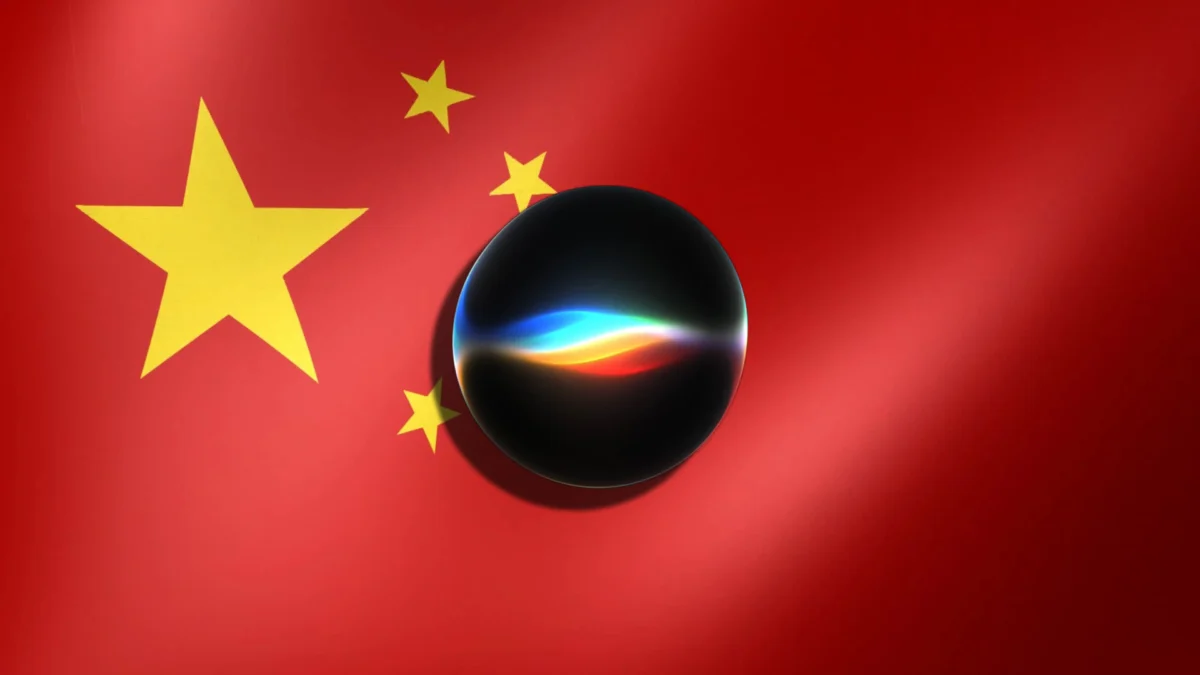
Apple is undergoing a significant strategic pivot in its relationship with the Chinese technology ecosystem, marked by a dual-track approach of aggressive talent acquisition in the artificial intelligence sector and a high-stakes re-engagement with domestic semiconductor manufacturers. Recent reports indicate that the Cupertino-based tech giant has moved beyond mere software partnerships to directly hiring the original engineering team responsible for Alibaba’s open-source Qwen AI models. This maneuver coincides with intense lobbying efforts in Washington D.C., where Apple is reportedly seeking regulatory clearance to source critical memory components from blacklisted Chinese firms, including ChangXin Memory Technologies (CXMT) and Yangtze Memory Technologies Corp (YMTC). These developments suggest a fundamental recalibration of Apple’s "China for China" strategy, aimed at maintaining its competitive edge in the world’s largest smartphone market while navigating increasingly complex geopolitical and economic headwinds.
The Strategic Acquisition of Alibaba’s AI Talent
The most recent development in Apple’s Chinese expansion involves the reported hiring of the core team behind Alibaba’s open-source Qwen AI model. According to Robert Scoble, a veteran technology analyst and former Microsoft executive, Apple has successfully recruited the "original" team tasked with developing the open-weight versions of Qwen. While Apple has not issued an official confirmation, the move aligns with the company’s broader objective to localize its "Apple Intelligence" suite for the Chinese market.
In the West, Apple has integrated OpenAI’s ChatGPT into its operating systems to handle complex queries that exceed the capabilities of its on-device models. However, due to regulatory restrictions on Western AI models in China, Apple has been forced to seek local alternatives. By hiring the engineers who built the foundational architecture of Qwen, Apple is likely attempting to bring the development of its "Chinese Siri" in-house, or at the very least, ensure a seamless integration of Alibaba’s Large Language Models (LLMs) into the iOS ecosystem.
The Qwen family of models, developed by Alibaba Cloud, has rapidly become a dominant force in the global AI landscape. The upcoming Qwen 3.8, which is rumored to feature a staggering 2.4 trillion parameters, is positioned as a direct competitor to frontier models such as Anthropic’s Fable 5 and Google’s Gemini. By securing the talent behind this technology, Apple gains deep institutional knowledge of the specific linguistic and cultural nuances required to make Siri a viable competitor against local rivals like Huawei and Xiaomi, both of which have already integrated sophisticated native AI into their handsets.
Integrating Apple Intelligence with the Chinese Ecosystem
The integration of Alibaba’s Qwen into Apple Intelligence represents a departure from Apple’s traditional preference for proprietary, vertically integrated systems. Under this new arrangement, users in China will be able to access Qwen’s capabilities directly through the Siri interface. This includes advanced text and image understanding, as well as generative capabilities, without the need for standalone applications.
The technical implementation of this partnership is expected to mirror the "wrapper" approach used for ChatGPT. When a user makes a request that requires high-level reasoning, Siri will route the data—with user permission—to Alibaba’s cloud-based models. An Alibaba spokesperson recently noted that this integration allows for a fluid user experience, enabling "text and image understanding and generation without needing to jump between tools."
Furthermore, the "new Siri" is designed to be deeply embedded in the hardware-software interface. It features integration with the Dynamic Island, access to personalized context from the user’s emails and messages, and real-time awareness of on-screen content. For instance, a user could ask Siri about a concert mentioned in a text message, and the AI could automatically add the date to the calendar while providing directions to the venue using local mapping data. Achieving this level of sophistication in the Chinese language requires more than just translation; it requires a model trained on the specific digital habits and data structures prevalent in China, which explains Apple’s interest in the Qwen engineering team.
Navigating the Semiconductor Minefield: CXMT and YMTC
While the AI front of Apple’s China strategy is focused on software and talent, the hardware front is focused on cost and supply chain stability. Apple is currently engaged in a delicate diplomatic dance with the United States government regarding the procurement of memory chips. Specifically, the company is seeking to source DRAM from CXMT and NAND flash from YMTC for use in iPhones sold within the Chinese market.

CXMT has recently come under intense scrutiny in Washington, with the Pentagon placing the company on a blacklist due to alleged connections to China’s People’s Liberation Army (PLA). Despite these tensions, Apple is reportedly lobbying the Trump administration for clearance to maintain these supply nodes. Financial analysts suggest that if Apple is forced to source memory exclusively from non-Chinese suppliers like Samsung or SK Hynix for its China-bound devices, the memory costs for the upcoming iPhone 18 Pro could potentially triple.
Bloomberg’s Mark Gurman has noted that Apple is working to minimize political blowback by positioning these purchases as a localized supply chain necessity that does not compromise U.S. national security. By using CXMT and YMTC chips only for devices sold within China, Apple hopes to satisfy Chinese "buy local" sentiments while keeping its global supply chain segregated. However, this strategy carries significant reputational risk in Washington, where "de-risking" from Chinese technology remains a rare point of bipartisan consensus.
A Chronology of Apple’s Strategic Re-engagement
The shift toward deeper integration in China follows a period of attempted diversification. The following timeline illustrates the evolution of Apple’s recent China strategy:
- Early 2023: Apple accelerates efforts to move production to India and Vietnam in response to "Zero-COVID" disruptions and rising geopolitical tensions.
- Late 2023: Reports surface that Chinese government agencies have restricted the use of iPhones among state employees, leading to a dip in Apple’s market share.
- March 2024: CEO Tim Cook visits China, opening a new flagship store in Shanghai and meeting with top suppliers, signaling a commitment to the region.
- June 2024: Apple announces "Apple Intelligence" at WWDC but notably omits details regarding the Chinese market, sparking rumors of a search for a local AI partner.
- July 2024: Reports emerge that Apple has finalized a deal with Alibaba to use Qwen. Simultaneously, the company begins lobbying for memory chip exemptions.
- Late 2024 (Projected): Apple completes the hiring of the original Qwen open-source team, shifting its AI localization efforts into high gear.
Comparative Analysis: The Global AI Landscape
The urgency of Apple’s moves in China is underscored by the rapid pace of AI development globally. Alibaba’s Qwen 3.8 is part of a broader trend of high-performance "open-weight" models that are challenging the dominance of closed-source giants like OpenAI.
| Model | Developer | Status | Key Strength |
|---|---|---|---|
| Qwen 3.8 | Alibaba | Open-weight | 2.4T parameters; Multi-modal mastery |
| Fable 5 | Anthropic | Closed-source | Advanced reasoning and safety protocols |
| Kimi K3 | Moonshot AI | Open-weight | Long-context window (China-centric) |
| GPT-4o | OpenAI | Closed-source | Global standard for conversational AI |
The arrival of Qwen 3.8, which ranks as one of the most powerful models available, second only to top-tier Western models like Fable 5, provides Apple with a "frontier-class" partner in China. For Apple, the choice of Alibaba over other local players like Baidu or Moonshot AI likely stems from Alibaba’s robust cloud infrastructure and its proven ability to scale open-source projects, which Apple’s newly hired team can now tailor to the iOS ecosystem.
Broader Implications and Geopolitical Risks
Apple’s deepening ties with Chinese AI and semiconductor firms represent a high-stakes gamble. From a business perspective, the logic is sound: to sell premium hardware in China, Apple must offer AI services that are as good as, or better than, those offered by local competitors. Furthermore, reducing component costs through local sourcing is essential for maintaining the high margins that investors demand.
However, the implications extend beyond the balance sheet. By hiring the Qwen team, Apple is effectively absorbing expertise that was nurtured within China’s state-supported tech ecosystem. This could lead to further scrutiny from U.S. regulators concerned about the transfer of AI "know-how." On the hardware side, any reliance on CXMT or YMTC makes Apple vulnerable to future sanctions or export controls that could be triggered by a shift in U.S. foreign policy.
In the long term, Apple is attempting to create a bifurcated operating model: a Western-aligned supply chain and AI stack for the global market, and a China-centric stack for its most critical growth region. Whether the company can maintain this equilibrium without drawing the ire of either Washington or Beijing will be the defining challenge for Tim Cook’s leadership in the coming years.
As the "age of open-source AI" matures, Apple’s decision to bring the architects of that movement into its fold suggests that the company is no longer content to simply "partner" with Chinese firms—it intends to master the local technology itself. With the iPhone 18 and the next generation of Siri on the horizon, the results of this strategic pivot will soon be visible to millions of consumers across the mainland.