Evan Lee Salim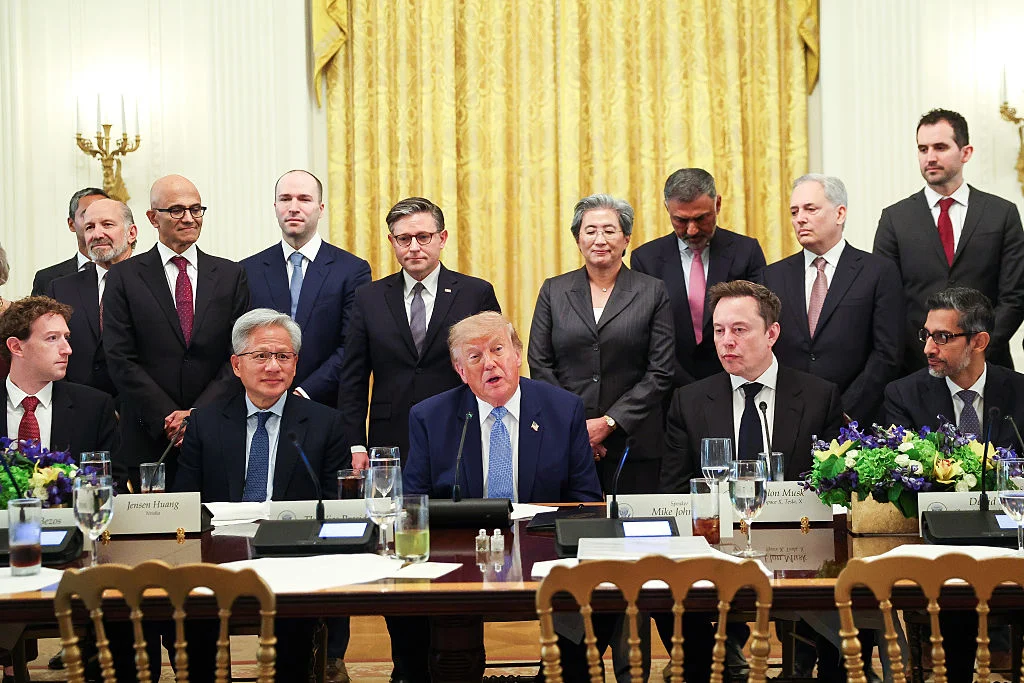
President Donald Trump has officially announced the formation of a new Super Intelligence Force, an initiative he asserts will solidify America’s preeminence in a technological revolution he deems more impactful than the Industrial Revolution and the internet combined. The newly established body will be spearheaded by national intelligence director Jay Clayton, alongside a cadre of high-ranking administration officials, and is charged with orchestrating the federal government’s efforts to harness the full potential of this emerging domain while safeguarding national interests and enhancing the lives of all Americans.
The announcement came via a Sunday morning post on Trump’s social network, Truth Social, where he outlined the ambitious mandate of the Super Intelligence Force. "The Super Intelligence Force is tasked with coordinating the effort of the Federal Government to ensure that America continues to lead the World in Super Intelligence, which many say is bigger than the Industrial Revolution, and the Internet, and will protect the interests, and improve the lives, of all Americans," Trump stated, underscoring the perceived monumental scale of the technological shift. This move follows months of anticipation and previous declarations from the President regarding the necessity of a dedicated federal body to address the rapid advancements in artificial intelligence.
The Evolution of an Initiative: From AI to Super Intelligence
The roots of this initiative can be traced back to September, amidst a burgeoning public and expert debate surrounding AI safety and ethical development. At that time, President Trump had largely characterized these concerns as a "hoax created by Radical Left Dumocrats." Despite his dismissive stance on the perceived alarmism, he nevertheless signaled his intent to form an "AI Force" and appoint an "AI czar," famously adding the stipulation, "Only High I.Q. individuals need apply!" This early rhetoric established a tone that prioritized rapid development and national competitive advantage over what he viewed as potentially innovation-stifling regulations.
Subsequently, the administration took a significant step in rebranding the technology, with Trump signing an executive order aimed at officially renaming "AI" as "super intelligence." This semantic shift, while seemingly minor, reflects a deliberate strategy to frame the technology in a way that emphasizes its transformative power and potential, rather than the more commonly associated — and sometimes fear-inducing — "artificial intelligence." The rebranding effort was evident during a recent gathering at the White House, where leading tech executives convened to sign a non-binding safety pledge related to the technology. While the executives appeared to embrace the new terminology, some initial stumbles in its adoption highlighted the nascent nature of this linguistic pivot. Curiously, the pledge itself garnered attention for including a notable typo, misspelling "United States," a minor detail that nonetheless underscored the hurried pace of these high-level engagements.
The current naming of the new task force, the "Super Intelligence Force," thus aligns perfectly with this deliberate rebranding strategy. The Wall Street Journal reported on the leadership structure, confirming that Jay Clayton, formerly the chairman of the U.S. Securities and Exchange Commission, will chair the Super Intelligence Force. This appointment effectively designates him as the administration’s AI/SI czar, a powerful position designed to centralize and direct federal efforts. He will be supported by a distinguished group of vice chairs: Federal Trade Commission Chair Andrew Ferguson, Undersecretary of War for Research and Engineering Emil Michael, and Office of Personnel Management Director Scott Kupor. The composition of this leadership team, spanning regulatory, defense, and human resources domains, suggests a comprehensive approach to integrating "super intelligence" across various sectors of governance and national strategy.
The Mandate and the Race for Global Dominance
The Super Intelligence Force has been given a tight deadline: 120 days to produce a comprehensive report detailing the risks and opportunities presented by AI, or "super intelligence" as the administration now prefers to call it. This rapid turnaround underscores the urgency with which the administration views the evolving technological landscape. Jay Clayton, in previous statements, has consistently emphasized the critical importance of the United States maintaining its lead in this field. He notably stated that it would be "irresponsible" for the U.S. to "back away" from AI development, particularly given the aggressive advancements being made by rival nations like China. Reaffirming this stance in comments to the Wall Street Journal, Clayton reiterated that one of the most significant risks America faces is "not being first" in the race for super intelligence.
The task force’s charter outlines its core mission with clarity: "develop plans for responding to SI-enabled threats to our society, while preventing overregulation and regulatory capture that would stifle innovation and competition." This dual mandate reveals a central tension in the administration’s approach: how to simultaneously protect society from potential harms while fostering an environment conducive to rapid technological progress. The emphasis on preventing "overregulation and regulatory capture" is particularly telling, signaling a preference for a light-touch regulatory framework that aims to unleash innovation rather than constrain it, a philosophy often favored by segments of the tech industry.
Broader Context: The Geopolitical AI Race and Economic Implications
The establishment of the Super Intelligence Force is not an isolated event but rather a significant development within a broader global context characterized by an intense geopolitical competition for technological supremacy. Artificial intelligence, in all its forms, is widely regarded by economists and strategists alike as the foundational technology of the 21st century. Projections from various research firms consistently estimate the global AI market to reach trillions of dollars in the coming decade, with its potential impact on productivity, economic growth, and military capabilities dwarfing previous technological revolutions.
The comparison to the Industrial Revolution and the internet is not mere hyperbole. The Industrial Revolution fundamentally transformed societies, economies, and labor markets over centuries, leading to unprecedented wealth creation and societal restructuring. The internet, in a much shorter span, revolutionized communication, commerce, and access to information, creating entirely new industries and global connectivity. "Super intelligence," as envisioned by its proponents, could accelerate scientific discovery, automate complex tasks across every sector, personalize services on an unimaginable scale, and fundamentally alter human interaction with the physical and digital worlds. However, it also presents profound ethical, social, and national security challenges, from job displacement and algorithmic bias to autonomous weapons and the potential for existential risks.
China, in particular, has emerged as a formidable competitor, with its government-backed "New Generation Artificial Intelligence Development Plan" aiming for global leadership in AI by 2030. This plan integrates massive state investment, data collection capabilities, and a national strategy that views AI as critical to both economic prosperity and military modernization. The U.S. initiative, therefore, can be seen as a direct response to this intensifying competition, reflecting a bipartisan consensus on the need for sustained American leadership in critical technologies.
Leadership and Strategy: A Multifaceted Approach
The selection of Jay Clayton, with his background in financial regulation, as chair of the Super Intelligence Force, highlights the administration’s focus on the economic and market implications of AI. His prior experience at the SEC involved navigating complex technological shifts in financial markets, a skill set deemed valuable for understanding the broad economic disruptions and opportunities presented by AI. His repeated warnings about the risks of the U.S. "not being first" underscore a market-driven, competitive ethos.
The inclusion of Federal Trade Commission Chair Andrew Ferguson as a vice chair signals an intent to address market competition, consumer protection, and potentially antitrust concerns related to dominant AI firms. The FTC has been increasingly active in scrutinizing the practices of large technology companies, and its involvement suggests a focus on ensuring a level playing field and preventing monopolistic control over "super intelligence" technologies.
Emil Michael, the Undersecretary of War for Research and Engineering, brings a crucial defense and national security perspective. This appointment underscores the strategic military implications of AI, from advanced weaponry and intelligence gathering to logistics and cybersecurity. The "War" department’s involvement is a clear indication that "super intelligence" is viewed not just as an economic driver but also as a critical component of national defense and geopolitical power projection.
Scott Kupor, Director of the Office of Personnel Management (OPM), adds a vital dimension related to workforce implications and government talent. As AI advances, its impact on employment, the skills gap, and the future of work will be immense. OPM’s role suggests an awareness of the need to prepare the federal workforce for an AI-integrated future and to consider the broader societal impact on labor.
Implications and Challenges Ahead
The Super Intelligence Force faces a daunting task within its 120-day timeframe. Defining "super intelligence" itself, let alone outlining its risks and opportunities, is a complex endeavor that has engaged philosophers, scientists, and ethicists for years. The report will likely need to address a wide array of issues, including:
- Economic Impact: Potential for job displacement, creation of new industries, and the need for workforce retraining and education.
- National Security: Development of autonomous weapons, cybersecurity vulnerabilities, and the use of AI in intelligence operations.
- Ethical Concerns: Algorithmic bias, privacy violations, accountability for AI decisions, and the potential for misuse.
- Societal Implications: Impact on misinformation, social cohesion, and the nature of human decision-making.
- Global Governance: The need for international cooperation and standards in AI development and deployment.
The emphasis on "preventing overregulation" will undoubtedly spark debate. While proponents argue that excessive regulation can stifle innovation and cede leadership to less regulated nations, critics contend that a lack of robust oversight could lead to unchecked development, exacerbating risks and inequalities. Finding the right balance between fostering innovation and ensuring responsible development will be the central challenge for the Super Intelligence Force.
The formation of this new body marks a significant inflection point in the U.S. approach to artificial intelligence. By centralizing federal efforts, rebranding the technology, and assembling a diverse leadership team, the Trump administration is signaling its intent to aggressively pursue global leadership in what it perceives as the defining technology of the era. The coming months, particularly as the 120-day report takes shape, will reveal the concrete strategies and policies that will underpin America’s quest for "super intelligence" supremacy.