Evan Lee Salim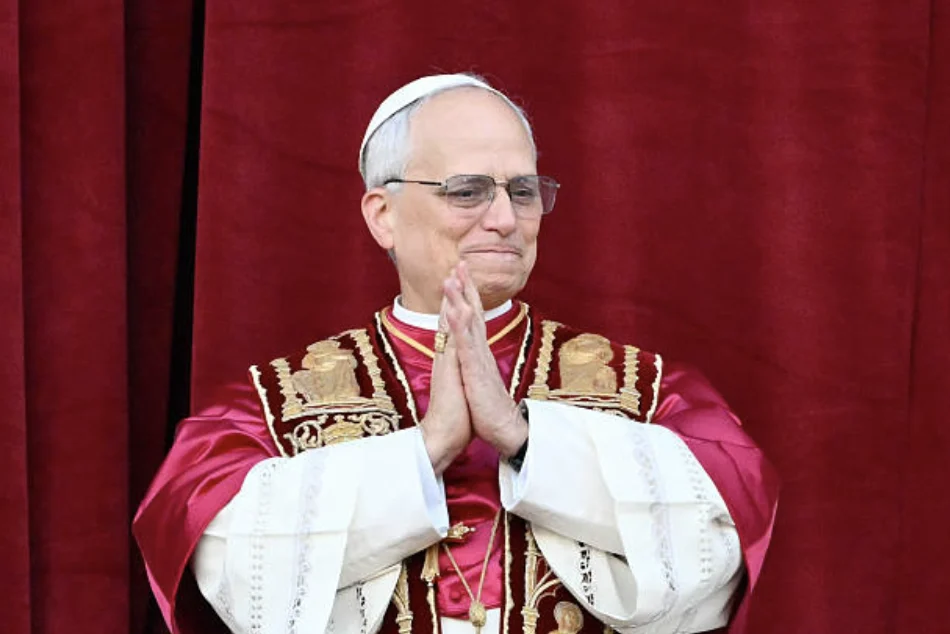
In a significant intervention into the rapidly evolving global discourse surrounding artificial intelligence, His Holiness the Bishop of Rome (Episcopus Romanus), Primate of Italy (Primatus Italiae), and Supreme Pontiff of the Universal Church (Summus Pontifex Ecclesiae Universalis), Pope Leo XIV, has issued a powerful call to distinguish and preserve human-generated art from the growing proliferation of works created by artificial intelligence. His statements, delivered initially via a post on the social media platform X and elaborated upon in a prior encyclical, underscore a profound theological and philosophical concern regarding the essence of human creativity in an increasingly automated world.
The pontiff’s direct message, shared on Friday morning, October 2, 2026, at 8:39 AM PDT, articulated a clear demarcation: "In this era of artificial intelligence, it is becoming urgent to distinguish human art from what machines produce. There is an ontological difference, even before an aesthetic one, between art and what a machine can generate through statistical calculation based on millions of images created by others. Algorithms lack the spark of humanity." This declaration, coming from a figure of immense moral and spiritual authority, immediately resonated across artistic, technological, and ethical communities worldwide, adding a potent new dimension to the ongoing debate about AI’s role in creative fields.
The Vatican’s Evolving Stance on AI Ethics
Pope Leo XIV’s recent pronouncements are not isolated but rather form part of a more extensive and carefully considered engagement by the Holy See with the ethical implications of artificial intelligence. The Vatican has, in recent years, positioned itself as a leading moral voice in the global conversation surrounding advanced technologies, seeking to ensure that innovation serves human dignity and the common good. This approach is rooted in centuries of Catholic social teaching, which consistently prioritizes the human person and ethical considerations above unbridled technological advancement.
"Magnifica Humanitas": A Foundational Encyclical
The immediate precursor to Pope Leo XIV’s X post was his encyclical letter, "Magnifica Humanitas" (Magnificent Humanity), issued in May 2026. Encyclicals, as formal papal letters, are among the most authoritative documents issued by a Pope, intended to clarify Church doctrine, address contemporary issues, and guide the faithful. "Magnifica Humanitas" dedicated substantial sections to exploring the importance of human dignity in an increasingly automated world, serving as a foundational text for the Church’s comprehensive ethical framework for AI.
In "Magnifica Humanitas," Pope Leo XIV delved into the theological understanding of human creativity as a reflection of divine creation. He emphasized that humanity, created in the image and likeness of God, possesses unique faculties of intellect, will, and creativity that are intrinsically linked to its spiritual essence. The encyclical warned against any technological development that might diminish or obscure this unique human endowment, arguing that while automation can offer efficiencies and solve complex problems, it must never usurp or devalue those aspects of human existence that are fundamentally spiritual and irreducible to algorithms. The document called for a "human-centered AI," advocating for technologies that augment human capabilities rather than replace human essence, stressing the irreplaceable value of human labor, thought, and artistic expression. It also touched upon issues such of algorithmic bias, the potential for job displacement, and the need for robust ethical governance in the development and deployment of AI systems.
Chronology of a Moral Intervention
The Vatican’s focused engagement with AI ethics began to formalize several years prior to Pope Leo XIV’s recent statements. In February 2020, the Pontifical Academy for Life launched the "Rome Call for AI Ethics," an initiative that brought together leaders from technology companies, governments, and academic institutions to sign a pledge promoting ethical AI development. While this initial "Rome Call" focused broadly on principles like transparency, inclusion, responsibility, impartiality, and security, Pope Leo XIV’s subsequent encyclical and recent X post represent a deepening and more specific theological articulation of these principles, particularly concerning the domain of creativity.
The timeline of the Pope’s recent interventions is critical:

- May 2026: Publication of the encyclical "Magnifica Humanitas," laying the theological and ethical groundwork for the Vatican’s comprehensive stance on AI and human dignity. This document served as a broad framework, articulating the Church’s vision for a future where technology serves humanity without compromising its essence.
- September 29, 2026: A New York Times report details lobbying efforts by AI companies, specifically Anthropic, at the Vatican. This report highlighted the growing awareness within the tech industry of the Vatican’s moral authority and its potential influence on public perception and regulatory frameworks.
- October 2, 2026: Pope Leo XIV posts on X, explicitly addressing AI-generated art and drawing a sharp "ontological difference" between human and machine creativity. This direct social media engagement signaled an urgency and a desire to reach a broader, more immediate audience with a pointed message.
This progression shows a deliberate strategy: a foundational theological document, followed by a pointed, accessible social media message in response to current events and industry trends, aiming to shape public discourse and guide ethical reflection.
The "Ontological Difference": A Theological and Philosophical Deep Dive
The core of Pope Leo XIV’s argument rests on the concept of an "ontological difference." Ontology is the branch of metaphysics dealing with the nature of being. When the Pope states an "ontological difference," he is asserting that human-generated art and AI-generated art do not merely differ in style or quality, but in their very mode of being and their fundamental origin.
From a theological perspective, human creativity is often understood as a participation in God’s own creative act. Humans, endowed with free will, consciousness, and a soul, are capable of subjective experience, intention, emotion, and spiritual insight. These elements are not merely inputs or algorithms; they are the wellsprings of genuine artistic expression. A human artist imbues their work with personal history, struggles, joys, and a unique perspective on existence – often grappling with profound questions of meaning, suffering, and hope. This act of creation is an act of self-expression and spiritual engagement.
Conversely, AI-generated art, as the Pope describes, arises from "statistical calculation based on millions of images created by others." Generative AI models, such as diffusion models, operate by identifying patterns, relationships, and statistical probabilities within vast datasets of existing human-created images and texts. They synthesize new images by predicting and assembling pixels based on these learned statistical models. While the output can be aesthetically striking and even indistinguishable from human art to the untrained eye, the Pope argues that the process and origin are fundamentally different. An algorithm lacks subjective experience, intention, consciousness, or a spiritual dimension. It does not "feel" or "intend" in the human sense; it executes instructions based on mathematical models. The "spark of humanity" refers to this intrinsic connection between human creativity and the unique spiritual and cognitive faculties bestowed upon human beings. This distinction elevates the discussion beyond mere aesthetics, placing it firmly in the realm of what it means to be human and what constitutes genuine creation.
Reactions from the Tech Industry and Beyond
The Vatican’s firm stance has inevitably drawn attention from the very companies at the forefront of AI development. The New York Times report from late September 2026 specifically highlighted Anthropic, a prominent AI safety and research company, and its efforts to lobby the Vatican. Anthropic, known for its focus on developing "safe" and "constitutional" AI, reportedly engaged with Vatican officials to explore the Church’s position on "non-human consciousness." This suggests a desire by some AI developers to understand or even influence theological and ethical frameworks that might one day assign moral status or rights to advanced AI, or at least guide its responsible development. The report indicated that these lobbying efforts found "little success" in altering the Vatican’s anthropocentric (human-centered) theological framework, which remains steadfast in its affirmation of unique human dignity and spiritual essence.
The Pope’s statement is expected to elicit varied responses across different sectors:
- Human Artists: Many human artists, particularly those whose livelihoods and creative integrity are threatened by AI’s ability to quickly generate vast quantities of content, will likely feel validated and supported by the Pope’s words. It provides a powerful moral argument for the irreplaceable value of their craft and the unique human touch.
- AI Developers and Researchers: Some within the AI community might dismiss the theological distinction as irrelevant to technological progress, while others, particularly those focused on AI ethics and alignment, might see it as a significant challenge and an impetus to develop AI more thoughtfully, perhaps emphasizing tools that assist human creativity rather than attempting to replicate or supersede it.
- Ethicists and Philosophers: The Pope’s intervention will undoubtedly invigorate philosophical debates on the nature of consciousness, creativity, and the definition of art. It forces a re-examination of what constitutes genuine authorship and the ethical boundaries of machine intelligence.
- Cultural Institutions and Policymakers: Museums, galleries, and cultural heritage organizations, along with governmental bodies considering AI regulation, may find in the Pope’s statements a reinforced argument for protecting human artistic heritage and supporting human creators in an AI-dominated landscape. It could influence policy discussions on intellectual property rights, attribution, and the funding of arts and humanities.
Broader Impact and Implications
Pope Leo XIV’s explicit distinction between human and AI-generated art carries significant implications beyond the immediate religious context.
- Cultural and Societal Reaffirmation of Human Value: In an era where technological advancements often provoke anxieties about human obsolescence, the Pope’s statement serves as a powerful reaffirmation of human uniqueness and intrinsic value. It reminds society that certain domains, particularly those involving profound creativity and spiritual expression, remain uniquely human.
- Ethical Guidelines for AI Development: The Vatican’s consistent engagement in AI ethics offers a crucial moral compass. This specific articulation on art could influence the development of ethical AI frameworks, pushing for systems designed to respect and enhance human capabilities rather than diminish them. It reinforces the idea that not all "creation" is equal, and that the origin of a work carries ethical weight.
- Impact on the Art Market and Creative Industries: While difficult to quantify immediately, such a high-profile statement could influence public perception and consumer preferences. There might be a heightened appreciation for "authentically human" art, potentially creating a distinct market for works certified as entirely human-created, free from algorithmic influence. This could provide a much-needed boost to human artists struggling against the economic pressures of AI-generated content.
- Influence on Education and Policy: Educational institutions, especially those in arts and humanities, might integrate these ethical considerations into their curricula. Policymakers, when drafting legislation related to intellectual property, cultural preservation, and technological regulation, may find this moral argument a compelling factor in favoring human creators.
- A Continued Dialogue on Consciousness and Spirituality: The Pope’s emphasis on the "spark of humanity" and the "ontological difference" implicitly challenges the purely materialistic or reductionist views of consciousness often prevalent in some technological circles. It forces a deeper inquiry into the nature of consciousness, the human soul, and the spiritual dimensions of existence that AI, by its very nature, cannot replicate. This will undoubtedly fuel further interdisciplinary dialogues between theology, philosophy, and cutting-edge science.
In conclusion, Pope Leo XIV’s intervention is far more than a critique of a technological trend; it is a profound theological and philosophical assertion about the essence of human creativity and dignity in the digital age. By drawing a clear "ontological difference" between human and AI-generated art, the Supreme Pontiff has provided a robust ethical framework for evaluating the role of artificial intelligence, urging a global commitment to preserving the irreplaceable "spark of humanity" in artistic expression. This declaration marks a pivotal moment in the ongoing conversation about technology, ethics, and the enduring value of human spirit in an increasingly automated world.