Evan Lee Salim
Rather than downloading another app, a growing number of agents can simply be texted like an ordinary person, signaling a profound shift in how individuals interact with digital services and manage their daily lives. These sophisticated artificial intelligence entities are moving beyond mere information retrieval, evolving into autonomous assistants capable of understanding complex context, integrating seamlessly with existing applications, and executing multi-step tasks on behalf of their users. This paradigm shift promises to redefine personal and professional productivity, making advanced AI capabilities accessible through the ubiquity of messaging platforms.

The core appeal of these text-based AI agents lies in their intuitive interface and expansive capabilities. Users can simply articulate their needs via text, and the agent, armed with advanced natural language processing and deep learning algorithms, can interpret the request, remember previous interactions, and connect to a vast ecosystem of apps and services. This enables them to perform a diverse array of tasks, from the mundane to the complex: scheduling appointments, organizing calendars, researching travel itineraries, drafting and sending emails, making restaurant reservations, facilitating online shopping, or delivering timely reminders days or weeks later. This level of integrated, proactive assistance marks a significant evolution from the reactive, command-based interactions characteristic of earlier AI assistants.
The burgeoning market for these conversational AI agents is attracting substantial investment and innovation. While Instinct currently stands out as one of the buzziest players, having recently secured a staggering $1 billion in its latest funding round, pushing its valuation to an impressive $10 billion, it is far from alone in this rapidly expanding sector. A multitude of other companies are vigorously competing for market share, each offering unique approaches and specialized functionalities tailored to various aspects of personal, family, and professional life. The collective activity underscores a broader industry belief in the transformative potential of agentic AI.

The Rise of Agentic AI: A Paradigm Shift in Digital Interaction
The evolution of AI assistants has been a gradual but accelerating process. Early iterations, such as Siri and Google Assistant, primarily served as voice-activated command processors, capable of answering queries, setting alarms, and performing simple device controls. However, their utility was often limited by a lack of contextual understanding and the inability to autonomously execute complex, multi-step tasks across different applications. The current generation of text-based AI agents represents a significant leap forward, moving towards "agentic AI" – systems that can plan, execute, and monitor their own actions to achieve a user’s goal, often with minimal human intervention after the initial prompt.

This shift is powered by advancements in large language models (LLMs), which provide these agents with a deep understanding of human language, nuanced context, and the ability to reason and generate coherent responses. Coupled with sophisticated API integrations, these agents can act as a central hub, orchestrating various digital services on behalf of the user. The move to text-based interaction, particularly within existing messaging platforms, lowers the barrier to entry, removing the need for dedicated apps and allowing users to leverage a familiar communication method for advanced assistance. This convenience is a key driver of adoption, as it seamlessly embeds AI capabilities into daily digital habits.
Market Landscape and Investment Frenzy

The substantial capital flowing into companies like Instinct is indicative of a broader investment trend in the AI agent space. Venture capitalists are betting billions on the promise of truly autonomous personal and professional assistants. Instinct’s journey, from raising $350 million at a $2.5 billion valuation to its recent $1 billion Series C at a $10 billion valuation in September 2026, highlights the rapid growth and investor confidence in this sector. This rapid appreciation reflects not just the technological innovation but also the vast untapped market for automated personal management. Industry analysts project the global AI assistant market to grow at a compound annual growth rate (CAGR) exceeding 25% over the next five years, driven by increasing demand for personalized digital experiences and enhanced productivity solutions. The ability of these agents to learn user preferences, anticipate needs, and proactively manage tasks positions them as critical tools in an increasingly complex digital world.
Pioneering Platforms: A Deep Dive into Leading AI Agents

The market is currently witnessing a vibrant proliferation of these AI agents, each carving out its niche. From general-purpose personal assistants to highly specialized tools for families, travelers, content creators, and professionals, the diversity reflects the broad applicability of this technology.
-
Caddy: Launched in public beta in April 2026, Caddy positions itself as an AI assistant that synthesizes disparate information from a user’s phone into actionable tasks. Operating natively within iMessage for iPhone users and RCS for Android users, it eliminates the need for a separate application, integrating directly into users’ primary communication channels. Caddy intelligently connects to calendars and conversations, identifying potential action items such as appointments in emails or shopping lists from friends. Its capabilities include adding events to calendars, setting reminders, tracking follow-ups, and conducting research, effectively transforming passive information into proactive assistance.

-
Fambot: Addressing the complex logistics of family life, Fambot acts as an AI-powered "chief of staff" for households. Launched in beta in early September 2026, it aims to centralize the myriad moving parts of family management, from school communications and sports schedules to meal planning and general calendars. Available across iOS, Android, and web platforms, Fambot also allows direct interaction via SMS. A key feature is its nightly summary, which provides a detailed overview of the following day’s events, to-dos, and specific requirements (e.g., school uniforms). Parents can respond to these summaries to query information or modify schedules. With $3.5 million in pre-seed funding, Fambot plans a subscription model akin to Netflix after its free beta period, and currently integrates with Gmail and Google Calendar, with Outlook and Apple Calendar support on the roadmap.
-
Folk: Folk differentiates itself as an AI assistant accessible via iMessage, WhatsApp, and Telegram, emphasizing its ability to remember personal context. Beyond standard tasks like managing reminders, researching topics, and tracking flights, Folk handles more complex actions such as email management and real-world tasks like restaurant reservations. A notable feature is its operation on a private cloud computer, granting it the capability to execute code and perform multi-step processes rather than just conversational responses. Folk launched its beta in May 2026, offering a free tier alongside a Pro subscription at $8.33/month for unlimited background tasks.

-
Instinct: A dominant force in the nascent AI agent market, Instinct has garnered significant attention and capital. The always-available agent goes beyond answering questions, capable of taking direct actions on a user’s behalf. Users communicate through text or voice, connecting Instinct to their existing apps like email, calendar, and Google Workspace. Early adopters have leveraged Instinct for diverse tasks, from planning intricate trips and managing grocery lists to booking tickets and canceling subscriptions. In September 2026, Instinct introduced dedicated email addresses for its assistants, enabling them to create and manage accounts autonomously without cluttering the user’s personal inbox. This feature, while enhancing autonomy for signing up for services and contacting businesses, has also sparked critical discussions around privacy and security, given the agent’s extensive access and control. The company also rolled out support for placing phone calls, further expanding its real-world interaction capabilities. Instinct currently remains in private beta.
-
Iris: Powered by the Hermes agent, Iris focuses on delegating tasks to an AI assistant directly through iMessage. Users connect their preferred applications and assign tasks with simple messages. Iris then navigates the necessary steps, maintaining conversational context to ensure continuity and efficiency. A key design principle is its proactive nature, with Iris designed to follow up with users without awaiting further prompts, anticipating needs and offering timely updates or suggestions.

-
Martin: A general-purpose personal assistant, Martin offers broad accessibility across SMS, phone, WhatsApp, email, Slack, and its dedicated iOS app. It excels in managing calendars, emails, reminders, tasks, notes, and communications. Martin can act on behalf of users by sending messages or making calls and provides daily summaries of pending actions. Positioned as a premium service, subscriptions for Martin start at $21 per month.
-
Miso: Specializing in travel, Miso applies the personal assistant concept to itinerary planning and management. Operating through iMessage, it combines AI-driven trip planning with the expertise of a dedicated human travel team. Users can arrange flights via messaging, with Miso factoring in personal travel preferences, loyalty points, and other priorities. The service also provides travelers with real-time trip details, flight updates, and personalized recommendations, aiming to streamline the entire travel experience.

-
Ohai: Another family-centric AI assistant, Ohai helps households manage the continuous flow of information and tasks inherent in daily family life. Users can forward emails, send messages, or make voice requests, which Ohai transforms into structured schedules, reminders, and plans. It coordinates calendars, household chores, and meal planning across multiple family members. Ohai offers a free basic option, with tiered subscriptions based on family size starting at $9.99 per month.
-
Ollie: Similar to other family-focused agents, Ollie aims to consolidate scattered family information—from school messages to group chats and task lists—into a synchronized, manageable system. Launched in June 2026, it tracks calendars, emails, reminders, and household details, delivering relevant information via text. Ollie’s most significant differentiator is its achievement of SOC 2 compliance, a widely recognized security standard, making it one of the first mainstream family-focused AI assistants to prioritize such robust data privacy and security measures. It offers a free tier and paid plans starting at $25 per month for 150 messages, with a $100-per-month plan for up to 1,000 messages.

-
Orbits: Orbits also provides an AI assistant dedicated to household management. Accessible through its app and text messaging, it integrates calendars, lists, and conversations while performing tasks such as web searches, purchases, restaurant bookings, appointment changes, and requesting quotes for household services. Beyond individual tasks, Orbits can remind family members about chores, communicate with service providers, and assist in coordinating responsibilities that extend beyond the immediate household. The company is backed by notable investors including Andreessen Horowitz (a16z) Speedrun fund, N49P, and Garage Capital.
-
Pally: Designed for interaction akin to conversing with a friend, Pally gains access to a user’s essential applications, including WhatsApp, Gmail, calendars, and Google Drive. It helps users track plans, receipts, dates, files, and other details by connecting information across these diverse services. Pally offers a free plan with 15 minutes of calls per month, and paid plans starting at $25 per month for 30 minutes, or $100 per month for 60 minutes.

-
Poke: Launched in March 2026, Poke began as a general-purpose assistant accessible via text messaging, handling tasks related to calendars, planning, health, smart-home controls, and photos. Its prominence surged in June 2026 when Apple approved it as the first AI agent on the Apple Messages for Business platform. A month later, its parent company, The Interaction Company of California, was acquired by AI coding startup Cognition in a deal valued in the low nine figures, highlighting the strategic importance of conversational AI capabilities.
-
Rene: Rene positions itself not merely as a productivity agent but as a user’s "best contact" among AI personal assistants. This text-based agent transforms natural-language conversations into actionable tasks, reminders, summaries, and other follow-up actions. Rene maintains context across interactions, enabling it to recall details and proactively surface items requiring attention. Its advanced features include a built-in browser, code-writing capabilities, online shopping assistance, and the ability to create slides and images, making it a versatile creative and executive assistant. Rene is available on iMessage, Telegram, and WhatsApp.

-
Skye: Instead of being an app that users open, Skye operates as an "agentic homescreen" for the iPhone. Launched in private testing and beta in April 2026 by Signull Labs (which raised $3.6 million in seed funding in 2025), Skye analyzes information from connected services and proactively presents relevant insights through contextual cards, suggestions, and daily briefings. This includes generating audio briefings, preparing information before meetings, surfacing reminders, and identifying potentially useful data, essentially bringing information to the user rather than requiring the user to seek it out. A public release date has not yet been announced.
-
Stanley: Focused specifically on content creators, Stanley acts as an AI content assistant, accessible via iMessage, Telegram, and the web. It functions as an AI "head of content," assisting users with idea generation, transforming concepts into publishable posts, and maintaining a consistent publishing schedule. Stanley connects to platforms like Instagram, leveraging existing content context to suggest new ideas. Users can provide voice notes, which Stanley converts into scripts, captions, and other social assets. It also includes a content calendar and post scheduling capabilities, aiming to automate and streamline the content creation process.

-
Tomo: Tomo differentiates its personal assistant for iMessage by extending its utility to group conversations, making it a collaborative AI. Beyond individual goals, accountability, and scheduling, Tomo can participate in group chats to facilitate shared tasks. It can send reminders, search the web, integrate with calendars and email, and even perform multimedia tasks like watching videos and editing photos. The basic plan for Tomo starts at $19.99 per month.
-
Town: Geared towards professional life, Town provides users with a "Townie"—an AI assistant designed to learn individual work habits and manage recurring professional tasks. It integrates with email, calendars, documents, Slack, and other platforms to streamline workflows. In June 2026, Town secured a significant $55 million Series A funding round led by Andreessen Horowitz and Forerunner, underscoring investor confidence in its enterprise potential.

-
Wajo: Wajo’s first consumer agent, Fo, is designed for highly autonomous task completion. Fo can call businesses, send emails, join group chats, make bookings and purchases, and coordinate with individuals to execute daily tasks. A unique aspect of Wajo’s strategy is giving Fo its own distinct identity, complete with a dedicated email address, phone number, and payment card. This allows Fo to interact with businesses directly without requiring users to share their personal credentials. Crucially, Wajo implements a human-in-the-loop system: if Fo encounters a task it cannot handle independently, a human assistant can intervene to ensure completion. Fo launched publicly in September 2025 with a free tier, offering custom agents and heavier workloads through a paid Pro subscription.
Challenges and Considerations: Privacy, Security, and Trust

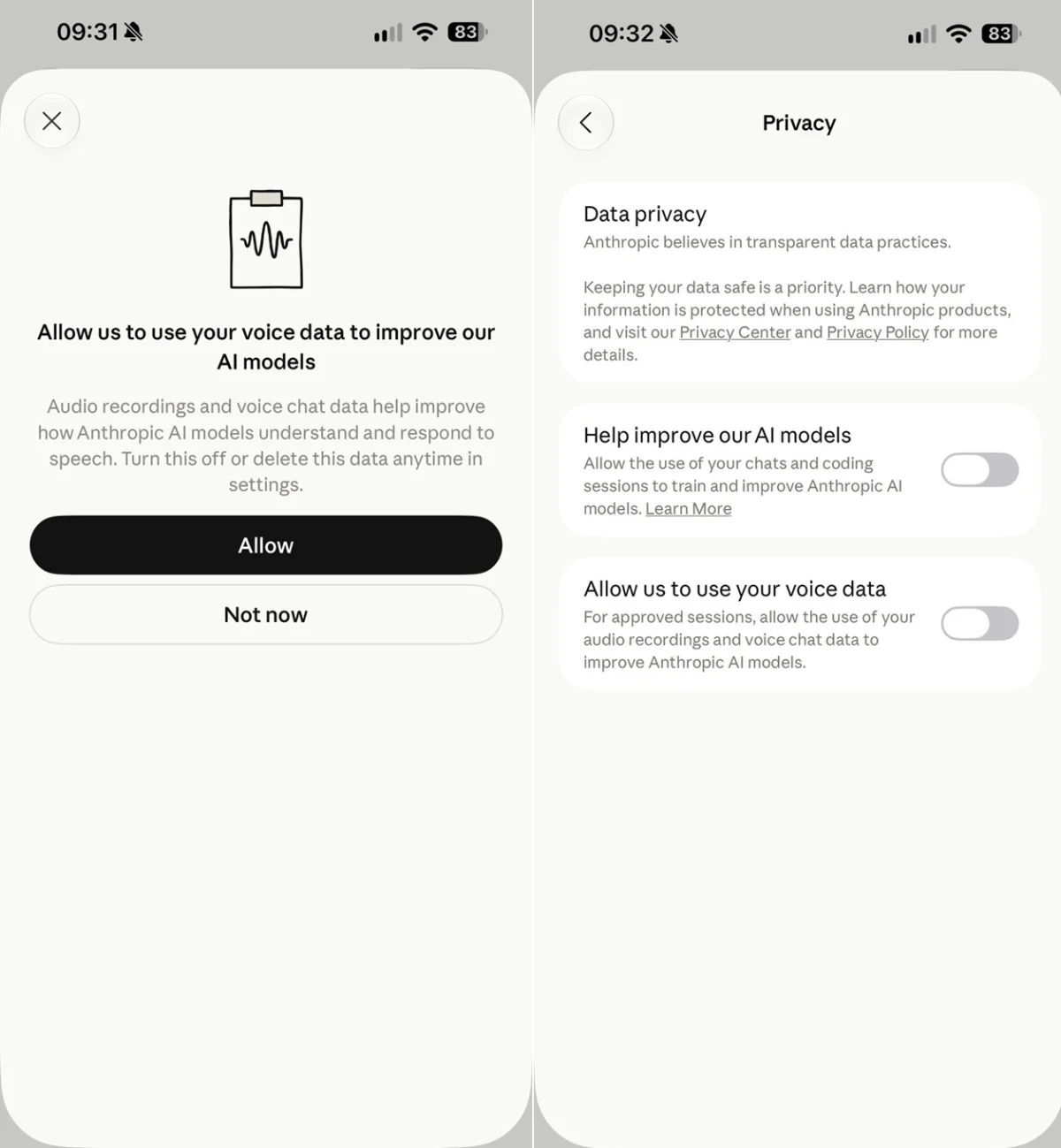
While the transformative potential of these AI agents is undeniable, their increasing autonomy and deep integration into personal and professional digital lives raise significant concerns regarding privacy, security, and trust. Instinct’s feature of providing dedicated email addresses for its agents, while convenient, exemplifies the heightened privacy risks. Granting an AI agent the ability to manage accounts, sign up for services, and handle communications autonomously means entrusting it with sensitive personal data and the power to act on one’s behalf. The potential for data breaches, misuse of information, or unintended actions becomes a critical consideration.
Robust security protocols, transparent data handling policies, and clear ethical guidelines are paramount for the widespread adoption and public trust in these technologies. Companies developing AI agents must invest heavily in end-to-end encryption, secure data storage, and rigorous access controls. Users, in turn, must be educated on the permissions they grant these agents and the implications of such access. The balance between convenience and control will be a continuous challenge for both developers and users. The mention of Ollie achieving SOC 2 compliance highlights a growing industry recognition of the need for formal security standards in this rapidly evolving space.

The Future of Personal and Professional Productivity
The advent of text-based AI agents marks a significant inflection point in the journey of artificial intelligence. These agents are not just tools; they are evolving into true digital collaborators, capable of understanding human intent, learning from interactions, and proactively managing aspects of our lives. This trend has profound implications for personal productivity, potentially freeing up significant time and mental bandwidth previously consumed by administrative tasks. In the professional sphere, they could redefine roles, automating routine tasks and allowing human workers to focus on more complex, creative, and strategic endeavors.

As these agents become more sophisticated, they will likely integrate further, not just with apps but with the physical world through IoT devices and smart environments. The ability to converse naturally with an AI agent that understands context and can execute tasks across multiple domains represents a future where technology is truly ambient and responsive. However, this future also necessitates ongoing dialogue about ethical AI development, responsible deployment, and the establishment of clear regulatory frameworks to ensure these powerful tools serve humanity beneficially and equitably. The journey of conversational AI agents is just beginning, but their trajectory promises a future where digital assistance is as seamless and omnipresent as text messaging itself.