Sisilia Frederika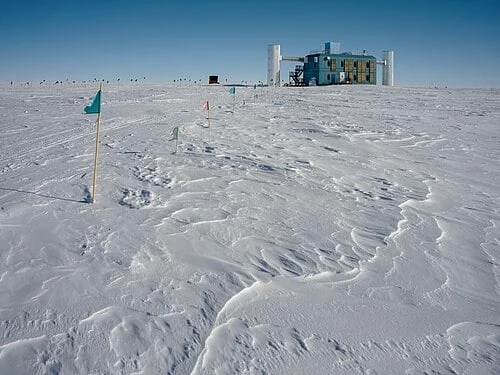
The phenomenon known as Cherenkov radiation, often colloquially referred to as a "light boom," represents one of the most visually striking and scientifically significant manifestations of electromagnetic theory in practice. While the speed of light in a vacuum ($c$) remains the universal speed limit at approximately 299,792,458 meters per second, light slows down significantly when passing through transparent media such as water, glass, or plastic. When a charged particle, such as an electron, travels through these media at a velocity exceeding the phase velocity of light in that specific environment, it generates a unique electromagnetic shockwave. This results in the characteristic ethereal blue glow that has become synonymous with nuclear fission and high-energy particle physics.
Though initially dismissed as a minor optical curiosity or a simple form of fluorescence, Cherenkov radiation has evolved into a cornerstone of modern diagnostic and observational science. Today, it serves as a critical tool in fields ranging from nuclear energy and deep-space astrophysics to subatomic particle detection and life-saving medical imaging.
The Chronological Development of Cherenkov Theory
The history of Cherenkov radiation is a testament to the importance of meticulous observation in experimental physics. The timeline of its discovery and subsequent validation highlights the transition from empirical observation to theoretical mastery.
- 1934: Initial Discovery. Working under the supervision of Sergey Vavilov, Soviet physicist Pavel Cherenkov observed a faint blue light emanating from a bottle of water subjected to radioactive bombardment. Unlike fluorescence, which depends on the chemical composition of the substance, this light was found to be a property of the medium’s refractive index and the speed of the incoming particles.
- 1937: Theoretical Framework. Physicists Igor Tamm and Ilya Frank developed the mathematical foundation for the phenomenon. They successfully applied Maxwell’s equations to show that the radiation is emitted in a cone-shaped wake, analogous to the sonic boom produced by an aircraft exceeding the speed of sound.
- 1958: Nobel Recognition. The significance of the discovery was solidified when Cherenkov, Tamm, and Frank were collectively awarded the Nobel Prize in Physics "for the discovery and the interpretation of the Cherenkov effect."
- Post-1960s: Global Application. As the Cold War spurred nuclear research, the Cherenkov glow became the primary visual indicator for reactor criticality. Simultaneously, astronomers began realizing that the Earth’s atmosphere could act as a giant detector for cosmic radiation using the same principles.
Nuclear Power and the Visual Indicators of Criticality
Perhaps the most iconic image associated with Cherenkov radiation is the brilliant blue luminescence found in the cooling pools of nuclear reactors. In these facilities, spent fuel rods or active reactor cores are submerged in water to provide both cooling and radiation shielding.
The water in these pools typically has a refractive index of approximately 1.33, which reduces the speed of light to roughly 75% of its vacuum velocity. High-energy electrons (beta particles) emitted during the decay of fission products often exceed this reduced speed. As these electrons traverse the water, they polarize the surrounding molecules. As the molecules return to their ground state, they emit photons. Because the particle is moving faster than the light it produces, the light waves constructively interfere, forming a coherent wavefront.
This blue glow is more than an aesthetic byproduct; it serves as a direct indicator of the intensity of the nuclear reaction. Engineers and safety inspectors use the presence and brightness of the light to verify that the reactor is functioning within expected parameters and to monitor the cooling of spent fuel. It remains one of the few instances where a purely relativistic effect is visible to the human eye without the aid of complex electronic translation.
Atmospheric Cherenkov Telescopes: Mapping the High-Energy Universe
Beyond the confines of Earth-bound laboratories, the universe operates as a massive producer of Cherenkov radiation. The Earth’s atmosphere is constantly bombarded by cosmic rays and high-energy gamma rays originating from extreme celestial events, such as supernovae, pulsars, and the relativistic jets of active galactic nuclei.
When a high-energy gamma ray enters the upper atmosphere, it interacts with atomic nuclei to produce a "cascade" or "shower" of secondary particles. Many of these secondary particles travel faster than the speed of light in air (which has a refractive index of roughly 1.0003). This creates a brief flash of blue and ultraviolet Cherenkov light that lasts only a few billionths of a second.
To capture these elusive signals, astronomers utilize Imaging Atmospheric Cherenkov Telescopes (IACTs). Unlike traditional telescopes that look at stars, IACTs use massive segmented mirrors to focus these nanosecond flashes onto highly sensitive cameras.
- MAGIC (Major Atmospheric Gamma Imaging Cherenkov): Located on La Palma in the Canary Islands, this dual-telescope system specializes in detecting gamma rays with energies as low as 25 GeV.
- H.E.S.S. (High Energy Stereoscopic System): Located in Namibia, this array has been instrumental in mapping the center of the Milky Way and identifying sources of cosmic rays within our galaxy.
- VERITAS (Very Energetic Radiation Imaging Telescope Array System): Based in Arizona, this facility focuses on the study of blazars and the search for dark matter signatures.
These instruments allow scientists to reconstruct the origin and energy of the primary gamma ray, effectively turning the Earth’s entire atmosphere into a high-energy particle detector.
Sub-Antarctic Neutrino Detection: The IceCube Observatory
One of the most ambitious engineering feats in modern physics is the IceCube Neutrino Observatory, located at the Amundsen–Scott South Pole Station. Neutrinos are nearly massless subatomic particles that rarely interact with matter, making them notoriously difficult to detect. To solve this, scientists turned a cubic kilometer of Antarctic ice into a Cherenkov detector.
The process begins when a high-energy neutrino traveling through the Earth occasionally strikes an atom in the ice. This interaction produces a muon—a heavy cousin of the electron. In the ultra-clear ice of the South Pole, these muons travel faster than light. The resulting cone of Cherenkov radiation is captured by an array of 5,160 Digital Optical Modules (DOMs) suspended in deep boreholes.
By analyzing the timing of the light hitting various sensors, researchers can determine the trajectory of the muon and, by extension, the source of the original neutrino. In 2018, this technology allowed the IceCube collaboration to trace a high-energy neutrino back to a "blazar"—a giant elliptical galaxy with a rapidly spinning black hole at its core—located 3.7 billion light-years away. This marked a milestone in multi-messenger astronomy, proving that Cherenkov radiation is the key to unlocking the secrets of the most distant and violent events in the cosmos.
Medical Applications: Advancing Oncology and Diagnostics
While the scales of nuclear reactors and Antarctic ice are vast, Cherenkov radiation also plays a vital role at the microscopic level within the human body. Positron Emission Tomography (PET) is a standard medical imaging technique used to detect cancer and monitor brain activity.
In a PET scan, a patient is injected with a radioactive tracer, such as Fluorodeoxyglucose (FDG). As the tracer decays, it emits positrons. When a positron encounters an electron in the patient’s tissue, they annihilate, releasing high-energy gamma rays. Research has shown that these gamma rays, as well as high-energy beta particles used in radiation therapy, produce Cherenkov radiation as they move through biological tissue.
Medical physicists are now developing "Cherenkov Luminescence Imaging" (CLI). This technique captures the faint light emitted during radiotherapy to provide real-time verification of the radiation dose being delivered to a tumor. This ensures that the treatment is precisely targeted, minimizing damage to surrounding healthy tissue. By bridging the gap between high-energy physics and clinical medicine, the Cherenkov effect is directly contributing to higher survival rates and more accurate diagnoses for patients worldwide.
Implications and Future Prospects
The transition of Cherenkov radiation from a laboratory "weirdness" to a multi-disciplinary tool highlights a fundamental trend in scientific progress: the most obscure observations often yield the most practical results. The ability to "see" particles that are otherwise invisible has provided humanity with a new set of eyes.
Looking forward, the Next Generation Cherenkov Telescope Array (CTA) is currently under construction. With dozens of telescopes planned for sites in both the Northern and Southern Hemispheres, the CTA will be ten times more sensitive than any existing instrument. It aims to answer fundamental questions about the nature of dark matter and the laws of physics near black holes.
In the realm of nuclear safety, new sensors are being developed to use Cherenkov signatures to detect illicit nuclear materials in transit, providing a non-invasive way to bolster global security. As our understanding of the "light boom" deepens, it continues to prove that Pavel Cherenkov’s quiet observation in 1934 was not just a curiosity, but the opening of a door to the high-energy universe. The blue glow, once a mystery, is now a beacon for the future of scientific exploration.