Garick Elordi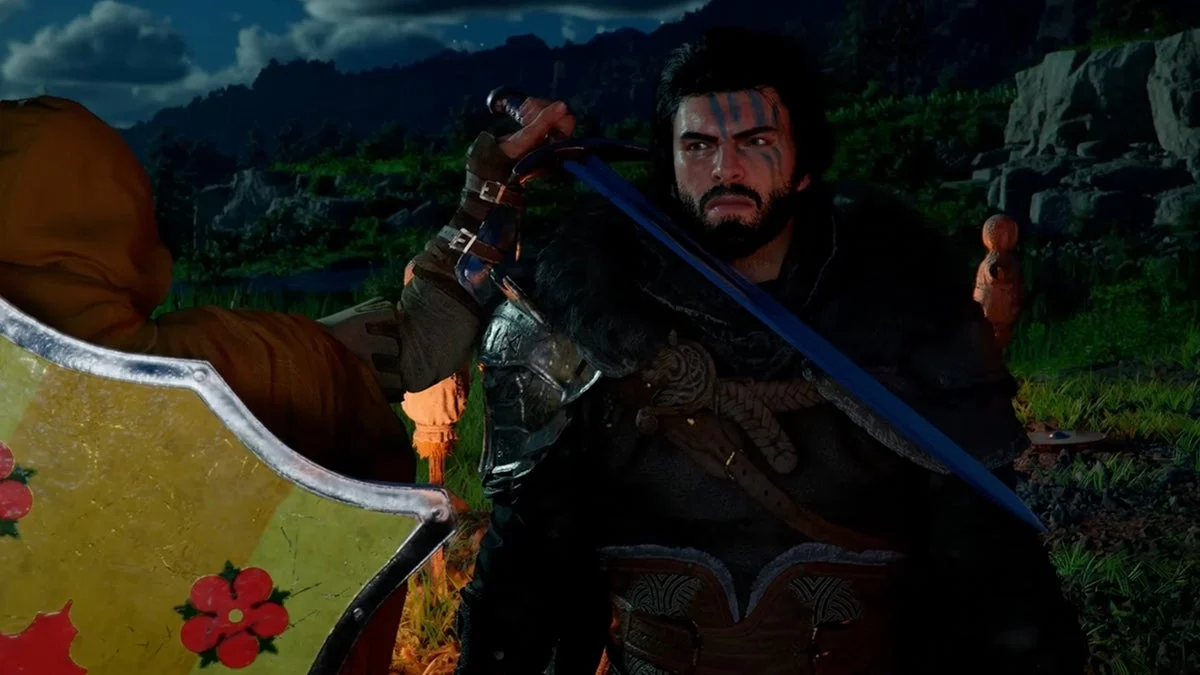
The long-anticipated release of Crimson Desert, the ambitious open-world action RPG from South Korean developer Pearl Abyss, has arrived to a polarizing reception from the global gaming community. While the title was marketed as a next-generation standard for the genre, the initial wave of player feedback has been heavily concentrated on fundamental mechanical flaws. Specifically, a growing consensus among early adopters points toward a convoluted control scheme and a perceived lack of responsiveness in character movement, issues that have overshadowed the game’s high-fidelity visual presentation. These technical grievances, combined with a sudden shift in market confidence, have placed Pearl Abyss in a precarious position during its most critical launch window to date.
The primary point of contention revolves around what players describe as an unintuitive and over-engineered input system. On social media platforms and community forums, users have documented a series of frustrations regarding button mapping and contextual interactions. One player, whose comments gained significant traction on X (formerly Twitter), suggested that the designer of the control scheme "should seek employment with the devil," citing a layout that feels fundamentally disconnected from modern action-game standards. These complaints are not merely aesthetic preferences but appear to stem from a design philosophy that complicates basic gameplay loops.
Critical Failures in User Interface and Interaction Design
The mechanical friction in Crimson Desert is most evident in its interaction system. In a genre where looting and environmental interaction are central to the progression loop, Pearl Abyss appears to have implemented a system that players find unnecessarily cumbersome. Reports indicate that looting items—a staple action in open-world RPGs—requires precise positioning and a finicky button prompt that frequently fails to trigger unless the player character is standing at a specific angle and distance.
Furthermore, the process for engaging with Non-Player Characters (NPCs) has been highlighted as a baffling departure from industry norms. According to player testimonials, talking to an NPC requires the user to hold one specific button while simultaneously pressing another. This multi-step input for a basic narrative function has led to widespread confusion, with players questioning why the developer moved away from the standardized single-press interaction models seen in contemporary titles like The Witcher 3 or Elden Ring. These UI/UX choices have created a barrier to immersion, forcing players to focus more on the mechanics of the controller than the world of Pywel itself.
Beyond the mapping of the buttons, there is a significant outcry regarding "game feel," a term used to describe the tactile feedback and responsiveness of a game’s movement system. Many players have reported a pervasive sense of sluggishness, often attributed to heavy character inertia and input latency. On the Crimson Desert subreddit, users have noted that actions often seem to register only upon the release of a button rather than the initial press, leading to a disconnected experience during high-stakes combat and traversal.
The Evolution of Crimson Desert: From MMO to Single-Player Epic
To understand the current state of Crimson Desert, one must look at its protracted development history. Originally announced in 2019 as a prequel to the successful Massively Multiplayer Online (MMO) title Black Desert Online, the project underwent a significant identity shift early in its lifecycle. Pearl Abyss eventually decided to pivot the game into a narrative-driven, single-player action RPG, though it retained certain online elements and the proprietary BlackSpace Engine.
This transition from an MMO framework to a single-player focus may explain some of the mechanical dissonance players are currently experiencing. MMOs often utilize complex hotbars and multi-key combinations to manage dozens of skills, whereas single-player console experiences typically prioritize streamlined, fluid movement. The "heavy" feel of the protagonist, Kliff, has been unfavorably compared to the precision found in titles like Ghost of Tsushima. While some players initially expected a similar level of "comfy" visual and mechanical polish, the reality of the launch has been described by some as "unbearably bad" due to the perceived lack of immediate control over the character’s momentum.
Market Reaction and Financial Implications for Pearl Abyss
The mixed reception from players and critics has had an immediate and tangible impact on Pearl Abyss’s financial standing. Following the release of the first wave of reviews and the subsequent player feedback, the company’s stock value experienced a dramatic decline, tumbling by as much as 30 percent. This volatility reflects investor anxiety regarding the game’s long-term commercial viability and its ability to sustain a player base in a crowded market.

Investors had high hopes for Crimson Desert, viewing it as the catalyst that would transition Pearl Abyss from a one-hit-wonder studio—dependent on the aging Black Desert Online—into a diversified AAA powerhouse. However, the "mixed-to-positive" critical consensus was not enough to satisfy the market’s expectations. While critics praised the game’s technical ambition and "whoop-inducing bombast," many also noted a sense of "brain-smoothing banality" in its open-world activities. This divide between visual spectacle and mechanical depth has left the market uncertain about the game’s legs, especially as it faces competition from established Western and Japanese franchises.
Technical Controversies and Platform Performance
The launch was further complicated by last-minute technical decisions that rankled the PC gaming community. Just prior to the Steam release, Pearl Abyss integrated Denuvo Anti-Tamper DRM (Digital Rights Management) into the game. Denuvo has long been a controversial figure in PC gaming, with players often blaming the software for performance degradation, increased load times, and CPU bottlenecks. The late addition of this software, often seen as a lack of transparency, contributed to a "mostly negative" or "mixed" sentiment on Steam in the hours following the launch.
On the console front, the situation is slightly more stable but not without its caveats. Pearl Abyss recently released footage of the game running on a base PlayStation 5 model to assuage fears that the game would only be playable on high-end PCs or the PS5 Pro. While the base PS5 footage was deemed "okay" by technical analysts, players have noted that the console version still suffers from the same inherent input lag and inertia issues found in the PC build. The discrepancy between the cinematic trailers shown at trade shows over the last four years and the actual "in-hand" feel of the game has led to a significant "expectations vs. reality" gap.
Analyzing the Broader Impact on the South Korean Gaming Industry
The launch of Crimson Desert is a significant milestone not just for Pearl Abyss, but for the South Korean games industry as a whole. For years, the region has been dominated by mobile gaming and PC-based MMOs characterized by heavy monetization. Recently, there has been a concerted effort by Korean studios to break into the global AAA console market, following the success of Neowiz’s Lies of P and Shift Up’s Stellar Blade.
Crimson Desert was positioned as the "heavy hitter" of this movement—a sprawling, high-budget epic intended to rival the biggest Western productions. The current struggles with control schemes and game feel highlight a potential growing pain for studios transitioning from the click-heavy interface of MMOs to the nuance-heavy requirements of third-person action titles. The "Devil’s control scheme" may be a symptom of a developer still grappling with the ergonomic demands of a gamepad-first audience.
Looking Ahead: Can Patches Salvage the Experience?
Despite the vocal criticism, Crimson Desert is not without its defenders. A segment of the player base has expressed a willingness to adapt to the game’s unique rhythm, arguing that the "sluggishness" is a deliberate choice intended to convey the weight of armor and the brutality of medieval combat. These players point to the game’s complex physics engine and environmental interactivity as signs of a "distinctly modern" experience that rewards patience.
However, the history of modern AAA gaming suggests that first impressions are difficult to overwrite. Pearl Abyss now faces the daunting task of retooling the game’s fundamental interaction layer through post-launch patches. Industry analysts suggest that the developer must prioritize three key areas to stabilize the player base:
- Input Buffer Optimization: Reducing the perceived delay between button presses and character actions.
- Contextual UI Refinement: Smoothing out the "finicky" interaction prompts for looting and NPC engagement to ensure they trigger reliably.
- Control Customization: Providing players with the ability to fully remap the "laborious" default button combinations.
Whether Pearl Abyss can pivot quickly enough to recover its lost market value remains to be seen. For now, Crimson Desert stands as a cautionary tale of how even the most visually stunning titles can be undermined by the most basic elements of player agency: the controls. As the studio works to address these "devilish" design choices, the gaming world will be watching to see if this crimson-hued epic can find its footing or if it will remain buried under the weight of its own mechanical complexity.