Sisilia Frederika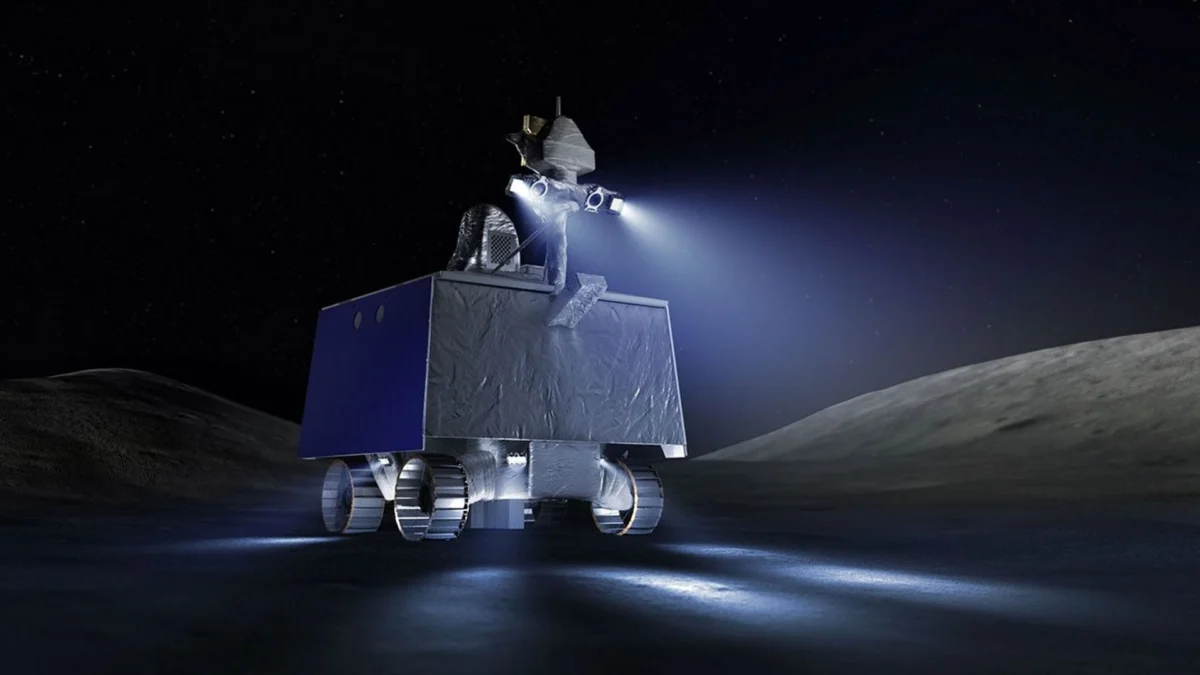
The global push to establish a permanent human presence on the Moon has entered a critical phase of engineering and geological scrutiny as international space agencies prepare for the most ambitious lunar missions since the Apollo era. Between NASA’s Artemis Program, the European Space Agency’s (ESA) Moon Village initiative, and the collaborative Sino-Russian International Lunar Research Station (ILRS), the transition from short-term exploration to long-term habitation is no longer a distant theoretical concept but a concrete operational goal. However, as mission planners look toward the lunar South Pole and other strategic highlands, a persistent and microscopic adversary remains at the forefront of technical concerns: lunar regolith.
Recent findings presented at the 2026 Lunar Planetary Science Conference (LPSC) have provided a significant breakthrough in understanding how this ubiquitous "Moon dust" interacts with exploration hardware. A study led by Vanesa Muñiz Lloréns, a doctoral student of lunar petrology at the University of Notre Dame, and Michael Lucas, an assistant scientist at the Florida Space Institute’s Exolith Lab at the University of Central Florida, suggests that the physical state of the regolith—specifically its "maturity"—plays a decisive role in the feasibility of lunar surface transportation. The research demonstrates that "immature" regolith, characterized by its coarser grain size and limited exposure to space weathering, maintains its structural integrity even under heavy rover traffic, potentially simplifying the construction of future lunar roadways.
The Mechanical and Biological Hazards of Lunar Dust
To understand the importance of this study, one must first recognize the unique and hostile nature of the lunar surface. Unlike Earth’s soil, which is softened and rounded by the erosive forces of wind and water, lunar regolith is the product of billions of years of high-velocity meteorite impacts and constant exposure to the vacuum of space. This process, known as space weathering, pulverizes the lunar crust into extremely fine, jagged particles of silica and trace metals.
Because the Moon lacks an atmosphere, these particles are not smoothed over time. Instead, they remain sharp and abrasive. Furthermore, the constant bombardment by solar wind and cosmic rays leaves the dust electrostatically charged. This charge causes the regolith to cling tenaciously to every surface it encounters, from camera lenses and solar panels to the intricate seals of astronaut spacesuits. During the Apollo missions, astronauts reported that the dust caused significant wear on mechanical joints and even led to "lunar hay fever"—a respiratory irritation caused by inhaling the fine silica dust brought back into the Lunar Module.
For modern missions intended to last months or years rather than days, the stakes are much higher. The accumulation of fine dust can lead to the catastrophic failure of life-support systems, the degradation of thermal control coatings, and long-term health risks for crew members. Consequently, identifying regions or types of regolith that are less prone to being "kicked up" into hazardous clouds is a top priority for mission safety.
Experimental Framework: The RIDER Terramechanics Testbed
The research conducted by Muñiz Lloréns and Lucas utilized the RIDER terramechanics testbed at the UCF Exolith Lab to simulate the rigors of lunar exploration. The team focused on a specific type of lunar simulant known as LHS-1E (Lunar Highland Simulant – Engineering grade). This material is designed to replicate the properties of immature regolith found in the lunar highlands and the feldspathic regolith expected at the lunar South Pole—the primary target for the Artemis III mission and subsequent lunar base construction.
The study was designed to measure "trafficability," or the ability of the lunar surface to support repeated vehicle movement without degrading into finer, more hazardous dust. To achieve this, the researchers employed three distinct rover wheel designs:
- The Astrobotic Polaris Prototype (APP): A modern design intended for heavy-duty lunar transport.
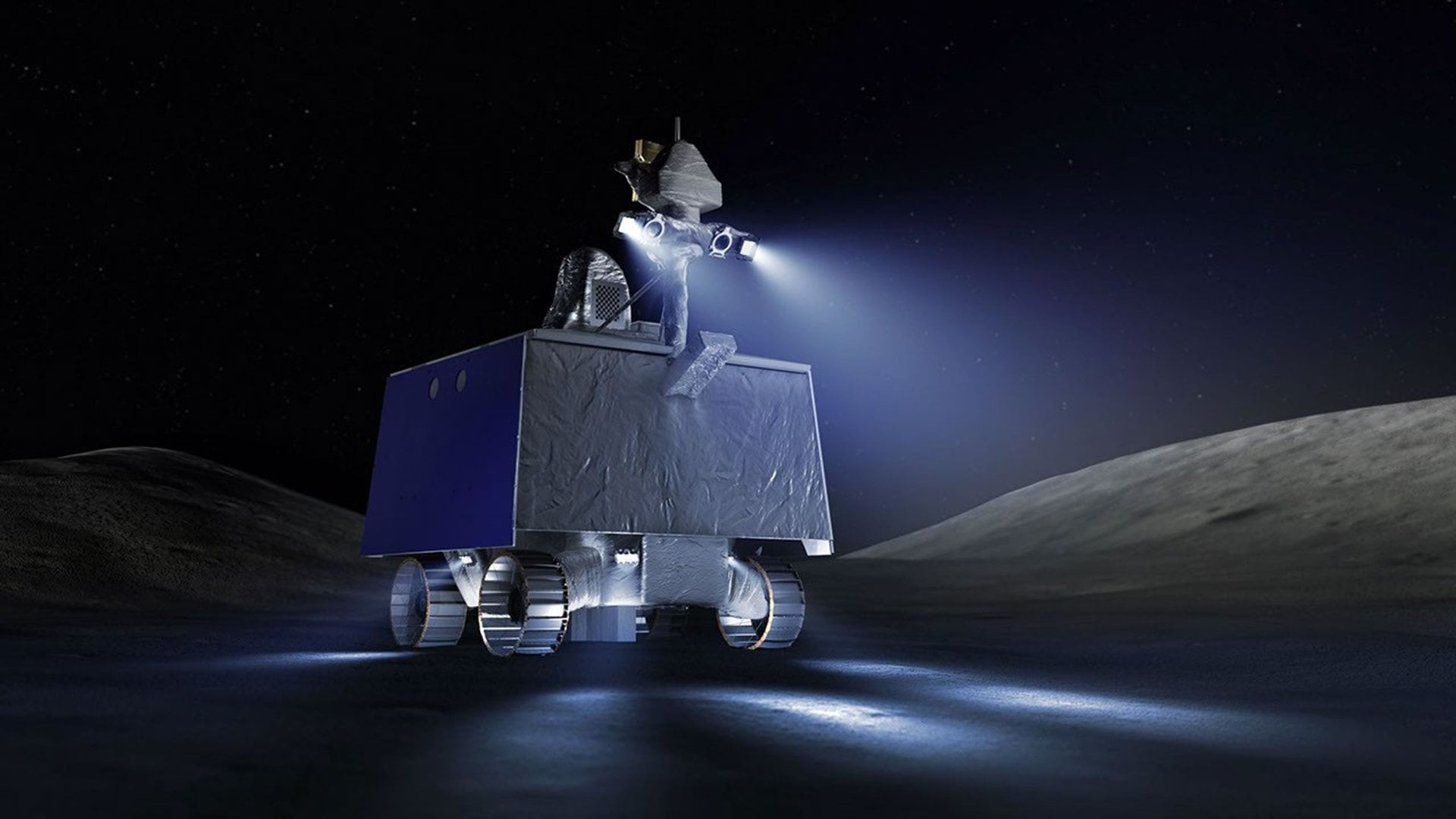
- The Resource Prospector Prototype (VRP): A wheel design similar to that planned for the Volatiles Investigating Polar Exploration Rover (VIPER), optimized for navigating the icy shadows of the South Pole.
- The Apollo Lunar Roving Vehicle (LRV) Replica: A tribute to the original wire-mesh wheels used during the Apollo 15, 16, and 17 missions.
Each wheel was subjected to 900 passes over a two-layer LHS-1E column, roughly 35 centimeters (14 inches) deep. The experiment was conducted under simulated lunar gravity to ensure that the weight-bearing and shearing forces accurately reflected the conditions rovers will face on the Moon.
Data and Findings: The Resilience of Immature Regolith
The core of the study involved collecting surface samples before the traverses began and after every 100 passes. These samples were analyzed for changes in particle size and shape (morphology). In the context of lunar geology, "maturity" refers to how much a sample has been altered by space weathering. Mature regolith contains higher concentrations of agglutinates (tiny glass shards formed by micrometeorite impacts) and nanophase iron (npFe). These components make the dust finer and more reactive.
The results of the 900-pass experiment were surprisingly positive. The researchers found that the LHS-1E simulant remained largely unchanged throughout the duration of the test. Despite the repeated mechanical stress of three different wheel designs, the coarser grains of the immature regolith did not break down into the ultra-fine, airborne dust that plagues mature lunar regions.
While minor variations in particle morphology were observed, these were largely attributed to the specific materials of the wheels themselves—such as the difference between metal mesh and carbon fiber components—rather than a systemic failure of the regolith’s structure. This suggests that immature regolith possesses a high degree of "shear strength," meaning it can support the weight and traction of heavy machinery without disintegrating.
Strategic Chronology of Lunar Infrastructure
The implications of this study are directly tied to the timeline of upcoming lunar missions. As NASA moves toward the launch of Artemis II (crewed lunar flyby) and Artemis III (human landing), the selection of landing sites and traverse paths has become a matter of intense debate.
- 2024-2025: Launch of various Commercial Lunar Payload Services (CLPS) missions to test landing technologies and scout the South Pole-Aitken Basin.
- 2026-2027: Expected deployment of the VIPER rover and other robotic explorers to map volatiles (water ice) and test regolith stability.
- 2028 and Beyond: Construction of the first permanent structures of the Artemis Base Camp and the ILRS.
The Notre Dame and UCF study provides a scientific basis for prioritizing "immature" terrain for the initial construction of roadways and landing pads. If planners can utilize the naturally stable properties of immature regolith, they may be able to reduce the amount of "In-Situ Resource Utilization" (ISRU) equipment—such as microwave sintering or solar melting tools—required to pave the lunar surface during the early stages of colonization.

Analysis of Global Implications
The success of the Artemis and ILRS programs depends on the ability to manage the lunar environment sustainably. If every rover traverse creates a cloud of electrostatically charged dust that lingers for hours, the maintenance costs for solar arrays and optical sensors will become prohibitive.
By identifying that immature regolith is naturally suited for traffic, this research offers a "low-tech" solution to a high-tech problem. It allows for the strategic mapping of "low-dust" corridors. Furthermore, the study highlights the importance of wheel design. The comparison between the Apollo-era mesh wheels and modern carbon fiber prototypes suggests that engineering the wheel-surface interface is just as important as the chemical composition of the ground itself.
Industry experts and representatives from the Florida Space Institute have noted that these findings will likely influence the design requirements for the next generation of Lunar Terrain Vehicles (LTV). NASA’s recent contracts with private companies for LTV development emphasize durability and dust mitigation; the data from the RIDER testbed provides a benchmark for these companies to validate their designs.
Toward a Permanent Presence
As the space-faring nations of Earth look toward the 2030s, the focus is shifting from "touch and go" missions to the establishment of "Moon Village" style settlements. The ability to move materials, water ice, and personnel across the lunar surface is the backbone of this vision.
The study by Muñiz Lloréns and Lucas reinforces the idea that the Moon is not a uniform desert of dust, but a complex geological body with varied properties. Understanding these properties is the key to turning the Moon from a hazardous destination into a viable outpost. By leveraging the mechanical stability of immature regolith, mission planners can mitigate one of the greatest risks to human health and mechanical longevity, paving the way—literally—for a new era of interstellar exploration.
The next steps for the research team involve expanding the study to include different moisture levels (simulating ice-regolith mixes) and testing the effects of even higher traffic volumes. As the 2026 Lunar Planetary Science Conference concludes, the consensus among the scientific community is clear: the path to the stars begins with a deep, technical understanding of the dust beneath our boots.