admin
admin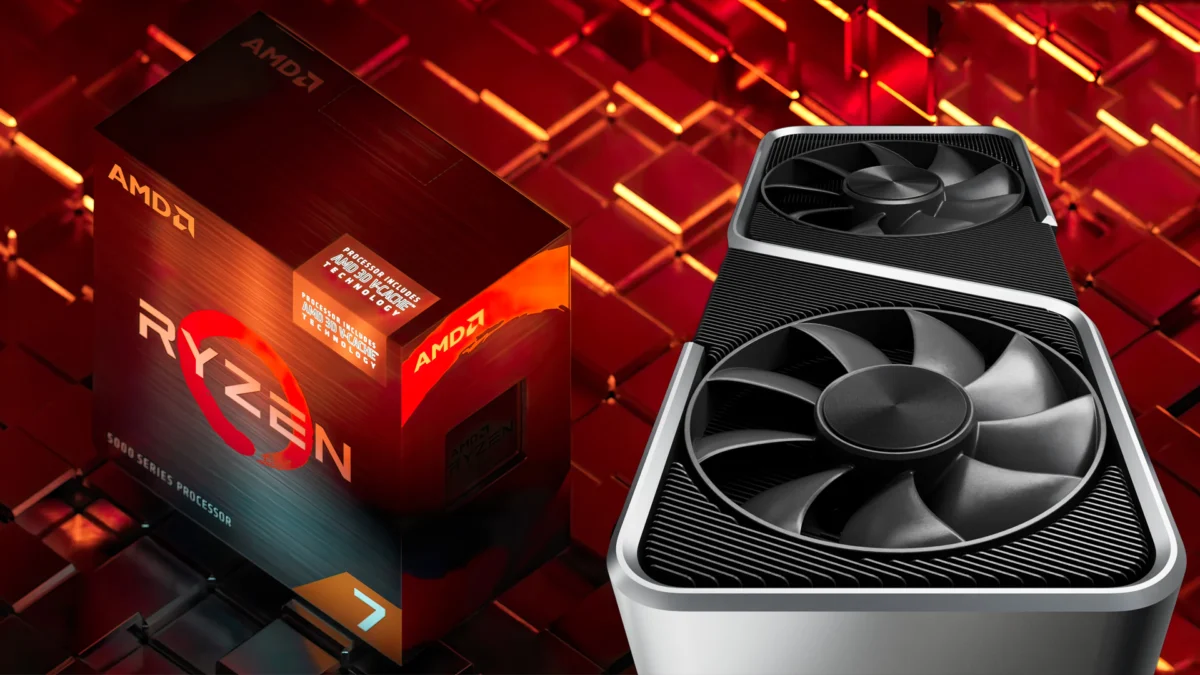
The global personal computer hardware market is currently witnessing a rare phenomenon in which leading manufacturers are turning back the clock to sustain consumer demand. Recent industry reports indicate that both AMD and NVIDIA are preparing to relaunch two of their most successful mid-range components: the Ryzen 7 5800X3D processor and the GeForce RTX 3060 12 GB graphics card. While the technology sector typically prioritizes rapid iteration and the abandonment of legacy architectures, the persistence of the AM4 platform and the enduring popularity of Ampere-based GPUs suggest a significant shift in consumer priorities, driven largely by the escalating costs of current-generation adoption.
The Resurgence of the AM4 Platform and the Ryzen 7 5800X3D
The AMD Ryzen 7 5800X3D, originally launched in April 2022, was a watershed moment for the semiconductor industry. It introduced the world to 3D V-Cache technology, which stacked 64MB of L3 cache vertically on top of the processor die. This innovation allowed the Zen 3-based chip to compete with, and often outperform, newer and more expensive processors in gaming workloads. Despite being officially discontinued within the last year to make way for the Ryzen 7000 and 9000 series, reports now suggest a strategic relaunch of the chip is slated for the second quarter of 2026, coinciding with the 10th anniversary of the AM4 socket.
The AM4 platform has proven to be one of the most resilient ecosystems in PC history. Launched in 2016, it has supported five generations of CPU architectures and over 125 different processor models. The decision to bring back the 5800X3D highlights a critical market reality: many users are unwilling to transition to the AM5 platform due to the mandatory requirement for DDR5 memory and the higher cost of entry-level motherboards. By reintroducing the 5800X3D, AMD is providing a "best-in-slot" upgrade path for millions of users who still utilize B450 or B550 motherboards, allowing them to achieve modern gaming performance without replacing their entire system core.
The Economic Barrier: DDR5 and Motherboard Pricing
A central factor driving this "hardware regression" is the economic landscape of PC building in 2024 and 2025. While the latest Ryzen 9000 series—including the high-end Ryzen 9 9950X3D—offers substantial gains in both gaming and multi-threaded productivity, the total cost of ownership remains prohibitive for the average consumer.

Data suggests that building a mid-range PC on a modern platform requires a significant premium. A standard DDR5 memory kit (32GB) frequently costs 40% to 60% more than a comparable DDR4 kit. Furthermore, while AM4 motherboards like the B550 can be found for approximately $100, the cheapest reliable AM5 motherboards often start at $160 to $200. When combined with the price of the CPU itself, the "platform tax" for moving to the latest generation can exceed $300 before a single frame of gameplay is rendered.
The Ryzen 7 5800X3D bridges this gap. It provides a level of performance that remains highly competitive at 1080p and 1440p resolutions. In many contemporary titles, the 5800X3D still delivers frame rates within 10% to 15% of the much newer Ryzen 7 7800X3D, making it an economically rational choice for gamers focused on value rather than bleeding-edge specifications.
NVIDIA’s Strategic Pivot: The GeForce RTX 3060 12 GB
Parallel to AMD’s strategy, NVIDIA is reportedly preparing to bolster its supply of the GeForce RTX 3060 12 GB. This move comes as the production of newer entry-level cards faces logistical and consumer reception hurdles. The RTX 3060, based on the Ampere architecture, remains the most popular graphics card in the world according to the Steam Hardware Survey, a position it has held for a significant duration.
The decision to relaunch or extend the life of the RTX 3060 is largely due to a perceived lack of value in the lower tiers of the RTX 40 and upcoming RTX 50 series. Specifically, the RTX 3060’s 12 GB of VRAM has become a point of contention and a selling feature. Many of its successors, such as the RTX 4060, launched with only 8 GB of VRAM, which has proven to be a bottleneck in modern AAA titles utilizing high-resolution textures and Ray Tracing.
NVIDIA’s upcoming RTX 5050 is rumored to feature only 9 GB of VRAM, and the RTX 5060 is expected to remain at 8 GB. In this context, the older RTX 3060 12 GB appears as a more future-proof option for budget-conscious gamers, despite its older architecture and lack of Frame Generation support (DLSS 3).

Comparative Timeline and Market Context
To understand the significance of these relaunches, one must examine the chronology of these components:
- September 2016: AMD launches the AM4 platform, promising long-term support.
- February 2021: NVIDIA launches the RTX 3060 12 GB to address the mid-range market during a global chip shortage.
- April 2022: AMD releases the Ryzen 7 5800X3D, setting a new benchmark for gaming efficiency.
- Late 2023 – Early 2024: Both components are phased out as manufacturers push DDR5 and Ada Lovelace architectures.
- Late 2024: Market reports indicate a surge in demand for used and refurbished 5800X3D and 3060 units, driving prices up.
- 2025/2026 (Projected): Official relaunch of these components to stabilize the sub-$1300 PC build market.
This timeline illustrates a cycle where the industry attempted to move forward, but the consumer base remained anchored by the price-to-performance ratio of previous-generation hardware.
Analysis of the $1,200 to $1,300 Budget Build
The primary beneficiary of these relaunches is the "mainstream" builder. An analysis of current component pricing reveals a compelling case for the older hardware. A builder can currently assemble a high-performance machine using the following configuration:
- CPU: Ryzen 7 5800X3D (~$300)
- Motherboard: B550 ATX (~$110)
- RAM: 32GB DDR4-3600 (~$70)
- GPU: GeForce RTX 3060 12 GB (~$280)
- Storage/Case/PSU: (~$350)
The total cost of such a system hovers around $1,110 to $1,200. A comparable system using a Ryzen 7 7800X3D, a B650 motherboard, and an RTX 4060 Ti would easily exceed $1,500 while providing only marginal gains in specific gaming scenarios. For the vast majority of PC users who play at 1080p—which accounts for over 60% of the market—the extra $300 to $400 expenditure does not translate into a proportional increase in the user experience.
Industry Reactions and Broader Implications
While AMD and NVIDIA have not issued formal press releases regarding the specific logistics of these relaunches, industry analysts suggest the move is a defensive strategy. By keeping older, cheaper-to-produce hardware in the channel, they prevent market share from leaking to competitors or the second-hand market.

"The relaunch of the 5800X3D is a testament to the success of 3D V-Cache," says one industry analyst. "It suggests that the architecture was so far ahead of its time that AMD is finding it difficult to convince users to move to AM5 without a massive price drop, which they are currently unwilling to do due to high DDR5 and chipset costs."
However, there is a segment of the enthusiast community that views this move with skepticism. Critics argue that instead of relaunching four-year-old hardware, manufacturers should focus on making current-generation technology more affordable. The fact that an RTX 3060 is still seen as a viable "upgrade" in 2025 points to a stagnation in the entry-level and mid-range GPU sectors.
Conclusion: A Market in Transition
The return of the Ryzen 7 5800X3D and the GeForce RTX 3060 12 GB represents a pragmatic, if uninspired, solution to the current volatility of the PC hardware market. For AMD, it honors the legacy of the AM4 platform and provides a lifeline to budget builders. For NVIDIA, it fills a glaring gap in its product stack where VRAM capacity has become a primary consumer concern.
As the industry moves toward the 10th anniversary of the AM4 socket, the message from consumers is clear: performance is important, but accessibility is paramount. Until the "platform tax" of DDR5 and high-end motherboards decreases, the hardware of the past may continue to be the most viable path for the future of mainstream PC gaming. While this may not be the technological leap enthusiasts dreamed of, it ensures that PC gaming remains a reachable hobby for the masses rather than a luxury reserved for the elite.