admin
admin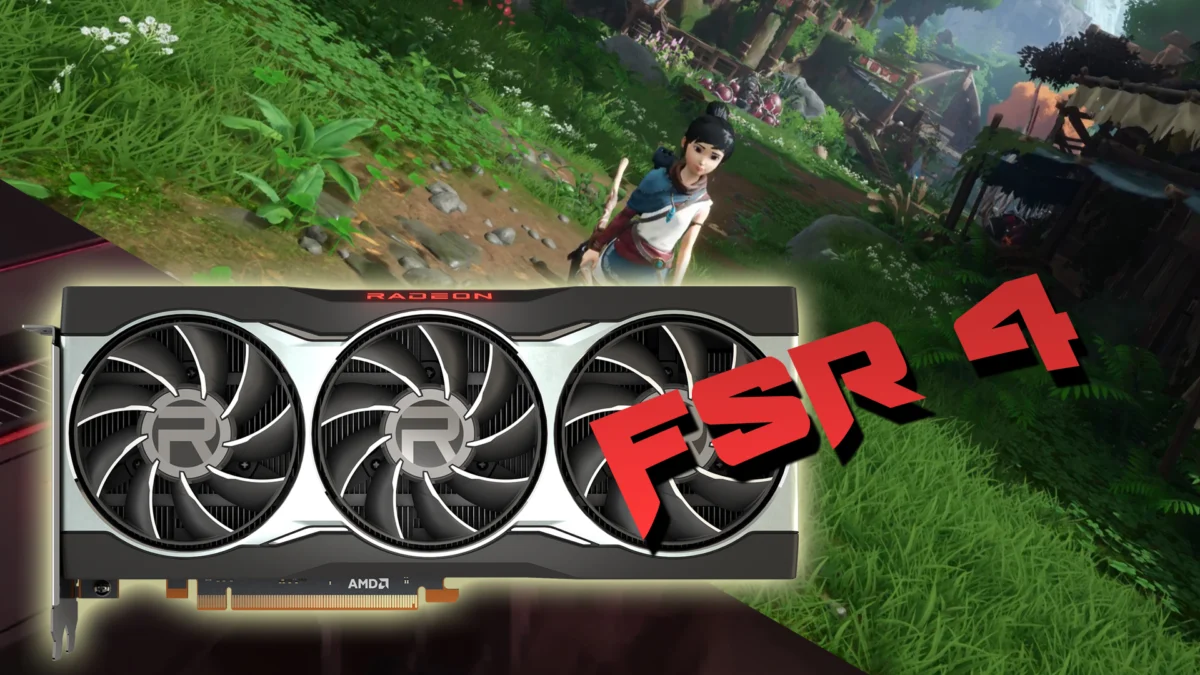
The landscape of PC gaming performance enhancement has shifted significantly with the release of Optiscaler version 4.0.2b, a community-driven update that introduces substantial optimizations for AMD’s RDNA 2 architecture. This latest iteration specifically targets the Radeon RX 6000 series, leveraging the INT8 (8-bit integer) version of AMD’s upcoming FidelityFX Super Resolution 4 (FSR 4) technology. By addressing persistent issues such as ghosting and performance overhead, this third-party tool has effectively leapfrogged official manufacturer support, providing legacy hardware users with access to cutting-edge AI-based upscaling features that were previously thought to be poorly suited for older silicon.
The Technical Evolution of FidelityFX Super Resolution
To understand the significance of the Optiscaler 4.0.2b update, one must examine the trajectory of AMD’s upscaling technology. Since its inception, FSR has undergone several radical transformations. FSR 1.0 was a spatial upscaler, which, while easy to implement, often resulted in "shimmering" and a loss of fine detail. FSR 2.0 introduced temporal upscaling, using data from previous frames to reconstruct a higher-resolution image, bringing it closer to NVIDIA’s Deep Learning Super Sampling (DLSS) in terms of quality, albeit without the dedicated AI hardware requirement.
FSR 3.1 further refined this process and introduced Frame Generation, but the industry has been waiting for FSR 4, which AMD has signaled will be a fully AI-based upscaler. Unlike its predecessors, FSR 4 is designed to utilize machine learning to handle the heavy lifting of image reconstruction. While RDNA 3 (RX 7000) and the newer RDNA 4 architectures feature dedicated AI accelerators, the RDNA 2 (RX 6000) series relies on its standard compute units to handle these operations. This fundamental hardware difference led to initial skepticism regarding whether RDNA 2 could ever effectively run FSR 4 without crippling performance losses.
Chronology of the FSR 4 Leak and Community Integration
The emergence of FSR 4 on current and previous-gen hardware did not follow the traditional corporate rollout. Instead, the technology entered the public sphere through an accidental leak. Earlier this year, AMD reportedly uploaded an INT8-based DLL file for FSR 4, which was quickly discovered by the modding community. This file confirmed that AMD was developing an AI upscaler capable of running on non-specialized hardware by utilizing INT8 precision—a mathematical format that is less computationally expensive than the standard FP16 or FP32 formats used in traditional rendering.
Following this leak, the developers behind Optiscaler, a popular tool used to swap upscaling libraries in modern games, began integrating the FSR 4 DLLs. The initial results were a mixture of promise and frustration. While the visual fidelity of FSR 4 was immediately apparent, offering cleaner edges and better detail reconstruction than FSR 3.1, the performance cost was high. Users reported a "performance regression" or overhead of 10% to 20% compared to previous FSR versions. Furthermore, the RDNA 2 implementation suffered from "ghosting," where moving objects left distracting trails behind them due to errors in temporal data processing.
Analysis of the Optiscaler 4.0.2b Optimizations
The release of Optiscaler 4.0.2b, announced via GitHub and community platforms like Discord by developers such as TheRazerMD, specifically addresses these RDNA 2 bottlenecks. The update focuses on two primary pillars: visual stability and computational efficiency.
Eliminating Ghosting Artifacts
Ghosting has long been the "Achilles’ heel" of temporal upscalers. In an AI-driven environment like FSR 4, ghosting occurs when the neural network incorrectly predicts the position of an object based on previous frame data. For RDNA 2 users, this was exacerbated by the way the INT8 instructions were being handled by the GPU’s shaders. Optiscaler 4.0.2b introduces a dedicated fix for this phenomenon. By refining how the upscaler interprets motion vectors and depth buffers on RDNA 2 hardware, the developers have managed to virtually eliminate the trailing artifacts that previously marred the experience in fast-paced titles.

Mitigating Performance Regression
The 10-20% performance hit observed in earlier versions of FSR 4 was a significant barrier to adoption. For a gamer running a mid-range card like the Radeon RX 6700 XT, a 20% drop in frame rate often negates the benefits of upscaling. The new 4.0.2b version optimizes the execution of the INT8 path. By streamlining the way the GPU schedules these AI workloads alongside standard rendering tasks, Optiscaler has reduced the overhead, making the transition from FSR 3.1 to FSR 4 far more viable for daily gaming.
Supporting Data: Performance and Compatibility
Preliminary testing from the community suggests that while FSR 4 still carries a slight premium in terms of frame time compared to the simpler FSR 2.2 or 3.1, the gap has narrowed significantly. On RDNA 2 hardware, the "Quality" preset of FSR 4 via Optiscaler 4.0.2b now provides a visual output that many testers claim rivals DLSS 3.7 in terms of stability, particularly in complex scenes with fine foliage or hair.
Crucially, the Optiscaler team noted that these optimizations do not require users to hunt for specific, older driver versions or "hack" their registry. The tool is designed to work with the latest AMD Adrenalin drivers, ensuring that users can maintain system security and stability while benefiting from the unofficial upscaler. This ease of use is a direct response to the complexity usually associated with "modding" GPU features into games.
Broader Implications for the GPU Market and AMD’s Strategy
The success of Optiscaler highlights a growing tension between hardware manufacturers and their customer bases. AMD has faced criticism for what some perceive as a "planned obsolescence" approach, where newer software features are gated behind the latest hardware generations. While RDNA 3 was marketed with "AI Accelerators," the fact that RDNA 2 can run FSR 4 effectively through community-led INT8 optimizations suggests that the older hardware still has significant untapped potential.
For the consumer, this development extends the lifecycle of the Radeon RX 6000 series. At a time when GPU prices remain high and generational leaps in performance are becoming more incremental, the ability to use a modern, AI-based upscaler on a four-year-old card is a major value add. It allows older cards to maintain playable frame rates in modern, ray-traced titles that would otherwise be unplayable.
Furthermore, Optiscaler’s recent addition of FSR 4 support for Vulkan-based titles is a milestone that AMD itself has yet to reach officially. This expands the utility of the tool to a vast library of games, including popular titles like Doom Eternal and various emulated platforms, which rely on the Vulkan API for high-performance rendering.
Conclusion and Future Outlook
The release of Optiscaler version 4.0.2b represents a pivotal moment for the RDNA 2 user base. By solving the ghosting issues and reducing the performance penalty associated with FSR 4’s INT8 implementation, the community has provided a blueprint for how legacy hardware can coexist with modern AI demands.
As of this writing, AMD has not released an official timeline for the broad rollout of FSR 4, nor has the company confirmed which older GPU architectures will be officially supported. In this vacuum of information, third-party tools like Optiscaler have become essential infrastructure for PC enthusiasts. The technical achievement of version 4.0.2b proves that with proper optimization, the Radeon RX 6000 series remains a formidable contender in the modern gaming landscape, capable of delivering high-fidelity visuals through the power of AI-assisted reconstruction. For now, the "Red Team" community continues to lead the way where the manufacturer has hesitated, ensuring that "Fine Wine"—the long-standing joke about AMD hardware improving with age—remains a reality through the efforts of dedicated independent developers.