Sisilia Frederika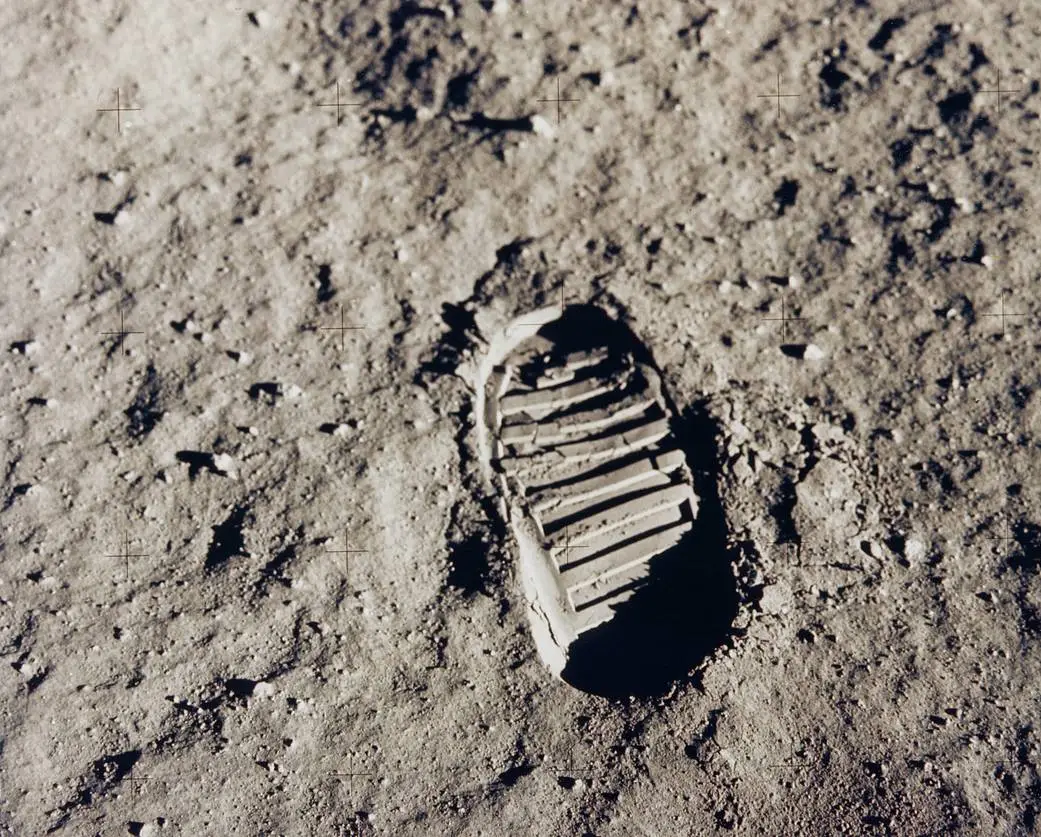
The silent, airless plains of the Moon currently host more than 100 metric tons of human-made material, a collection that spans from the wreckage of the Soviet Union’s Luna 2 probe to the iconic descent stages of the American Apollo missions. As the global community enters a new era of space exploration, characterized by a rapid increase in both governmental and commercial missions, the question of how to preserve these historic sites has moved from the realm of academic curiosity to an urgent policy priority. A recent report published by Teasel Muir-Harmony, Curator of the Space History Department at the Smithsonian National Air and Space Museum, and Todd Mosher, a Scholar in Residence at the University of Colorado, Boulder, highlights the profound legal, scientific, and engineering hurdles facing the preservation of "lunar heritage."
The report stems from a summit hosted by the Smithsonian and the American Institute of Aeronautics and Astronautics (AIAA) on Outer Space Heritage. It warns that without a robust, internationally recognized framework, the physical records of humanity’s first steps beyond Earth could be lost to the "lunar gold rush" of the 21st century. NASA currently predicts that the coming decade will see more than 100 new lunar missions, a surge that would equal or exceed the total number of missions flown since the dawn of the Space Age.
A Chronology of Lunar Occupation
The history of human interaction with the Moon began on September 14, 1959, when the Soviet Luna 2 became the first human-made object to impact the lunar surface. This event marked the beginning of a decade of intense robotic exploration, followed by the historic Apollo 11 landing in July 1969. Over the subsequent three years, six American crews landed on the Moon, leaving behind not only flags and footprints but also sophisticated scientific instruments, lunar rovers, and more mundane items such as Hasselblad cameras and bags of biological waste.
By the mid-1970s, the initial surge of exploration had waned, leaving the lunar surface largely undisturbed for decades. However, the early 21st century has seen a renewed interest in the Moon, driven by the discovery of water ice at the lunar poles and the emergence of commercial spaceflight. Missions from China, India, Japan, and private entities like Intuitive Machines have added new artifacts to the lunar landscape. This accumulation of hardware represents a continuous timeline of human technological evolution, yet much of it remains unprotected by any formal international conservation status.
The Legal Vacuum of Outer Space
Protecting historical sites on Earth is governed by established domestic laws and international treaties, such as the UNESCO World Heritage Convention. On the Moon, however, the legal landscape is dictated by the 1967 Outer Space Treaty (OST). While the OST serves as the "constitution" of space, it contains significant ambiguities regarding heritage.
Article VIII of the OST stipulates that nations retain jurisdiction and control over the objects they launch into space, regardless of where they land. This means that a Soviet lander remains the property of the Russian Federation, and an Apollo descent stage remains the property of the United States. Furthermore, Article IX requires states to avoid "harmful interference" with the activities of other states.
While these provisions offer a modicum of protection, they do not explicitly define "heritage" or "preservation." As Muir-Harmony and Mosher point out, the treaty does not legally prevent a nation from visiting an old site to retrieve material for study, nor does it protect the "cultural landscape"—such as the famous footprints of Neil Armstrong and Buzz Aldrin—which are not "hardware" and thus fall into a legal gray area.
In 2020, the United States introduced the Artemis Accords, a non-binding multilateral agreement intended to establish "best practices" for sustainable space exploration. Section 9 of the Accords specifically addresses the protection of heritage sites. However, the Accords have not been signed by major spacefaring competitors, most notably China and Russia. Without a global consensus, the Accords remain a set of guidelines for a specific coalition rather than a universal standard for lunar preservation.
The Scientific Value of Extraterrestrial Archaeology
The drive to preserve lunar sites is not merely sentimental; it is deeply rooted in engineering and astrobiology. The Moon provides a unique environment for "extraterrestrial archaeology"—the study of how human-made materials degrade over decades of exposure to extreme temperature fluctuations, micrometeoroid bombardment, and intense solar radiation.
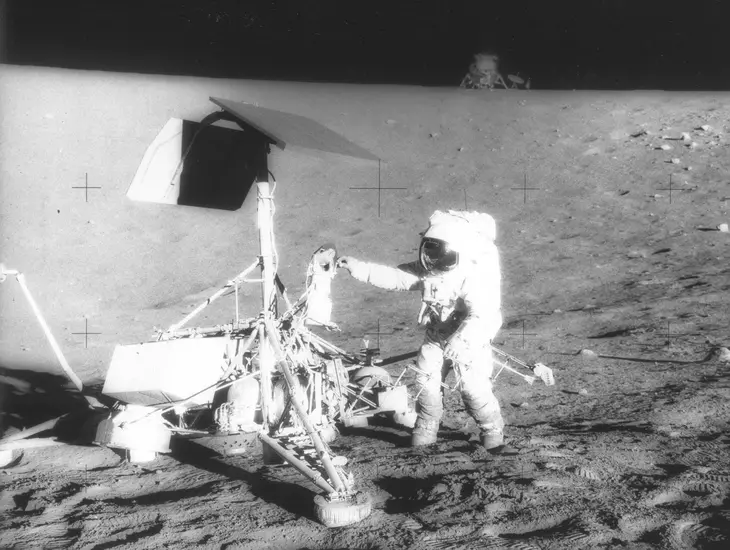
History provides a precedent for this type of research. In November 1969, the Apollo 12 crew landed within 600 feet of the robotic Surveyor 3 lander, which had been on the Moon for two and a half years. The astronauts retrieved the lander’s television camera and several other components, bringing them back to Earth for analysis. This experiment provided invaluable data on how vacuum-exposed paint cracks and how the blast from a nearby lunar module affects existing structures.
Modern scientists are eager to conduct similar studies on a longer timeline. Astrobiologists are particularly interested in the 96 bags of human waste left behind by the Apollo missions. Determining whether any microbial life survived 50 years of lunar radiation would have profound implications for our understanding of planetary protection and the limits of life.
However, there is a tension between the desire to study these sites and the desire to preserve them as pristine monuments. Dr. Todd Mosher noted that even programs like DARPA’s LunA-10, which explores repurposing retired spacecraft for future infrastructure, must be balanced against historical value. Mosher argues that it is far more efficient to design future missions for reuse than to salvage parts from historical landers that were never intended for that purpose.
The Geopolitics of the South Pole
The urgency of the preservation debate is heightened by the geography of upcoming missions. Unlike the Apollo missions, which targeted the lunar equator for ease of landing, modern missions are focused on the Lunar South Pole. This region is believed to contain vast deposits of water ice in permanently shadowed craters—a critical resource for fuel and life support.
The geography of the South Pole is notoriously difficult, characterized by "peaks of eternal light" and narrow corridors of navigable terrain. Because the "prime real estate" for access to both sunlight and water is limited, the risk of "harmful interference" between competing missions is high. A landing too close to an existing site could sandblast a historic lander with high-velocity regolith, potentially erasing the physical record of a previous mission.
Cultural Perspectives and Competing Interests
The debate over lunar heritage also touches on cultural and religious sensitivities. For many indigenous cultures and religious groups, the Moon is a sacred body. These groups often view any industrial activity or permanent human presence on the Moon as sacrilegious.
The Smithsonian-AIAA report emphasizes that balancing these competing interests—scientific inquiry, commercial exploitation, and cultural preservation—is one of the greatest challenges of the new space age. While the World Monuments Fund has previously listed the Moon as an "endangered site," and there have been calls to utilize UNESCO’s framework, no international body currently has the authority to enforce protection.
Analysis: The Future of Lunar Tourism and Preservation
Despite the lack of a formal legal framework, there is a growing realization that preservation may eventually be driven by economic incentives. Tourism is projected to be a significant revenue stream for the burgeoning "New Space" industry. Just as the Pyramids of Giza or the ruins of Rome drive terrestrial tourism, the Apollo landing sites are expected to be the premier destinations for future lunar travelers.
"What better places to visit than the Apollo sites where we originally set foot on our nearest neighbor?" the authors suggest. The commercial value of these sites as "museums in situ" could provide the necessary impetus for private companies to adhere to preservation guidelines, even in the absence of binding international law.
However, the lack of an international working group dedicated to this topic remains a concern. While organizations like the Open Lunar Foundation and For All Moonkind are advocating for the creation of "lunar heritage zones," these initiatives remain on the periphery of official space policy.
Conclusion: A Light Burning for History
The report by Muir-Harmony and Mosher concludes on a note of cautious optimism. While the legal and engineering hurdles are significant, the level of engagement at recent summits suggests that the international community is at least beginning to recognize the problem.
As we prepare to return humans to the Moon through the Artemis program and China’s International Lunar Research Station (ILRS), the artifacts already there serve as a reminder of our shared human heritage. Protecting the Luna 2 impact site or the Apollo 11 descent stage is not just about honoring the past; it is about establishing the norms of behavior that will define our future as a multi-planetary species. Without a concerted effort to codify these protections now, we risk entering the next chapter of space exploration by erasing the very history that made it possible.