admin
admin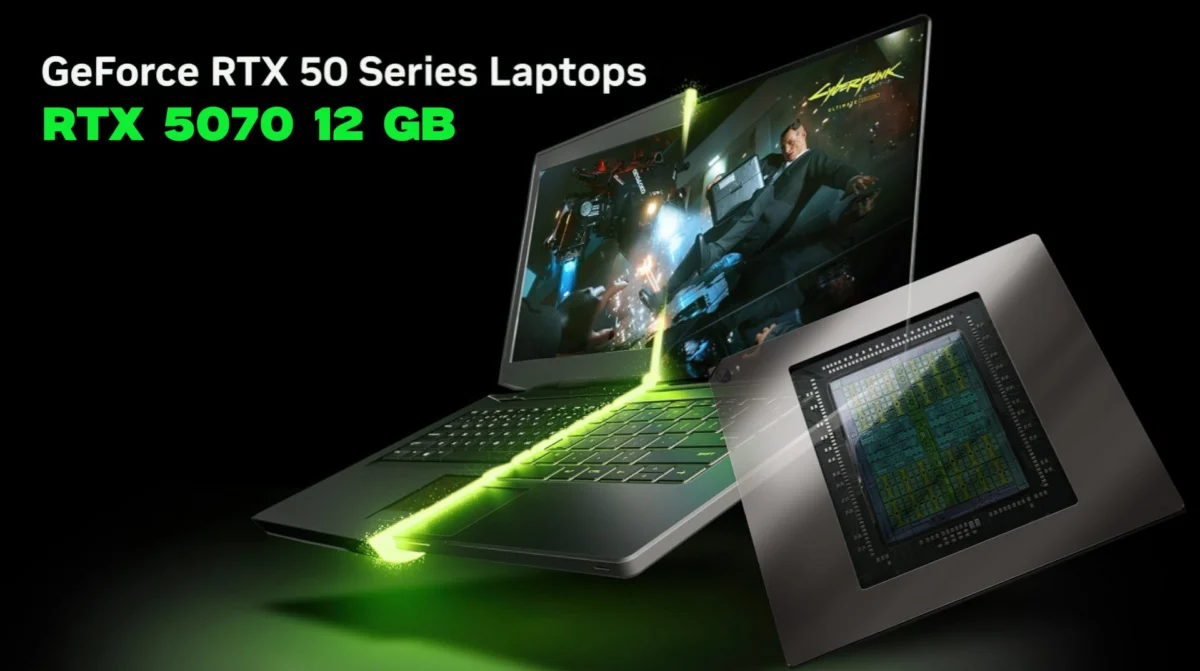
This revelation comes as a pivotal moment for laptop enthusiasts who have long criticized the stagnation of VRAM capacities in the 70-class mobile segment. The transition from 8 GB to 12 GB represents a 50% increase in available memory, a move that would fundamentally alter the longevity and performance profile of mid-range gaming portables. The data, surfaced by prominent industry leaker @94G8LA, highlights several upcoming models within Lenovo’s popular LOQ and Legion Pro 5 families, specifically identifying the RTX 5070 as a 12 GB component.
Technical Analysis of the Leaked Specifications
The leaked documents identify four specific Lenovo laptop models that are slated to feature the upgraded RTX 5070 12 GB GDDR7 GPU. These include two entries from the budget-friendly but performance-oriented LOQ lineup and two from the enthusiast-grade Legion Pro 5 series. Specifically, the models mentioned are the LOQ 17IRX10, the Legion Pro 5 16IRX10, the Legion Pro 5 16ADR10, and the LOQ 15IRX10.
According to the technical data sheets associated with these listings, the RTX 5070 12 GB variant is rated for a Total Graphics Power (TGP) of 115W. This represents a notable 15W increase over the standard RTX 5070 mobile GPU, which typically operates within a 50W to 100W range. The increased power envelope is likely necessary to accommodate the additional memory modules and the associated controller overhead required for the 12 GB configuration.
The listings also detail a boost clock of 2347 MHz, which aligns with the clock speeds expected for the Blackwell mobile architecture. However, the move to GDDR7 memory is perhaps the most significant hardware shift. GDDR7 offers substantially higher bandwidth and improved power efficiency compared to the outgoing GDDR6 and GDDR6X standards. By utilizing 12 GB of this high-speed memory, NVIDIA and its partners like Lenovo are addressing a growing bottleneck in modern AAA gaming: the demand for high-resolution textures and complex shader arrays that frequently exceed the 8 GB threshold at 1440p and 4K resolutions.
Addressing the 12 GB VRAM Discrepancy
The existence of a 12 GB RTX 5070 mobile GPU has been a subject of intense debate within the hardware community for several months. Initial leaks from both ASUS and Lenovo previously hinted at this capacity, but many analysts dismissed those early listings as clerical errors or placeholders. The logic was that a 128-bit memory bus—which the RTX 5070 is rumored to possess—traditionally supports 8 GB or 16 GB configurations when using standard 2 GB density modules.

However, the emergence of 3 GB GDDR7 memory modules has changed the calculus. By employing 3 GB modules on a 128-bit or 192-bit bus, NVIDIA can achieve unconventional memory capacities like 12 GB without requiring the wider, more expensive bus widths typically reserved for 80-class or 90-class GPUs. This technological flexibility allows NVIDIA to provide a "sweet spot" for gamers who require more than 8 GB of VRAM for modern titles but do not wish to pay the premium for an RTX 5080 or 5090 mobile system.
Despite the consistency of these new Lenovo listings, some internal discrepancies remain. One specific entry for the Legion Pro 5 16ADR10 cites 988 AI TOPS (Tera Operations Per Second) of performance, which is significantly higher than the 798 AI TOPS listed for other models. Furthermore, this same listing mentions a boost clock of 1425 MHz—a figure that is widely believed to be the base clock rather than the boost frequency. Such inconsistencies suggest that while the 12 GB VRAM specification is likely accurate across the product stack, the fine-tuning of secondary specifications like AI throughput and clock speeds may still be in flux as Lenovo nears the final production phase.
Chronology of the RTX 50-Series Mobile Leaks
The path to the RTX 5070 12 GB leak has been marked by a series of incremental revelations over the past six months.
- Late 2024: Initial rumors regarding NVIDIA’s "Blackwell" mobile architecture began to circulate, suggesting a heavy focus on GDDR7 integration and AI-driven performance enhancements through DLSS 4.
- January 2025: During CES, while NVIDIA focused heavily on desktop components, secondary leaks from supply chain partners in Taiwan suggested that the mobile 50-series would see a tiered VRAM rollout.
- February 2025: ASUS inadvertently listed several ROG and TUF gaming laptops with "RTX 5070 12 GB" specifications on regional retail sites. These were quickly taken down, leading many to believe they were typos.
- Early March 2025: Lenovo’s internal product database was accessed, revealing the four specific models (LOQ and Legion) with the 12 GB configuration clearly defined. Unlike previous leaks, these listings included TGP ratings and AI TOPS data, lending them a higher degree of credibility.
- Current Status: With a projected launch window of late April 2025, the industry is now awaiting an official confirmation from NVIDIA regarding the final SKU specifications for the Blackwell mobile family.
Market Implications and Competitive Landscape
The introduction of a 12 GB RTX 5070 mobile GPU would be a strategic masterstroke for NVIDIA in the current market. For the past two hardware generations, the 8 GB VRAM limit on 70-class mobile GPUs has been a primary point of contention for consumers. As modern games like Alan Wake 2, Cyberpunk 2077, and upcoming Unreal Engine 5 titles push memory requirements higher, 8 GB has increasingly become a limiting factor for high-quality settings, even when the underlying silicon has the raw compute power to handle the workload.
By moving to 12 GB, NVIDIA effectively silences critics of its memory allocation strategy while simultaneously creating a more distinct gap between the RTX 5070 and the entry-level RTX 5060, which is expected to remain at 8 GB. This shift also places pressure on AMD, whose Radeon RX 7000-series mobile GPUs have struggled to gain significant market share despite offering competitive VRAM capacities. If NVIDIA can pair its superior feature set (DLSS, Frame Generation, and Ray Reconstruction) with adequate VRAM, it will likely maintain its dominant position in the gaming laptop market.
Furthermore, the emphasis on AI TOPS in Lenovo’s listings reflects the broader industry trend toward "AI PCs." With the RTX 5070 12 GB hitting nearly 800 AI TOPS, these laptops will not only be gaming powerhouses but also highly capable machines for local AI development, large language model (LLM) inference, and generative content creation. The extra 4 GB of VRAM is particularly crucial for these workloads, as AI models are notoriously memory-intensive.

Broader Impact on the Gaming Laptop Industry
The anticipated April launch of these Lenovo laptops signals the beginning of a massive refresh cycle for the PC industry. Historically, the second quarter of the year is when OEMs (Original Equipment Manufacturers) release their flagship and mid-range refreshes to capture the "back-to-school" and early summer markets.
For Lenovo, the decision to include the 12 GB RTX 5070 in its LOQ series—a lineup typically aimed at budget-conscious gamers—suggests that high-capacity VRAM is no longer being treated as a luxury feature reserved for the $2,000+ price bracket. This democratization of hardware specs could force other manufacturers like MSI, HP, and Dell to follow suit, potentially making 12 GB the new standard for mid-range gaming in 2025 and beyond.
As the industry moves toward the April release window, several questions remain. It is still unclear whether NVIDIA will offer both 8 GB and 12 GB versions of the RTX 5070 mobile, or if the 12 GB version will be an "unannounced" upgrade that replaces the 8 GB SKU entirely in certain regions. There is also the matter of pricing; the addition of GDDR7 and higher density memory modules will likely incur a manufacturing premium. Whether Lenovo and other OEMs can absorb these costs or if they will be passed on to the consumer remains to be seen.
In conclusion, the Lenovo listings provide a compelling look at the future of mobile gaming. If the RTX 5070 12 GB becomes a reality, it will represent one of the most significant year-over-year upgrades for the 70-class segment in recent memory. By addressing the VRAM bottleneck and leveraging the efficiencies of the Blackwell architecture, NVIDIA and Lenovo appear ready to redefine expectations for what a mid-range gaming laptop can achieve. All eyes now turn to the official launch at the end of April, where the final performance benchmarks will determine if this hardware lives up to its leaked potential.