Evan Lee Salim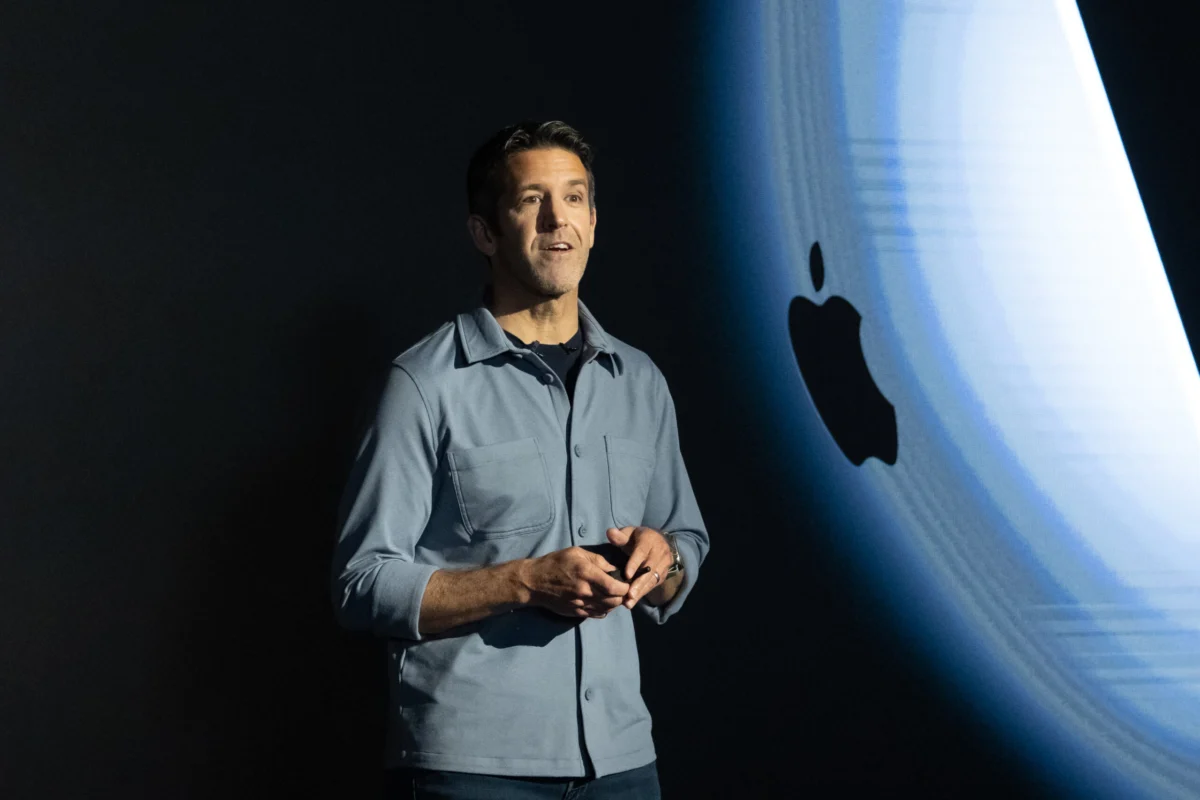
The technology world witnessed a significant leadership transition this week as Tim Cook officially stepped down from his role as Chief Executive Officer of Apple, Inc., handing the reins to John Ternus, the company’s former Senior Vice President of Hardware Engineering. The move, effective August 31, 2026, ushers in a new era for the Cupertino giant, placing a seasoned product builder at the helm during a pivotal moment defined by intense competition and rapid advancements in artificial intelligence. Ternus wasted no time in setting the tone, issuing his first memo as CEO that promised a "huge launch next week," a statement widely interpreted as a prelude to Apple’s highly anticipated annual iPhone event, now falling directly under his immediate purview. This critical timing underscores the immediate challenges and immense expectations facing the new CEO.
While Cook has transitioned from the executive leadership, his influence is far from over. He will remain with the company as Executive Chairman, a newly created role designed to leverage his deep experience in high-level policy relationships, strategic partnerships, and global corporate governance. This new position allows Cook to continue contributing to Apple’s long-term trajectory, focusing on intricate geopolitical and regulatory landscapes. An illustrative example of the complexities Cook is expected to navigate includes recent high-profile incidents, such as the public balancing act surrounding a seemingly minor map label dispute concerning Lake Ontario, which escalated into a significant diplomatic and public relations challenge for the company. The dual leadership structure, with Ternus leading day-to-day operations and product vision while Cook handles broader strategic and external affairs, raises fundamental questions for industry observers and shareholders: What distinct vision will the Ternus era bring, and how much strategic latitude will investors grant him to reshape Apple’s future?
A Decade of Unprecedented Growth: Tim Cook’s Enduring Legacy
Tim Cook’s tenure as CEO, which began in August 2011 following the passing of co-founder Steve Jobs, has been nothing short of transformative for Apple. Under his leadership, the company evolved from a hardware innovator to a global technology behemoth with a diversified ecosystem of products and services, achieving milestones previously unimaginable. When Cook took over, Apple’s market capitalization stood at approximately $350 billion. By the time of his departure as CEO, Apple had consistently maintained its position as one of the world’s most valuable companies, frequently surpassing a market valuation of $3 trillion. This phenomenal growth was underpinned by several key strategic pillars.
Cook meticulously optimized Apple’s legendary supply chain, turning it into a competitive advantage that ensured efficient production and global distribution, even amidst geopolitical complexities and unprecedented demand. He also spearheaded a significant diversification into services, recognizing the potential for recurring revenue streams beyond hardware sales. The App Store, Apple Music, iCloud, Apple TV+, and Apple Pay collectively grew into a formidable segment, contributing a substantial and growing portion of Apple’s quarterly revenue, often exceeding 25% of total sales. This strategic shift helped insulate Apple from the cyclical nature of hardware upgrades and fostered deeper customer loyalty.
Furthermore, Cook oversaw the expansion of Apple’s product portfolio into entirely new categories, including the highly successful Apple Watch, which revolutionized the wearables market, and the AirPods, which redefined wireless audio. More recently, he championed ambitious projects like the Apple Vision Pro, signaling Apple’s continued commitment to pioneering spatial computing. Beyond financial metrics, Cook was a vocal advocate for corporate social responsibility, emphasizing privacy as a fundamental human right and pushing for aggressive environmental sustainability goals across Apple’s operations and supply chain. He consistently navigated Apple through intense regulatory scrutiny, particularly concerning App Store policies and antitrust allegations in various jurisdictions, demonstrating a unique blend of operational prowess and diplomatic skill.
John Ternus: The Product Architect Steps Up
John Ternus, a veteran of Apple for over two decades, steps into the CEO role with a reputation as a highly respected "product builder" and an engineering-first leader. Having joined Apple in 2001, Ternus steadily climbed the ranks, playing critical roles in the development of nearly every major hardware product over the past two decades. His career highlights include significant contributions to the design and engineering of the iPhone, iPad, Mac, and more recently, the AirPods and the groundbreaking Apple Vision Pro. Prior to his elevation to CEO, Ternus served as the Senior Vice President of Hardware Engineering, a position where he was directly responsible for the entire hardware engineering teams for all products.
His appointment is widely seen by industry analysts as a strategic move to refocus Apple on core product innovation, particularly at a time when technological breakthroughs are increasingly driven by the synergy between advanced hardware and sophisticated software. Ternus’s deep understanding of product development, manufacturing processes, and the intricate details of Apple’s design philosophy positions him uniquely to lead. His leadership style is characterized by a meticulous attention to detail, a relentless pursuit of excellence, and a deep appreciation for the user experience – traits highly valued within Apple’s culture. While Cook was lauded for his operational genius and financial stewardship, Ternus is expected to bring a renewed emphasis on the tangible products that define Apple’s brand.
The Immediate Test: A "Huge Launch" and the iPhone’s Future
The promise of a "huge launch next week" places Ternus squarely in the spotlight from day one. This event, traditionally dominated by the unveiling of the latest iPhone models, will be his first major public appearance as CEO. The timing is critical; it will serve as the world’s initial glimpse into Ternus’s vision for Apple and his ability to articulate it compellingly. Expectations are exceptionally high. Analysts anticipate the introduction of the latest generation of iPhones, potentially the iPhone 18 or 19, alongside updates to other key product lines such as the Apple Watch, AirPods, and potentially new Mac models.
Beyond the specific product announcements, the launch event will be scrutinized for how Apple plans to integrate emerging technologies, particularly artificial intelligence, into its core offerings. This event is not merely about new features; it’s about signaling direction. How will Ternus’s Apple differentiate itself in an increasingly crowded and competitive market? Will the focus be on raw processing power, enhanced photographic capabilities, or groundbreaking new software experiences powered by on-device AI? The performance and reception of these initial products under Ternus’s leadership will significantly influence investor confidence and public perception of the new era.
Navigating the AI Era: Software, Hardware, and the Apple Ecosystem
The backdrop against which Ternus assumes leadership is the burgeoning "AI era," a period of rapid advancement in artificial intelligence that is reshaping virtually every aspect of technology. Companies across the industry, from Google and Microsoft to numerous startups, are heavily investing in generative AI capabilities, large language models, and sophisticated machine learning applications. Apple, while having long integrated AI and machine learning into features like Siri, Face ID, and computational photography, has been perceived by some critics as being slower to embrace the public-facing, generative AI wave compared to its rivals.
This context makes Ternus’s background as a hardware chief particularly intriguing. While conventional wisdom might suggest a software-focused leader would be better suited to navigate the AI landscape, Apple’s strength has always been the seamless integration of hardware and software. Ternus’s deep expertise in hardware engineering could prove to be an unexpected advantage. AI, especially on-device AI, demands highly optimized silicon for efficient processing, power management, and data privacy. Apple’s custom silicon, including its A-series chips with integrated Neural Engines, has been a cornerstone of its strategy. Ternus, having overseen the development of these chips, is uniquely positioned to drive the next generation of AI-powered hardware that can run increasingly complex models locally on devices, enhancing performance, privacy, and responsiveness.
The challenge for Ternus will be to demonstrate how Apple’s integrated approach can deliver a superior AI experience that is both powerful and inherently "Apple" – intuitive, private, and seamlessly integrated into the user’s daily life. This could manifest in more intelligent Siri capabilities, advanced photo and video editing features, smarter productivity tools, and even new forms of interaction within the Vision Pro ecosystem. Industry analysts Kirsten Korosec and Sean O’Kane, hosts of TechCrunch’s popular podcast Equity, have already begun unpacking this very dynamic, questioning whether Ternus’s hardware background might paradoxically enable greater progress on software innovation by fostering a deeper, more symbiotic relationship between the two. They posit that Apple’s unique control over its entire tech stack—from chip design to operating system to applications—allows it to optimize AI experiences in ways that competitors, reliant on third-party hardware or software, simply cannot.
Shareholder Expectations and the Road Ahead
The question of "how much rope" shareholders will give Ternus is a significant one. Under Tim Cook, Apple delivered consistent financial performance, predictable product cycles, and strong returns for investors. The company’s stock, trading on the NASDAQ, became a benchmark for stability and growth in the tech sector. Ternus inherits a company with immense financial resources, a global brand, and a fiercely loyal customer base exceeding two billion active devices worldwide. However, he also inherits the pressures of maintaining this growth trajectory amidst increasing global competition, persistent regulatory headwinds, and the constant demand for groundbreaking innovation.
Investors will be looking for continuity in financial performance but also clear signs of a renewed innovation pipeline. Key metrics will include sustained revenue growth, particularly in services, continued expansion in emerging markets, and the successful launch and adoption of new product categories beyond the iPhone. The market will closely watch Apple’s research and development spending, which has consistently been in the tens of billions of dollars annually, to see if Ternus shifts investment priorities towards specific areas like advanced AI research or new hardware ventures.
Furthermore, Ternus will need to deftly navigate the complex geopolitical landscape that impacts Apple’s global supply chain, particularly its manufacturing presence in China, and its market access in various countries. While Cook will handle the Executive Chairman role with a focus on these policy relationships, the ultimate responsibility for Apple’s operational resilience and strategic market positioning will rest with Ternus. His ability to balance aggressive innovation with prudent risk management will be critical to maintaining shareholder confidence.
Broader Implications and Future Outlook
The transition to John Ternus as CEO marks a significant inflection point for Apple. While the company is renowned for its stability and deliberate leadership changes, a shift at the very top invariably brings new perspectives and priorities. Ternus’s leadership style, likely more hands-on with product development, could foster a renewed sense of urgency and creative exploration within Apple’s engineering teams. The internal culture, while retaining its core values of secrecy and excellence, might see subtle shifts reflecting Ternus’s engineering-first ethos.
The broader tech industry will undoubtedly react to Apple’s new leadership. Competitors like Samsung, Google, Microsoft, and Meta will be watching closely for any signals of strategic shifts, particularly concerning Apple’s approach to AI, its ecosystem strategy, and its stance on interoperability. A more hardware-centric Apple under Ternus could double down on vertical integration, making its ecosystem even more robust and differentiated. Conversely, it might also open new avenues for partnerships or platform development if Ternus identifies strategic opportunities.
Looking five to ten years into the future, the Ternus era could solidify Apple’s position not just as a consumer electronics leader, but as a dominant force in ambient computing, spatial computing, and on-device AI. His background suggests a future where hardware and software are even more deeply intertwined, delivering experiences that are profoundly personal, intelligent, and seamless. The immediate challenge of the "huge launch next week" is merely the first step in what promises to be a closely watched and potentially transformative chapter for one of the world’s most influential companies. As TechCrunch’s Equity podcast co-hosts Kirsten Korosec and Sean O’Kane continue to analyze, the blend of continuity from Cook’s strategic oversight and the fresh, product-focused vision of Ternus presents both immense opportunities and formidable challenges for Apple in the years to come. Listeners interested in further insights into this significant transition are encouraged to subscribe to Equity on YouTube, Apple Podcasts, Overcast, Spotify, and all major podcast platforms, and follow @EquityPod on X and Threads for ongoing discussions.