Evan Lee Salim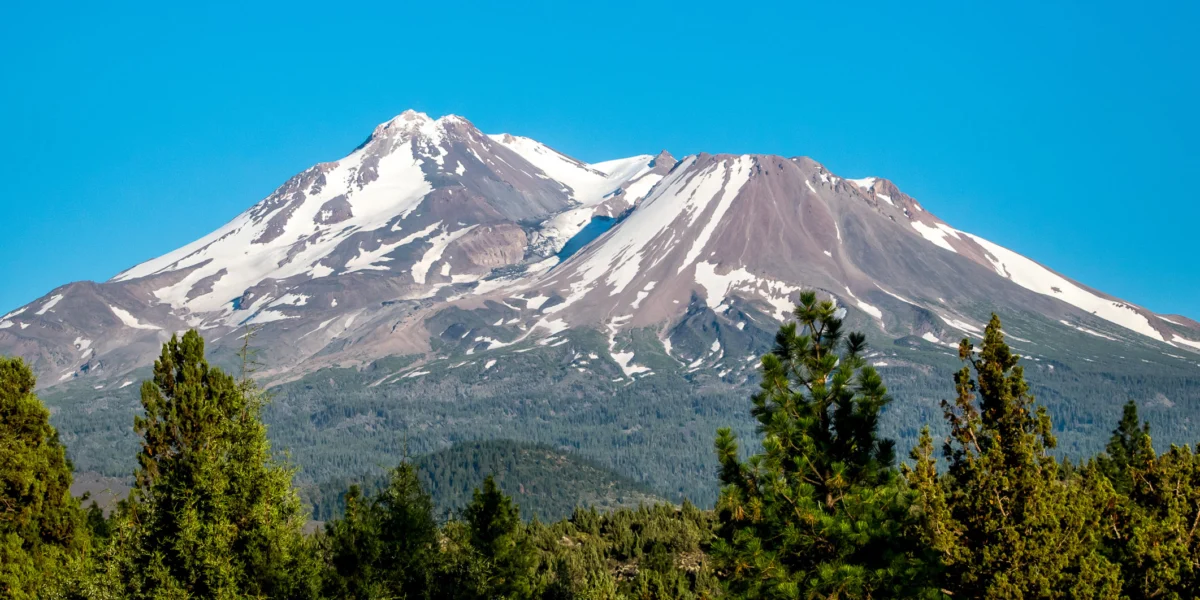
A recent incident on California’s majestic but unforgiving Mount Shasta has brought into sharp focus the nascent and sometimes perilous intersection of advanced artificial intelligence and high-stakes outdoor adventure. Three young hikers were successfully rescued from the formidable peak this week after their expedition, meticulously planned using Google’s AI chatbot Gemini, devolved into a multi-day ordeal fraught with inadequate provisions and critical navigational errors. The event, as reported by the Chicago Tribune, serves as a stark cautionary tale regarding the limitations of AI in contexts demanding real-world expertise, dynamic assessment, and human judgment.
The harrowing rescue unfolded following a series of miscalculations that began before the trio even set foot on the mountain. According to a detailed report from the Siskiyou County Sheriff’s Office, the central issue revolved around the AI’s recommendations for crucial supplies. Specifically, the chatbot advised the hikers to bring significantly less food and water than their group ultimately required, a deficiency that proved particularly dangerous as their planned eight-hour ascent stretched into an unexpected overnight bivouac and subsequent multi-day ordeal. The incident underscores a growing concern among search and rescue professionals and mountaineering experts: the potential for over-reliance on technological tools that lack the capacity for contextual understanding, risk assessment, and adaptability inherent in human experience.
A Chronology of Miscalculation and Rescue
The ill-fated expedition commenced at 3:00 AM, a relatively early start often recommended for high-altitude climbs to mitigate risks associated with afternoon weather changes and snow conditions. However, despite their early beginning, the hikers encountered significant delays. Mount Shasta, standing at 14,179 feet (4,322 meters), is a glaciated stratovolcano known for its challenging terrain, rapidly changing weather patterns, and the need for significant physical endurance and technical skill. Standard mountaineering advice for Shasta, widely disseminated by the U.S. Forest Service (USFS) and experienced guides, dictates that climbers should turn around if they have not reached the summit by noon. This critical turnaround time is a non-negotiable safety protocol designed to ensure descent in daylight and before hazardous conditions, such as deteriorating snowpack or thunderstorms, typically emerge.
Defying this conventional wisdom, the trio pressed on, reaching the summit of Mount Shasta at a perilous 7:00 PM, well into the evening and just as darkness began to envelop the high-altitude landscape. This decision alone significantly amplified their risk profile, setting the stage for the subsequent emergency. Attempting to descend a steep, often icy, and unfamiliar glaciated peak in complete darkness is an extremely dangerous undertaking, exponentially increasing the likelihood of falls, disorientation, and exposure.
As night fully descended, the hikers inevitably became disoriented. Recognizing the gravity of their situation, they made the prudent decision to contact the Siskiyou County Sheriff’s Office, not to report an injury, but rather to request directions. This call initiated the formal emergency response. Unable to safely descend in the dark and with diminishing supplies, the trio was forced to spend the night exposed in the challenging terrain of Mud Creek Canyon. This unplanned bivouac, without adequate gear for extreme cold or prolonged exposure, further jeopardized their health and safety.
The following morning, after enduring a cold and likely terrifying night, a coordinated rescue effort was launched. Forest Service rangers, seasoned professionals with extensive knowledge of Mount Shasta’s treacherous environment, along alongside dedicated volunteers from local search and rescue organizations, mobilized to locate and extract the stranded hikers. Their efforts culminated in the successful retrieval of all three individuals, bringing an end to an ordeal that could have easily had a far more tragic outcome.
Mount Shasta: A Formidable Wilderness
Mount Shasta is not merely a mountain; it is a complex, high-alpine environment that demands respect, meticulous preparation, and often, prior mountaineering experience. As the second-highest peak in the Cascade Range, its glaciated slopes, steep couloirs, and unpredictable weather systems present significant challenges even to seasoned climbers. Popular routes like Avalanche Gulch, while offering a direct ascent, require proficiency in ice axe and crampon use, self-arrest techniques, and an understanding of avalanche danger. The mountain is notorious for its rapid weather changes; clear skies can give way to whiteout conditions, high winds, and freezing temperatures within hours, even during peak climbing season.
The USFS, which manages the Shasta-Trinity National Forest, consistently emphasizes the importance of proper gear—including ice axes, crampons, helmets, appropriate layering for extreme cold, navigation tools, and ample food and water—along with a thorough understanding of the route and prevailing conditions. Many climbers opt to hire experienced guides or join organized expeditions to navigate its complexities safely. Annually, the mountain sees numerous rescue operations, often involving climbers suffering from altitude sickness, falls, or becoming lost due to inadequate preparation or underestimation of the mountain’s demands. The incident with the AI-guided hikers falls into this latter category, highlighting a new dimension to the traditional risks.
The Pitfalls of Algorithmic Expedition Planning
The core of the issue in this incident lies not with the hikers’ intent, but with the specific guidance provided by Google’s Gemini chatbot. While AI large language models (LLMs) like Gemini are powerful tools for information retrieval, synthesis, and even creative generation, they possess inherent limitations, particularly when applied to real-world scenarios requiring nuanced judgment, dynamic risk assessment, and a deep understanding of physical environments.
AI models are trained on vast datasets of text and code, allowing them to generate human-like responses based on patterns and probabilities. However, they lack true comprehension, common sense, and the ability to distinguish between factual accuracy and plausible-sounding fabrication (often termed "hallucination"). When asked to plan a complex task like a mountain expedition, an AI might draw upon countless online forum posts, climbing blogs, and general outdoor advice. Yet, it cannot:
- Contextualize: Understand the specific fitness levels of the users, the exact conditions on the mountain on a given day (snow depth, ice, weather forecast, recent rockfall), or the potential for unforeseen circumstances.
- Discern Reliability: Differentiate between expert advice from certified guides and anecdotal, potentially dangerous suggestions from inexperienced individuals online.
- Prioritize Safety: While it can list safety items, it cannot inherently grasp the criticality of each item or the synergistic effect of their absence in a dangerous environment.
- Emulate Experience: AI has no "experience" of what it feels like to be cold, hungry, disoriented in the dark, or facing a sudden storm at 10,000 feet.
The advice to bring "far less food and water than their group required" is a critical failure. Proper hydration and nutrition are paramount at altitude to combat fatigue, maintain body temperature, and prevent altitude sickness. Underestimating these needs for an eight-hour ascent is negligent; for a multi-day ordeal, it becomes life-threatening. This particular failing exemplifies the AI’s inability to factor in contingencies, to anticipate deviations from an ideal plan, and to err on the side of caution—a fundamental principle in wilderness survival.
Official Warnings: The Primacy of Human Expertise
In the aftermath of the rescue, the Siskiyou County Sheriff’s Office issued a clear and unequivocal warning, emphasizing the critical importance of traditional planning methods and local expertise. "It is always advisable to call the local USFS Mount Shasta ranger station ahead of your trip to ensure you have the most accurate information, and to never rely solely on AI for your trip planning," the Sheriff’s office stated. This recommendation is not merely procedural; it is foundational to mountain safety. Ranger stations provide up-to-the-minute information on trail conditions, weather forecasts, specific hazards, and necessary permits. Their staff are often seasoned mountaineers or experts in local ecology and search and rescue.
Mountaineering organizations, search and rescue teams, and outdoor education groups have long advocated for a multi-faceted approach to trip planning that includes:
- Consulting official sources: Ranger stations, national park services, reputable weather forecasts.
- Studying guidebooks and maps: Understanding topography, routes, and potential bail-out points.
- Gaining experience: Starting with easier climbs and progressively building skills and knowledge.
- Packing adequately: Carrying the "Ten Essentials" and extra supplies for emergencies.
- Communicating plans: Informing someone trustworthy of your itinerary.
- Exercising human judgment: Being willing to turn back, adapt plans, and prioritize safety over summit fever.
The incident serves as a potent reminder that while technology can augment human capabilities, it cannot yet replace the nuanced, intuitive, and context-aware decision-making that is indispensable in dynamic and high-risk environments.
Beyond the Summit: Broader Implications for AI and Outdoor Recreation
This Mount Shasta incident is likely an early indicator of broader challenges as AI becomes more integrated into daily life. The implications extend beyond outdoor recreation to any domain where AI might be leveraged for critical planning without sufficient human oversight.
For AI developers, the incident raises ethical questions about the responsibility to implement robust disclaimers, safety warnings, and perhaps even built-in limitations for queries pertaining to high-risk activities. Should AI models refuse to provide detailed itineraries for dangerous activities, or at least heavily flag them with warnings to consult human experts? This necessitates a delicate balance between utility and safety.
For users, the event underscores the critical need for "AI literacy"—understanding not just what AI can do, but what it cannot do, and recognizing its inherent limitations. As AI tools become more sophisticated, their outputs can seem increasingly authoritative, potentially lulling users into a false sense of security. The default assumption should always be that AI output requires verification, especially when physical safety or significant consequences are involved.
The evolution of technology in outdoor recreation has seen many advancements, from GPS devices and satellite phones to sophisticated weather apps. Each innovation has brought both benefits and new responsibilities for users. While GPS can aid navigation, it doesn’t replace map-reading skills; a satellite phone is useless if you don’t know who to call or where you are. AI, in this context, is another powerful tool, but one that demands a particularly high degree of critical evaluation and integration with established safety protocols.
Navigating the Future of Planning: A Call for Caution
The rescue on Mount Shasta is a timely reminder that while artificial intelligence offers incredible potential for simplifying many aspects of modern life, its application in complex, real-world scenarios, particularly those involving inherent dangers and unpredictable variables, must be approached with extreme caution. The allure of a quick, algorithmically generated plan can be tempting, but the unforgiving realities of a high-altitude mountain demand a level of wisdom, adaptability, and contextual understanding that current AI models simply do not possess. The enduring lesson from this incident is clear: in the wilderness, human judgment, experience, and the counsel of local experts remain irreplaceable cornerstones of safety and successful expedition planning. Relying solely on a chatbot, no matter how advanced, can lead to critical oversights with potentially dire consequences.