Sisilia Frederika
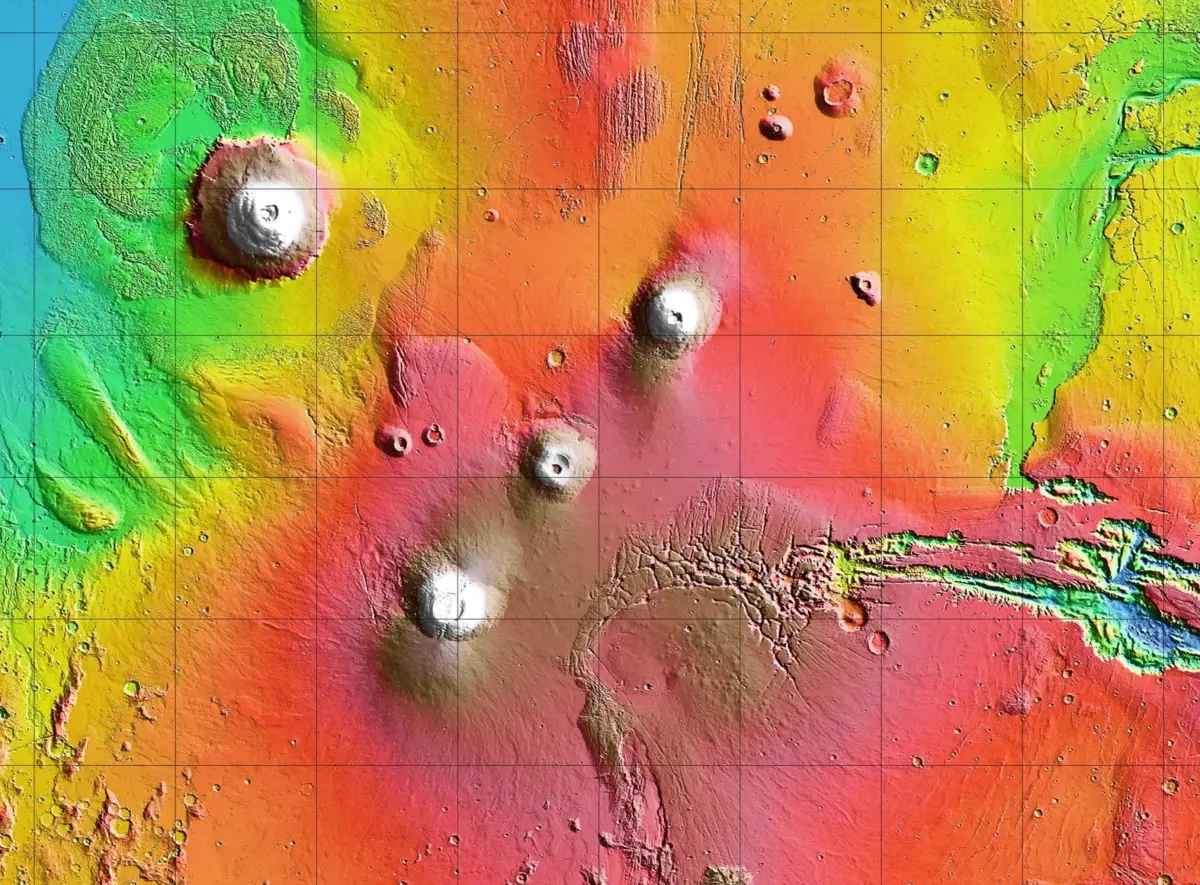
For decades, the scientific consensus regarding the Red Planet was characterized by a sense of geological finality, with researchers largely assuming that Mars had long ago exhausted its internal heat and settled into a state of permanent dormancy. While the Martian surface is famously scarred by the remnants of colossal volcanoes and sprawling rift valleys, these features were viewed as relics of a distant, more energetic past rather than indicators of contemporary activity. However, a groundbreaking study published in Nature Communications has fundamentally challenged this "geologically dead" paradigm. By analyzing seismic data captured by NASA’s InSight (Interior Exploration using Seismic Investigations, Geodesy and Heat Transport) lander, a collaborative team of international scientists has confirmed that tectonic forces are still actively reshaping the Martian crust, specifically beneath the massive Valles Marineris canyon system.
The research, led by Assistant Professor Jung-Hun Song of Imperial College London’s Department of Earth Science and Engineering, alongside colleagues from Columbia University and the University of Illinois Urbana-Champaign, provides the first definitive evidence of modern tectonic ruptures within the Solar System’s largest canyon. The findings suggest that Mars, despite lacking the plate tectonics that drive geological change on Earth, remains a "living" world where ancient fault lines continue to slip and release energy under modern stresses.
From Stagnant Lid to Seismic Reality
The historical view of Mars as a geologically inactive world was rooted in its classification as a "stagnant lid" planet. Unlike Earth, which possesses a lithosphere broken into several mobile tectonic plates that recycle material into the mantle, Mars consists of a single, continuous outer shell. This configuration led many to believe that once the planet’s initial internal heat dissipated, the crust would become rigid and immobile.
The arrival of the InSight lander in November 2018 marked a turning point in this understanding. Equipped with the Seismic Experiment for Interior Structure (SEIS), a highly sensitive seismometer, InSight was designed to "listen" to the pulse of the planet. Over its four-year mission, the lander detected hundreds of "marsquakes." While many of these events were attributed to meteoroid impacts or the gradual cooling and contraction of the planet, a specific event—designated S0976a—stood out as a geological anomaly.
Recorded on August 25, 2021, S0976a was unique not only for its magnitude but for its origin. It was the only significant seismic event detected in the western hemisphere of Mars, occurring on the opposite side of the planet from the lander. The seismic waves from this event were powerful enough to travel through the Martian core before reaching InSight’s sensors, providing a rare "X-ray" view of the planet’s deepest interior. Initial analysis localized the quake to the western reaches of Valles Marineris, but the precise mechanism behind the tremor remained a subject of intense debate until the recent publication of Song’s study.
The Magnitude of Valles Marineris
To understand the significance of the S0976a event, one must consider the scale of the Valles Marineris. This canyon system is a geological titan that dwarfs any comparable feature on Earth. Stretching over 3,900 kilometers (2,423 miles) in length and reaching depths of more than 9 kilometers (5.5 miles), it is nearly ten times longer and five times deeper than the Grand Canyon in the United States. When compared to Earth’s largest canyon system, the Yarlung Tsangpo Grand Canyon in Tibet—which is approximately 505 kilometers long and reaches a maximum depth of 6 kilometers—the Martian feature represents a different order of geological magnitude.
Geologists believe Valles Marineris formed roughly 3.5 billion years ago, during the Noachian and Late Hesperian periods. The prevailing theory suggests it is a tectonic "crack" in the crust, formed as the nearby Tharsis volcanic plateau grew and put immense stress on the lithosphere. This process created rift faults, where the crust was pulled apart by tensional forces. Over eons, these rifts were further widened by erosion, landslides, and the collapse of canyon walls.

The new study indicates that these ancient faults are not merely historical artifacts. Instead, they remain unstable. The S0976a event was determined to be a "strike-slip" quake, a type of movement where two blocks of crust slide horizontally past one another. This motion occurred at a depth of 20 to 40 kilometers (12 to 24 miles) beneath the canyon floor. This depth is significant because it suggests the rupture occurred in the brittle upper crust, triggered by stresses that continue to accumulate in the modern era.
Forensic Seismology: Ruling Out External Factors
The research team employed a rigorous modeling approach to determine the cause of the S0976a quake. Given the Martian environment, several alternative explanations were considered, including a high-velocity meteoroid impact or a massive landslide. Valles Marineris is known for its frequent "mass wasting" events, where gravity pulls vast quantities of rock and dust down the steep canyon walls.
However, the seismic wave patterns recorded by InSight did not match the signatures typically produced by surface impacts or landslides. To confirm this, the team cross-referenced their seismic models with high-resolution satellite imagery from NASA’s Mars Reconnaissance Orbiter (MRO). The MRO images, taken of the western Valles Marineris region following the quake, showed no new impact craters and no evidence of fresh landslide scars that would correspond to an event of that magnitude.
"The seismic waves tell us that there was a sideways sliding motion on a fault well below the surface," Assistant Professor Song explained. "The geology seen from orbit shows a region crossed by long-lived fault systems. What makes the result compelling is that several completely different types of evidence point in the same direction."
This multi-modal approach allowed the researchers to conclude that S0976a was an endogenous tectonic event. It represents the first time scientists have been able to link a specific marsquake to an active, identifiable fault system within the Valles Marineris.
The Drivers of Modern Martian Tectonics
If Mars lacks plate tectonics, what is driving this modern seismic activity? The researchers point to several interconnected factors. First is the long-term cooling of the planet. As the Martian interior slowly loses heat, the planet undergoes a subtle contraction. This contraction creates "thermal stress" within the crust, which can be released as quakes along pre-existing zones of weakness.
Second, the legacy of the Tharsis region continues to play a role. The Tharsis Bulge is a massive volcanic province that hosts Olympus Mons, the largest volcano in the Solar System. The sheer weight of this volcanic complex creates a permanent load on the Martian lithosphere, generating regional stresses that extend thousands of kilometers away, into the Valles Marineris.
Finally, the geometry of the canyon itself may contribute to its own seismic activity. The removal of vast amounts of material through ancient erosion and landslides has altered the local stress field. This "unloading" of the crust can make it easier for deep-seated faults to slip under relatively minor amounts of tectonic pressure.

The study also highlights that Valles Marineris is not the only active region. InSight previously detected activity in the Cerberus Fossae fissures and the southern Elysium Planitia. The fact that these active zones are scattered across the planet suggests that Martian tectonic stress is not a single, unified global pattern, but rather a complex web of localized stresses acting on a billion-year-old crustal framework.
Scientific Reactions and the InSight Legacy
The broader scientific community has welcomed the findings as a testament to the enduring value of the InSight mission. Although the lander officially ceased operations in December 2022 after dust accumulation on its solar panels prevented it from recharging its batteries, the data it gathered continues to yield transformative discoveries.
Dr. Doyeon Kim, an Assistant Professor in Earth and Planetary Science at Imperial and a senior author on the study, emphasized the dual importance of the S0976a event. "S0976a has turned out to be an extraordinary event, playing an important role in our understanding of the Red Planet," Kim stated. "Its waves traveled through the core and helped us investigate the deepest part of Mars, and now they are telling us what happened at the source itself. From a single marsquake, we can learn both about the center of the planet and about an active fault beneath one of its most remarkable landscapes."
The discovery also has implications for future human exploration. Understanding the frequency and location of seismic activity is crucial for the structural safety of future Martian habitats. Furthermore, the presence of active faults and internal heat raises intriguing questions about the potential for subsurface hydrothermal activity, which is a key factor in the search for past or present microbial life.
Conclusion: A New Chapter in Planetary Science
The revelation that Valles Marineris is tectonically active marks a significant shift in our perception of the terrestrial planets. It demonstrates that a "stagnant lid" planet is not necessarily a dead one. The internal heat of Mars, while much diminished from its youth, is still sufficient to drive geological change on a scale that is observable and measurable.
As researchers continue to mine the InSight data archives, more secrets of the Martian interior are expected to emerge. For now, the image of Mars as a frozen, unchanging desert has been replaced by that of a world that is still shifting, cracking, and groaning under the weight of its own history. The "Grand Canyon of Mars" is not just a monument to the past, but a living laboratory of modern planetary evolution. The study serves as a reminder that in the exploration of the Solar System, even the most established assumptions are subject to the transformative power of new data.