Garick Elordi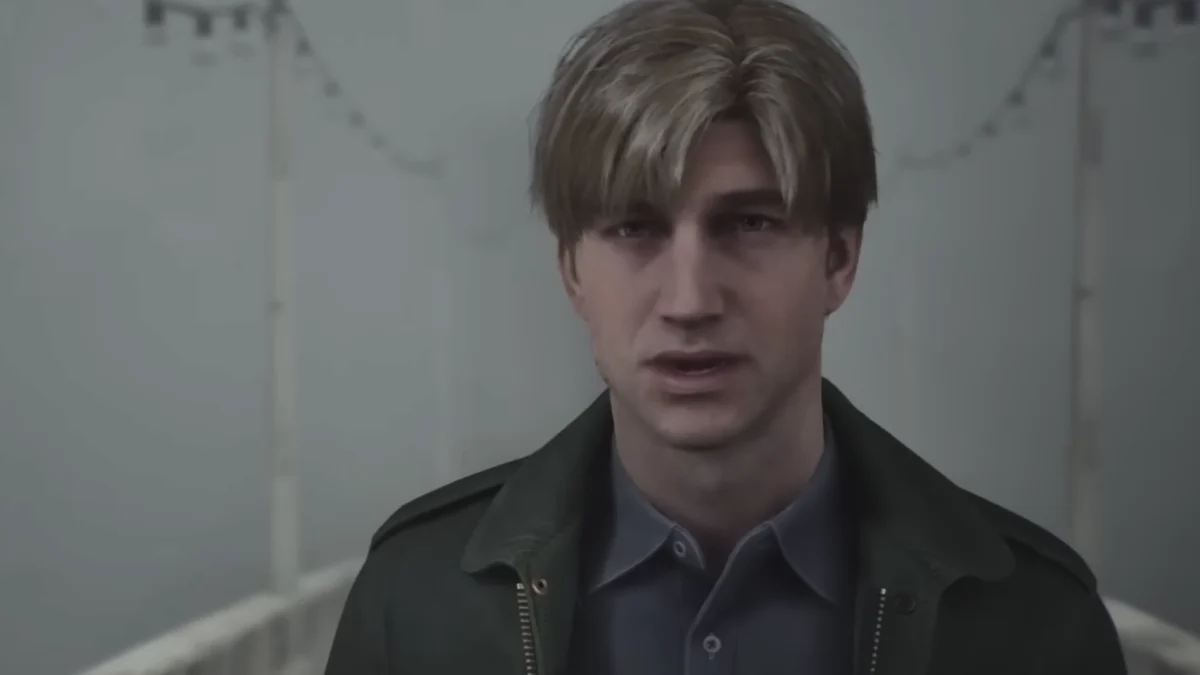
Konami has officially confirmed that it is investigating a series of new technical complications affecting the Silent Hill 2 remake on both the PlayStation 5 and the PlayStation 5 Pro. The issues emerged following the release of Patch 1.07, an update originally intended to refine the game’s visual fidelity and stability. Instead, the patch appears to have introduced significant regressions, particularly within the game’s Performance Mode, leading to widespread reports of graphical artifacts, lighting inconsistencies, and a phenomenon known as "crushed blacks." The publisher’s acknowledgment comes after a weekend of escalating community feedback, as players expressed frustration over the state of the highly-regarded survival horror title on Sony’s high-end hardware.
In a public statement issued via the official Konami UK social media channels, the publisher stated that the development team is fully aware of the problems and is currently working toward a resolution. "We would like to confirm that we are aware of the recent issues affecting Performance Mode on PS5 and PS5 Pro in Silent Hill 2 following Patch 1.07," the statement read. "Our team is currently investigating these issues and looking into potential solutions. Thank you for your patience and understanding. We’ll share more information as soon as it becomes available." While the statement confirms an active investigation, Konami has yet to provide a specific timeline for a corrective hotfix or a subsequent patch.
The Technical Intentions of Patch 1.07
Patch 1.07 was designed to be a comprehensive optimization update. According to the official patch notes released by Konami and developer Bloober Team, the primary objectives were to improve the rendering of the series’ iconic fog, reduce shadow flickering, and eliminate various movement-related visual artifacts that had been present since the game’s October launch. Furthermore, the update was marketed as a way to boost overall image quality across both the standard PlayStation 5 and the newly released PlayStation 5 Pro.
On paper, the update promised to leverage the additional power of the PS5 Pro to provide a cleaner, more stable experience. This was particularly relevant for the game’s "Performance Mode," which targets a 60-frames-per-second (fps) output. In contrast, the "Quality Mode" focuses on higher resolution and enhanced ray-tracing effects but caps the frame rate at 30fps. Initial reports suggest that Quality Mode has remained largely unaffected by the regressions introduced in the latest update, leaving the burden of the issues on those who prefer higher frame rates.
Analysis of Reported Graphical Regressions
Despite the intended improvements, the reality for many players has been a noticeable decline in visual quality. The most prominent issue reported is the appearance of "crushed blacks." In digital imaging, this occurs when shadow detail is lost in the darkest areas of the screen, resulting in a flat, muddy black smear rather than a nuanced transition of dark tones. In a game like Silent Hill 2, which relies heavily on atmosphere, darkness, and subtle lighting to convey horror, the loss of shadow detail significantly impacts the intended aesthetic and gameplay experience.
In addition to lighting issues, users on platforms such as Reddit and ResetEra have documented several other regressions:
- Shadow Strobing: Rather than reducing flicker, some players report that shadows now pulse or strobe more aggressively than they did in version 1.06.
- Mirror Artifacting: Visual glitches have been noted in scenes involving mirrors, specifically affecting the character model of the protagonist, James Sunderland. These artifacts manifest as pixelation or "ghosting" around the character’s reflection.
- Cursed Foliage: On the standard PS5, users have highlighted issues with how trees and bushes are rendered, describing them as having a "shimmering" or "cursed" appearance that breaks immersion during outdoor segments.
- PSSR Stability: On the PS5 Pro, the implementation of PlayStation Spectral Super Resolution (PSSR)—Sony’s AI-driven upscaling technology—continues to be a point of contention. Players have noted that the upscaling results in a noisy image, particularly in motion, which Patch 1.07 was supposed to mitigate.
A History of Technical Hurdles on PlayStation Hardware
The current situation with Patch 1.07 is not the first time the Silent Hill 2 remake has faced technical scrutiny on Sony’s platforms. Since its launch, the game has been a benchmark for the capabilities of the PlayStation 5, but it has also served as a case study for the challenges of modern game optimization.
When the PS5 Pro launched in early November 2024, Silent Hill 2 was advertised as a "Pro Enhanced" title. However, technical analysts, including those at Digital Foundry, noted that the initial Pro experience was fraught with "glaring image stability issues not found on the standard PlayStation 5." The primary culprit was identified as a troubled PSSR implementation, which caused shimmering and flickering on fine details like fences, foliage, and puddles.
.png?width=1200&height=630&fit=crop&enable=upscale)
The backlash from the community was immediate. Some early adopters of the PS5 Pro went as far as to call the "Pro Enhanced" labeling misleading, as the game arguably looked and ran better on the base console at the time of the Pro’s launch. Bloober Team eventually responded to these concerns, assuring fans that work was ongoing to harness the Pro’s hardware more effectively. While a patch addressing some of these glitches arrived two weeks after the console’s debut, the long-term stability of the game has remained elusive.
Community Reaction and QA Concerns
The reaction from the Silent Hill fanbase has been a mixture of disappointment and bewilderment. On the r/silenthill subreddit, threads discussing the 1.07 update have been flooded with comparison screenshots and videos showing the degraded visual state of the game. One highly upvoted comment questioned the quality assurance (QA) process at both Konami and Bloober Team, asking, "How on earth did this pass QA? The crushed blacks are visible within five minutes of starting the game."
The frustration is compounded by the fact that the Silent Hill 2 remake was a massive critical and commercial success. Upon its release in October 2024, the game received high praise for its faithful yet modern reinterpretation of the 2001 Team Silent masterpiece. It sold over one million copies in less than a week, proving that there is still a massive global appetite for the franchise. For many fans, the ongoing technical instability on the platform where the game was marketed most heavily feels like a disservice to the quality of the core experience.
Broader Implications for the Silent Hill Franchise
The technical difficulties surrounding the Silent Hill 2 remake come at a critical juncture for Konami. After a decade of dormancy for the franchise, the publisher is currently in the midst of a massive "Silent Hill Transmission" revival strategy. This includes multiple video game projects, such as Silent Hill: Townfall and Silent Hill f, as well as a new feature film titled "Return to Silent Hill."
The success of the Silent Hill 2 remake was intended to be the foundation of this revival. While the game’s critical reception remains stellar—including a five-star review from Eurogamer that praised its careful attention to the original’s atmosphere—the persistent technical flaws could potentially dampen the momentum for future releases.
Looking ahead, the next major entry in the series is Silent Hill: Townfall, scheduled for release on September 24th for PC and PS5. Developed by No Code and published by Annapurna Interactive in collaboration with Konami, Townfall is expected to be a more experimental take on the series. Early previews of the first five hours of Townfall have been positive, with critics noting that the game successfully subverts expectations. However, the technical performance of the Silent Hill 2 remake will likely stay in the spotlight until Konami can deliver a stable, definitive version of the game that satisfies both base PS5 users and PS5 Pro owners.
Conclusion and Outlook
As Konami continues its investigation into the failures of Patch 1.07, the player base remains in a state of "wait and see." For a game that relies so heavily on its visual presentation to evoke psychological horror, these technical regressions are more than just minor inconveniences; they are fundamental disruptions to the artistic intent of the developers.
The situation serves as a reminder of the complexities inherent in developing for mid-generation hardware refreshes. As developers strive to balance traditional rendering techniques with new AI-upscaling technologies like PSSR, growing pains are becoming increasingly common in the industry. For now, players who value visual clarity may find it best to stick to the game’s 30fps Quality Mode, which remains the most stable way to experience the foggy streets of Silent Hill until a fix for Performance Mode is deployed. Konami has promised further updates as information becomes available, and the gaming community will be watching closely to see if the publisher can restore the remake to its former glory.