Garick Elordi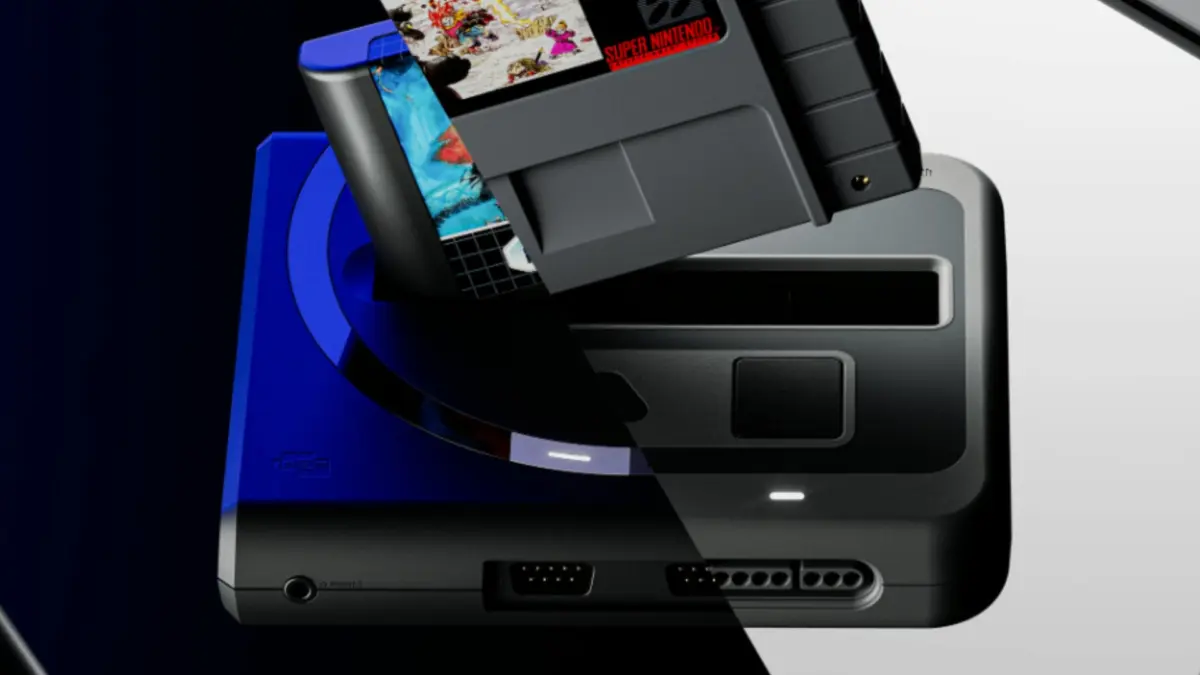
Analogue, the hardware manufacturer renowned for its high-fidelity recreations of classic video game systems, has officially unveiled the Mega Sg+ and Super Nt+. These revised editions of the company’s celebrated Sega- and Nintendo-compatible consoles represent a significant technological evolution of the original hardware launched in the late 2010s. Designed to interface with modern high-definition displays while maintaining absolute fidelity to original game cartridges, the new "+" models introduce a suite of internal hardware upgrades and quality-of-life features. Pre-orders for both systems are scheduled to begin on October 19, with the company aiming for a rapid turnaround and shipping slated for December of this year.
The announcement marks a pivotal moment for the boutique hardware manufacturer. The original Super Nt, released in 2018, and the Mega Sg, which followed in 2019, were discontinued after a "final run" that left many collectors and enthusiasts navigating an expensive secondary market. These new iterations not only bring the systems back into production but do so with a modernized internal architecture that leverages over a decade of the company’s research into Field Programmable Gate Array (FPGA) technology.
The Evolution of FPGA Hardware Architecture
At the core of the Mega Sg+ and Super Nt+ is a significant shift in engineering. While previous Analogue consoles utilized third-party FPGA chips with custom logic, the new "+" series features an FPGA designed entirely in-house. This proprietary hardware is the culmination of more than ten years of development aimed at eliminating the nuances and inaccuracies often associated with software emulation.
Software emulation, used by the majority of modern "classic" consoles and digital storefronts, relies on a general-purpose processor to run a software layer that mimics original hardware. This often introduces input lag, audio inaccuracies, and visual artifacts. In contrast, FPGA technology functions at the circuit level. The Mega Sg+ and Super Nt+ do not "run" software to play games; instead, the FPGA reconfigures itself to behave exactly like the original Motorola 68000 or Ricoh 5A22 processors found in the Sega Genesis and Super Nintendo, respectively.
Analogue describes this approach as "purpose-built 1080p for 2D gaming." By handling the video processing and logic within the same hardware environment, the systems achieve zero lag—a critical requirement for the frame-perfect timing necessary in retro titles like Mega Man X or Sonic the Hedgehog.
Detailed Compatibility and Library Support
The Mega Sg+ is positioned as a comprehensive solution for the Sega ecosystem. According to Analogue, the system is 100 percent compatible with a library exceeding 2,180 games. This includes titles for the Sega Genesis, Mega Drive, and Master System. Furthermore, via the use of adapters, it supports the Game Gear, Mycard, and Mark III/SG1000 libraries. This level of breadth ensures that nearly the entire 8-bit and 16-bit history of Sega’s home and handheld consoles can be experienced on a single machine with digital output.
The Super Nt+ offers a similarly expansive reach for Nintendo enthusiasts. It is compatible with over 2,200 Super Nintendo (SNES) and Super Famicom (SFC) cartridges. This compatibility extends to games that utilized specialized enhancement chips, such as the Super FX chip found in Star Fox or the SA1 chip used in Super Mario RPG. Historically, these chips presented significant hurdles for third-party hardware, but Analogue’s FPGA implementation is designed to replicate these complex sub-processors with total accuracy.
Modern Features and Industrial Redesign
While the internal logic remains focused on historical accuracy, the external hardware and user interface have been updated for modern convenience. Both consoles feature a redesigned "industrial" aesthetic, maintaining the sleek, minimalist look for which Analogue is known while refining the form factor for durability and heat dissipation.
One of the most notable additions is the integration of native wireless support. The Mega Sg+ and Super Nt+ now support both Bluetooth and 2.4GHz connectivity out of the box, allowing users to pair modern controllers or specialized retro-style wireless gamepads without the need for external dongles.
The user experience has also been streamlined through a "hot-swap" feature. On original hardware and previous Analogue models, changing a cartridge typically required a full power cycle to avoid system crashes or hardware damage. The new "+" models allow users to quit a current game and swap cartridges while the system remains powered on. Additionally, the consoles can now be powered on and off remotely via a connected controller, a feature that was notably absent from the original versions.
In a move toward standardization, Analogue has replaced the power delivery systems with USB-C. Each unit will include a dedicated USB-C power supply and cable, ensuring compatibility with modern power standards and reducing the clutter of proprietary AC adapters.
Pricing, Variants, and Market Context
Both the Mega Sg+ and the Super Nt+ are priced at $219.99 USD. This price point reflects the premium nature of the hardware, targeting the high-end enthusiast market rather than the casual consumer.
To cater to regional aesthetics and collector preferences, Analogue is offering both consoles in multiple variants:
- Mega Sg+: Available in "Japan," "EU," and "US" colorways, mirroring the distinct palettes used for the Sega Genesis and Mega Drive in those territories.
- Super Nt+: Available in "Classic" (North American purple), "SF" (Super Famicom/European multi-color), and "Black" variants.
The timing of this release is significant. The retro gaming market has seen a surge in interest over the last five years, leading to a shortage of high-quality hardware options. Competitors like the MiSTer FPGA project offer similar accuracy but require significant technical knowledge to assemble and configure. By providing a "plug-and-play" FPGA solution, Analogue occupies a unique niche that balances professional-grade accuracy with consumer-friendly accessibility.
Chronology of Analogue’s Hardware Cycles
To understand the impact of the Mega Sg+ and Super Nt+, one must look at Analogue’s release history. The company first gained mainstream attention with the Nt Mini, an aluminum-clad NES recreation.
- February 2018: The original Super Nt launches to critical acclaim, praised for its ability to output SNES games in 1080p without lag.
- March 2019: The Mega Sg launches, providing a similar high-fidelity experience for the Sega library.
- 2021-2023: Analogue focuses on the "Pocket," a handheld FPGA device, and the "Duo," a PC Engine/TurboGrafx-16 compatible system. During this period, the Super Nt and Mega Sg are produced in limited quantities and eventually declared "End of Life."
- October 2024: Analogue surprises the market by announcing the "+" revisions, signaling a return to the 16-bit home console market with upgraded internals.
Broader Implications for Media Preservation
The release of the Mega Sg+ and Super Nt+ speaks to a broader movement within the gaming industry regarding media preservation. As original hardware from the early 1990s begins to fail due to aging capacitors and deteriorating circuit boards, the need for reliable replacement hardware becomes more urgent.
Because these consoles use original cartridges rather than digital ROM files, they encourage the continued collection and maintenance of physical media. Industry analysts suggest that Analogue’s commitment to "No Emulation" helps preserve the intended experience of the original developers, ensuring that the timing, sound, and visual presentation remain exactly as they were thirty years ago, even when played on a 4K OLED television.
Furthermore, the inclusion of modern features like 1080p output and wireless connectivity bridges the gap between generations. It allows younger gamers to experience historical titles without the friction of finding a compatible Cathode Ray Tube (CRT) television or dealing with the signal degradation of composite video cables.
Anticipated Demand and Distribution
Historically, Analogue products have been subject to rapid sell-outs and long wait times due to global supply chain constraints and the high demand for FPGA components. However, the company’s announcement that shipping will begin in December—only two months after pre-orders open—suggests a more robust production strategy for the "+" series.
While Analogue has not released specific production numbers, the $219.99 price point is expected to generate significant volume. The consoles will be sold exclusively through the official Analogue website. As the October 19 pre-order date approaches, the enthusiast community remains focused on whether the company can meet the anticipated demand or if the new models will follow the trend of previous releases and become immediate sell-outs.
With the Mega Sg+ and Super Nt+, Analogue is not merely re-releasing old products; it is refining the standard for how classic games are played in the modern era. By combining proprietary FPGA logic with updated hardware features, the company continues to position itself as the primary architect for the future of retro gaming.