Garick Elordi
Firaxis Games has officially announced a comprehensive content roadmap for Sid Meier’s Civilization 7, marking a pivotal moment for the long-standing strategy franchise as it celebrates its 35th anniversary. The announcement, which includes the reveal of a massive free content update titled "Arc of Tomorrow" and the game’s first major paid expansion, "Earthrise," comes at a critical juncture for the developer. Following a launch two years ago that was met with significant community criticism regarding its technical state and monetization structure, Firaxis appears to be doubling down on long-term support to regain the trust of its dedicated player base. The upcoming updates aim to extend the game’s historical scope into the near future while introducing fundamental changes to diplomacy, warfare, and environmental management.
The Arc of Tomorrow: Bridging the Gap to the Modern Era
The centerpiece of the upcoming free content is the "Arc of Tomorrow" update, which is designed to address one of the most persistent criticisms of the Civilization series: the perceived stagnation of the late-game experience. Traditionally, Civilization matches have culminated in a modern era that many players found less engaging than the exploration-heavy early game. Arc of Tomorrow seeks to rectify this by introducing the Atomic Age, a new playable era that extends the timeline from the mid-20th century into the burgeoning technology of the near future.
This new age introduces period-specific visuals, units, and buildings, ensuring that the transition from the industrial era feels distinct and impactful. Players will have the option to experience the full breadth of human history starting from Antiquity or jump directly into the Atomic Age for a faster-paced, high-tech experience. The introduction of this era allows Firaxis to explore the complex geopolitical tensions of the late 20th century, including the Cold War and the rapid acceleration of the digital revolution.
Nuclear Diplomacy and the New Face of Conflict
Central to the Atomic Age update is a complete overhaul of nuclear mechanics. Firaxis has revealed a "fun twist" on the concept of Mutually Assured Destruction (MAD), intended to make the possession of nuclear weapons a strategic burden as much as a deterrent. Unlike previous iterations where nuclear war was often a binary choice of total destruction, Arc of Tomorrow introduces "Multilateral Agreements." This system allows world leaders to form collective responses to global threats.
Through these agreements, civilizations can react to the growing stockpiles of rival nations by calling for international disarmament or, conversely, escalating their own production in a desperate arms race. This adds a layer of diplomatic depth that mirrors real-world historical entities like the United Nations and various non-proliferation treaties. Furthermore, the update introduces "Proxy Warfare," a mechanic that shifts the focus from total empire-on-empire conflict to smaller-scale, localized disputes.
This is facilitated by new empire management tools that allow players to transform their own Settlements into independent City-States. These City-States can then be funded or manipulated to fight on behalf of a larger power, reflecting the "shadow wars" that defined global conflict during the latter half of the 20th century. Firaxis noted that this change was born from a desire to honor the uncertainty and fear of the recent past, where the specter of nuclear war loomed over every diplomatic interaction.

Cultural and Economic Innovations: The Rise of Cinema
Beyond the battlefield, Arc of Tomorrow introduces significant changes to the cultural and economic victory paths. A standout feature is the introduction of "Great Works of Film." Moving beyond static art and music, players can now deploy "Film Crews" to various tiles across the map to find ideal shooting locations. The quality and benefits of the resulting film depend on the geography and the genre chosen by the player.
This mechanic encourages players to continue exploring and valuing their territory late into the game, as a specific mountain range or desert tile might become the backdrop for a global blockbuster that generates massive amounts of Tourism and Culture. Economically, the update introduces "Manufactured Goods." This system allows players to combine basic commodities into sophisticated resources. For example, by processing specific minerals, a civilization can produce Enriched Uranium, a resource required for both advanced energy solutions and the most devastating weaponry in the game.
Earthrise: Expanding the Horizon into the Cosmos
While Arc of Tomorrow focuses on refining the terrestrial experience, the "Earthrise" expansion represents the first paid major expansion for Civilization 7, pushing the boundaries of the series into orbit. Firaxis describes Earthrise as a journey that begins in the Antiquity Age, where early civilizations first began charting the stars, and culminates in a fully realized space race in the near future.
In the early stages of the game, players will be able to name celestial bodies and constellations, gaining unique bonuses and insights that provide a foundation for later scientific endeavors. As the game progresses into the Modern and Atomic Ages, the focus shifts to orbital missions. Players will eventually establish their own space agencies, launching missions to the moon and beyond to uncover planetary features. These discoveries are not merely for prestige; resources found during space exploration can be brought back to Earth to provide unprecedented advantages to a player’s empire.
Environmental Adaptability and Engineering
A significant component of the Earthrise expansion is its focus on the relationship between humanity and the planet. Firaxis is introducing "Environmental Adaptability," a system that allows players to gain proficiency in specific biomes. As a civilization spends more time working a particular type of land—such as tundra or rainforest—they unlock unique bonuses that allow them to thrive where others might struggle.
Moreover, the expansion addresses the increasing threat of "Natural Disasters" and rising global temperatures. New civil engineering structures will be available to mitigate the damage caused by a changing climate. In a series first, players will even have the ability to engage in large-scale projects to reverse global warming itself, provided they have the technological prowess and international cooperation required. This adds a layer of "planetary management" to the end-game, forcing players to balance industrial growth with ecological stability.
Update 1.5.0: Immediate Improvements and Technical Refinements
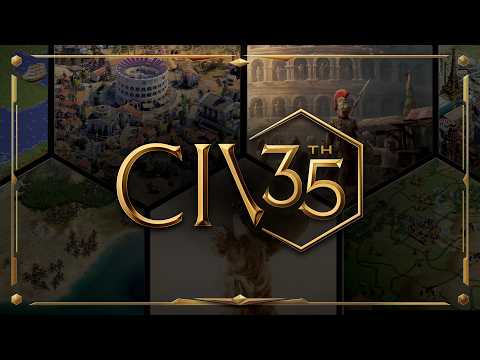
Before the launch of the major 2027 updates, Firaxis is set to release Update 1.5.0 later this month. This patch is aimed at addressing immediate community feedback and improving the core gameplay loop. A highlight of the update is the return of the "True Start Location (TSL) Earth" map, a fan-favorite feature that allows players to lead their civilizations from their actual historical geographic origins.
The update also includes new map scripts, such as "Terra Incognita" and "Shuffle Voronoi," which are designed to provide more unpredictable and varied terrain generation. Beyond content, 1.5.0 brings much-needed refinements to the user interface (UI) and resource generation algorithms. Diplomacy, which has been a point of contention since launch, will see adjustments to how AI leaders evaluate trade and military threats, aiming for a more logical and challenging interaction.
Historical Context: 35 Years of the Sid Meier Legacy
The announcement of these updates coincides with the 35th anniversary of the original Sid Meier’s Civilization, released in 1991. Over three and a half decades, the series has sold tens of millions of copies and defined the "4X" (Explore, Expand, Exploit, Exterminate) genre. However, the road to Civilization 7 has been uncharacteristically rocky. Upon its launch in 2025, the game was criticized for a perceived lack of depth compared to its predecessor, Civilization 6, and a monetization strategy that saw over £100 of downloadable content (DLC) available shortly after release.
Industry analysts suggest that the Arc of Tomorrow and Earthrise updates are an attempt to replicate the "redemption arcs" seen in other major titles like No Man’s Sky or Cyberpunk 2077. By providing a substantial amount of free content alongside the paid expansion, Firaxis is signaling a commitment to the game’s longevity.
Industry Impact and Future Outlook
The strategy gaming landscape has become increasingly competitive, with titles like Humankind and Millennia challenging Civilization’s dominance. By introducing mechanics like Proxy Warfare and near-future environmental engineering, Firaxis is attempting to modernize the franchise while staying true to the "one more turn" philosophy that made it a household name.
The success of this roadmap will likely depend on the execution of the Atomic Age mechanics. If the Multilateral Agreements and MAD systems can successfully create a tense, engaging endgame, it may silence critics who felt the game was released prematurely. As playtesting for Arc of Tomorrow begins later this year, the eyes of the strategy world will be on Firaxis to see if they can navigate the complexities of the modern era as successfully as they have the annals of history. For now, the message to the fans is clear: the journey of Civilization 7 is only just beginning, and the stars—once a distant dream—are finally within reach.