Galang Taruna
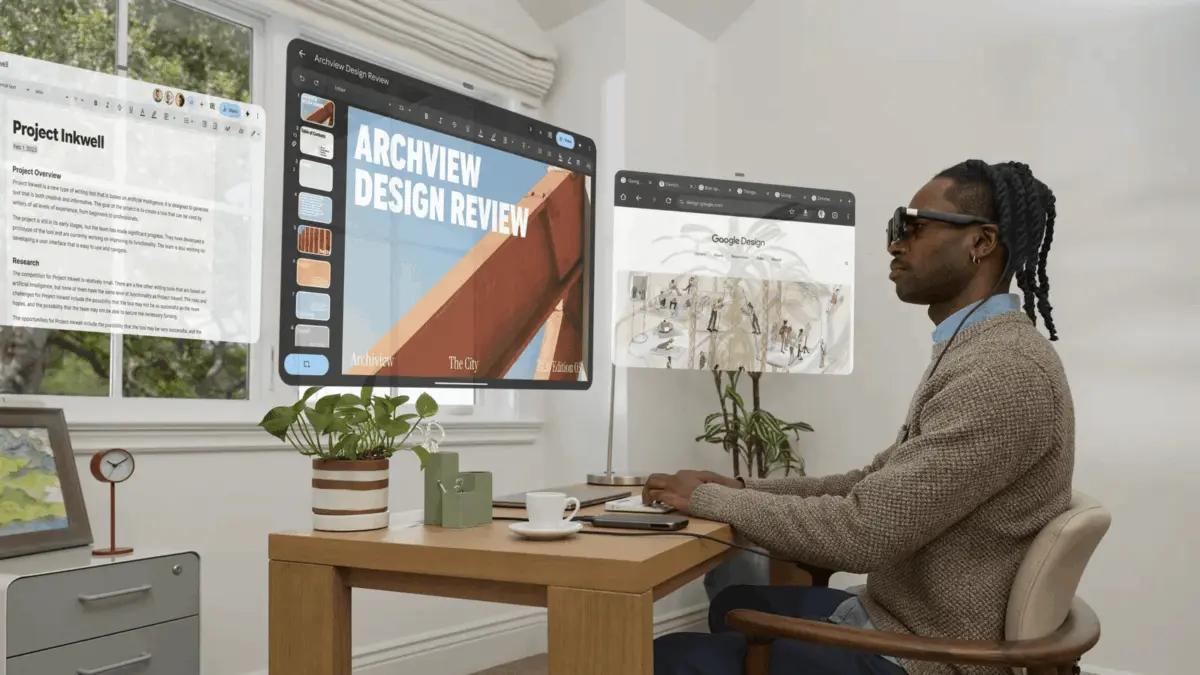
Google and Xreal officially commenced pre-orders for their highly anticipated Aura smart glasses on October 28, 2026, marking a significant milestone for the Android XR platform. Priced initially at $1,099 for a limited promotional period, these "first wired glasses under Android XR" are poised to redefine the immersive computing experience. However, the global rollout strategy has revealed a notable disparity, with immediate availability restricted to North America and select Asian markets, leaving European consumers awaiting a confirmed price and launch date.
The announcement came via a blog post published by Shahram Izadi, Vice President of XR at Google, underscoring Google’s deepening commitment to the extended reality (XR) space. The Xreal Aura glasses, developed in close collaboration with Google, represent a crucial step in bringing the Android XR operating system to consumer-ready hardware. This initiative builds upon Google’s prior explorations in smart eyewear, culminating in a more robust and ecosystem-driven approach.
Initial Availability and Pricing Structure
The launch pricing for the Xreal Aura starts at $1,099, a promotional offer valid until the end of December. This introductory price applies to the base model, which features 12 GB of RAM and 256 GB of internal storage. Following this promotional window, the standard price for this configuration will revert to $1,279. A more advanced variant, boasting 16 GB of RAM and 512 GB of storage, is also available, priced at $1,299 during the promotional period before settling at its regular price of $1,499. Xreal has committed to automatically refunding the price difference to any American customers who pre-ordered the Aura at the higher, non-promotional price prior to this announcement, ensuring fairness for early adopters.
The initial rollout targets specific markets: the United States, Canada, and South Korea began accepting orders on October 28. Japan is slated to join this first wave of availability starting November 2. Deliveries for these regions are expected to commence in mid-November, just in time for the holiday shopping season. In the United States, consumers can purchase the Aura glasses directly from Xreal’s online store or through select Best Buy retail locations. Purchases are restricted to individuals aged 18 and older, aligning with industry standards for advanced tech devices.
The Enigmatic European Market Strategy
Despite earlier indications of a broader global launch, European consumers face an indefinite wait. As of the launch date, Xreal only offers a "Founder Priority Pass" for €299 in European markets, including the 27 member states of the European Union and the United Kingdom. This pass functions as a reservation deposit, granting early access to pre-orders once they become available, but critically, it does not specify a final price or an estimated delivery date for the region. This contrasts sharply with Xreal’s press release issued during the Augmented World Expo (AWE) in June, which explicitly stated that the Aura would launch in the US, UK, Japan, Canada, and South Korea in the autumn, with the EU countries to follow "shortly after."
The current absence of concrete pricing and availability for Europe suggests a significant alteration to the initial rollout plan. Industry analysts speculate that the delay could be attributed to a range of factors, including regulatory hurdles, localization efforts, supply chain logistics, or a strategic decision to prioritize key markets for initial feedback and optimization. Without official clarification from either Google or Xreal, the European launch is now widely anticipated to occur sometime in 2027, leaving a substantial portion of the global market in suspense.
Underlying Technology: Android XR and Snapdragon Reality Elite
The Xreal Aura glasses are notable for being the inaugural consumer device to run on Android XR, Google’s dedicated operating system for extended reality. Android XR is designed to provide a cohesive and scalable platform for a new generation of immersive experiences, leveraging the familiar Android ecosystem while optimizing for the unique demands of AR and VR. This platform represents Google’s renewed, focused effort in XR, learning from past ventures like Google Glass and Daydream, to create an open and developer-friendly environment. Shahram Izadi highlighted in his blog post Google’s vision for Android XR as a versatile foundation that will empower a diverse range of hardware partners to innovate and bring differentiated experiences to market.
At the heart of the Aura’s processing power lies the Qualcomm Snapdragon Reality Elite chip, making these glasses the first to integrate this new-generation processor. While the glasses themselves are remarkably lightweight, weighing less than 95 grams, the intensive computational tasks, battery power, and advanced processing are offloaded to an external compute unit. This separate, wired module weighs an additional 265 grams and houses the Snapdragon Reality Elite chip along with the device’s battery. This design choice is critical for maintaining the glasses’ comfortable, lightweight form factor, minimizing heat generation near the user’s face, and enabling longer battery life without compromising on performance. The Snapdragon Reality Elite chip is engineered to deliver high-performance, low-latency XR experiences, supporting advanced features like spatial computing, sophisticated sensor fusion, and efficient power management, crucial for realistic augmented reality.
Hardware Specifications and Immersive Experience
Beyond the processing unit, the Xreal Aura glasses boast impressive display capabilities. They feature transparent lenses, allowing users to seamlessly blend digital content with their real-world surroundings. The integrated display offers a wide field of view (FOV) of 70 degrees, providing an expansive canvas for virtual objects and interfaces without overly restricting peripheral vision. This balance of transparency and FOV is essential for practical augmented reality applications, enabling users to remain aware of their physical environment while interacting with digital overlays.
The design emphasizes comfort and practicality for extended wear. The wired connection to the external compute unit, while potentially less convenient than fully untethered solutions, offers significant advantages in terms of weight distribution and thermal management, preventing the glasses from becoming cumbersome or overheating during use. This approach positions the Aura as a device optimized for sustained productivity and entertainment rather than short bursts of immersive content.
Software Innovation and User Interaction

The Android XR platform on the Aura glasses introduces several groundbreaking software features, leveraging Google’s expertise in AI and ecosystem development. A standout feature is the deep integration of Gemini, Google’s advanced AI assistant. Gemini on the Aura glasses is designed to be contextually aware, capable of understanding what the user is looking at, whether it’s an object in the physical environment or content on virtual screens. This allows for intelligent assistance, such as highlighting specific elements upon user request or providing relevant information based on visual input. The ability to share the user’s live view with Gemini opens up possibilities for enhanced visual search, interactive learning, and hands-free information retrieval.
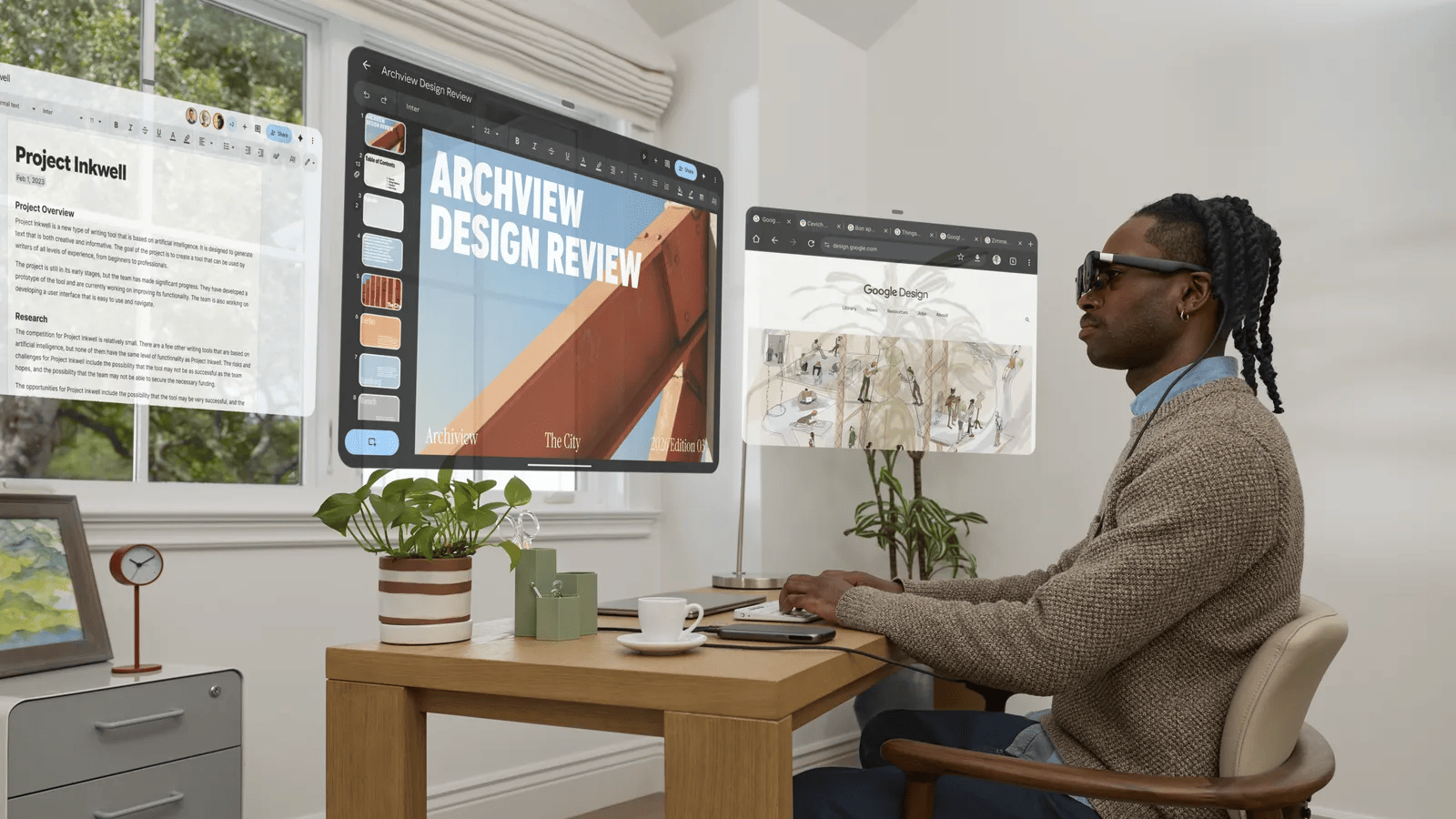
Another significant feature is "Wired Mirroring." This functionality allows users to connect a laptop or other compatible device via a USB-C cable and project its screen into a resizable, private virtual window visible only to the wearer. This feature transforms the Aura into a portable, multi-monitor setup, offering an unparalleled level of privacy and flexibility for mobile productivity, content creation, or simply enjoying media on a large virtual display in any environment. This capability is particularly appealing to professionals who require large screen real estate on the go, or for individuals seeking a private viewing experience in public spaces.
The Google Play Store on Android XR has been curated to offer over 150 applications specifically designed for the XR environment, in addition to supporting a vast library of classic Android applications. This robust app ecosystem provides a diverse range of use cases, from productivity tools and educational content to immersive entertainment. Google has highlighted several examples of compelling XR content available, including "Nevatars," an immersive film co-directed by Andy Serkis, which promises a new dimension of storytelling. Gaming experiences are also a focal point, with titles like "Fallout Factions" and "Project Hail Mary" showcased, demonstrating the potential for engaging gameplay within the augmented reality paradigm. The ability to navigate these applications using intuitive hand gestures, as demonstrated by early previews, further enhances the immersive and natural user experience.
Market Implications and Future Outlook
The launch of the Xreal Aura with Android XR is a pivotal moment for the burgeoning XR market. By partnering with Xreal, a company with established experience in AR glasses, Google is making a strong statement about its commitment to building an open, Android-based ecosystem for spatial computing. This strategy contrasts with more vertically integrated approaches seen from competitors like Apple with its Vision Pro, or Meta with its Quest line, which primarily target virtual reality.
The Aura’s lightweight, wired design positions it as a distinct offering, emphasizing comfort and extended utility for everyday use, potentially appealing to a different segment of the market than bulkier, untethered headsets. Its initial price point, while premium, is significantly more accessible than high-end devices like the Apple Vision Pro, suggesting a play for early adopters and developers who are keen to explore the potential of Android XR without a prohibitive investment. The delayed European launch, however, could temper initial market momentum and allow competitors to gain traction in those regions.
For developers, Android XR presents an exciting new frontier. The familiarity of the Android development environment, combined with Google’s extensive tools and resources, is expected to foster rapid innovation in XR applications. The promise of a unified platform that can scale across various hardware configurations could lead to a proliferation of diverse and impactful AR experiences, ultimately driving mainstream adoption of smart glasses.
Looking ahead, the Xreal Aura could serve as a crucial testbed for Android XR, providing Google with invaluable real-world data and user feedback. This initial consumer launch may well be a precursor to future, potentially untethered, Google-branded or closely partnered XR devices, as the technology matures and miniaturization progresses. The journey of mainstream augmented reality is still in its early stages, but the Xreal Aura, powered by Android XR, undeniably marks a significant and promising stride forward.