Galang Taruna

Apple has officially launched its highly anticipated MacBook Pro featuring a tactile OLED display, marking a significant evolution in its professional laptop lineup. However, a closer examination of the product landscape reveals that the existing Mini LED models, which Apple continues to offer with identical processing power, are rapidly becoming the preferred choice for value-conscious professionals, with retailers already initiating significant price reductions.
The Dawn of a New Era: Tactile OLED and ProMotion XDR
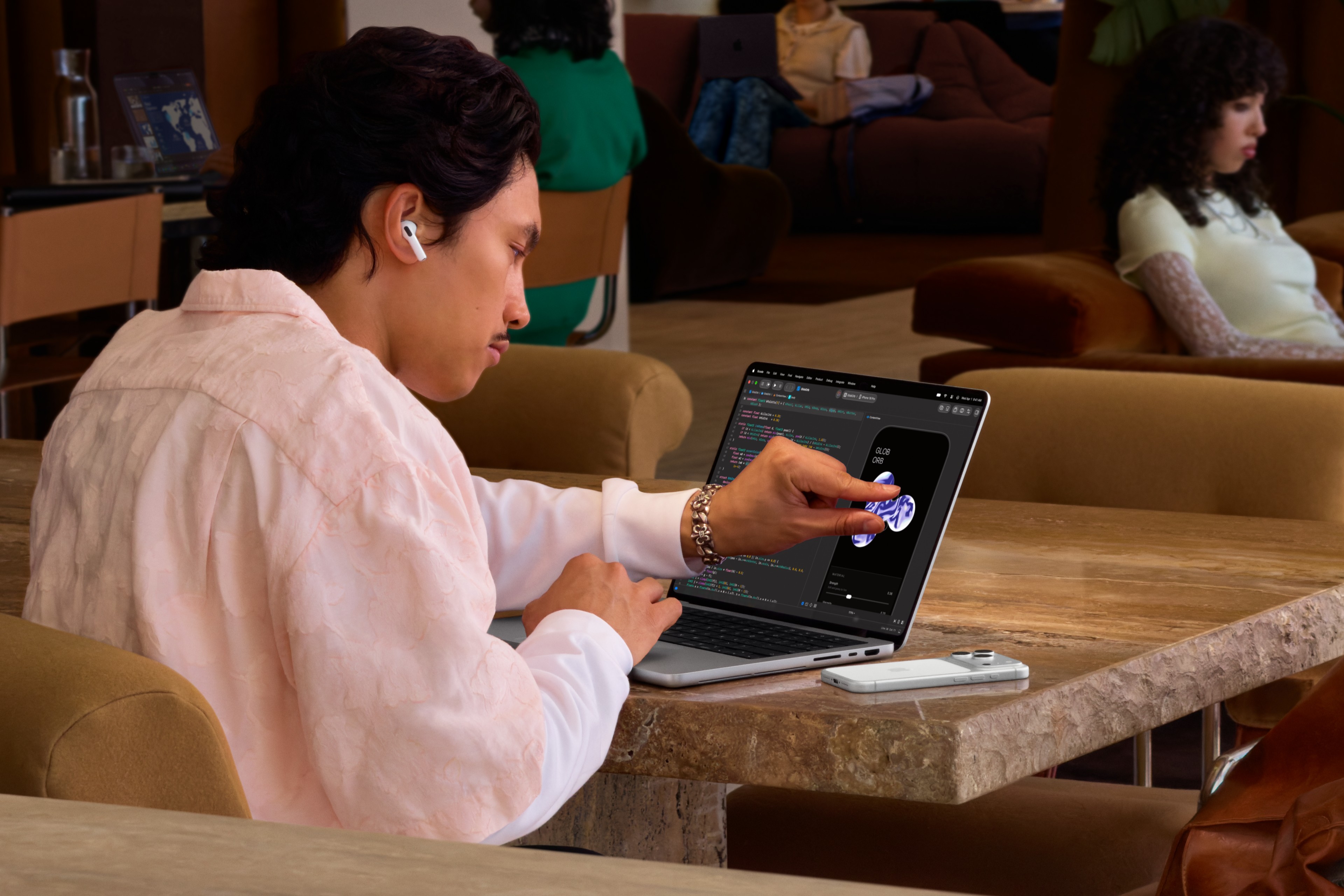
On Wednesday, October 28th, Apple unveiled the MacBook Pro that had been the subject of extensive industry speculation and user demand for years. This new iteration introduces a groundbreaking ProMotion XDR display utilizing tandem OLED technology, capable of reaching an astonishing 2,000 nits of peak brightness. Beyond the display, the device incorporates a tactile interface, a first for the MacBook Pro, alongside other notable enhancements such as the integration of Dynamic Island, previously an iPhone exclusive, and the nostalgic return of the illuminated Apple logo on the lid. These features collectively represent a bold step in Apple’s hardware innovation, aiming to redefine the user experience for creative professionals and power users. The detailed specifications and new capabilities are encapsulated in comprehensive reviews and announcements from the launch event.
The introduction of a tactile display on a MacBook Pro is particularly noteworthy, challenging Apple’s long-held philosophy of differentiating between macOS and iPadOS based on touch versus cursor interaction. For years, Apple executives, including Steve Jobs and Tim Cook, maintained that touchscreens were better suited for tablets and that a touch-enabled macOS device would compromise the traditional laptop experience. This pivot suggests a reevaluation of user interface paradigms, potentially driven by market demand and advancements in display technology that allow for a seamless integration of touch without sacrificing ergonomic comfort for laptop use. The tandem OLED architecture, which layers two OLED panels, is designed to enhance brightness and longevity, addressing some of the historical limitations of OLED technology, such as potential burn-in, while delivering unparalleled contrast ratios and color accuracy crucial for professional content creation.
Strategic Coexistence: Mini LED Maintains its Ground
Despite the fanfare surrounding the new OLED model, Apple’s decision to retain the MacBook Pro with the Mini LED display in its catalog is arguably the most significant development for many prospective buyers. This strategy creates an interesting dynamic in the market, as consumers now face a direct choice between cutting-edge display technology and established, high-performance hardware at a more accessible price point. The core appeal of the Mini LED models lies in their continued use of the same M5 Pro and M5 Max chips, initially introduced in March, ensuring identical computational performance, memory configurations, storage options (with the exception of a new 16TB option exclusive to the 16,000-euro OLED model), port selections, battery life, and overall autonomy.
The price differential between the new tactile OLED models and their Mini LED counterparts is substantial. For an identical configuration, the tactile OLED display commands a premium of 400 euros for the 14-inch model and 500 euros for the 16-inch variant. The new 14-inch MacBook Pro with the PROLED XDR display starts at 3,299 euros, while the 16-inch model begins at 3,899 euros. In contrast, the Mini LED versions are priced at 2,899 euros and 3,399 euros, respectively. Pre-orders for the new models commenced on the launch day, with deliveries expected to begin on Friday, November 6th.
Deep Dive into Display Technologies and Performance
The premium associated with the new MacBook Pro primarily accounts for the superior display specifications—2,000 nits peak brightness for OLED versus 1,600 nits for Mini LED—the tactile functionality, and a marginally lighter chassis (220 to 320 grams lighter). Crucially, there is no discernible improvement in raw processing power. For intensive tasks such as video editing, code compilation, or running local AI models, the Mini LED model delivers precisely the same performance. Indeed, the Mini LED MacBook Pro was previously hailed as "the market reference" in comprehensive reviews, underscoring its robust capabilities.
The Mini LED technology, which Apple markets as Liquid Retina XDR, utilizes thousands of tiny LEDs grouped into local dimming zones, allowing for precise control over brightness and contrast across the screen. While not achieving the pixel-level contrast of OLED, it offers exceptional brightness, deep blacks, and impressive HDR capabilities, making it highly suitable for professional workflows. The introduction of tandem OLED further elevates the visual experience with true blacks and even greater contrast, alongside the benefit of touch input. However, for many professionals, the existing Mini LED technology already provides a visually stunning and highly capable display that meets the demands of color-accurate work without the added cost.
The Economic Landscape: Rising Prices and Strategic Positioning
The current pricing structure of MacBook Pro models reflects broader trends in the computing industry. Over the past several months, the cost of MacBook Pros has seen a general increase. The 14-inch M5 Pro model, for instance, rose from 2,499 euros to 2,899 euros, and the 16-inch model from 2,999 euros to 3,399 euros. Apple’s pricing adjustments are not solely dictated by internal decisions; the global shortage of memory components, largely driven by the insatiable demand from AI data centers, has pushed up prices across the entire IT sector. Apple maintained its pricing for an extended period before finally adjusting on June 25th, indicating the significant external pressures influencing its cost structure.
In this challenging economic climate, Apple had the option to phase out the Mini LED model entirely, making the 14-inch tactile OLED at 3,299 euros the new entry point for the M5 Pro MacBook Pro line. By choosing to allow both product lines to coexist, Apple empowers consumers to prioritize either cutting-edge display and interaction or optimal performance-to-price ratio. This segmentation strategy allows Apple to cater to different segments of its professional user base, from those who demand the absolute latest in display technology and tactile interaction to those who prioritize raw computational power and value.
The Reseller Advantage: Unlocking Value
The real opportunity for astute buyers emerges in the reseller market. With the introduction of the new OLED models, the Mini LED MacBook Pro, no longer the latest generation, is beginning to see significant price reductions from third-party retailers. On the launch day, Amazon was already listing a 16-inch M5 Max MacBook Pro with 36GB of RAM and 2TB of storage for 3,999 euros, a substantial discount from Apple’s official price of 5,099 euros. This discounted price point is roughly equivalent to that of the new 16-inch tactile OLED model equipped with an M5 Pro chip (3,899 euros), but offers a considerably more powerful M5 Max chip and double the storage capacity. Other major retailers, such as Boulanger, are also offering similar discounts, with some models seeing reductions of 400 euros.

This scenario is a classic market pattern: the introduction of a new generation often pushes down the prices of its predecessor. What makes this particular situation unique is that the "predecessor" shares the exact same, highly capable processing unit as the newly launched models. This parity in performance, coupled with aggressive discounting, positions the Mini LED MacBook Pro as an exceptionally compelling proposition for professionals seeking maximum computational power per euro spent.
Reconditioned Market and Chip Performance Analysis
While official Apple certified refurbished stores are typically a good source for discounted products, they might not immediately offer the best deals for the Mini LED MacBook Pro following this launch. For example, a 16-inch M5 Pro model with 48GB of RAM and 1TB of storage might be available for 3,449 euros, representing a decent 15% reduction from its original price, but stock is often limited to higher-end configurations.
Furthermore, older chip generations, such as the M4 Pro, might not represent the best value in Apple’s reconditioned store. A 16-inch M4 Pro model might be priced around 3,069 euros, which is paradoxically more expensive than a new 14-inch M5 Pro Mini LED model (2,899 euros). This highlights the importance of careful comparison shopping. Despite being an older generation, the M4 Pro remains an excellent chip. Performance benchmarks show that the M5 Pro offers an approximately 11% improvement in multi-core performance under Cinebench 2024 compared to the M4 Pro. This indicates that a reconditioned M4 Pro MacBook Pro could still be a worthwhile investment, especially if found at a price point around 2,000 euros from a reputable refurbisher, as detailed in comprehensive guides on purchasing reconditioned MacBooks.
Implications and Recommendations for Buyers
Apple’s latest product launch effectively raises the ceiling for its professional laptop line, with highly configured models now exceeding 16,000 euros, catering to an elite segment of users with specialized needs and budgets. However, for the majority of professional users, the continued availability of the M5 Pro MacBook Pro starting at 2,899 euros with the Mini LED display remains the critical price point. Even the entry-level 14-inch M6 MacBook Pro, introduced on Tuesday, October 27th, at 2,299 euros, has seen a 100-euro price increase, underscoring the upward trend in Apple’s pricing across the board.
For those requiring uncompromising power for demanding computational tasks, the Mini LED MacBook Pro, especially when discounted by resellers, presents an unparalleled value proposition. It delivers the same raw performance as the new OLED models at a significantly lower cost. Users whose workflows heavily depend on an absolute reference-grade display for color-critical work, or those who value the enhanced portability and intuitive tactile interaction, might find the 400 to 500 euro premium for the OLED model justifiable. For professionals who do not require the extreme power of a Pro chip, the 14-inch M6 MacBook Pro, while seeing a slight price increase, remains an excellent and highly capable option for everyday professional tasks.
This strategic product segmentation by Apple offers a wide array of choices, reflecting a nuanced understanding of its diverse professional user base. While the new tactile OLED MacBook Pro undoubtedly pushes the boundaries of display technology and user interface innovation, the market dynamics created by the continued availability and discounting of the Mini LED models present a compelling case for value-driven purchasing decisions. This approach allows Apple to simultaneously cater to early adopters and those seeking the latest technological advancements, while also providing robust, high-performance options for professionals prioritizing cost-effectiveness without sacrificing essential capabilities.