Evan Lee Salim
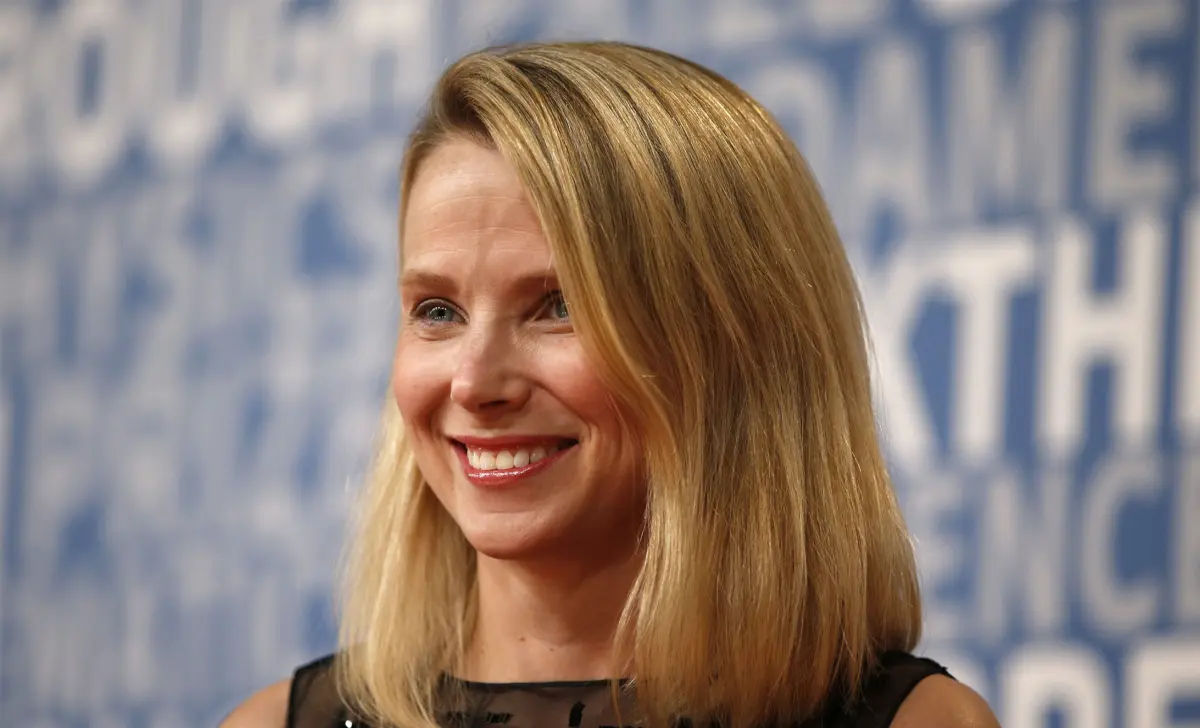
Former Yahoo CEO and early Google engineer Marissa Mayer has become the latest prominent tech figure to draw significant public criticism for her views on integrating artificial intelligence into deeply personal aspects of life, specifically parenting. The controversy erupted following an interview where Mayer discussed her new application, Dazzle, an AI assistant designed to learn from a user’s camera roll. Mayer presented what she believed was an impressive demonstration of Dazzle’s capabilities: assisting her in formulating three bullet points about her ten-year-old daughter for a school birthday presentation, describing the child as "empathetic, creative, and an animal lover."
The seemingly innocuous description, widely characterized as vague and generic—a profile that could arguably fit a multitude of ten-year-olds—quickly ignited a firestorm of online commentary. Critics argued that Mayer’s reliance on AI for such a personal task underscored a widening cultural chasm between the tech elite and mainstream society. Progressive activist Leah Greenberg publicly "marveled" at the disclosure, stating, "the fact that Marissa Mayer would voluntarily disclose this to a reporter is a pretty good demonstration of how deeply the culture of Silicon Valley has diverged from the rest of humanity." This incident is not isolated; it reflects a growing pattern of tech billionaires suggesting the outsourcing of fundamental human experiences, such as child-rearing—a journey traditionally understood as a profound test of patience, humility, and kindness—to artificial intelligences that, by definition, lack the capacity for genuine human emotion.
A Pattern of AI Integration in Personal Spheres
The public’s frustration with Mayer’s remarks is not new; it has been simmering for some time, fueled by previous comments from other high-profile tech leaders. Just a year prior, in 2025, OpenAI CEO Sam Altman stirred controversy during a televised appearance with late-night host and Bored Ape NFT owner Jimmy Fallon. Altman remarked on national television, "I cannot imagine… figuring out how to raise a newborn without ChatGPT." This statement, widely perceived as tone-deaf and detached, generated significant negative feedback, yet Altman appeared largely unphased.
Months later, in 2026, Altman again courted criticism when he suggested on X (formerly Twitter) that a "cool use case" for ChatGPT Work would be creating a podcast that discusses one’s children’s upcoming birthdays or soccer games and "explains your kids’ interests." The suggestion was brutally "ratioed" – a term indicating a disproportionate number of replies criticizing the original post compared to likes or retweets – with many respondents questioning the need for such an intermediary. A common retort, epitomizing the public’s sentiment, was simply, "What if you just talked to your children?" These instances highlight a recurring theme: the tech industry’s often enthusiastic promotion of AI solutions for human interactions that many believe are inherently, and necessarily, personal and un-outsourcable.
Mayer’s Defense and Broader AI Ambitions
Following the widespread backlash, Marissa Mayer issued a lengthy defense on X. She clarified that her intention was not to rely on Dazzle to understand her child, but rather to test the prototype’s capabilities. She explained that the app had resurfaced photos of "forgotten kindergarten projects," such as a "snake devenomer" or a "sandcat playground," which then illustrated her daughter’s creativity and care for animals. While this explanation offered some nuance, it did little to quell the underlying anxieties about AI’s expanding role in personal life.
The same interview where the initial controversy arose revealed Mayer’s broader vision for Dazzle, one that extends far beyond recalling forgotten memories. She explicitly remarked that people could use her AI to outsource the "mental load" of tasks like "figuring out the theme for your child’s birthday party." Mayer detailed her own use of the app for planning a playdate for her daughter, booking family activities during vacations, and even deciding on Halloween costumes. Perhaps most strikingly, she proposed a future where her AI assistant could coordinate plans with her husband’s AI assistant. When confronted by the reporter with the question of whether this "frictionless future… planned by AI" felt depressing, Mayer’s candid reply—"I haven’t really thought that through"—underscored a perceived lack of reflection on the deeper societal implications of such widespread AI integration.
The Quest for "Frictionless" Living and Its Critics
The desire to eliminate "friction" from daily life appears to be a driving force behind many of these AI initiatives. While efficiency is undeniably valuable in many sectors, critics argue that applying this ethos indiscriminately to human relationships risks stripping away the very elements that make them meaningful. The inherent messiness, the effort, the occasional friction—these are often the crucibles in which empathy, understanding, and profound connection are forged.
A Pew Research Center study published in September 2025 reported that a significant 50% of U.S. adults believe that AI will ultimately reduce people’s ability to form meaningful relationships. In stark contrast, only a mere 5% of respondents thought AI would facilitate these connections. This data points to a fundamental divergence between the aspirations of some tech leaders and the broader public’s apprehension regarding the social impact of AI. The public seems to intuitively grasp that while AI can streamline tasks, it may also inadvertently diminish the depth and authenticity of human interaction.
Mark Zuckerberg’s Vision for AI-Mediated Social Connection
Meta CEO Mark Zuckerberg joins his Silicon Valley peers in envisioning a future where AI plays a central role in fulfilling human social needs. In a podcast last year (2025), Zuckerberg cited statistics suggesting a growing loneliness epidemic, noting, "The average American I think has, it’s fewer than three friends, three people they’d consider friends, and the average person has demand for meaningfully more, I think it’s like 15 friends." He concluded that "the average person wants more connectivity, connection than they have."
Zuckerberg’s solution to this perceived deficit in human connection leans heavily on AI. He predicts that it will become increasingly socially acceptable to outsource emotional needs to AI therapists or even AI romantic partners. While acknowledging the irreplaceable value of physical connections, he emphasized the reality that "people […] feel more alone a lot of the time than they would like." Meta, under Zuckerberg’s leadership, appears committed to advancing virtual reality embodiments of AI avatars, making them ever more realistic. This strategic direction suggests a greater focus on enhancing relationships with these sophisticated approximations of humans, rather than fostering deeper, more authentic connections among the actual billions of human users who interact on Meta’s platforms daily.
The Biohacking Ethos and the Human Experience
Part of this drive to optimize and automate personal life likely stems from the prevailing culture within the tech industry, which often prizes extreme efficiency and "biohacking." This ethos extends to personal health, where individuals attempt to optimize their own bodies by meticulously tracking sleep schedules with health wearables or even injecting unregulated "peptide stacks" to maximize productivity and longevity. While this pursuit of optimization can yield benefits in areas like physical performance or mental acuity, its application to the inherently complex and often unpredictable realm of human relationships raises profound questions.
The development of electric vehicles or computer chips clearly benefits from a relentless pursuit of efficiency. In these domains, minimizing friction and maximizing output are clear "North Stars." However, human relationships are not technological products to be shipped with minimal capital or effort. They are organic, dynamic, and often chaotic. The very "friction"—the misunderstandings, the compromises, the difficult conversations, the vulnerability required to connect—is often what gives these relationships their profound meaning and resilience. When individuals delegate these intricate interactions to computers, they risk surrendering the challenging, yet ultimately fulfilling, experience of authentic human connection.
Ethical and Societal Implications
The broader implications of this trend extend beyond individual convenience. Ethically, the outsourcing of parental duties or emotional support to AI raises concerns about child development, the formation of empathy, and the fundamental nature of human attachment. What does it mean for a child’s understanding of love and care if their parent’s descriptions of them, or even their birthday party themes, are generated by an algorithm? How does it impact an adult’s capacity for emotional resilience if AI consistently smooths over every social rough edge?
Societally, a widespread embrace of AI-mediated relationships could lead to a further erosion of face-to-face interaction skills, a decline in empathy, and a collective retreat into curated, algorithmically optimized realities. The very act of navigating complex human emotions and social dynamics is crucial for personal growth and societal cohesion. If AI becomes the primary intermediary for these interactions, there is a risk that humanity could lose some of its most essential relational capacities.
The debate sparked by figures like Marissa Mayer, Sam Altman, and Mark Zuckerberg underscores a critical juncture in the integration of AI into human society. While AI offers unparalleled potential for innovation and convenience, the public discourse highlights a deep-seated apprehension about its encroachment into the most intimate and sacred aspects of human existence. The challenge for Silicon Valley, and indeed for society at large, is to discern where AI can genuinely augment human life without inadvertently diminishing its inherent richness, complexity, and ultimately, its meaning. The answer may lie not in a wholesale embrace of "frictionless" living, but in a careful and considered approach that prioritizes authentic human connection over mere algorithmic efficiency.