Sisilia Frederika
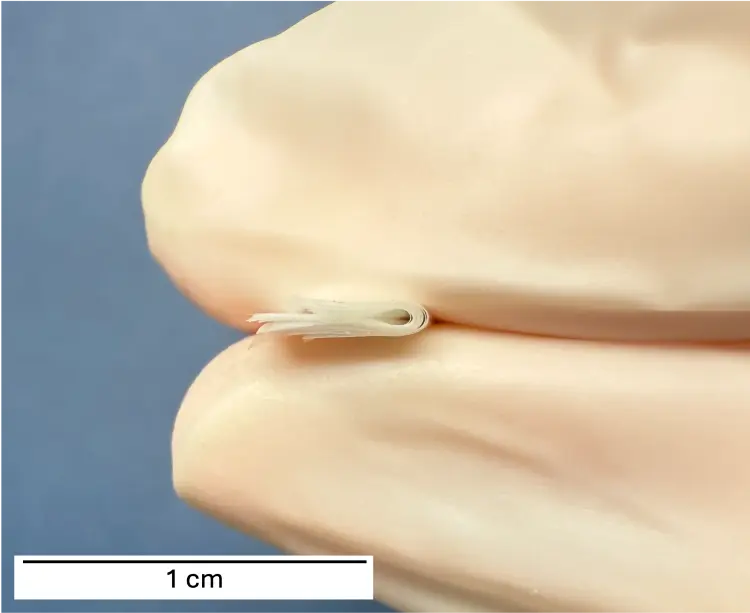
The pursuit of sustainable human presence on the Moon has moved from the realm of science fiction into the rigorous domain of materials science and structural engineering. As international space agencies, led by NASA’s Artemis program, prepare for the first crewed lunar landings in over half a century, the primary obstacle remains the Moon’s uncompromising environment. Unlike Earth’s protective atmosphere and stable climate, the lunar surface is a landscape of thermal extremes, vacuum conditions, and abrasive regolith. To address these challenges, a team of researchers from the University of Pennsylvania’s School of Engineering and Applied Science has developed a novel thermal insulation system utilizing layered Mylar sheets. This innovation, recently detailed in the journal ACS Applied Materials & Interfaces, provides a blueprint for habitats that are not only thermally efficient but also mechanically resilient enough to withstand the physical rigors of long-term human occupancy.
The Engineering Challenge of Lunar Survival
Thermal management is arguably the most critical component of extra-planetary architecture. On Earth, the atmosphere facilitates heat transfer through convection, while the magnetic field and ozone layer mitigate solar radiation. On the Moon, the lack of an atmosphere means that heat transfer occurs primarily through radiation and conduction. This leads to a thermal environment that is uninhabitable for unprotected biological life. In regions targeted for exploration, such as the lunar south pole, temperatures can soar to 127 degrees Celsius (260 degrees Fahrenheit) during the lunar day and plummet to minus 247 degrees Celsius (minus 413 degrees Fahrenheit) in the shade or during the lunar night.
Furthermore, a single lunar day lasts approximately 29.5 Earth days, meaning habitats must endure two weeks of continuous, scorching sunlight followed by two weeks of cryogenic darkness. Existing insulation technologies, such as the Multi-Layer Insulation (MLI) used on satellites, are designed for the static environment of deep space where they are rarely touched or compressed. However, a lunar base is a dynamic environment. Astronauts moving within or around a structure, the expansion and contraction of materials due to temperature swings, and the potential for accidental impacts require an insulation material that is both a superior thermal barrier and a robust mechanical component.
Methodology: Rethinking Multi-Layer Insulation (MLI)
The University of Pennsylvania team, led by Dr. Igor Bargatin, Associate Professor in Mechanical Engineering and Applied Mechanics, focused their research on optimizing Mylar—a high-strength polyester film—for use in these high-stakes conditions. Mylar has been a staple of the aerospace industry for decades due to its high tensile strength, chemical stability, and gas barrier properties. However, the UPenn study sought to push the material’s limits by experimenting with layered "stacks" of varying thicknesses and densities to determine the optimal configuration for a vacuum environment.
The researchers evaluated three specific thicknesses of Mylar: 2.5 micrometers (µm), 5 µm, and 12.5 µm. To test the efficiency of these materials, they created layered stacks with densities ranging from 80 to 400 layers per millimeter. Specifically, the 2.5 µm sheets were stacked at a density of 400 layers, the 5 µm sheets at 200 layers, and the 12.5 µm sheets at 80 layers.
The experimental setup involved subjecting these stacks to a series of rigorous environmental stressors. These included high-vacuum conditions to simulate the lunar atmosphere and a wide spectrum of temperatures. Crucially, the team introduced a mechanical stress test, applying pressures equivalent to 200 pounds of force on an area the size of a human fingertip. This simulated the "wear and tear" of a lunar base, such as an astronaut leaning against a wall, the weight of equipment, or the physical shifting of a habitat’s shell.
Experimental Results: The Counterintuitive Performance of Thickness
The results of the study challenged the researchers’ initial hypotheses regarding material efficiency. Conventionally, in insulation design, thinner layers are often preferred because they allow for more interfaces within a given volume, theoretically creating more barriers to heat transfer. However, the UPenn team discovered that the thinnest Mylar sheets (2.5 µm) performed poorly compared to their thicker counterparts when stacked densely.
The data revealed that in the 2.5 µm stacks, microparticles on the surface of the sheets were more likely to come into contact with one another. In the vacuum of space, these points of contact act as "thermal bridges," allowing heat to bypass the reflective barriers via conduction. Because the thinner sheets were more flexible and prone to microscopic deformation, they experienced greater "micro-contact," which significantly degraded their insulating properties.
In contrast, the medium (5 µm) and thicker (12.5 µm) layered stacks maintained better structural separation. The microparticles on these sheets did not touch as frequently, effectively "trapping" the vacuum between the layers and preventing conductive heat transfer. This finding is significant for lunar architecture, as it suggests that slightly heavier, thicker materials actually provide superior thermal protection and better energy efficiency for the habitat’s life-support systems.
Durability Under Pressure: Simulating Physical Interaction
Beyond thermal performance, the study’s most promising takeaway was the resiliency of the Mylar stacks. Traditional MLI is notoriously fragile; even a small amount of compression can ruin its effectiveness by forcing the layers together. The UPenn researchers found that their specific stacking method allowed the material to maintain its integrity even under significant pressure.
Dr. Igor Bargatin emphasized the necessity of this durability for long-term missions. "You could use these stacks to insulate a lunar habitation, but astronauts will inevitably have little accidents where they bump into them," Bargatin noted. "When we’re talking about long-term habitation on the moon, it’s really important to have tough materials that can last long enough."
The ability of the 5 µm and 12.5 µm stacks to recover from compression and resist thermal bridging under load makes them ideal candidates for the exterior "skin" of lunar modules. This resiliency ensures that the habitat remains safe even if the structure undergoes physical stress from internal pressurization or external impacts.
Historical Context: From Apollo to Artemis
The evolution of space insulation reflects the broader history of lunar exploration. During the Apollo era (1961–1972), missions were short-duration "sorties." The Lunar Module (LM) was insulated with layers of aluminized Kapton and Mylar, but these were designed to last only a few days on the surface. The goal was weight minimization above all else, as the craft only needed to survive a brief window of lunar daylight.
NASA’s Artemis program represents a fundamental shift in strategy. The goal is no longer just to visit the Moon, but to establish the Artemis Base Camp. This requires infrastructure that can function for years, if not decades. The development of robust insulation is a direct response to the failures and limitations identified in 20th-century materials. The UPenn study bridges the gap between the fragile, high-performance foils of the past and the durable, multi-functional materials required for the future.
Economic and Logistical Implications for Space Agencies
The implications of this research extend to the logistics and economics of spaceflight. Every kilogram of material launched to the Moon costs tens of thousands of dollars. By identifying that 5 µm and 12.5 µm Mylar stacks are more effective than thinner versions, engineers can optimize the weight-to-performance ratio of lunar habitats.
Furthermore, superior insulation directly impacts the power requirements of a lunar base. If a habitat can maintain a stable internal temperature with minimal heat loss during the 14-day lunar night, the demand on battery systems and nuclear power sources (such as Fission Surface Power systems currently under development) is greatly reduced. This allows for smaller, lighter power plants, further reducing mission costs and complexity.
The Environmental Extremes of the Lunar South Pole
The research is particularly timely given NASA’s focus on the lunar south pole. This region is of immense strategic value because of "permanently shadowed regions" (PSRs) within deep craters. These areas, which have not seen sunlight in billions of years, contain high concentrations of water ice. This ice is the "gold" of the solar system, as it can be processed into oxygen for breathing and hydrogen for rocket fuel.
However, operating in the south pole means dealing with the most extreme temperature gradients on the Moon. A habitat might have one side facing the sun at 120°C while the other side faces a PSR at -240°C. The UPenn-developed Mylar stacks are specifically designed to handle these massive thermal differentials. The research provides a scalable solution for insulating everything from the habitats themselves to the rovers and storage tanks used to harvest and store lunar ice.
The Path Toward Extraterrestrial Architecture
The findings by the University of Pennsylvania team represent a critical step in the "humanization" of space. For the Moon to become a place where humans live and work, the structures must move beyond the "tin can" designs of early spaceflight. They must become true homes—safe, durable, and thermally stable.
The next steps for this technology likely involve testing the Mylar stacks in low-Earth orbit (LEO) or on uncrewed lunar landers to observe how they interact with lunar dust (regolith). Lunar dust is highly abrasive and electrostatically charged, posing a secondary threat to any exterior material. If the Mylar stacks can be integrated with dust-repellent coatings, they could become the standard for all future lunar and Martian surface structures.
As the global community looks toward the launch of Artemis III and the eventual construction of permanent lunar outposts, the work of materials scientists remains the foundation of success. The transition of "everyday Mylar" into a high-tech lunar insulator demonstrates that the solutions for living on other worlds often come from refining and reimagining the materials we already have on Earth. Through this blend of innovation and pragmatism, the goal of a sustainable lunar civilization moves closer to reality.