Lina Irawan
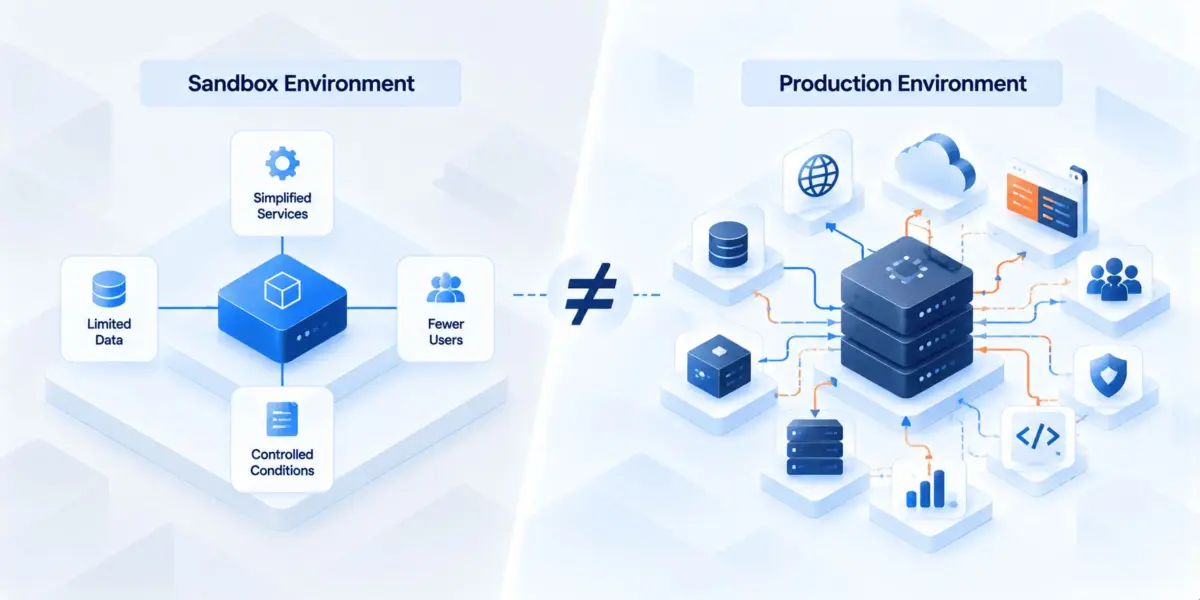
The persistence of the gap between sandbox testing environments and production systems remains one of the most significant hurdles in modern software engineering, representing a structural reality that defies simple configuration fixes. For years, development teams have operated under the assumption that achieving "parity"—a state where the testing environment perfectly mirrors the live environment—is the ultimate goal of a robust CI/CD (Continuous Integration and Continuous Deployment) pipeline. However, emerging industry data and architectural shifts toward microservices suggest that this pursuit of perfect parity may be a misguided investment. The divergence between these environments is not a series of unfortunate edge cases but rather a fundamental characteristic of distributed systems that requires a shift in how engineers approach maintenance, simulation, and risk mitigation.
The Structural Nature of Environmental Drift
Environmental drift occurs when the configuration, data, or behavioral patterns of a sandbox environment fall out of alignment with the production environment. This phenomenon is rarely the result of a single catastrophic failure; instead, it is an accumulation of small, often invisible changes. A configuration variable set differently in a staging environment, a database seed that omits legacy record formats found in the real world, or an upstream service that modifies its response schema without notifying downstream consumers—all of these contribute to a "stale" sandbox.
The core of the problem lies in the different schedules and triggers that govern production and sandbox updates. Production is a living organism, evolving constantly through application deployments, infrastructure patches, database migrations, and third-party API updates. Conversely, the sandbox is often static, updated only when a developer manually intervenes or when a specific test failure forces a reconciliation. Because these two environments are rarely coordinated with deliberate synchronicity, drift becomes the default state rather than the exception.
The Chronology of Sandbox Degradation
To understand how this drift impacts software reliability, it is helpful to look at the lifecycle of a typical testing environment within a high-growth engineering organization.
- Phase 1: Initial Accuracy (Day 0): A team builds a new sandbox. They carefully study upstream service documentation and capture current API responses. At this moment, the simulations are 100% accurate, reflecting the current state of the production ecosystem.
- Phase 2: The Silent Divergence (Months 1-3): Upstream teams deploy several minor updates. A field that was previously optional in a payment gateway response becomes mandatory. An error code is renamed for clarity. Because these changes do not immediately break the downstream team’s tests, they go unnoticed.
- Phase 3: The Systematic False Positive (Months 3-6): The downstream team continues to run their test suites. The "green" status of the dashboard provides a false sense of security. The suite is validating code against stale assumptions—effectively testing for a world that no longer exists.
- Phase 4: The Production Incident (The Breaking Point): The team deploys a new feature that relies on the fields that changed in Phase 2. The tests passed in the sandbox, but the code fails instantly in production because the real service returns a format the application was not prepared to handle.
This timeline illustrates that the most dangerous failure mode is not a "flaky" test, but a "systematically wrong" test that remains reliably green despite being incorrect.
Infrastructure Parity vs. Behavioral Contract Accuracy
A critical distinction must be made between two types of environmental drift: infrastructure divergence and behavioral contract drift. Industry experts argue that teams often spend too much time on the former and not enough on the latter.
Infrastructure Divergence
This involves differences in hardware, instance types, memory limits, and networking rules. While it is satisfying to ensure that a staging environment uses the same AWS instance types as production, this type of parity rarely determines whether an integration test catches a functional bug. An application’s logic for handling a payment response will typically remain the same whether it runs on a t3.medium instance or a high-performance production cluster. Infrastructure parity is measurable and "diffable," making it an attractive target for DevOps teams, but it offers diminishing returns for software quality.
Behavioral Contract Drift
This is the "silent killer" of distributed systems. It refers to the gap between what a simulated dependency (a mock or a stub) returns and what the actual service returns in production. When the order service’s simulation of a payment service provides a response structure that the real payment service has since abandoned, the contract is broken. Behavioral accuracy is significantly harder to maintain because it requires real-time knowledge of upstream changes.
Supporting Data: The Economic Impact of Stale Testing
According to the "Cost of Software Quality" report by the Consortium for Information & Software Quality (CISQ), the cost of poor software quality in the US alone reached an estimated $2.41 trillion in 2022. A substantial portion of this cost is attributed to "failed development projects" and "legacy system problems," many of which are exacerbated by integration failures that were not caught in testing.
Furthermore, data from DORA (DevOps Research and Assessment) metrics suggests that "Elite" performing teams—those with the lowest Change Failure Rate (CFR)—are characterized not by having the most complex sandboxes, but by their ability to detect and remediate drift quickly. The cost of fixing a bug in production is estimated to be 10 to 100 times higher than fixing it during the design or development phase. When a sandbox environment fails to catch an integration error due to behavioral drift, it directly contributes to this exponential increase in technical debt and operational costs.
Technological Solutions: The Role of Observation-Based Testing
As the industry moves away from manual mock authoring, new tools are emerging to bridge the behavioral gap. One of the most promising developments is the use of observation-based simulations, which utilize technologies like eBPF (Extended Berkeley Packet Filter) to capture real interactions.
Tools such as Keploy have gained traction by capturing real HTTP traffic at the kernel level. By recording what an upstream service actually returns during a session in a staging or production-like environment, these tools create simulations based on observed reality rather than developer assumptions or outdated documentation. This approach addresses the "human error" factor in simulation maintenance. When an upstream service changes, the observation tool can capture the new response, and a "diff" can be generated to show exactly which fields have changed. This provides the downstream team with actionable intelligence: they can see precisely how the contract has evolved and update their application code accordingly.
Industry Perspectives and Official Responses
While no single governing body dictates how sandboxes should be managed, the consensus among CTOs and Lead Architects at major tech firms is shifting toward a "Testing in Production" (TiP) or "Testing with Production Data" philosophy.
"The goal is no longer to build a perfect replica of production," says one senior DevOps consultant. "The goal is to maintain a high-fidelity representation of the interfaces. If your interfaces are accurate, the underlying infrastructure matters much less for 90% of your functional tests."
Engineering leaders at companies like Netflix and Uber have pioneered the use of "shadowing" and "canary deployments" to mitigate the risks of environmental drift. By routing a portion of real traffic to a new version of a service without affecting the end-user experience, they can observe how the service handles real-world data and upstream responses before a full rollout. This effectively treats production as the ultimate testing ground, acknowledging that the sandbox will always have limitations.
Broader Impact and Future Implications for DevOps
The acceptance of structural drift marks a maturation in the field of DevOps. It moves the conversation from "how do we fix the sandbox" to "how do we manage the gap." This shift has several long-term implications for the industry:
- Redefining the "Definition of Ready": Teams are increasingly requiring that any upstream API change must be accompanied by an updated simulation or "contract" that downstream teams can immediately consume.
- Automation of Simulation Updates: The industry is moving toward a model where simulation updates are triggered by upstream deployment events. If Service A deploys a new version, a trigger automatically refreshes the mocks used by Service B.
- Focus on Observability: As sandboxes are recognized as inherently limited, investment is shifting toward observability and monitoring. The ability to detect an integration failure in production within seconds and roll it back automatically is becoming as important as preventing the failure in the first place.
- Data Privacy and Synthesis: The need for "production-like" data in sandboxes must be balanced with increasingly stringent data privacy laws like GDPR and CCPA. This is driving innovation in synthetic data generation, where tools create "realistic but fake" data that mirrors the complexity and "messiness" of production records without exposing sensitive information.
In conclusion, the gap between the sandbox and production is not a flaw in the engineering process; it is a boundary to be understood and managed. The most successful engineering teams are those that stop chasing the mirage of perfect parity and instead focus on the targeted accuracy of behavioral contracts. By leveraging observation-based tools and aligning simulation updates with upstream changes, organizations can eliminate the class of failures that do not require production to reveal, thereby creating a more resilient and predictable software delivery lifecycle. Environment drift is not the enemy; undetected drift is. Understanding this distinction is the first step toward building truly robust distributed systems.