Lina Irawan
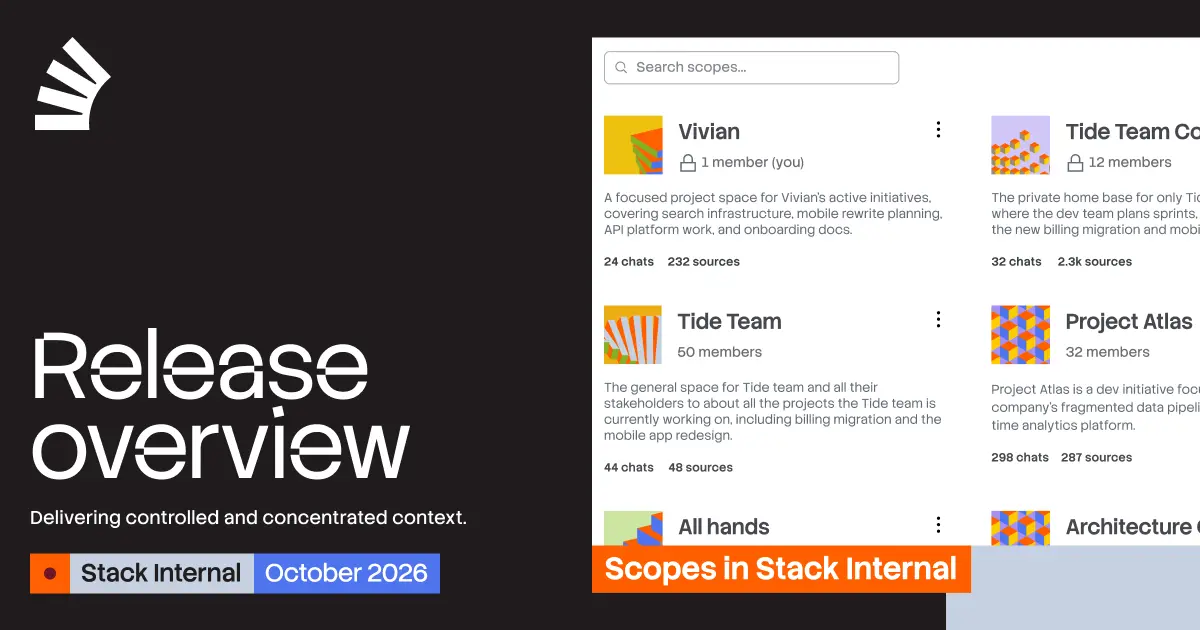
Stack Overflow has officially announced its October release for Stack Internal and Stack Internal Community, introducing a suite of features designed to bridge the widening "context gap" in modern developer workflows. As organizations increasingly grapple with fragmented data silos and the rapid integration of artificial intelligence into the software development lifecycle, this latest update focuses on three core pillars: focused knowledge boundaries, automated repository ingestion, and robust human-in-the-loop verification. By uniting localized project context with enterprise-wide governance, the release aims to transform static documentation into a dynamic, high-signal intelligence layer capable of supporting both human engineers and autonomous AI agents.
Addressing the Persistent Context Gap in Software Engineering
The release comes at a critical juncture for the technology industry. According to the 2026 Developer Survey, the inefficiency of information retrieval has reached a breaking point within large-scale enterprises. The data reveals that 75% of developers now spend more than five hours per week simply searching for information required to complete their tasks. Perhaps more concerning for project timelines is the finding that 79% of developers discover critical context only after they have already commenced work on a task, leading to significant rework, technical debt, and missed deadlines.
Industry analysts suggest that this "context gap" is a byproduct of the shift toward microservices and remote-first work cultures, where institutional knowledge is often buried in ephemeral chat threads or disparate version control systems. Stack Overflow’s October release seeks to mitigate these inefficiencies by providing a centralized, verified source of truth that integrates directly into the tools developers use daily.
Strategic Knowledge Boundaries: The Introduction of Scopes
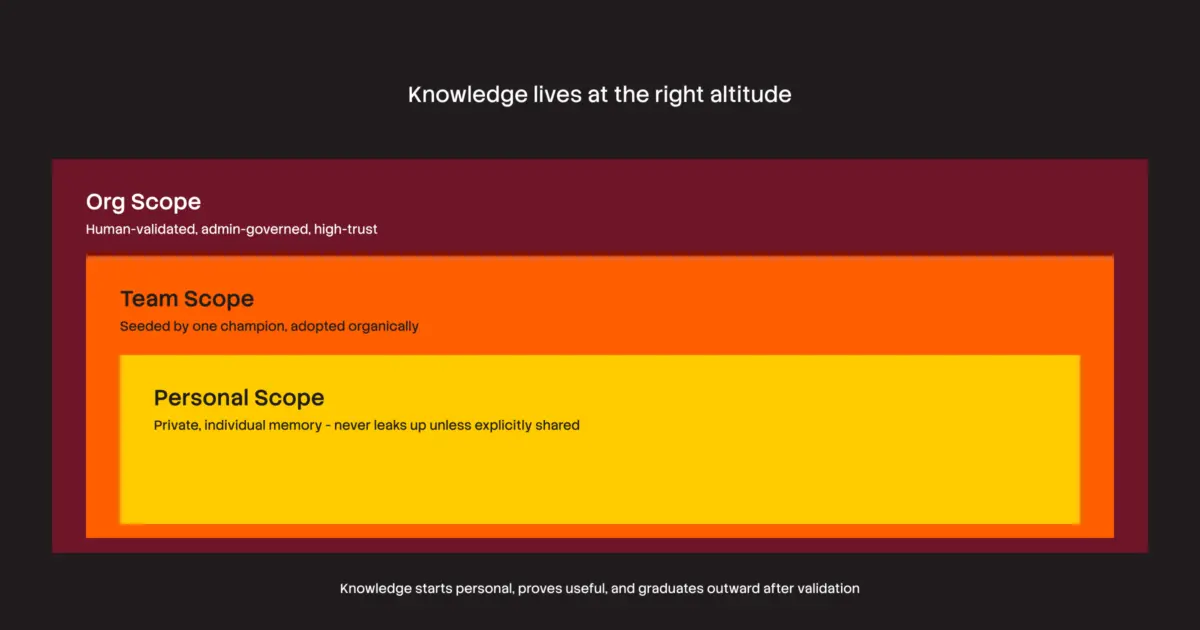
A cornerstone of the October update is the introduction of "Scopes," a new architectural layer within Stack Internal. Scopes allow organizations to segment their knowledge base into focused, permission-governed spaces. This replaces the "one-size-fits-all" approach to internal search with a more granular system where knowledge is curated based on project, team, or departmental relevance.
From a technical perspective, Scopes serve as a filter for both human users and AI models. By controlling what information is included in a specific Scope, administrators can ensure that developers are not overwhelmed by irrelevant "noise" from unrelated projects. Furthermore, Scopes are compatible with the Model Context Protocol (MCP) server. This allows developers to direct AI agents to query specific, high-trust knowledge boundaries, reducing the likelihood of AI hallucinations caused by outdated or conflicting information. The ability to fluidly switch between contexts ensures that the right information is available at the right moment, whether a developer is onboarding to a new team or troubleshooting a legacy system.
Bridging Repositories and Memory: The GitHub Connector
Recognizing that a significant portion of engineering intelligence resides within version control systems, Stack Overflow has introduced an out-of-the-box GitHub connector. This feature is designed to ingest "engineering memory"—the logic behind pull requests, issue resolutions, and repository documentation—directly into the Stack Internal verified knowledge layer.
Historically, documentation has been a manual and often neglected task. The new connector automates the capture of high-signal engineering decisions, ensuring that the rationale behind a specific code change is preserved long after the pull request is merged. Crucially, the system enforces source-level permissions. This ensures that the existing GitHub access controls are mirrored within Stack Internal, preventing unauthorized exposure of sensitive code logic to users or AI agents who do not have the requisite clearance. This integration effectively turns a static code repository into a living enterprise memory, accessible via natural language queries.
Enterprise Security and Workflow Automation via Service Accounts
As organizations move toward "agentic" workflows—where AI agents perform autonomous tasks—the need for secure, scalable authentication has become paramount. The October release addresses this by allowing workspace administrators to connect applications, MCP clients, and automated workflows using service accounts.
Previously, many organizations relied on personal access tokens or shared user accounts to integrate internal tools, creating significant security risks and administrative overhead. The new service account model provides a standard OAuth flow and a stable identity for automated systems. Each service account is bound to a single workspace with its own set of permissions and credentials, providing a fully auditable identity trail. This improvement allows security teams to manage the lifecycle of automated integrations without disrupting developer productivity, facilitating the safe deployment of AI agents across the enterprise.
The Human Element: SME Validation and Feedback Loops
Despite the rise of AI, human expertise remains the ultimate arbiter of truth in complex engineering environments. To support this, Stack Overflow has overhauled the Subject Matter Expert (SME) validation flow. A new "Reviews" feature has been integrated directly into the Stack Internal web UI, centralizing the process of expert verification.
This feature allows designated SMEs to monitor, review, and validate questions and answers from across the workspace in one location. By attaching explicit trust labels—such as "validated," "corroborated," or "unsupported"—to content, the platform provides a clear signal of reliability. This human-in-the-loop approach is essential for training internal AI models, as it provides the high-quality, labeled data necessary for fine-tuning and retrieval-augmented generation (RAG).
Furthermore, a new validation API endpoint allows these human-verified updates to be pushed back into other enterprise tools. For example, if a solution is validated within Stack Internal, the API can automatically update corresponding documentation in Confluence or the Stack Internal Community. This creates a "closed-loop" system where knowledge is not just captured but continuously refined and synchronized across the entire organization.
Enhancing Engagement and Administrative Oversight
The October release also introduces several quality-of-life improvements aimed at increasing platform engagement and transparency. Users can now utilize animated GIFs in Q&A posts and articles, a feature intended to make technical demonstrations more intuitive. Transparency is further bolstered by new attribution controls for unaccepted answers and clear reasoning requirements for marking posts as obsolete.
For administrators and moderators, the update provides enhanced coordination tools. Targeted announcements can now be sent to specific moderator groups, and granular controls allow for more precise SME management. On the governance side, search activity exports and a comprehensive "History" page for site-setting changes provide the visibility required for compliance and platform optimization.
A Chronology of Knowledge Management Evolution
The launch of these features represents the latest step in a multi-year evolution of the Stack Overflow ecosystem.
- 2008–2018: Stack Overflow established itself as the global "public square" for coding knowledge, solving the problem of repetitive technical queries on a global scale.
- 2019–2022: The company introduced Stack Overflow for Teams (now evolving into Stack Internal), recognizing that the same collaborative Q&A model could solve the "private knowledge" problem within corporations.
- 2023–2024: With the explosion of Generative AI, the focus shifted toward "OverflowAI," integrating conversational search and IDE extensions to bring knowledge directly to the developer’s cursor.
- October 2025–2026: The current release marks the transition from a simple Q&A platform to a "Self-Sustaining Memory Layer." The focus has moved beyond human search to providing the infrastructure for AI-driven enterprise intelligence.
Broader Industry Implications and Analysis
The strategic shift toward "permission-bounded Scopes" and "automated ingestion" reflects a broader trend in the tech industry: the move away from centralized "data lakes" toward decentralized, high-context "data ponds." As LLMs become more commoditized, the competitive advantage for enterprises will lie in the quality and accessibility of their proprietary data.
By integrating directly with GitHub and providing an MCP server, Stack Overflow is positioning itself as the essential middleware between an organization’s raw data and its AI tools. This release mitigates the primary risks associated with enterprise AI: hallucination and data leakage. When an AI agent can cite a human-verified thread within a permissioned Scope, the "trust gap" in AI-generated code is significantly narrowed.
Furthermore, the "closed-loop" memory system—where chat-based resolutions in Slack or IDEs are written back to a permanent knowledge base—addresses the "knowledge attrition" that occurs when senior developers leave an organization. By capturing the "why" behind the code in real-time, enterprises can preserve institutional logic as a permanent asset.
Conclusion and Future Outlook
The October release of Stack Internal and Stack Internal Community signals a maturation of the enterprise knowledge market. It acknowledges that while AI can synthesize information, it cannot independently verify truth or understand the nuanced context of a specific corporate architecture without human guidance.
As organizations continue to integrate these tools, the metric for success will likely shift from "search volume" to "decision velocity." By reducing the time spent searching and increasing the reliability of the information found, Stack Overflow aims to enable a future where developers spend less time on administrative discovery and more time on high-value innovation. The platform is now available for new users through a free workspace program, while existing customers can begin enabling the new Scopes and GitHub connectors through their administrative dashboards.