Lina Irawan
The rapid proliferation of generative artificial intelligence has prompted a surge in internal development projects, with engineering teams across the globe attempting to construct proprietary knowledge systems. The prevailing sentiment among high-capability technical organizations is that an internal solution is both cost-effective and technically straightforward. By leveraging a vector database, integrating standard connectors, and deploying a Retrieval-Augmented Generation (RAG) pipeline, teams believe they can centralize organizational intelligence in a matter of weeks. However, industry data and operational post-mortems suggest a recurring pattern of failure: what begins as a streamlined weekend project frequently evolves into a full-time, resource-heavy obligation for platform teams within six months of deployment.
The discrepancy between initial expectations and long-term operational reality stems from a fundamental misunderstanding of the problem space. While standing up a vector database is a manageable engineering task, maintaining a governed, high-trust knowledge pipeline is a complex challenge involving compliance, security, and continuous data hygiene. As AI agents become more integrated into corporate workflows, the technical debt associated with home-grown RAG systems begins to compound, leading to a "maintenance wall" that can stifle innovation in other core product areas.
The Evolution of Knowledge Infrastructure: A 24-Month Chronology
To understand the current shift toward managed knowledge platforms, it is necessary to examine the trajectory of enterprise AI adoption over the last two years.
In early 2023, the primary focus for most engineering teams was "The Demo Phase." Organizations rushed to prove that Large Language Models (LLMs) could interact with internal documents. These early prototypes were often built using open-source libraries and basic scraping tools. By mid-2023, these teams entered "The Accuracy Gap," where users reported that while the AI could find documents, it frequently hallucinated or cited outdated information.
By early 2024, the focus shifted to "The Governance Crisis." As these internal tools moved from experimental to operational, security and legal departments began to raise concerns regarding data provenance, permission leakage, and compliance with frameworks such as GDPR and SOC2. This led to the current era in 2025, defined by "The Operational Reality Check." Organizations are now realizing that the cost of maintaining the connectors, trust models, and audit trails required for enterprise-grade AI often exceeds the cost of purchasing a specialized platform.
The Five Stages of a Production-Grade Knowledge Pipeline
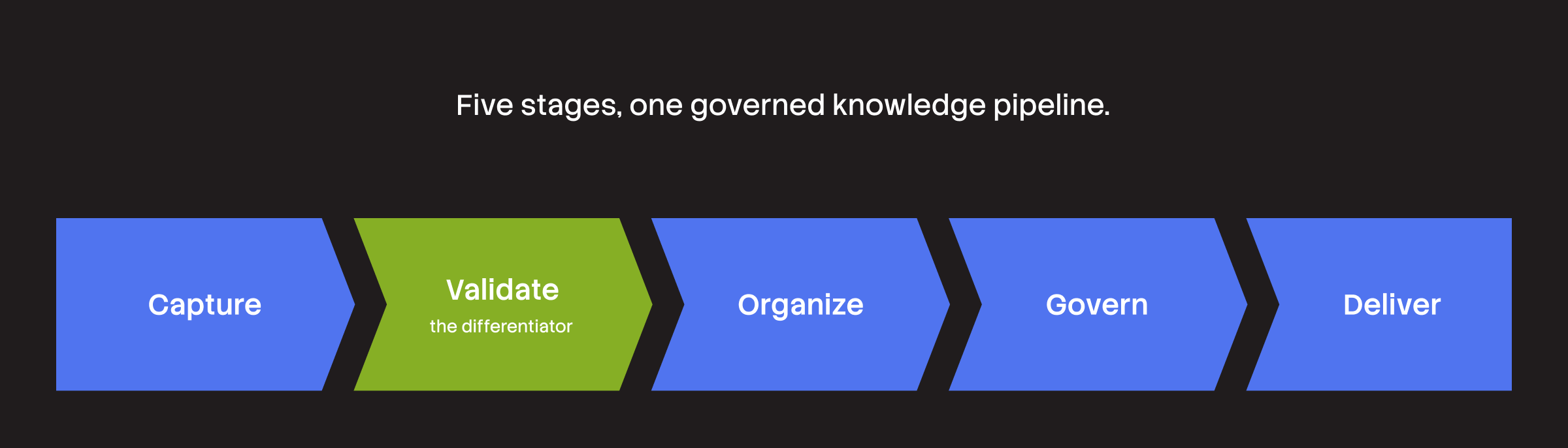
A robust internal AI system is comprised of five distinct stages: Capture, Validate, Organize, Govern, and Deliver. While each stage appears tractable in isolation, the cumulative maintenance requirements represent a significant burden on engineering resources.
1. Capture: The Challenge of API Volatility
The initial stage involves connecting to various data sources—such as Slack, Jira, Confluence, and GitHub—to pull in relevant information. The "easy" version of this task involves writing a simple connector. However, the production reality is far more grueling. Vendor APIs evolve constantly; a single update to a third-party platform can break a custom connector, requiring immediate engineering intervention. Furthermore, deduplication is a persistent issue. Without sophisticated logic, the system may capture the same document in three different formats, leading to redundant or conflicting search results.
2. Validation: The Differentiator
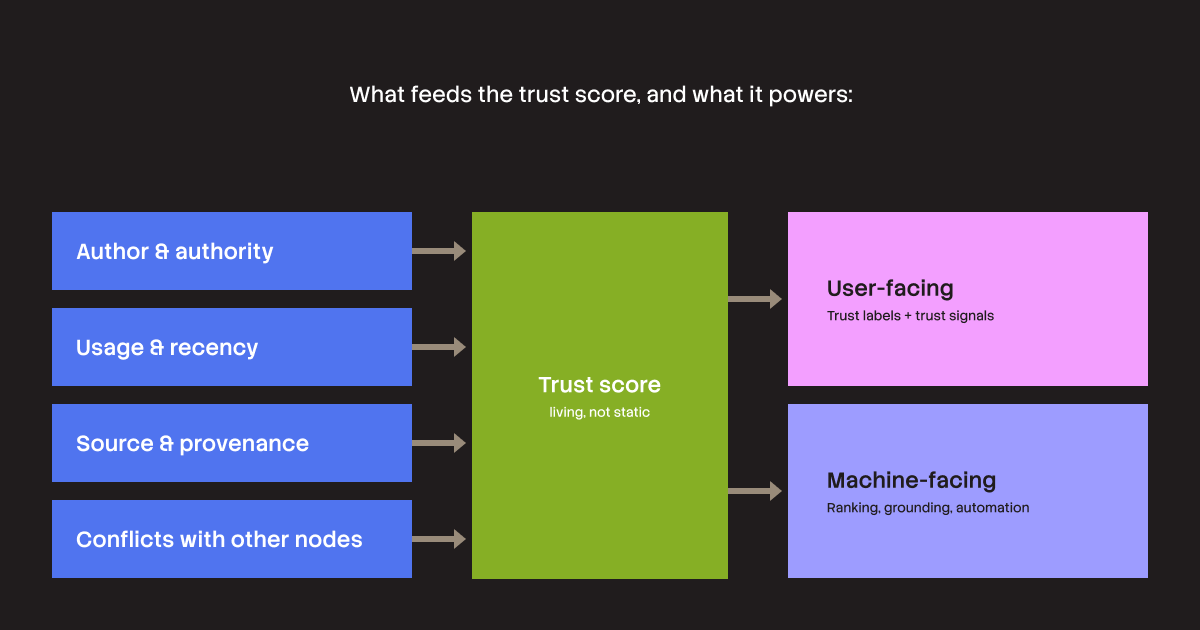
Validation is the most critical stage and the one most frequently overlooked by internal teams. It involves distinguishing between authoritative "source of truth" documents and transient or obsolete information. In a raw RAG pipeline, a Slack thread discussing a potential policy change is often treated with the same weight as the finalized policy itself. To solve this, a pipeline must generate what is known as a "knowledge node"—a living record that includes the substance of the information, its owner, its origin, and its current trust score.
3. Organization: Moving Beyond Manual Filing
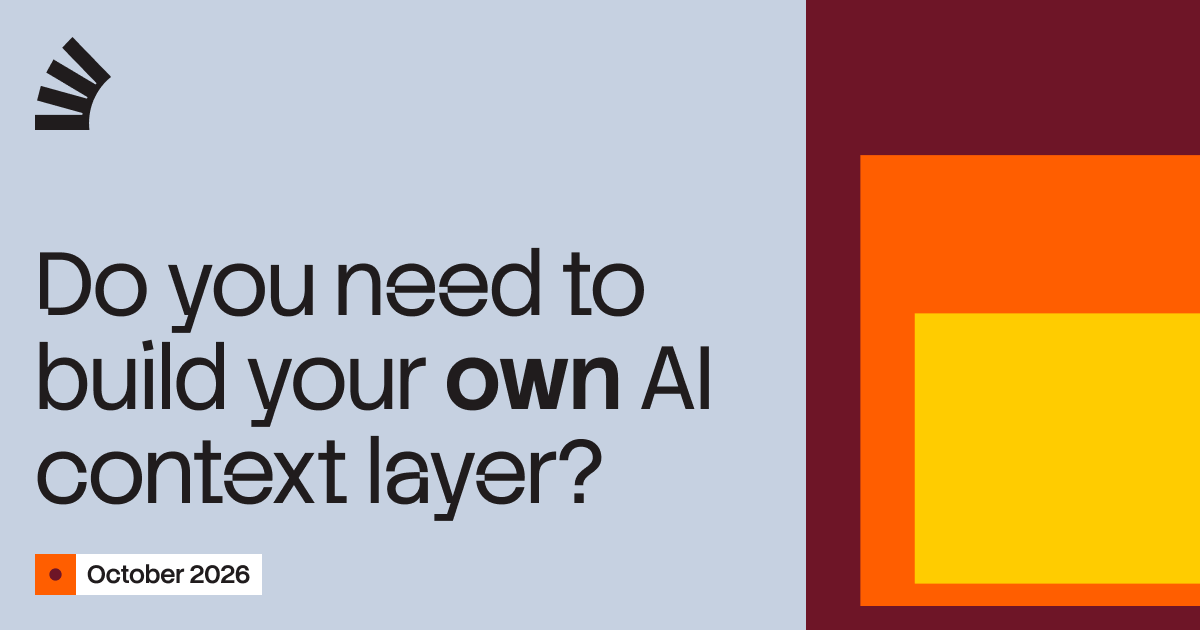
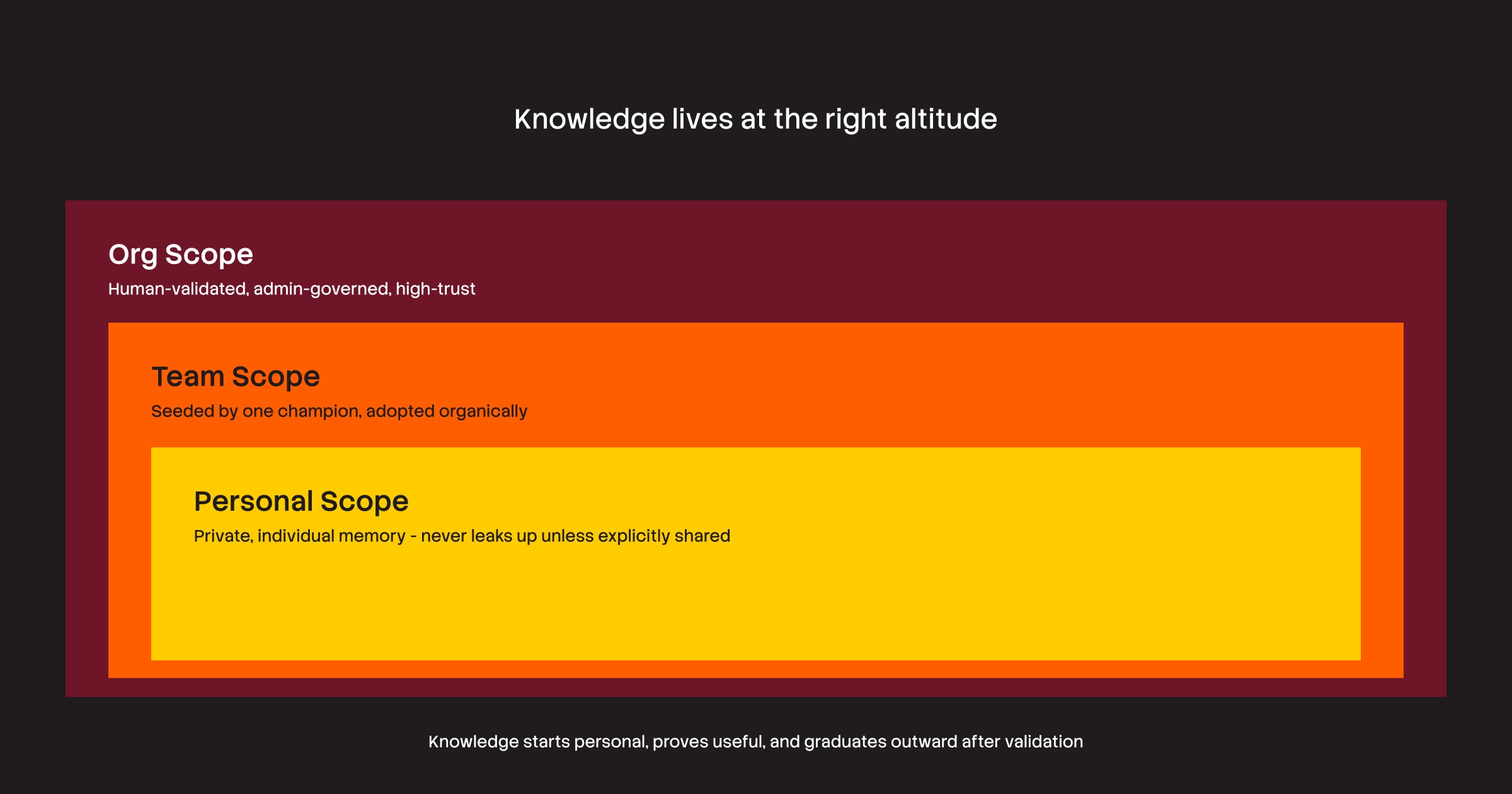
Organizing knowledge involves more than just sorting content by team. It requires automated logic that recognizes when a piece of information has "earned" its way from a personal note to a team-wide resource or a company-wide standard. In manual systems, this process relies on human tagging, which is notoriously unreliable. Advanced systems use "scopes" to allow knowledge to settle naturally into the correct context without requiring manual intervention from the end-user.
4. Governance: Meeting Compliance Requirements
For an AI system to be deployed at scale, it must satisfy the requirements of IT and security teams. This includes bulk permissioning, identity provider (IDP) integration, and comprehensive audit trails. Internal builds often lack the "paper trail" necessary for compliance. If an AI agent provides a sensitive answer, security teams must be able to trace that output back to a specific validated source and a specific reviewer.
5. Delivery: Proactive vs. Reactive Information
The final stage is the delivery of information to the user or agent. Modern delivery is increasingly moving toward the Model Context Protocol (MCP), a standardized interface that allows agents to query the current, validated state of a knowledge graph rather than a stale data snapshot. This ensures that every AI tool in the company is working from the same "up-to-date" answer.
Data Analysis: The Cost of the "Build" Strategy
Recent industry surveys indicate that the total cost of ownership (TCO) for an internal AI knowledge system is often underestimated by 300% to 400%. According to internal metrics from platform providers like Stack Internal, a typical enterprise engineering team spends approximately 40% of its time on "Day 2" operations—tasks such as fixing broken connectors, re-indexing stale data, and manually adjusting permissions—rather than building new features.
Furthermore, the "trust decay" of unmanaged data is a measurable phenomenon. In systems without automated revalidation, the accuracy of AI-generated answers tends to decline by roughly 10% per month as organizational knowledge shifts and documents become obsolete. This necessitates a "human-in-the-loop" system where owners are automatically prompted to revalidate content that falls below a certain confidence threshold.
Stakeholder Reactions and Industry Perspectives
The debate between building and buying knowledge infrastructure has reached the C-suite. Chief Technology Officers (CTOs) are increasingly concerned with "organizational focus."
"The question isn’t whether our engineers can build a vector database," noted one tech executive during a recent industry roundtable. "The question is whether we should be in the business of maintaining knowledge infrastructure. If it’s not our core product, every hour spent on connector maintenance is an hour stolen from our customers."
Security and compliance officers have also expressed a preference for standardized platforms. The ability to set "agent guardrails" and view "knowledge health" dashboards provides a level of visibility that is difficult to achieve in bespoke systems. For these stakeholders, the "buy" option represents a significant reduction in risk, particularly regarding the potential for AI to leak sensitive internal data across permission boundaries.
The Shift to Knowledge Nodes and Implicit Trust
A key innovation in the current landscape is the transition from stored copies of data to "knowledge nodes." Unlike a standard database entry, a knowledge node is a durable entity that survives even if the original source tool is disconnected or deleted.
This architecture relies on two modes of validation:
- Implicit Trust: The system automatically assigns trust based on signals such as authorship (e.g., a merged PR from a principal engineer), usage frequency, and recency.
- Explicit Trust: This serves as a fallback for high-stakes information. When the system detects a conflict or a decay in confidence, it triggers a lightweight, one-tap revalidation request to the content owner.
The goal of this dual-mode system is to drive the number of human interruptions toward zero while maintaining a high-trust environment.
Broader Implications for the Future of Enterprise AI
As organizations move toward more sophisticated AI stacks, the infrastructure supporting those stacks must become more robust. The decision to build internal knowledge pipelines is increasingly seen as a legacy approach suited for the experimental phase of 2023, but ill-equipped for the governed reality of 2025.
The emergence of platforms like Stack Internal suggests a future where knowledge infrastructure is treated as a utility—much like cloud hosting or identity management. By absorbing the costs of connector maintenance, trust-model tuning, and governance, these platforms allow engineering teams to focus on their primary mission: building products that drive revenue.
In conclusion, while the initial allure of a "simple" RAG pipeline remains strong, the compounding costs of maintenance, validation, and governance make the "build" strategy a risky proposition for most enterprises. As AI agents take on more consequential roles in the workplace, the demand for a stable, governed, and trusted knowledge foundation will only continue to grow. Organizations that recognize this shift early will likely gain a significant competitive advantage by redirecting their engineering talent toward true innovation rather than infrastructure maintenance.